
An ice cream counter cone holder hygiene layout should give staff a stable place to set a prepared cone, keep unused cones protected, and leave a clear route for removing and cleaning the holder. Start by separating those three tasks. An open stand for a finished order is not automatically a storage dispenser for empty cones. Test the proposed arrangement with your actual cone shapes, serving routine and cleaning method before approving the counter. The useful result is a marked layout and a repeatable work sequence, rather than simply a photograph of an attractive accessory.
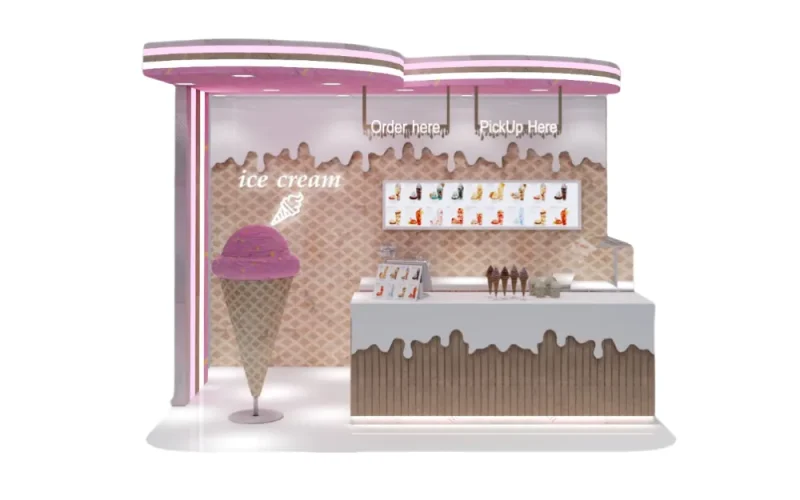
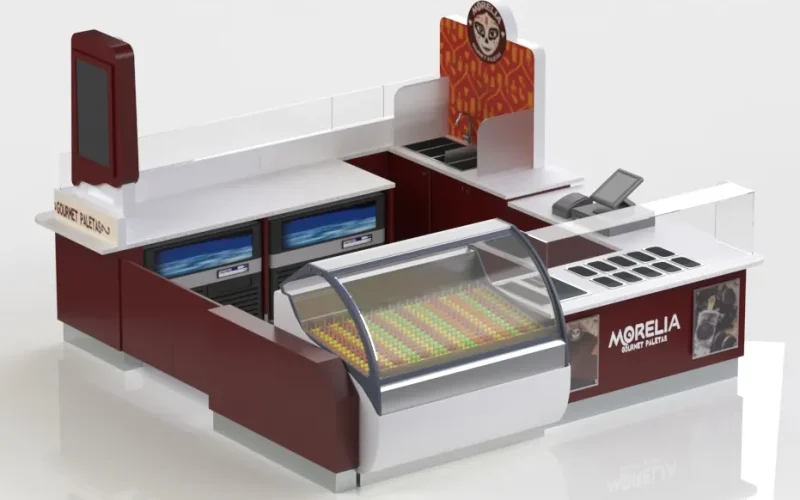
This guide is for buyers planning countertop fixtures. It does not approve a food-contact material, prescribe sanitizer concentrations or replace the local food authority’s requirements. The product images are supplier design renderings: they show a counter arrangement with small cone supports, not a verified operating food business.
Separate serving holders from protected cone storage
Write down what each accessory will hold. A serving holder supports a prepared cone briefly while staff complete an order or hand it over. A storage dispenser holds unused cones between services. A decorative cone model is a merchandising prop. Confusing them creates an avoidable purchasing problem: an accessory may look right in a drawing while failing the actual task. Identify each item in the equipment list and ask the supplier to confirm its intended use.
Bring the smallest and largest cones you intend to sell to the sample review. Include their sleeves or wrappers where used. Check that each cone sits securely without contacting neighboring orders, and that a worker can lift it out without squeezing the edible rim. Record any excluded cone shape. Do not assume that a holder sized for one waffle cone will work with a different supplier’s product or a heavier serving.
Keep the wider equipment decision in the ice cream kiosk fixture buying guide. This approval concerns the small service station and the work around it; it does not establish the suitability of the freezer, electrical supply or full kiosk installation.
Choose the location by walking through a real order
Mark the intended holder position on a sample counter. Have one worker prepare a representative order while another takes payment. Watch where their hands travel and where they need to place tools, packaging and completed items. A position that works when the counter is empty may become awkward when a customer puts down a bag or a second employee opens the freezer.
Place the trial stand so that the worker does not have to reach across a finished cone to collect a sleeve or receipt. Keep it away from the immediate path of payment equipment, used utensils and cleaning materials. These are workflow observations, not universal distance rules. Agree actual clearances with the equipment providers and the person responsible for the shop’s food-safety plan.
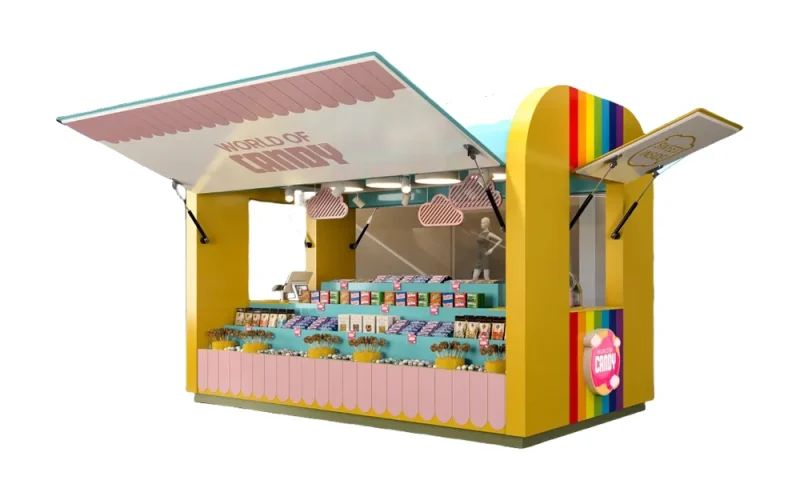
Use the pink ice cream kiosk product reference to discuss the visible front-counter arrangement. Its renderings illustrate small cone supports near the service area. They do not identify the support material, removable joints, storage capacity or cleaning approval. Ask for those details separately before including an accessory in an order.

Use a practical sample-review checklist
The following table is a purchasing checklist, not a hygiene standard. Use your actual cones and a representative service arrangement. Record a clear outcome for each row and identify the person who must resolve any question. A supplier drawing can locate an accessory, but it cannot demonstrate all of these tasks.
| Task to test | What the reviewer should observe | Evidence to request or keep |
|---|---|---|
| Set down a prepared cone | The intended cone sits securely and can be lifted without disturbing its neighbor | Cone type, serving configuration and sample photographs |
| Collect an unused cone | Protected storage can be accessed without reaching over completed orders | Storage accessory identification and a marked work sequence |
| Replenish the station | The refill path avoids payment activity and does not require placing packaging on the serving stand | Location of reserve stock and a refill demonstration |
| Remove the holder | Staff can perform the manufacturer’s removal procedure without moving unrelated equipment | Removal instructions and the sample accessory identifier |
| Clean around the position | The exposed counter and accessible parts can be reached using the approved procedure | Material-care instructions and an observed cleaning trial |
| Return to service | The clean accessory has an identified drying and storage location before it is put back | Written responsibility and a clean-to-used separation plan |
Plan replenishment without turning the counter into storage
Decide where unopened reserve stock belongs and how it reaches the serving station. Replenishment should be a planned task, rather than something a worker improvises by setting cartons beside prepared orders. Test the route from storage to the point of use. Look for doors, customer queues and other work that interrupt it. Change the stock position or refill sequence when the trial exposes a conflict.
Choose the working quantity from observed demand and the actual storage equipment. There is no useful universal number of cones for every shop. A small event kiosk and a busy permanent store may need different routines. Record who checks the supply, how an interrupted refill is handled, and where unused packaging goes. Keep cartons and cleaning chemicals out of the prepared-order position.
If customers collect cones themselves, include that action in the review. Observe whether someone can reach a completed order without touching another cone or knocking the holder. If the arrangement does not support the intended handoff, change the service procedure or accessory before opening. Do not solve a crowded counter by extending a loose stand into a circulation route.
Make cleaning access part of the purchase decision
Request the accessory’s material identification, intended food-contact use where relevant, and care instructions. Ask how staff reach the underside, joints and cone openings. Have the supplier demonstrate any removal or disassembly step. A glossy finish in a rendering does not establish cleanability, chemical compatibility or suitability for contact with an edible cone.
The FDA Food Code 2022 is a model offered for adoption by regulatory authorities. Confirm which rules apply at your location rather than treating a model provision as automatic local approval. Use that discussion to resolve food-contact status and the shop’s operating procedure before ordering an accessory that staff cannot adequately clean.
Penn State Extension explains cleaning and sanitizing in foodservice as separate steps: remove food and soil, wash, rinse, then sanitize using an appropriate method. This distinction matters when approving a holder. Being able to wipe the visible top does not demonstrate that the whole accessory can go through the required process.
Follow the approved product labels, equipment instructions and local procedure for the actual method, concentration and contact time. Do not assume a stand can go in a dishwasher or be soaked just because it appears to be metal or transparent plastic. Ask for written compatibility information. If a supplier cannot identify the material or cleaning method, leave that item unapproved.

Include drying, replacement and interrupted service
A cleaning plan needs somewhere for the accessory to go. Identify the route to the approved cleaning area and the location for drying and protected storage. Keep used items separate from items ready to return to service. The Northern Nevada Public Health food-contact surface guidance includes washing, rinsing, sanitizing and allowing surfaces to air dry. Apply the procedure appropriate to your equipment and jurisdiction.
Discuss what happens if the only holder is unavailable during trading. The answer might be an approved spare or a different handoff procedure, depending on the operation. Do not let the replacement plan depend on balancing cones against an unrelated object. Identify spare accessories by their approved model so a later purchase does not silently introduce a different material or opening size.
Inspect the sample for damage and ask the manufacturer what makes an item unsuitable for continued use. Record the replacement route and the responsible person. A change of cone supplier, accessory model or serving style should trigger another fit check. Keep the approval record with the counter documentation so future staff can understand the arrangement.
Approve the station with the people who will use it
Before signing off, repeat the set-down, collection, refill and removal sequence with the proposed equipment in place. Use representative packaging and include both normal service and a cleaning interruption. Have the operating team explain the sequence back to the buyer. Any disagreement about where clean or used equipment belongs is a layout question to resolve while the station is still easy to change.
Record the holder model, cone types, marked counter position, storage arrangement, cleaning instructions and unresolved approvals. Coordinate the counter drawing through the ice cream shop design service. For the wider procurement list, see ice cream shop equipment planning and supplier and vendor selection. Keep the accessory approval attached to the final order instead of relying on an unlabeled image in an email.
Watch the cleaning and sanitizing sequence
Penn State Extension’s educational video “Cleaning and Sanitizing” explains the distinction used in the cleaning-access review. It provides foodservice education and is not a demonstration or endorsement of the pictured kiosk or its accessories.
Watch Cleaning and Sanitizing on YouTube.
Frequently asked questions
Can a serving stand also store unused cones?
Do not assume so. Confirm the intended function with the manufacturer. Plan protected storage for unused cones separately from the brief support of prepared orders unless the proposed equipment is expressly suitable for both tasks.
How many cones should fit on the counter?
Use the real order sequence and available approved space to decide. Test your cone shapes and handoff routine. Avoid choosing capacity from a photograph or increasing it until prepared orders become difficult to collect independently.
Does the product rendering prove the holder is food safe?
No. It shows an arrangement and appearance. Request material identification, intended use, care instructions and any documentation required by the responsible local authority for the actual supplied accessory.
Should the holder be fixed permanently to the worktop?
Choose only after testing stability, service access and the manufacturer’s cleaning procedure. Confirm any mounting method with the supplier and responsible reviewer. A permanent attachment can introduce cleaning or removal questions that an image does not reveal.
When should the layout be checked again?
Repeat the relevant trial when cone sizes, serving methods, equipment positions or accessory models change. Also review the arrangement if staff cannot follow the agreed refill, cleaning or handoff sequence during real service.


 English
 German
 Arabic
 French
 Spanish
 Italian
 Russian
 Turkish
 Portuguese
 Japanese