
Retail merchandising teams use display stands when a product group needs a self-contained presentation that can be seen and approached without becoming a permanent wall run. Common formats include tiered island stands, pedestals, freestanding slatwall towers, hook or spinner stands, countertop risers, and modular campaign units. The right choice depends on the merchandise, campaign duration, viewing direction, replenishment routine, and available floor area. This guide compares the main types of retail display stands for retail merchandising teams and provides a practical method for selecting, specifying, and reviewing them before production or purchase.
Browse OYDisplay’s display stand collection for real product examples. A stand is usually a focused feature or flexible merchandising unit. If the goal is a long run of open shelving, use our retail display rack guide instead; an enclosed merchandise presentation calls for a display cabinet.
Choose the stand by the product story
Decide what the stand should make easier: noticing a new item, comparing a small assortment, testing a product, taking a packaged unit, or finding a promotion. A fixture that looks memorable but hides prices or obstructs replenishment may not serve the campaign. Write down the product sizes, packaging, desired facings, expected handling, label locations, and stock available for refill.
Retail teams may use one stand as a seasonal focal point and another as a repeatable store-wide unit. Those are different jobs. A temporary campaign may prioritize quick graphics and easy removal; a permanent stand may emphasize durable finish, replacement parts, and a design that still works after the first assortment changes.
Search results for the planned phrase mix point-of-purchase guidance, podium comparisons, floor stands, and unrelated general merchandising material. The useful common theme is fixture purpose: an open stand should present a defined product task and fit the customer’s route. This article turns that theme into a buyer-side format comparison.
Compare stand formats by where customers use them
The table is a qualitative decision aid. Actual load, dimensions, fixing, and electrical details depend on the specific stand and supplier proposal. Test the intended products rather than assume a photographed stand accepts any item.
| Stand format | Useful role | Checks before ordering |
|---|---|---|
| Tiered island stand | Showing a curated range from several approach directions | Can customers see every level and handle products without blocking adjacent shoppers? |
| Pedestal or plinth | Giving a hero product or coordinated set a distinct focus | Does the top fit the item and presentation base? Is the unit stable in its proposed location? |
| Freestanding slatwall or grid tower | Rearranging hooks, shelves, and signs as the assortment changes | Which accessories fit the panel system, and how are product positions and graphic updates managed? |
| Hook or cylindrical stand | Presenting packaged accessories where shoppers browse around a compact unit | Will packaging swing, snag, or obscure labels? Can staff replenish all sides safely? |
| Countertop riser or small stand | Presenting small items at a service or checkout location | Does it leave enough work surface and a clear customer approach? |
| Modular campaign stand | Repeating a temporary presentation across stores or changing graphics often | Are parts, finishes, assembly steps, and replacement graphics defined for each location? |
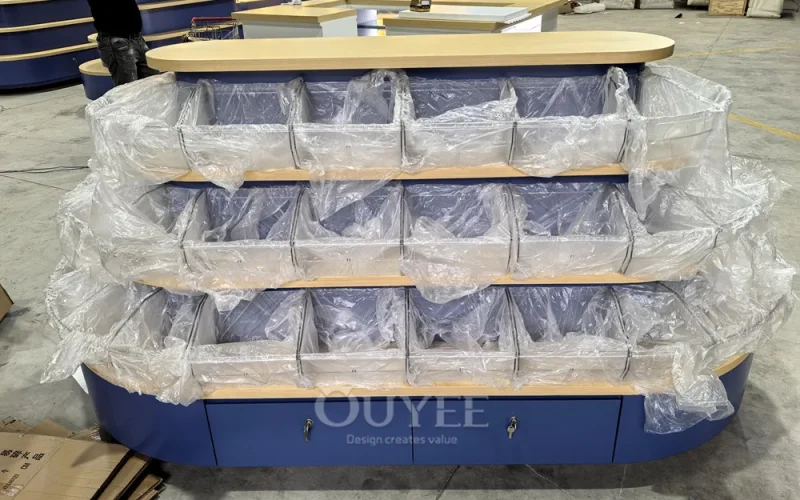
OYDisplay’s blue tiered island display stand is a real example of an open feature unit. The visible shelves can help a buyer discuss presentation rhythm, but the photo cannot establish usable dimensions, load, or packaging fit for another assortment.
Use tiered islands for a browsable collection
A tiered stand can bring several related products into one visual story without building a full aisle. Map which items belong on each level, where price labels sit, and how customers approach the front and sides. Leave enough room to pick up a product without brushing another level. If replenishment happens during trading, decide where the reserve stock sits and how staff reach the stand.
The tiered format is useful when the range is small enough to remain legible. If every level is filled with unrelated items, the display loses its intended focus. A merchandiser should test the plan with actual packaging, photograph the approved arrangement, and use that image as a replenishment reference. Keep the approved display rules simple enough that another team member can rebuild the presentation.
Use slatwall and hook towers for changeable accessories
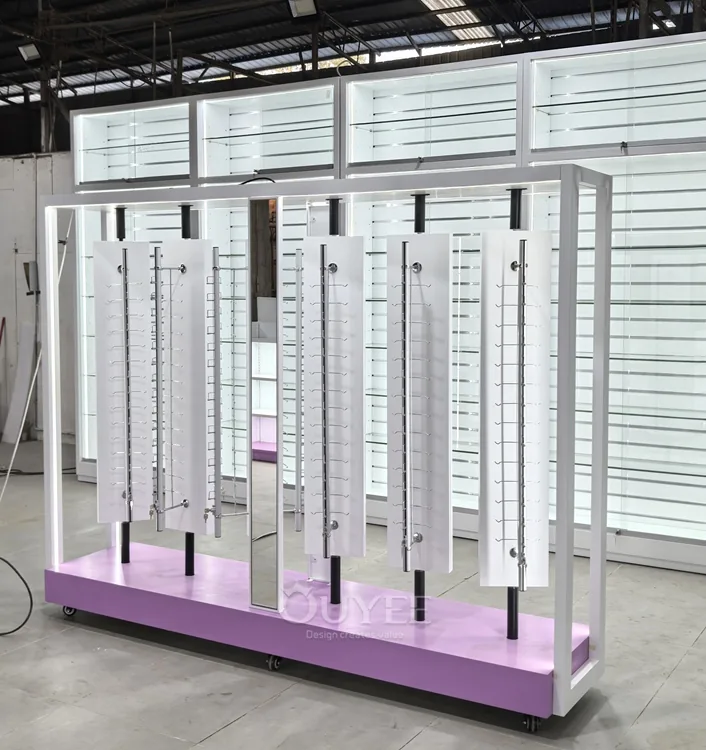
Freestanding merchandise stands such as a slatwall tower can accept different hooks, trays, or signs when merchandise changes. The buyer needs the exact accessory system and panel details, not just the word “modular.” Ask the supplier to identify compatible parts, the method for moving them, replacement availability, and how the fixture is stabilized or installed at the site.
See OYDisplay’s white freestanding slatwall stand tower as a visual reference. Before ordering, lay out the heaviest and largest actual packages on a dimensioned drawing. The proposed hook spacing, reach, and supplier-stated loading information should match the real assortment. Avoid assuming a generic hook is suitable because it fits a slot.
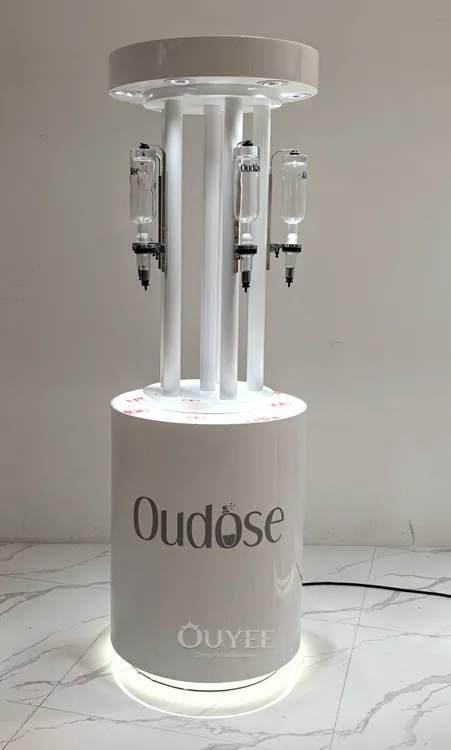
A cylindrical cosmetic stand with hooks shows a different accessory presentation. Round or multi-sided stands need a plan for label orientation and replenishment on every visible face. If a unit includes lighting, ask for the actual electrical scope and access to replace components.
Use pedestals for a single decision point
A pedestal makes a product or compact collection the visual priority. That can help a campaign with a clear hero item, but it does not replace the assortment plan. Specify the presentation base, sign position, product restraint if needed, and the staff routine for changing the display. A wide empty top may be as unhelpful as a crowded one if no product story is defined.
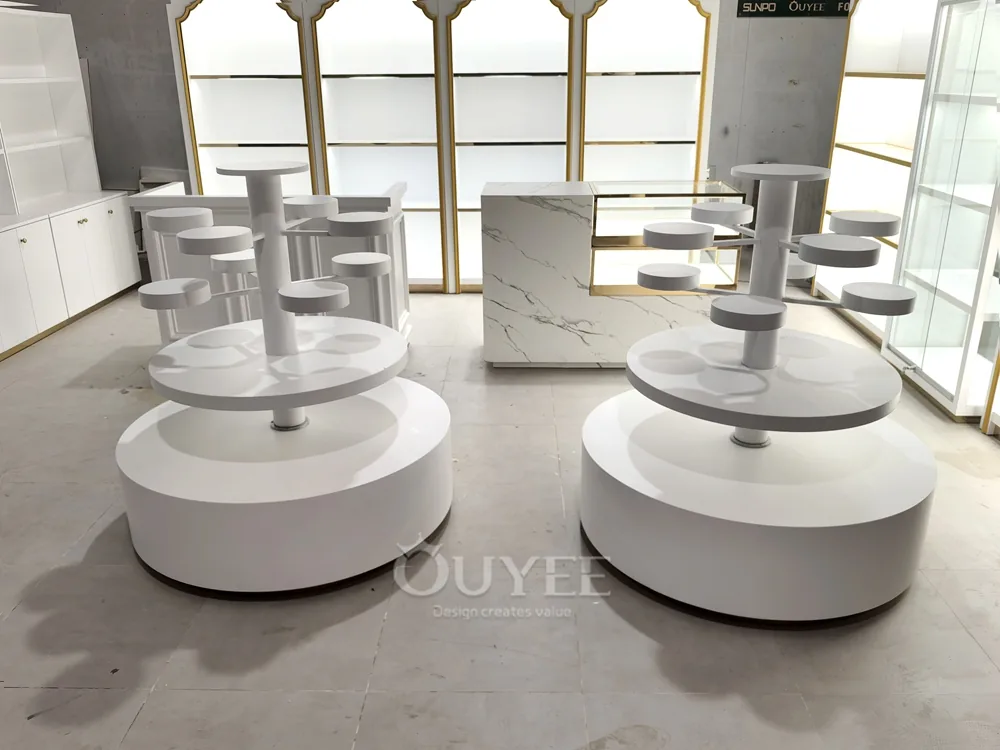
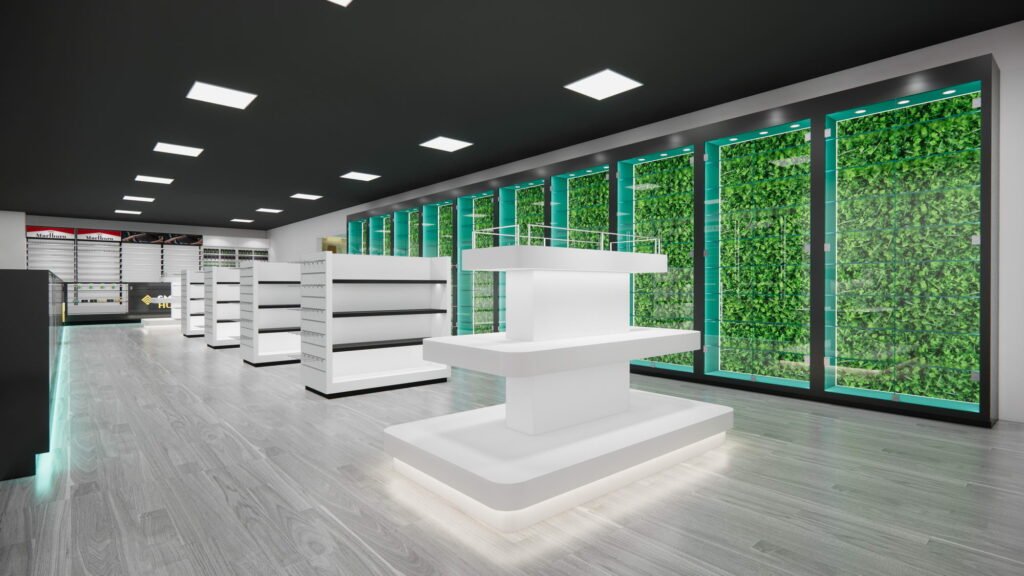
The white round pedestal display stand set shows one real product direction. Review the customer’s view from the entrance and the path around it. Ask for the actual base and top dimensions, construction, finish sample, and method of moving or fixing the unit. A product photograph alone cannot show stability with your merchandise.
Place stands without narrowing the customer journey
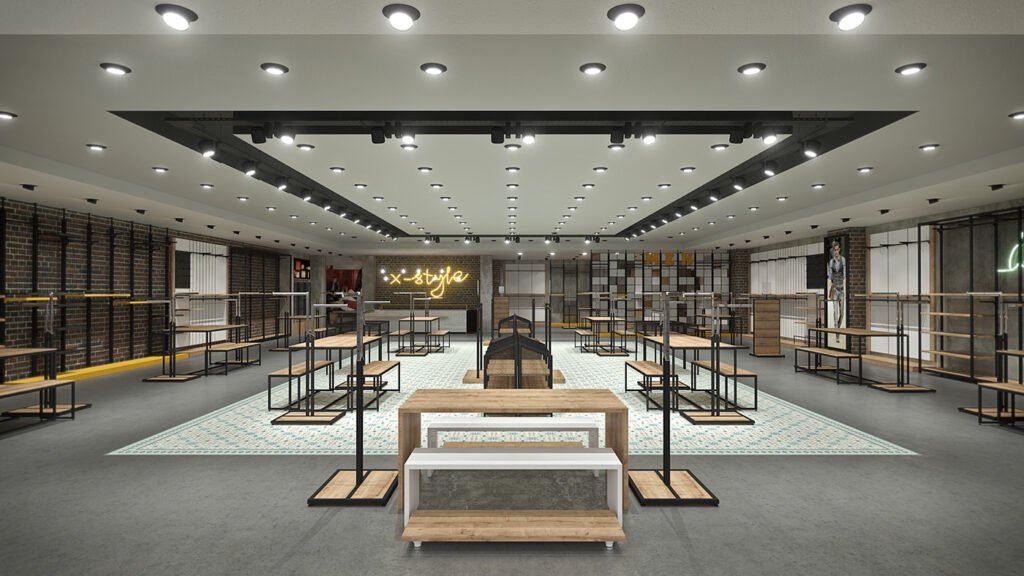
Mark the entrance, main route, service counter, fitting or consultation points, doors, and existing fixtures on a measured plan. Add a stand footprint and the space customers need to view or handle its merchandise. Check whether people waiting at a counter will conceal it or turn it into an obstacle. Stand placement should help shoppers navigate, not make the route harder to understand.
For U.S. projects, the U.S. Access Board guide to clear floor and turning space explains clear space at accessible elements and when additional maneuvering room applies. The U.S. Department of Justice ADA Standards provides the underlying standard text. A qualified project professional should identify requirements for a particular store. This guide does not assign one universal aisle dimension to every stand.
The U.S. Access Board video below shows wheelchair maneuvering, floor surfaces, and reach concepts that help teams think about fixture placement. Use it alongside the written standards and the store’s measured plan.
Watch Wheelchair Maneuvering from the U.S. Access Board.
Plan temporary campaigns and permanent fixtures differently
Countertop display stands need a clear work surface and a customer approach; floor stands need a stable location and a replenishment route. A temporary display needs a defined campaign period, graphic change method, packing plan, and removal or reuse process. A permanent stand needs durable surfaces, cleaning instructions, spare parts, and a layout that remains useful when product ranges change. Neither label by itself proves quality. Ask how the proposed unit is assembled, maintained, and stored between uses.
For multiple locations, document the approved product positions and all components in a short fixture schedule. If a store has a different door width, power point, or floor layout, record the exception before production. A stand that is quick to install in one shop may require a different delivery plan elsewhere.
Compare the supplier’s material and finish samples with real products. Ask how a scuffed panel, broken hook, worn graphic, or light component will be replaced. A low initial price may be less useful if the display cannot be replenished or repaired in routine operations.
Give suppliers a clear stand brief
Send the same product schedule and store plan to each bidder. Include actual package dimensions, merchandising purpose, stand position, requested materials and finish, graphics, assembly, lighting where used, delivery, and exclusions. Ask the supplier to state any loading information for the exact stand and its installed condition.
| Brief section | What to provide or request | Decision check |
|---|---|---|
| Merchandise | Actual products, packages, facings, labels, refill stock, expected handling | Does the stand make the assortment understandable and easy to replenish? |
| Store fit | Measured location, approaches, neighboring fixtures, doors, power points | Can customers approach and staff maintain it without blocking required routes? |
| Construction | Named materials, finish samples, compatible accessories, stability or fixing details | Is the construction clear enough to approve and service? |
| Delivery | Drawings, samples, packing, shipping, assembly, installation, spare parts, exclusions | Are suppliers pricing the same complete scope? |
Our store fixture manufacturer guide addresses wider supplier selection. For a feature that must be enclosed or staff-controlled, compare the display cabinet type guide; an open stand is a different product decision.
Common display stand mistakes
- Choosing a striking shape before deciding what product or decision it presents.
- Assuming every hook, shelf, or riser suits the planned package and handling.
- Placing a freestanding unit without testing views, routes, and staff replenishment.
- Calling a fixture modular without listing which parts actually interchange.
- Omitting assembly, graphics, replacement parts, or lighting service from the quote.
- Using a crowded feature display as substitute stock storage.
Frequently asked questions
What types of retail display stands are used in stores?
Common types include tiered islands, pedestals, freestanding slatwall or grid towers, hook and spinner stands, countertop risers, and modular campaign units. Choose according to merchandise, customer approach, duration, replenishment, and the measured location.
How is a display stand different from a display rack?
A stand usually creates a focused, self-contained product presentation. A rack typically organizes a longer assortment on open shelves or rails. The terms overlap in catalogs, so describe the exact merchandising task and construction when requesting a quote.
When should a team use a pedestal?
A pedestal can work for a hero item or compact collection when the product deserves its own focal point. Check the presentation base, label, approach space, stability, and routine for changing the display before ordering.
What should I send a supplier for a stand quote?
Send actual product and package sizes, display purpose, measured store location, desired finish and graphics, compatible accessories, installation or assembly needs, campaign duration, delivery conditions, and any local project requirements.
Can a stand photograph prove its capacity or stability?
No. Ask for the supplier’s construction, recommended loading information, fixing or stability details, and a drawing for the exact proposed unit. Test the stand with representative merchandise during approval.






 English
  German
  Arabic
  French
  Spanish
  Italian
  Russian
  Turkish
  Portuguese
  Japanese