
Plan jewelry showcase lighting maintenance access before the cabinet is fabricated: identify the service side, show where each driver will be mounted, and demonstrate how the largest replaceable lighting component can leave the case. A removable panel is useful only if a technician can open it, reach the fixings, handle the wiring safely and put everything back without disturbing adjacent counters. Put that complete sequence on the approved drawing and test it on a sample. This guide helps store owners and fixture buyers specify access, coordinate responsibilities and accept the finished installation. It does not prescribe wiring or replace the lighting manufacturer’s instructions.
Start with a service route, not a panel size
A showcase can look easy to maintain in an isolated factory photograph and become inaccessible once it stands beside another unit. Start your review with the installed floor plan. Mark the customer side, staff side, neighboring cabinets, walls and any cashier furniture. Then mark the location where a technician will work and where the removed panel will be placed. Include the normal position of chairs and merchandise storage, rather than drawing an artificially empty room.
Trace four separate movements: opening the cabinet, reaching the component, releasing its fixings and removing it. A hand may fit through a narrow opening while a screwdriver cannot turn. A driver may fit through the opening but remain trapped behind a structural rail. A hinged door may open comfortably until a nearby drawer is extended. These are coordination problems that a plan view and a simple physical demonstration can expose before delivery.
For an overview of cabinet formats, use our jewelry showcase selection guide. Keep the service-access review as a separate approval item: approving the appearance or overall dimensions does not approve the replacement route.
Separate merchandise access from lighting service access
Daily access for selling jewelry and occasional access for electrical maintenance serve different people and tasks. A sales associate may need to open a tray compartment frequently, while a qualified technician needs controlled access to the lighting equipment. Ask the cabinet designer to identify which doors or panels serve each task and how unauthorized access to service areas is restricted.
Where a service panel shares a compartment with merchandise, define how stock will be removed, counted and secured before work starts. Avoid a proposed sequence that requires tools to pass over exposed jewelry or leaves a loose panel balanced against glass. The store team should know who controls service keys, who clears the work area and who confirms that the display is ready to reopen.
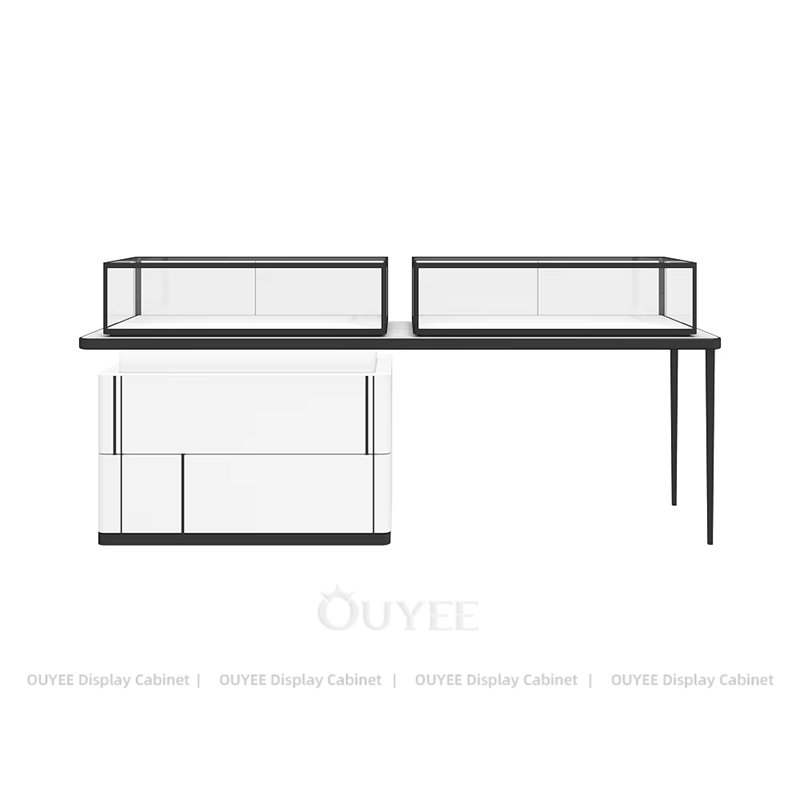
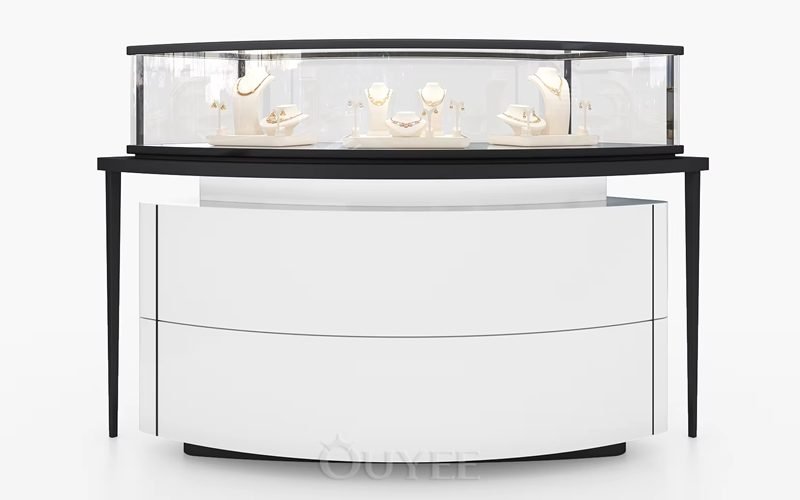
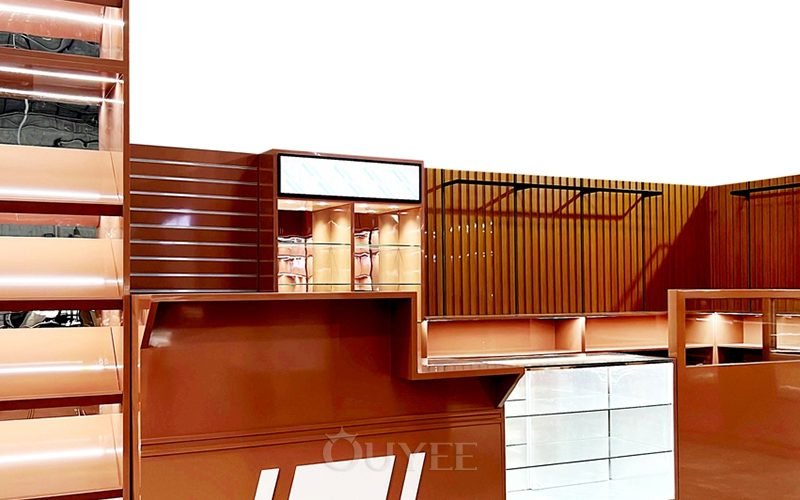
The jewelry counter and side cashier desk reference illustrates the relationship between display and working furniture. Its images are visual references, not evidence of a particular driver position or certified electrical arrangement.
Give each driver an identified location
Do not accept “inside the base” as a complete driver-location note. Ask for an equipment schedule that links each showcase reference to its light sources, drivers, controls and relevant installation documents. The drawing should show the mounting position, service opening, cable entry and the part that is removed for replacement. If several drivers occupy one compartment, identify which lighting section each one supplies.
The lighting manufacturer must confirm the permitted orientation, environmental conditions, mounting arrangement and clearances for the actual equipment. There is no universal ventilation gap or access-opening dimension that applies to every showcase driver. Avoid treating a generic cabinet drawing as an instruction to enclose any power supply in the same space. Storage trays, bags and spare packaging must not encroach on the approved equipment area.
Ask who is responsible for selecting the driver and confirming compatibility with the lighting and controls. Similar-looking replacement units are not automatically interchangeable. Record the model identification and approved replacement procedure in the handover documents. A cabinet buyer can check that this information exists without attempting to design or alter the electrical circuit.
Use an access checklist to compare proposals
The following table is a purchasing and coordination tool. Its acceptance observations are practical checks, not electrical-code dimensions. The project electrician, fixture designer and equipment manufacturer should resolve the final technical requirements together.
| Item to review | Evidence to request | Sample acceptance observation |
|---|---|---|
| Service side | Installed plan showing surrounding counters and furniture | The working position remains reachable in the actual layout |
| Panel operation | Opening direction, fixing type and removal sequence | The panel opens and can be placed safely without contacting glass |
| Driver replacement | Component envelope and documented removal route | The relevant component can leave the case without removing structural members |
| Light source replacement | Lighting supplier’s procedure and access drawing | Tools and hands can reach the required fixings without forcing the fixture |
| Equipment identification | Case references, model schedule and labels | The technician can match equipment to the correct case and documents |
| Safe isolation | Electrician-approved isolation arrangements and site procedure | The responsible team can identify the correct equipment before service |
| Restoration | Closing sequence and final inspection checklist | Panels, locks and display presentation return to their approved condition |
Test the longest and most awkward removal path
Some lighting parts are longer than their electrical enclosure. Review the light bar, diffuser, mounting rail and any connector separately. A small access hatch near a driver does not prove that a long light bar can slide out of its channel. Ask the supplier to demonstrate the actual replacement sequence for the proposed assembly, including which surrounding pieces must be removed first.
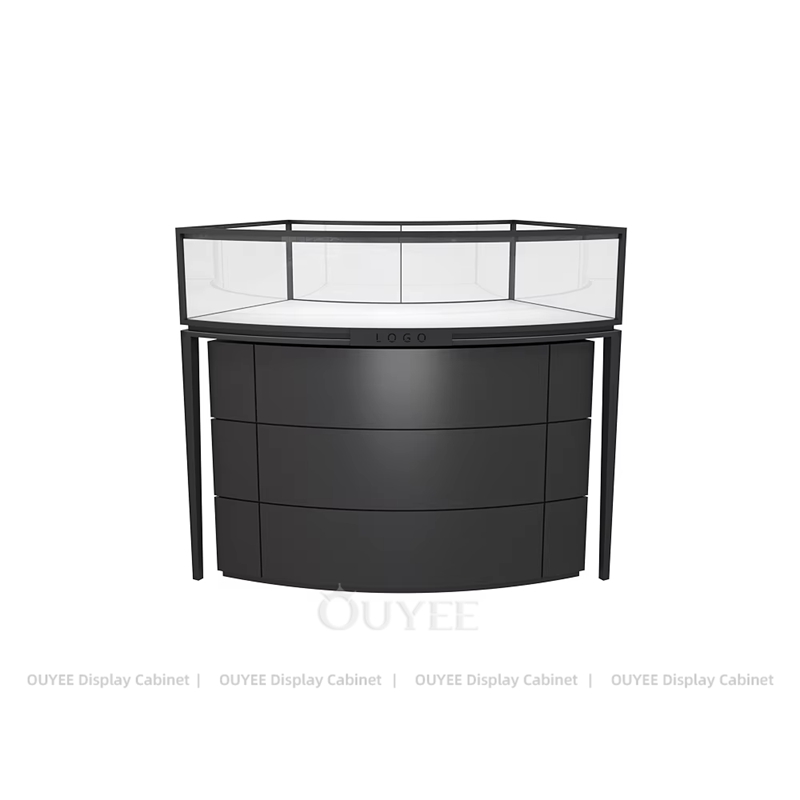
For a curved or corner case, test the turn as well as the opening. A part may need room to rotate after it clears a fixing. Drawings should identify whether service depends on moving the whole cabinet. If movement is proposed, coordinate the method with the installer and electrician, including the relationship to neighboring counters, floor connections and glass. Do not assume that an apparently freestanding cabinet can simply be pulled forward.
Request a demonstration on a representative sample using the intended tools and an approved procedure. Photograph the stages and annotate the drawing if the observed sequence differs from the proposal. Do not authorize cutting a rail, drilling new holes or altering wiring as an informal solution during an acceptance visit.
Make isolation and responsibility clear
Access planning must support safe work, rather than encourage staff to reach into electrical compartments. In the United States, OSHA’s electrical work-practice provisions address de-energizing exposed live parts, with specified exceptions and precautions. Have a qualified person determine the applicable procedure for the installation; a light switch being off is not a complete service plan.
In the project documents, name the party that provides the cabinet, the party that supplies the lighting assembly and the party that connects and commissions it on site. Identify who approves service access and who receives the maintenance records. When responsibilities cross suppliers, ask for one coordinated drawing rather than three documents that contradict each other.
Store staff can report visible symptoms, such as one dark section or a changed appearance, and record the case reference. Electrical diagnosis and intervention belong to appropriately qualified personnel following the site’s procedures. Avoid telling a sales team to try alternative drivers, bridge connections or repeatedly reset a problematic circuit.
Plan for maintenance without promising a lifetime
Access remains relevant even when an LED system is intended for long service. The U.S. Department of Energy’s solid-state lighting technical reports examine system reliability, including driver testing and changes in light output and color. Those research topics support asking about maintainability; they do not establish the life of a specific showcase or guarantee when its parts will need replacement.
Keep the cabinet’s product records with the lighting schedule. During routine visual checks, compare the display with its accepted appearance and note any changes for the service provider. Cleaning should follow the approved instructions for the glass, finishes and equipment. Do not spray liquid into openings or let storage gradually cover a designated service compartment.
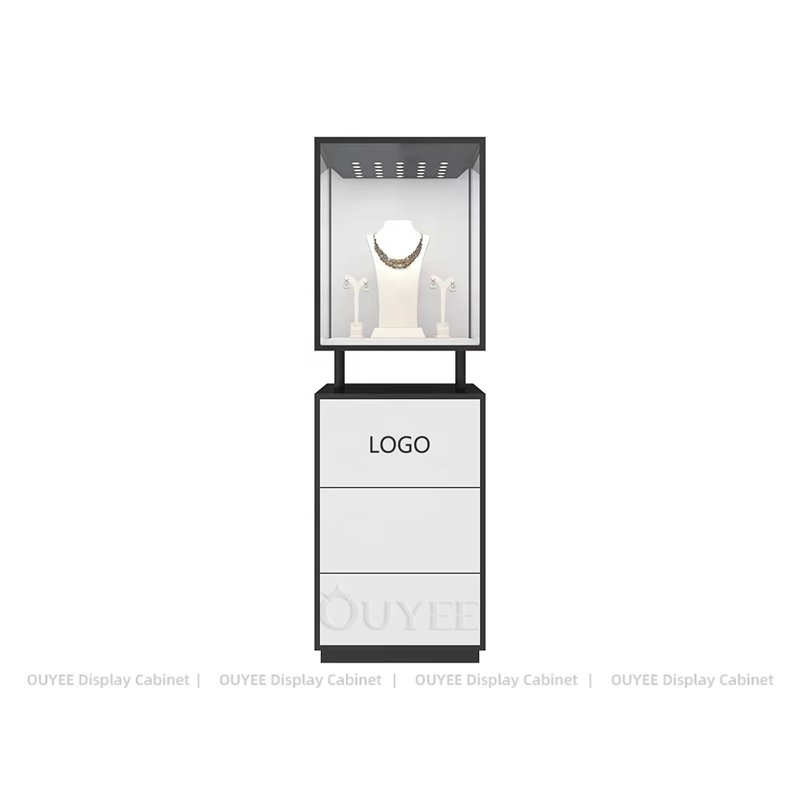
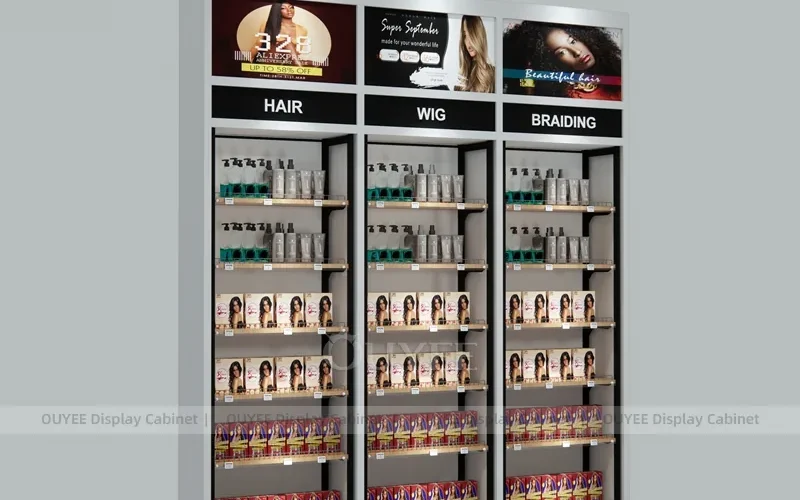
A tower display needs its own review. Its light source, fixing points and working position may differ from a horizontal counter, even if both use a similar finish. Evaluate how the service person reaches the upper display safely and where removed parts can be supported.
Keep replacement purchasing tied to the approved equipment
Before ordering spares, compare the equipment schedule, model label and supplier instructions. Ask the responsible technical party to confirm electrical compatibility, controls, mounting and the visual match with adjacent lights. Buying a replacement because it fits the available space can leave other requirements unresolved. Keep approved substitutions in the maintenance record so a later technician does not work from an obsolete schedule.
The following neutral training introduces general lighting purchasing considerations. It comes from the U.S. Department of Energy’s Federal Energy Management Program and discusses commercial and federal procurement. It is useful background for asking documented product questions; its federal purchasing examples are not showcase installation rules or proof that a particular cabinet meets them.
Watch the Department of Energy lighting purchasing training on YouTube.
Accept the service arrangement before shipment
Ask the supplier to show the closed cabinet first, then demonstrate access and restoration. Check the finished appearance again afterward: panel alignment, door operation, locks, glass protection and lighting presentation should return to the approved condition. Record any dependency on moving furniture or emptying a storage area. These practical observations are more useful than an unsupported claim that a cabinet is “easy to maintain.”
The final handover should include the approved access drawing, equipment schedule, relevant manufacturer instructions, service contacts and records of accepted substitutions. Associate the documents with clear cabinet references. If a component cannot be removed as agreed, resolve the access arrangement before shipment rather than leaving the installer to improvise around finished surfaces.
Begin a project discussion with the jewelry showcase manufacturing overview and supply your installed layout and maintenance questions together. For complementary decisions, see the ring display case buying guide and jewelry store interior design considerations. Resolve presentation, customer circulation and service access together, while giving each its own acceptance evidence.
Frequently asked questions
How large should a jewelry showcase service opening be?
Determine it from the actual component, required tools, hand access and removal path. Ask the fixture designer and lighting supplier to demonstrate the sequence on a representative sample. A generic opening dimension cannot prove that a particular assembly is maintainable.
Can the LED driver be placed in the lower storage cabinet?
Only if the responsible technical parties approve the location for the actual equipment and installation. Confirm mounting, environmental requirements, protection from stored goods and access for replacement. A lower cabinet visible in a product image does not establish that it is an approved electrical compartment.
Does a removable rear panel guarantee easy maintenance?
No. Neighboring furniture can obstruct it, tools may not reach the fixings, or a component may not pass through the opening. Test opening, reaching, removal and restoration with the surrounding layout represented.
Should sales staff replace showcase drivers themselves?
Electrical service should be assigned to appropriately qualified personnel following the equipment instructions and site safety procedures. Sales staff can record the case reference and visible symptoms, secure the merchandise and arrange service.
What should be included in the maintenance handover?
Include approved access drawings, cabinet references, lighting and driver model schedules, manufacturer instructions, isolation information approved by the responsible electrician, service contacts and accepted substitution records. Keep the documents current when equipment changes.




 English
 German
 Arabic
 French
 Spanish
 Italian
 Russian
 Turkish
 Portuguese
 Japanese