
For an independent jewelry store, the best ring display cases combine staff-controlled access, removable ring trays, clear sightlines and a layout that supports one-to-one service. Start with the actual ring assortment and selling routine; then choose the enclosure, insert system, lighting and storage. A countertop ring box, a full glass counter and a freestanding tower serve different jobs. This guide explains how to compare those options, test a sample and prepare a complete supplier brief without treating a photograph or a decorative lock as proof of security.
Choose the case around the selling process
List the categories you expect to show: everyday bands, engagement rings, statement rings, sample settings and special-order pieces. Record the largest setting, the tallest presentation stand and the working tray size. A case that fits empty inserts can still fail when a high setting touches the glass or a wide band hides the next label.
Decide whether customers browse independently or view selected pieces with an associate. Staff-served stock benefits from access on the staff side and a nearby presentation surface. Small open displays may work for supervised low-value samples, but should not be treated as a substitute for secure storage or a documented stock-control routine.
Build the case plan around opening, consultation, payment and closing. Identify where an associate places a removed tray, where packaging is stored and how a colleague passes behind the station. A showroom image does not demonstrate these movements. Draw them on a measured plan, including door swings and furniture, before deciding the shape of a showcase island.
| Case format | Useful retail role | Check before ordering |
|---|---|---|
| Portable glass-top tray case | Appointments, events or a small supervised selection | Loaded tray fit, carrying protection, hinge clearance and key control |
| Staff-served glass counter | Routine ring consultation and controlled product retrieval | Access direction, viewing depth, open-door footprint and transfer surface |
| Tower showcase | A small curated selection or featured collection | Customer sightlines, stable installation and safe access to upper positions |
| Custom island or counter run | A coordinated store layout with several selling positions | Corner access, delivery route, service spacing and module connections |
This table is a qualitative comparison of operating roles. It does not assign burglary resistance, load ratings or universal dimensions to any case type.
Check the ring inserts before the cabinet dimensions
Give the supplier a loaded reference tray or an exact drawing of it. Specify its outside dimensions, finger clearance and the height of the tallest ring as presented. Test whether the tray can be lifted without tilting jewelry against the glass. For removable pads, confirm how the pad sits securely and how it is lifted during closing.
Compare slot spacing with real merchandise rather than the advertised number of positions. Wider bands and large settings may need empty neighboring slots to remain visible. A nominally higher-capacity insert can therefore show fewer sellable combinations than a lower-capacity insert with better spacing. Use the same sample assortment when comparing proposals.
Choose an insert finish that allows customers to see the rings clearly and staff to read the identifiers. Check loose fibers, seams, adhesion and replacement availability. Avoid assuming that a soft-looking material is suitable for every gemstone or finish. Ask for the material and care instructions in writing, and make any item-specific restrictions part of the display routine.
Compare lighting with real rings and normal viewing positions
View the sample from the entrance direction, from the consultation position and from a seated customer’s position. Look for reflections that obscure labels or hide the ring behind the glass edge. Inspect a representative mix of metals and stones under the proposed lighting, rather than judging an empty illuminated cabinet.
The GIA explanation of light and diamond appearance illustrates why a diamond can look different as lighting conditions change. Use more than one ordinary viewing condition during a sample comparison. Do not approve lighting solely because it creates maximum sparkle in a supplier’s photograph.
Specify the light position, replacement method, power-supply location and access procedure. Ask whether the proposed equipment and installation meet the requirements accepted for your project. A claim about an LED component does not establish approval of the complete showcase. Keep drivers accessible to qualified service personnel without requiring daily stock to be dismantled.
Treat locking and stock control as a complete routine
Write down who opens each case and how keys are issued, stored and returned. Ask whether cases share a key, whether replacement cylinders are available and how an absent key is handled. The appropriate arrangement depends on the store’s risk assessment, insurer and operating routine; the presence of a small lock is not evidence of a tested security classification.
Practice the moment when a customer asks to compare two rings. Provide a defined presentation area and a return sequence so that an associate can keep track of the selection while speaking with the customer. Keep a tray count or position reference that remains understandable when another colleague takes over. Agree the procedure with the store team before the fixture is built.
Confirm how stock moves from the display to its designated overnight storage. Under-counter drawers may organize packaging or reserve inserts, but should not automatically be described as a safe. Have the store’s security adviser and insurer determine the appropriate protected storage, anchoring, alarm and access arrangements for the particular merchandise and location.
Plan accessible consultation and clear customer circulation
Keep the accessible route, service location and approach space visible on the plan. A ring counter may be used for consultation, payment or both, so the applicable requirements depend on the actual function. Review the project with the responsible designer using the U.S. Access Board ADA standards and guidance, rather than assuming that every glass display requires the same treatment.
Check the layout with the case doors open, an associate standing at the service point and a customer seated for a consultation. Include a companion or mobility device in the trial. A dimension that works with an empty room can become unusable when a chair, packaging drawer or display pedestal occupies the approach.
The following Access Board education explains sales and service counter access. Use it to understand the consultation planning discussion, then apply the actual standards and local requirements through the project designer. It is not a product demonstration or an endorsement of a particular ring showcase.
Watch Sales and Service Counters from the U.S. Access Board for the customer-service access principles discussed here. This educational video does not certify an individual fixture or store.
Separate daytime presentation from storage and care
Keep ring identification readable during tray changes and stock transfers. Match tray references with the store’s inventory method so that a replacement pad does not erase the position system. Store empty inserts where they remain clean and uncompressed, and confirm that replacements can be ordered without replacing the entire cabinet.
Plan individual support and separation for the rings you actually hold, and ask the responsible jeweler to identify any gem-specific care restrictions. Record those instructions alongside the stock information. The showcase cleaning routine and the jewelry cleaning routine should be separately documented; a cleaner suitable for glass is not automatically suitable for gemstones or display inserts.
Assign a routine inspection for dirty glass, loose hinges, damaged inserts, unreadable labels and failed lights. Record faults by case or module so staff can communicate a problem without moving unrelated stock. Before cleaning or servicing, secure the merchandise according to store procedures and follow the fixture manufacturer’s instructions.
Test a sample and compare complete quotations
Ask each shortlisted supplier to work from the same brief: plan, case positions, merchandise examples, loaded tray details, access direction, finishes, lighting and delivery restrictions. Request marked drawings showing what is included. Comparing a cabinet-only price with a complete installed counter run creates a misleading difference.
Use an acceptance checklist before approving production. Fit the loaded tray, lift it safely, open and close each access panel, read labels from the intended viewing position and demonstrate the light service method. Check the finish sample and drawer operation. Record deviations with photographs and a drawing revision so that an agreed change does not disappear into an informal message.
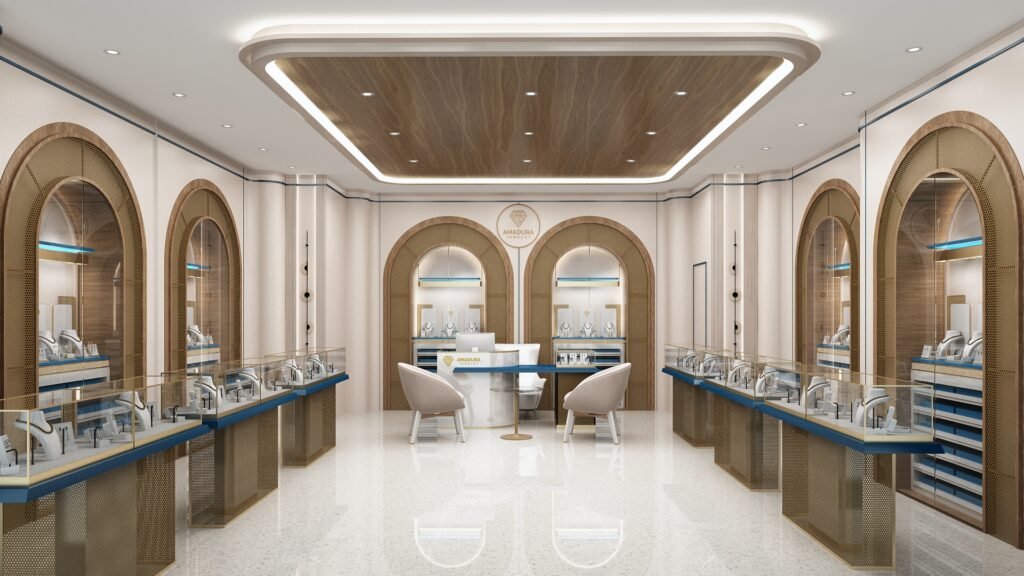
Identify the delivery route from vehicle to final position. Check doors, turns, lifts and any restrictions on glass handling. Decide who unpacks, assembles, positions and checks the fixtures, and define the process for reporting damage. An impressive completed-store image does not establish whether a particular assembled counter will fit through your doorway.
| Review item | Evidence to request | Acceptance question |
|---|---|---|
| Tray and ring clearance | Loaded tray sample and section drawing | Can the full assortment be placed and removed without contact? |
| Staff access | Plan with doors and drawers open | Can an associate retrieve stock while maintaining a usable service position? |
| Lighting and maintenance | Sample demonstration and component schedule | Can customers inspect rings clearly and qualified staff access service parts? |
| Delivery and installation | Packing list, module dimensions and responsibilities | Can the fixtures reach the planned position and be assembled as agreed? |
Use product references without turning them into specifications
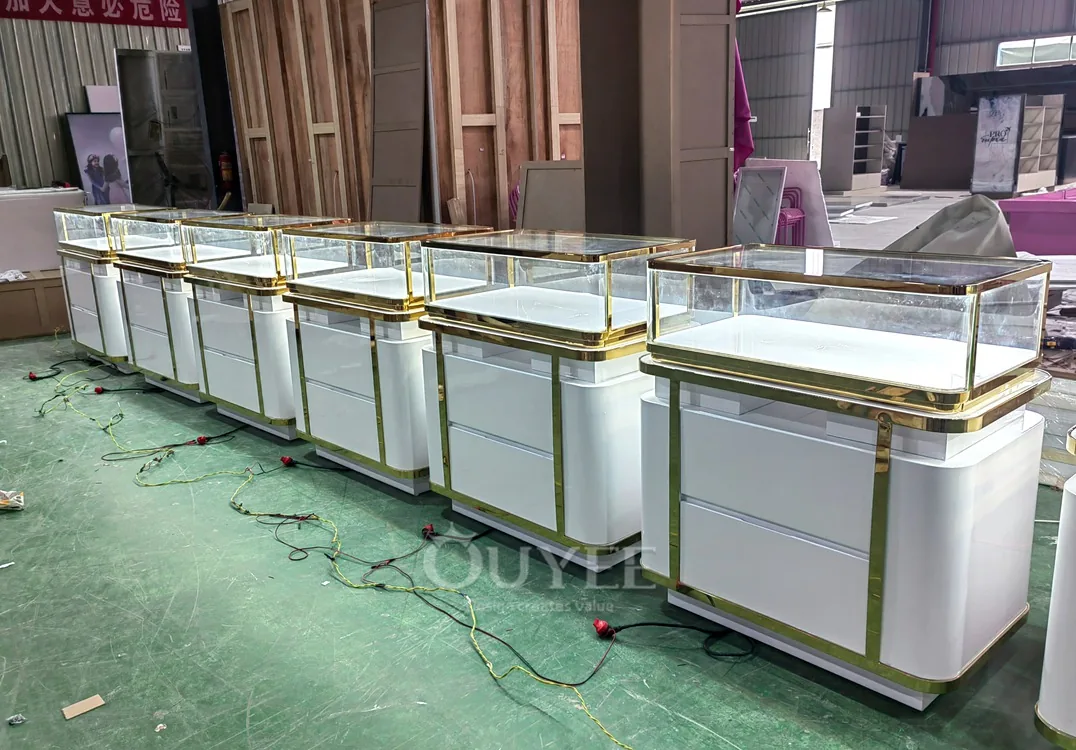
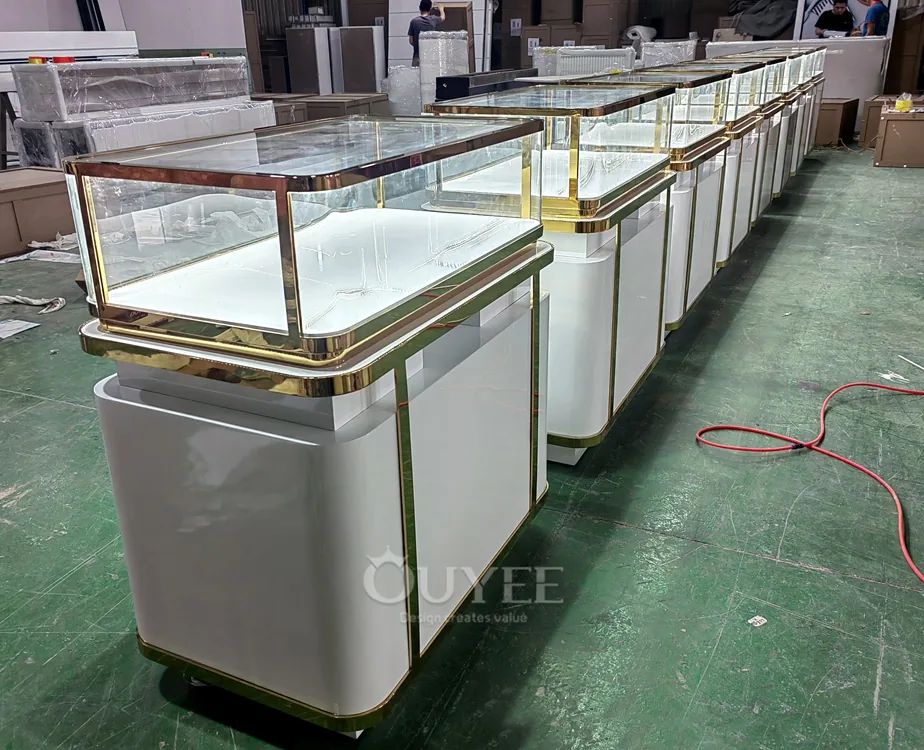
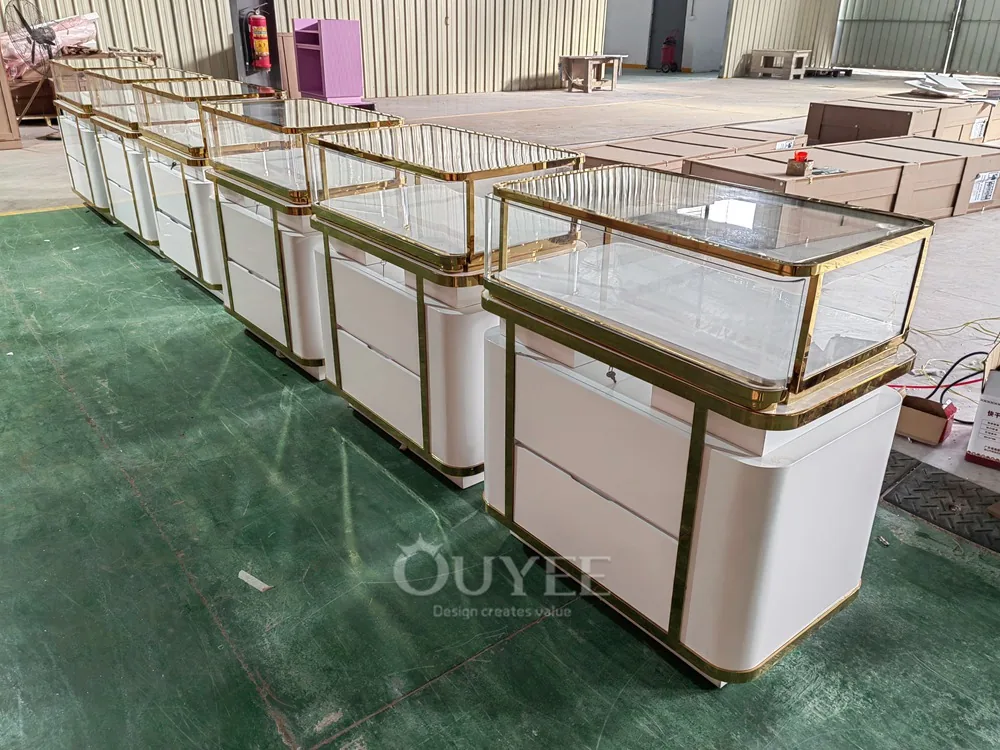
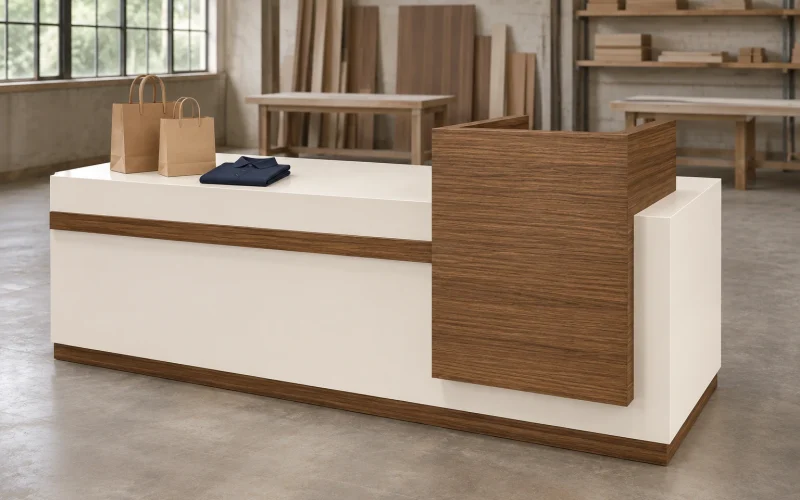
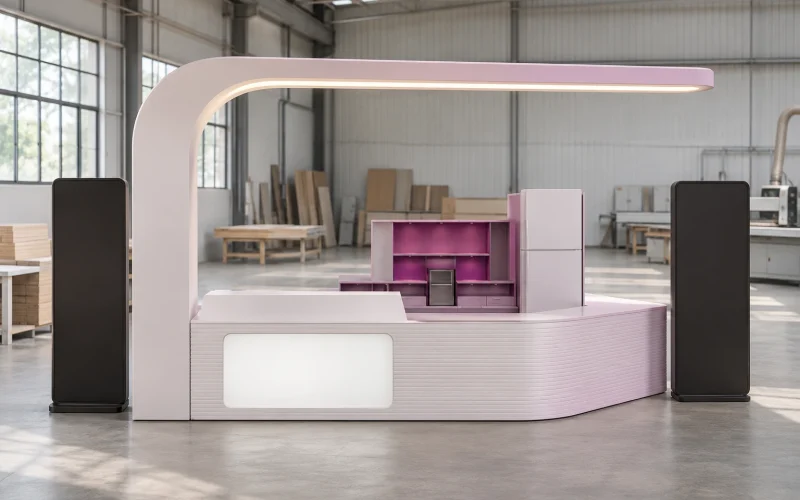
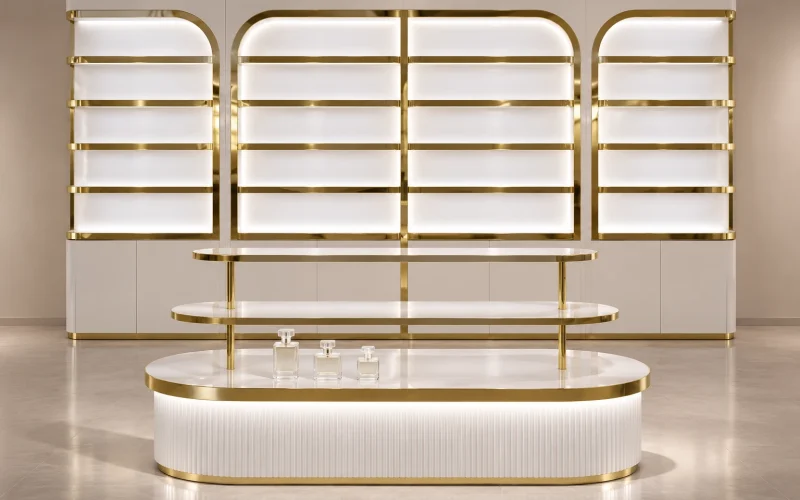
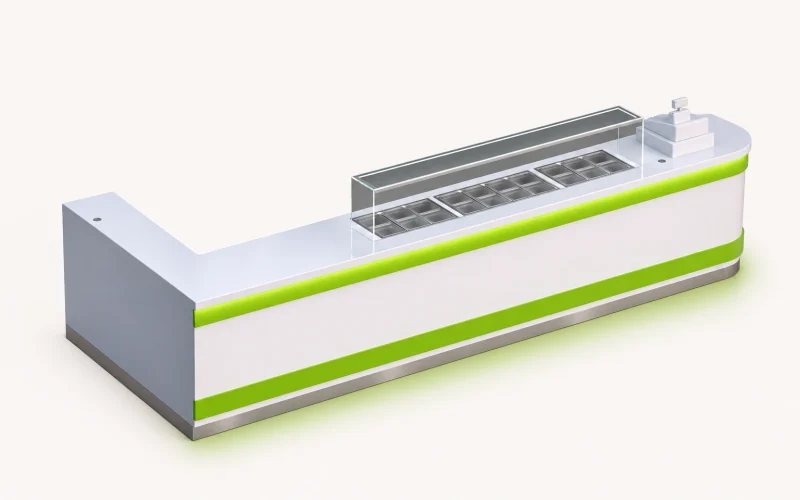
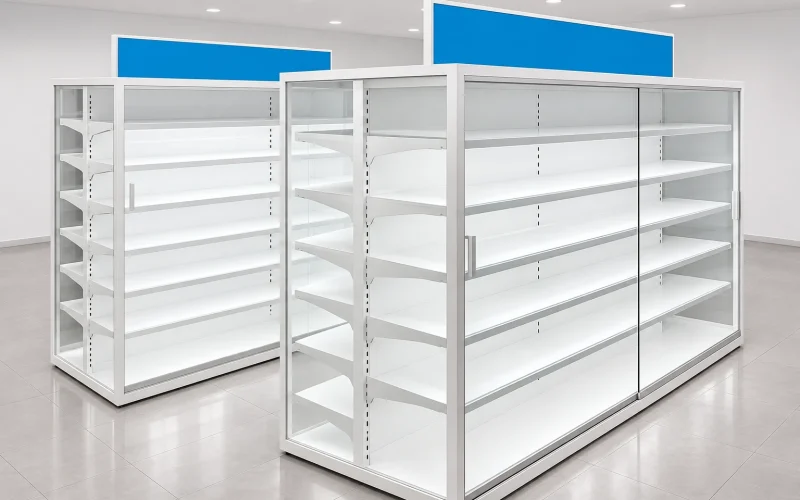
The white and gold jewelry showcase product provides the original workshop photographs used in this article. They show an enclosure style and module arrangement. They do not demonstrate ring insert dimensions, tested locking performance, glass specification or a completed accessible service position.
Use the jewelry showcase design and material guide as the parent reference for the broader fixture specification. For complementary purchasing work, review how to verify a jewelry showcase factory and the custom jewelry fixture budget factors. Those decisions support a supplier brief without replacing the ring-specific sample checks above.
Frequently asked questions
What is the best ring display case for a small jewelry store?
Start with a staff-served case and removable trays if associates retrieve valuable rings for consultation. Compare its actual fit, access and customer viewing position with your merchandise and floor plan. Portable cases and towers can support different roles, but no format is universally best.
How many rings should one case hold?
Determine the count from the loaded insert and the space each ring needs to remain visible. Large settings, label positions and the tray removal method may reduce the useful capacity. Approve a representative sample arrangement rather than relying on a nominal slot count.
Is a locking glass counter suitable for overnight storage?
A small cabinet lock alone does not establish secure overnight protection. Have the store’s risk assessment, insurer and security adviser determine storage and installation requirements. Document how rings move between display trays and the designated protected storage.
Should every ring use the same insert material?
Choose inserts using actual ring samples and written material and care information. Evaluate spacing, abrasion, fiber shedding and replacement availability. Item-specific gem or finish restrictions should be checked separately rather than inferred from the insert’s appearance.
What should I send a ring showcase supplier?
Send a measured floor plan, loaded tray dimensions, representative ring examples, access directions, finish references, lighting expectations and delivery restrictions. Ask for coordinated drawings, a material schedule, a sample acceptance process and a clear division of installation responsibilities.







 English
 German
 Arabic
 French
 Spanish
 Italian
 Russian
 Turkish
 Portuguese
 Japanese
 Chinese