Can you open a bakery with no money? You can begin building a bakery business with very little cash, but a legal, safe, fully equipped storefront cannot literally be opened for free. Ingredients, permits, insurance, packaging, kitchen access, payment processing, and delivery all cost money. The practical goal is to start with the smallest compliant model, prove demand, reinvest profit, and postpone expensive commitments until the numbers support them.
This guide shows how to reduce the initial cash requirement without hiding the real costs. If you are planning a conventional location, also read our complete guide on how to open a bakery.
What “no money” should mean
For most founders, “no money” means one of three situations:
- you have skills and time but almost no savings;
- you can fund a small test but not a storefront;
- you need outside funding for equipment and a commercial location.
Each situation requires a different plan. Do not sign a lease or buy a full equipment package just to feel that the business has started. Begin with the least expensive legal way to sell a narrow product range, then collect evidence: paid orders, repeat customers, margins, production time, and demand by channel.
Step 1: Choose a low-cost bakery model
The cheapest startup model is rarely a full retail bakery. Consider these stages:
Home-based preorder bakery
Where local cottage-food rules allow it, a home-based operation can test shelf-stable products with limited overhead. Rules vary widely by location and may restrict products, sales channels, labeling, revenue, delivery, and wholesale activity. Confirm requirements with the relevant state and local authorities before selling.
Shared commercial kitchen
Renting licensed kitchen time by the hour or shift can provide compliant production space without funding an entire build-out. Compare minimum hours, storage fees, cleaning rules, insurance requirements, equipment access, and scheduling limits.
Market stall or pop-up counter
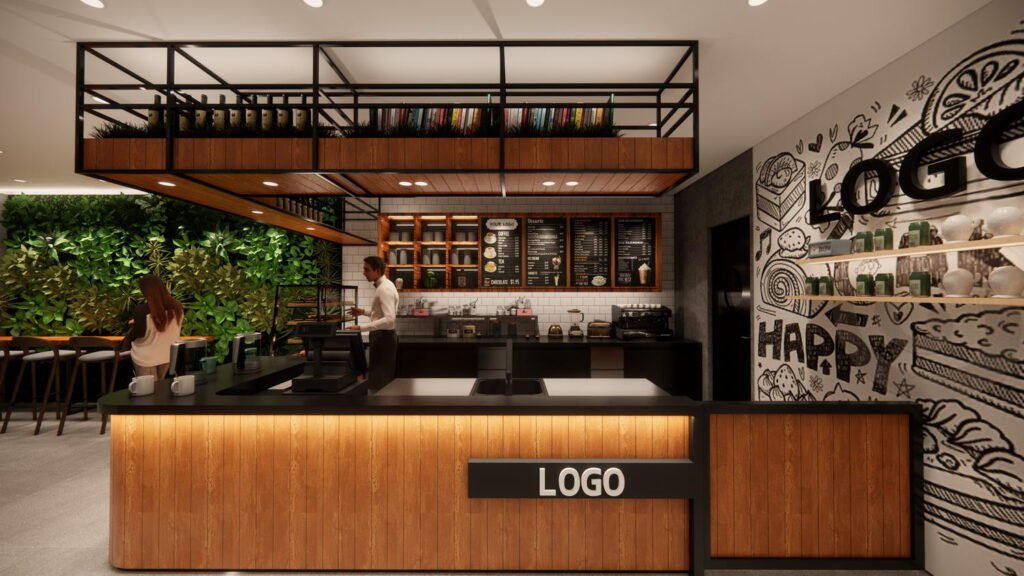
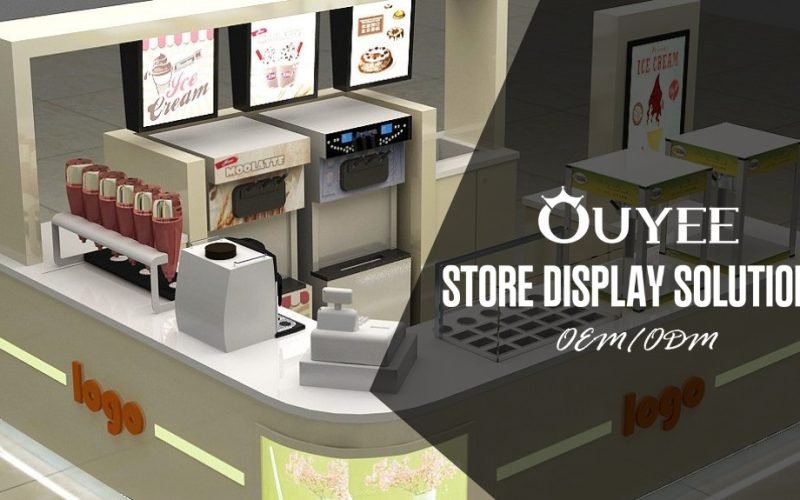
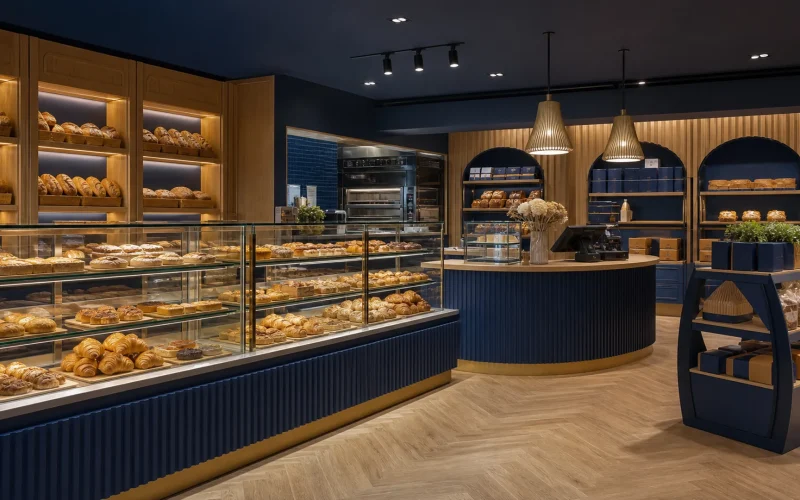
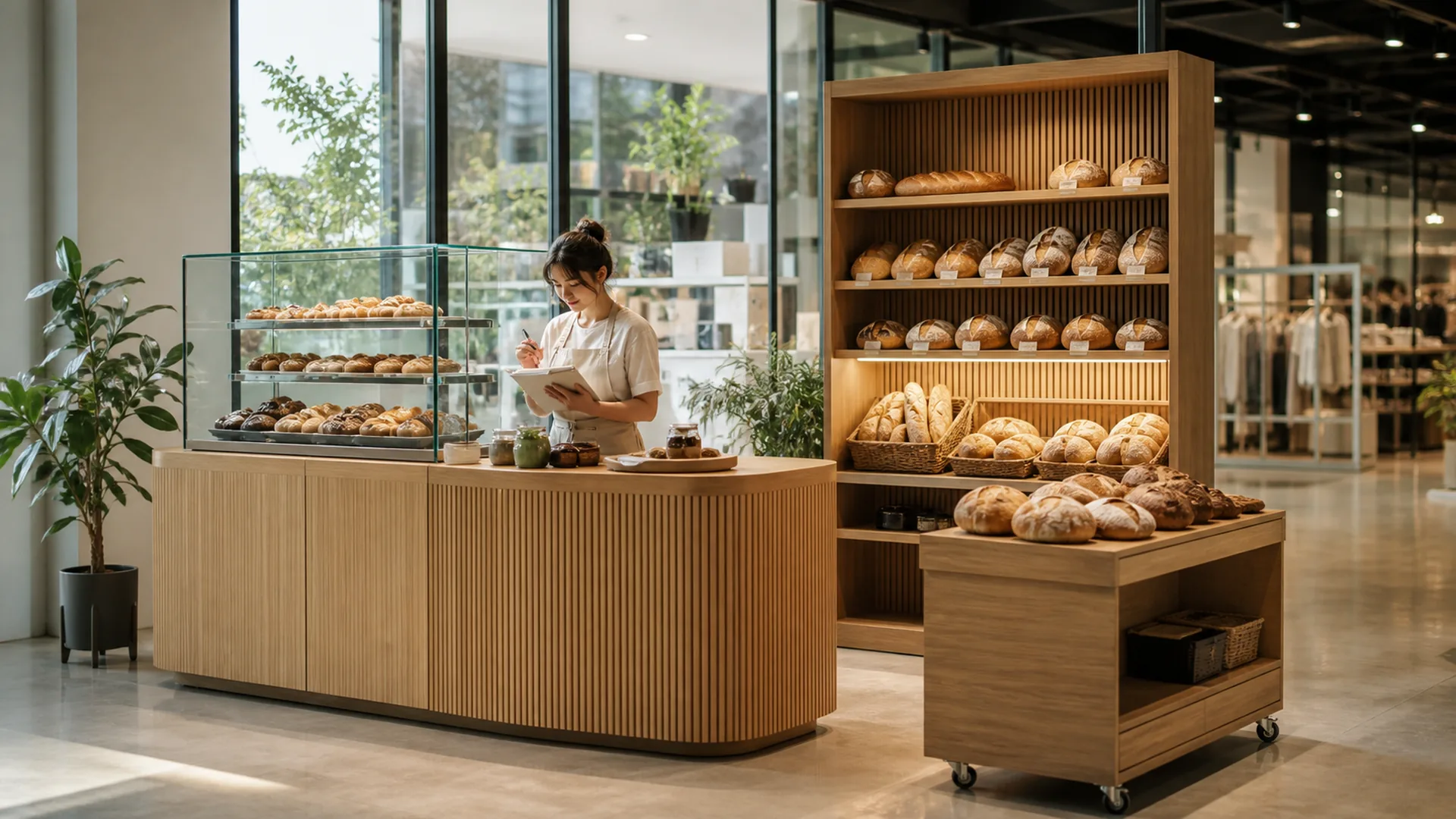
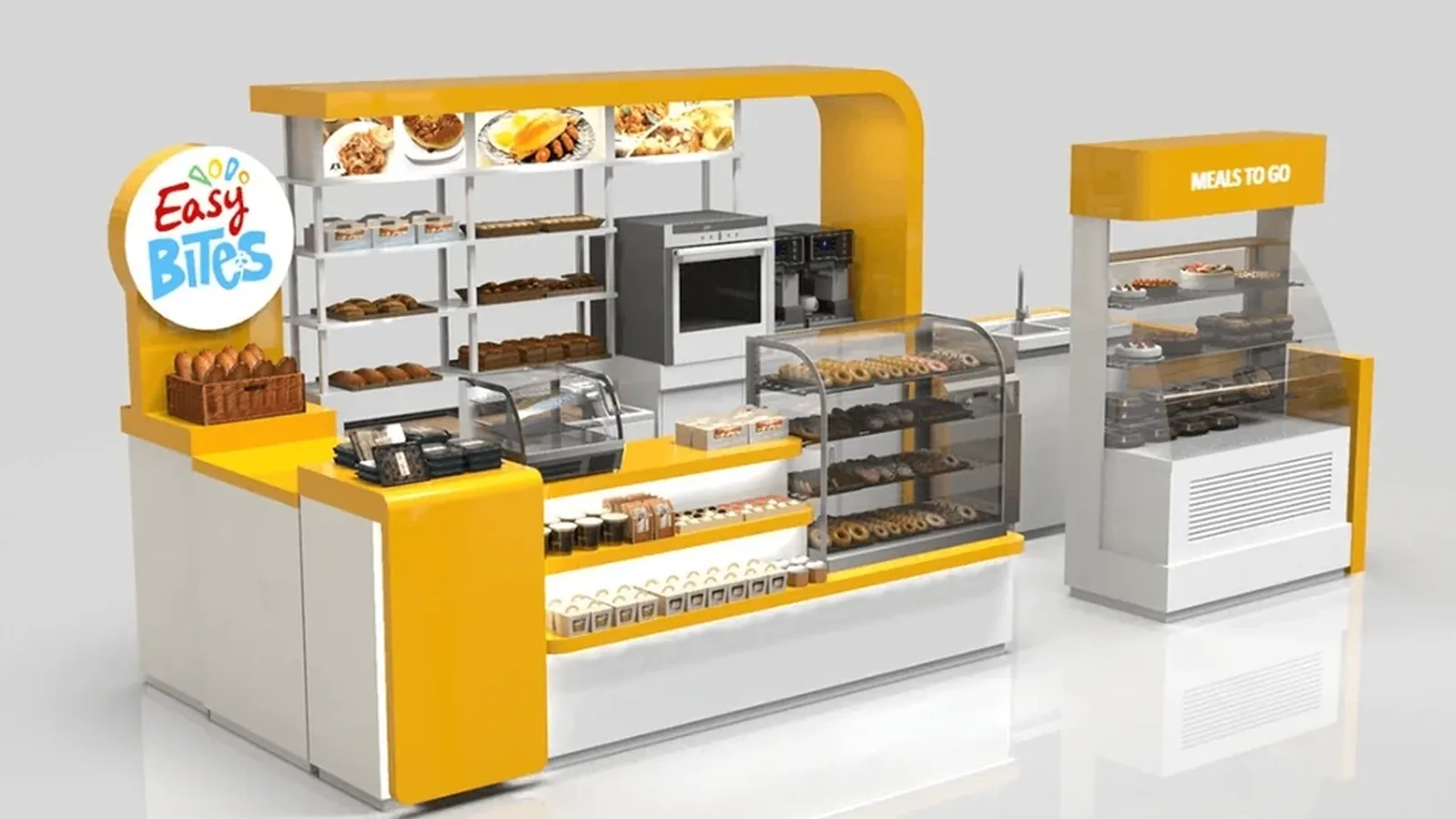
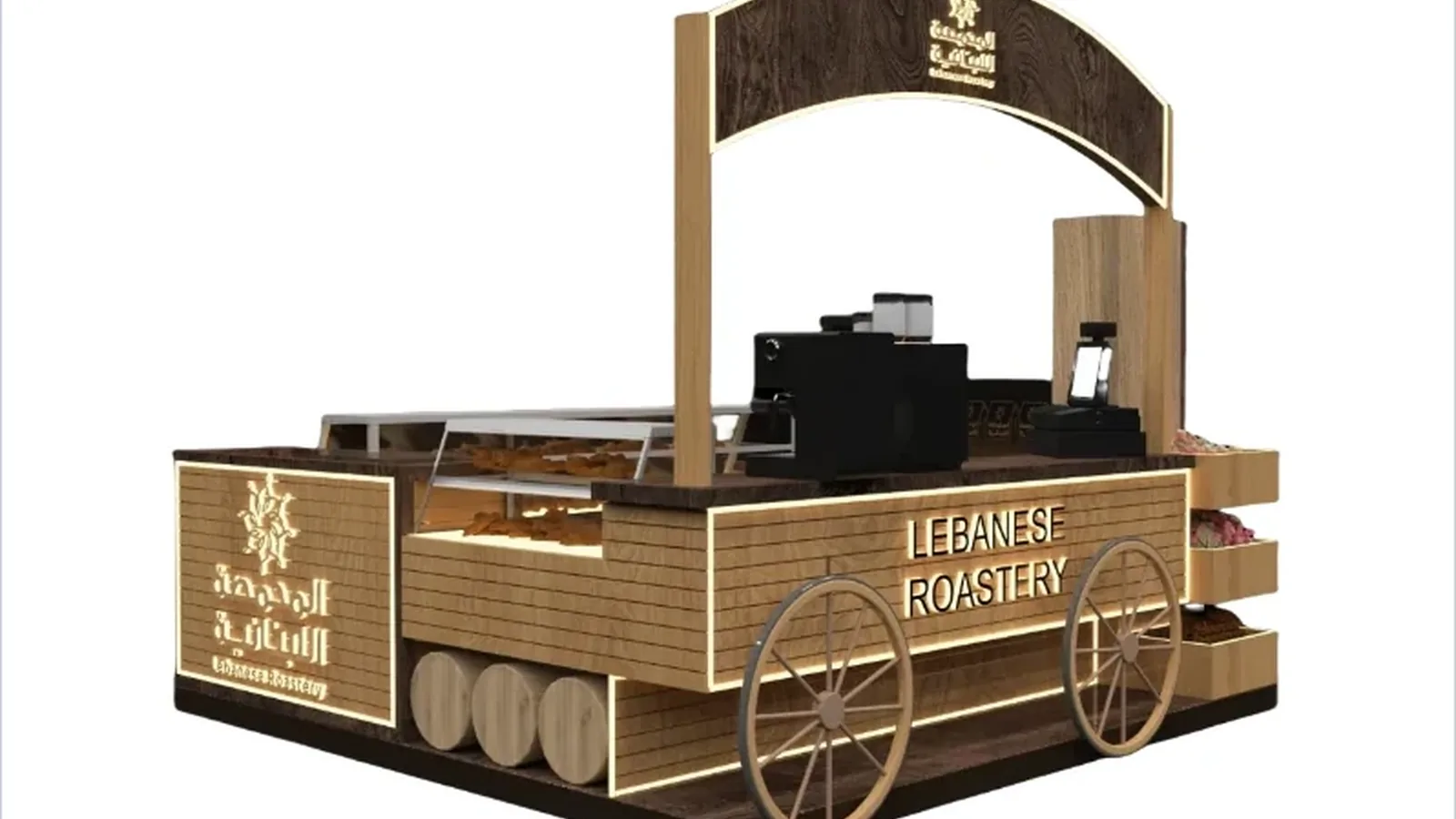
A farmers’ market, event, shop-in-shop, or weekend pop-up adds physical visibility without a long lease. A modular display counter, compact glass showcase, and movable bread rack can create a professional branded presence and later be reused in a permanent location.
Wholesale or corporate orders
Supplying offices, cafés, gift programs, or events can produce larger orders with fewer selling hours. However, pricing must include packaging, delivery, account management, samples, and payment delays.
Small pickup studio
After demand is proven, a production-focused pickup location may cost less than a high-traffic storefront. Customers order in advance, allowing better production planning and lower display inventory.
Step 2: Start with a very focused menu
Choose products that share ingredients, processes, equipment, and packaging. A short menu reduces inventory, training, production errors, and unsold stock. Evaluate each candidate product using:
- ingredient and packaging cost;
- hands-on labor time;
- batch yield and oven capacity;
- shelf life and transport risk;
- selling price and contribution margin;
- visual appeal and likelihood of repeat purchase.
Begin with a signature item, a dependable everyday option, and one rotating seasonal offer. Add products only when customers repeatedly request them and the operation can produce them profitably.
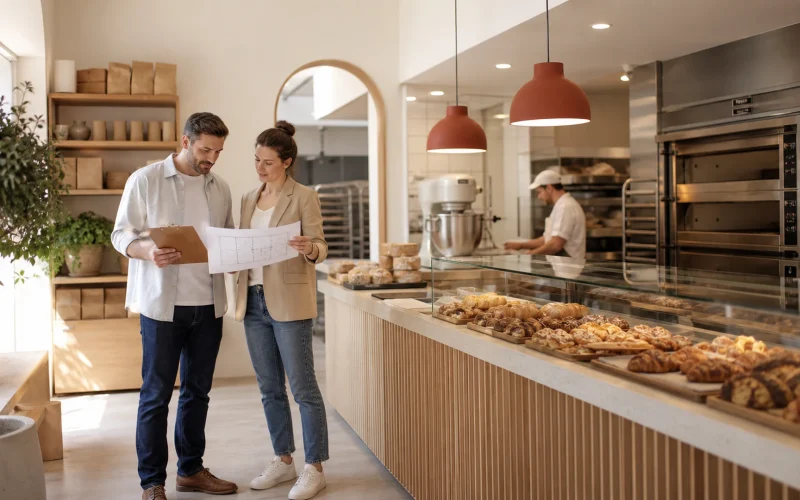
Step 3: Calculate the minimum viable budget
Even a very small bakery needs a written budget. Include business registration, permits, food-safety training, insurance, kitchen rent, ingredients, packaging, labels, delivery, market fees, payment fees, basic marketing, and a contingency reserve. Use our bakery startup cost guide to identify categories that may otherwise be missed.
For every product, calculate the cost of ingredients and packaging from current supplier prices. Then account for labor, kitchen time, delivery, transaction fees, spoilage, and overhead. A product that generates cash but no margin cannot fund growth.
Step 4: Pre-sell before buying too much
Preorders turn demand into cash before production and reduce leftover inventory. Build a simple weekly release: announce a limited menu, close orders at a fixed time, purchase quantities based on paid demand, produce in planned batches, and offer organized pickup or delivery.
Use clear policies for deadlines, cancellations, allergens, pickup, and refunds. Do not spend customer deposits on long-term assets if the money may be needed to fulfill or refund orders.
Other ways to validate demand include paid tasting boxes, holiday bundles, office sampling followed by preorder links, collaborations with local cafés, and deposits for custom cakes. Treat likes and survey answers as weak evidence; paid orders and repeat purchases are stronger.
Step 5: Use resources you control
List the assets already available: baking skill, recipes, photography, design ability, delivery capacity, supplier relationships, community access, or an audience. Trade can reduce some cash expenses, but every arrangement should be documented. Define what each party provides, the value, delivery dates, usage rights, and what happens if the project changes.
Borrow or rent equipment only when it is safe, permitted, and suitable for commercial use. Verify ownership, condition, sanitation, electrical requirements, and insurance implications. Free equipment that causes inconsistent production or repairs can be more expensive than short-term rental.
Step 6: Fund growth with the right source
Once the business has evidence of demand, consider funding that matches the purpose:
- Reinvested profit: slow but keeps control and forces spending discipline.
- Customer deposits and preorders: useful for confirmed production, not for speculative expansion.
- Friends or family: document whether money is a loan or ownership investment.
- Microloans or small-business loans: require repayment capacity, records, and a credible plan.
- Grants and competitions: can help, but are uncertain and should not be the only plan.
- Equipment financing: preserves cash but adds fixed payments and may require guarantees.
- Investors: may fund faster growth in exchange for ownership and decision rights.
Before borrowing, prepare realistic sales, margin, and cash-flow forecasts in a bakery business plan. The business must be able to make payments during slow months, not only at peak sales.
Step 7: Scale the bakery display in phases
A professional display does not require building the final flagship store on day one. Plan a reusable fixture path:
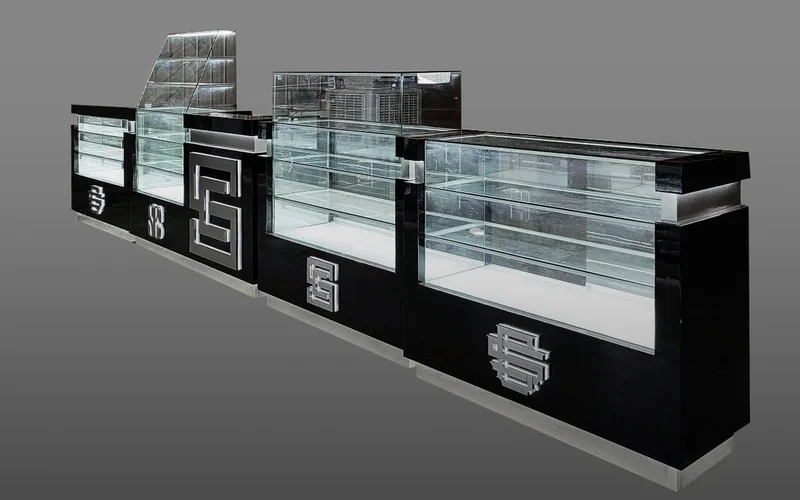
- Begin with a compact branded counter, protected display, and portable shelving for pop-ups.
- Add an illuminated glass showcase when chilled or premium products justify it.
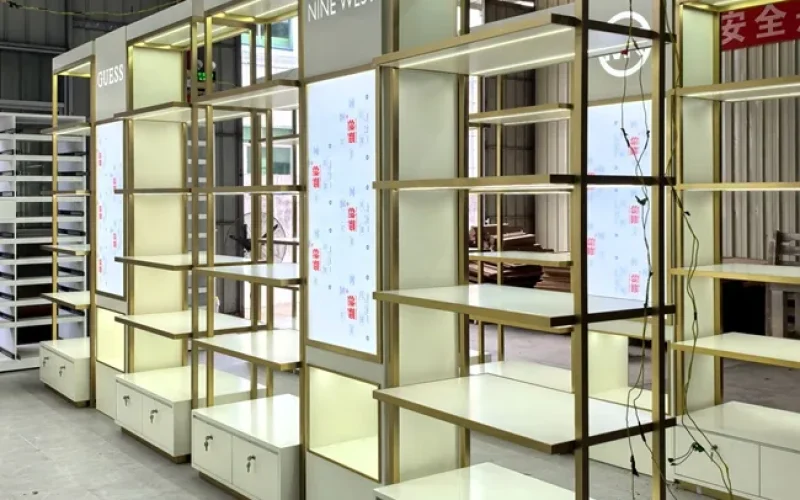
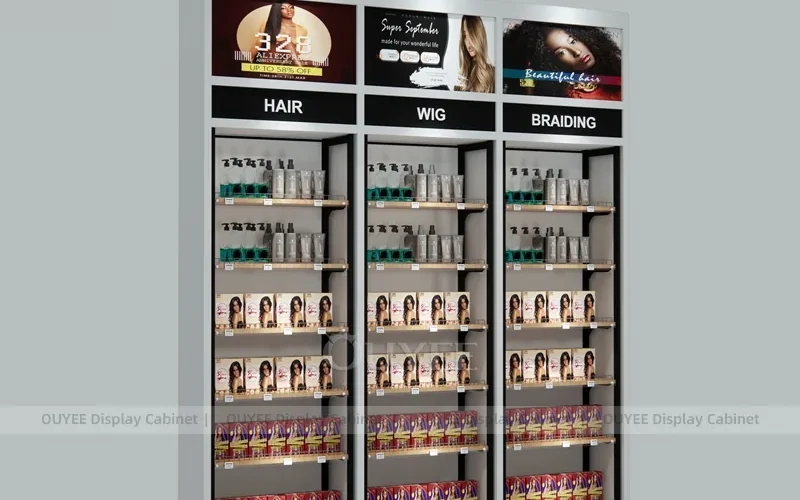
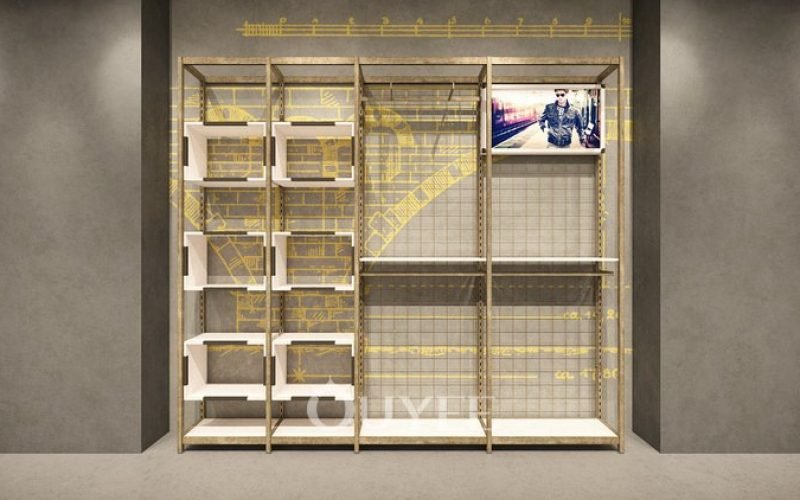
- Add modular wall shelving and panel cabinets as the range expands.
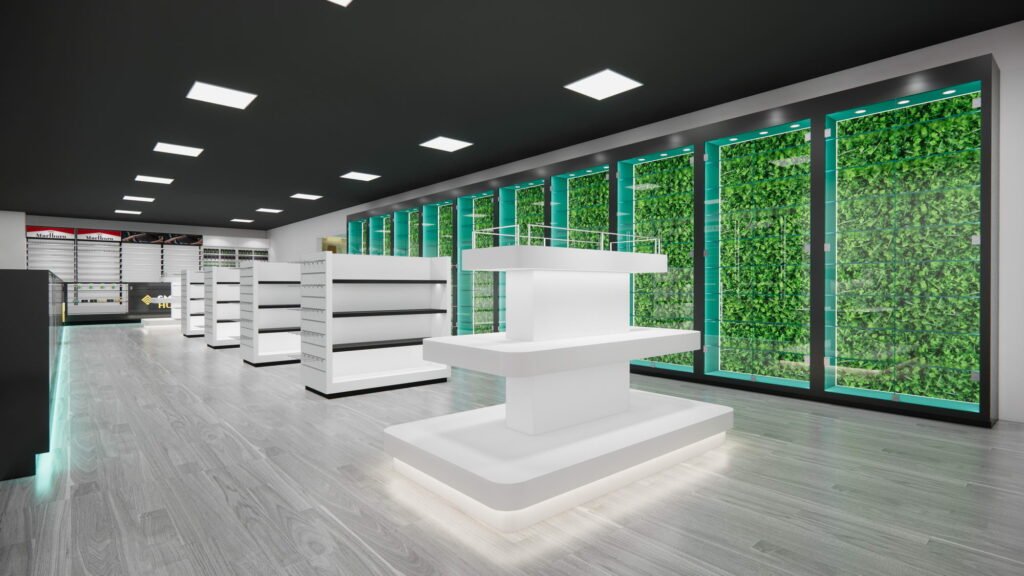
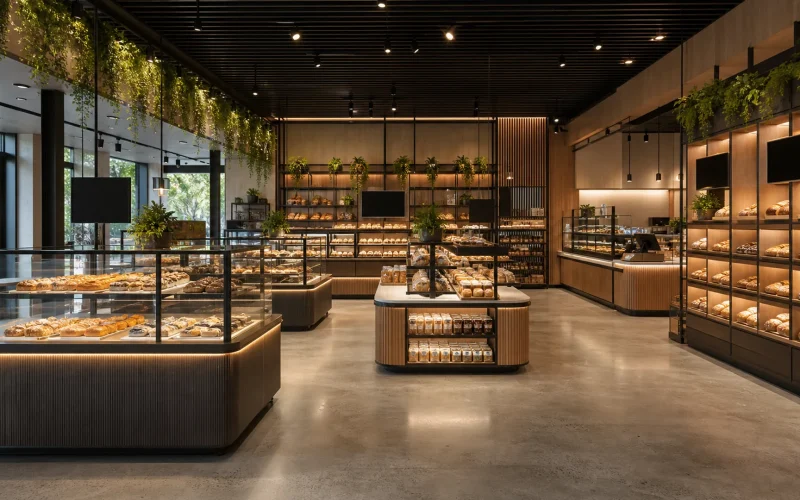
- Introduce a center island for bundles, seasonal goods, and impulse sales.
- Reuse compatible modules when moving into a kiosk or permanent shop.
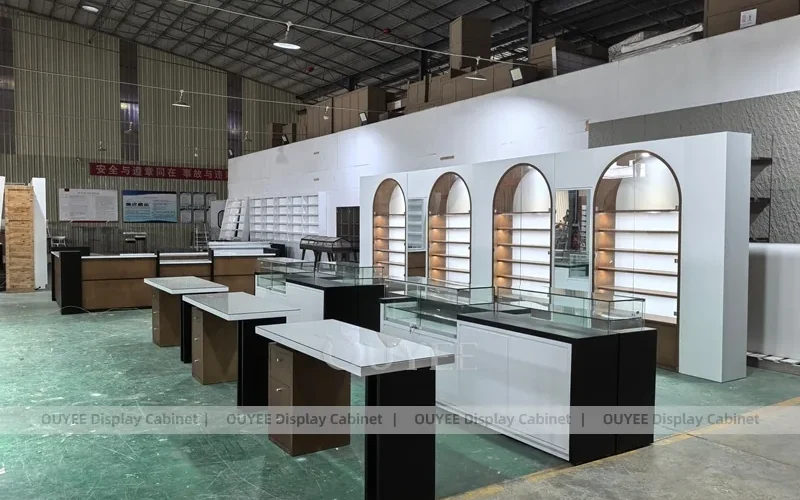
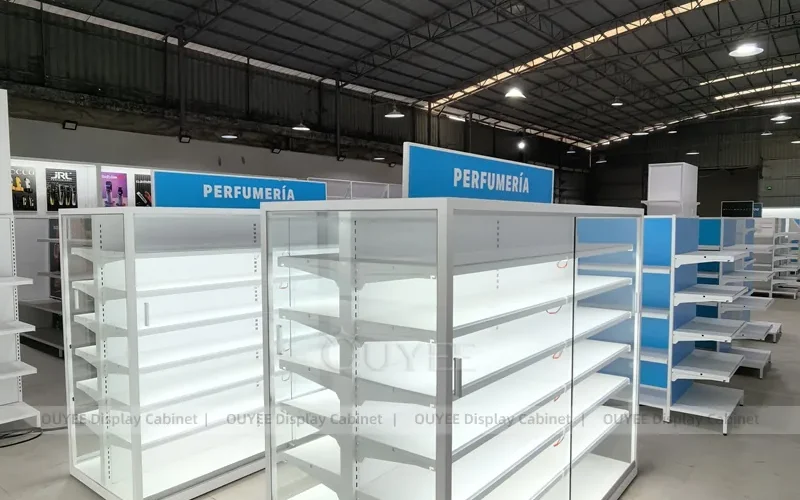
Ouyee Display can plan compact bakery counters, glass showcases, wall cabinets, bread racks, and modular kiosks around the current selling model and future footprint. Thinking ahead about dimensions, finishes, tray sizes, lighting, power, and transport helps prevent disposable purchases.
A practical 90-day low-cash launch plan
Days 1–15: define and verify
- Confirm local rules, allowed products, permits, tax requirements, and insurance.
- Select three to five products and standardize recipes.
- Calculate full unit costs and set prices.
- Interview potential customers and identify selling channels.
Days 16–30: run paid tests
- Create a small preorder release or paid tasting box.
- Track production time, yield, feedback, and actual margin.
- Refine packaging, pickup, and customer communication.
- Remove products that are fragile, slow, or unprofitable.
Days 31–60: build repeatability
- Establish a regular order and production schedule.
- Secure approved suppliers and backup ingredients.
- Record sales, expenses, waste, and customer contacts.
- Test one partnership, market, or pop-up channel.
Days 61–90: decide the next investment
- Review repeat rate, average order, margin, capacity, and cash.
- Identify the constraint that limits profitable growth.
- Buy or finance only the equipment or display that solves that constraint.
- Set the sales level required before considering a lease.
Mistakes that make a low-budget bakery expensive
- Ignoring permits because the business is small.
- Underpricing labor and kitchen time.
- Buying equipment before proving the menu.
- Signing a lease based on hoped-for sales.
- Offering too many products and carrying too much inventory.
- Using debt to cover an unprofitable operating model.
- Accepting custom work without deposits and written specifications.
- Choosing cheap displays that cannot protect food or be reused.
Final takeaway
You probably cannot open a complete bakery with literally no money, but you can begin without committing to the cost of a full store. Start legally, keep the menu focused, pre-sell, use shared production space, measure real margins, and reinvest in the constraint that most limits profitable growth. A small modular counter and carefully selected showcase can support the first physical sales while preserving a path to a larger bakery.
This article provides general business information. Licensing, food, tax, funding, and insurance requirements vary; confirm them with qualified local authorities and advisers.