Modern Glass Counter for Cell Phone Display Design Concept, Palette, and Display Intent
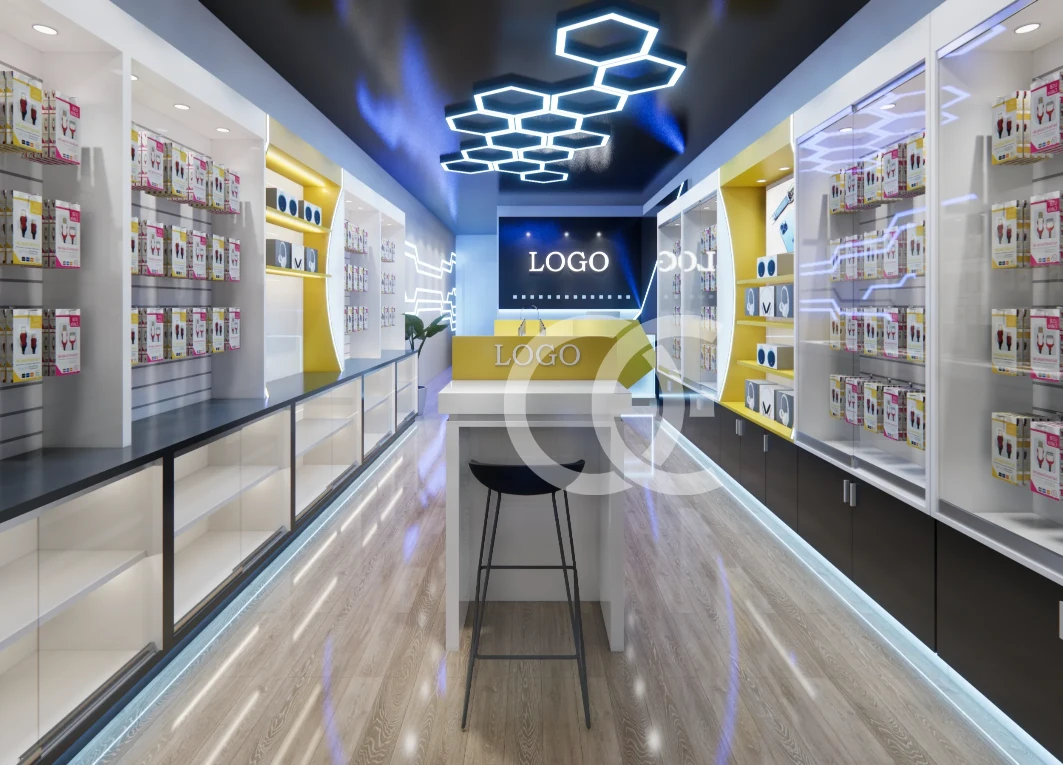
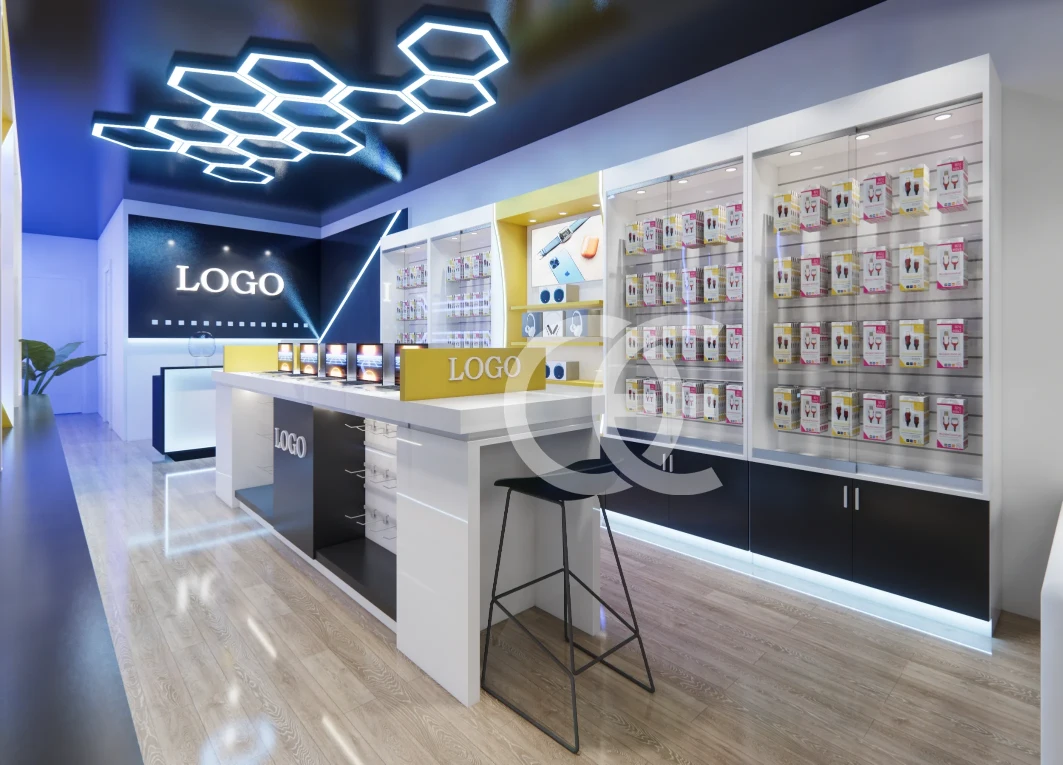
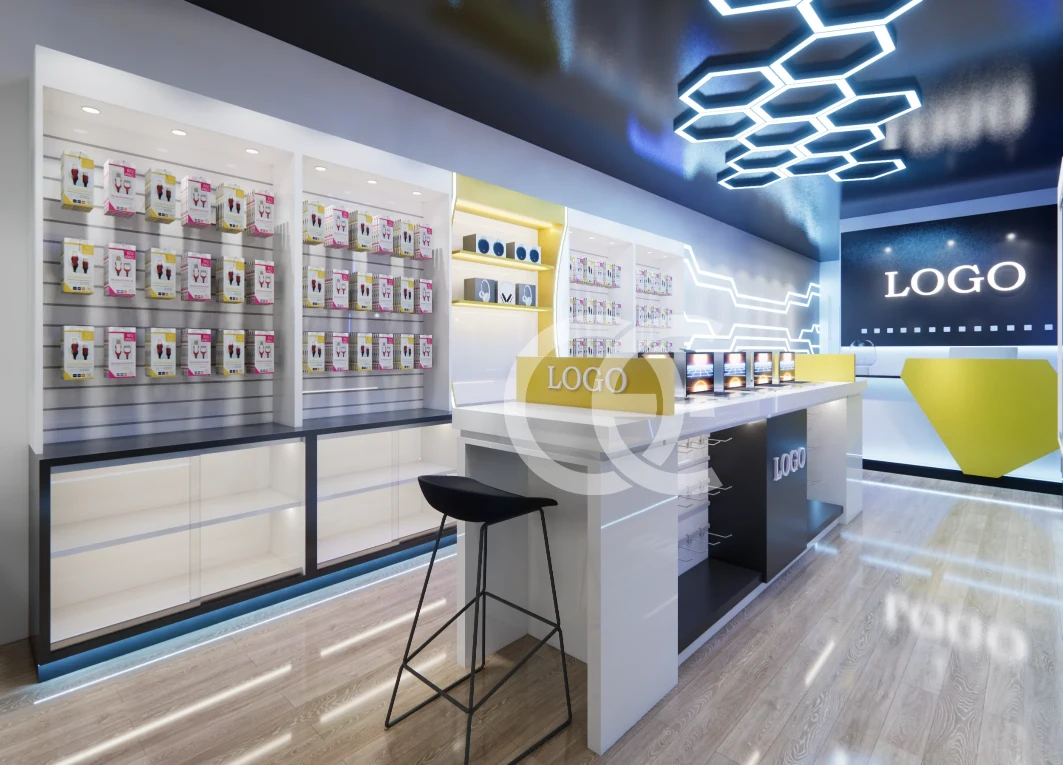
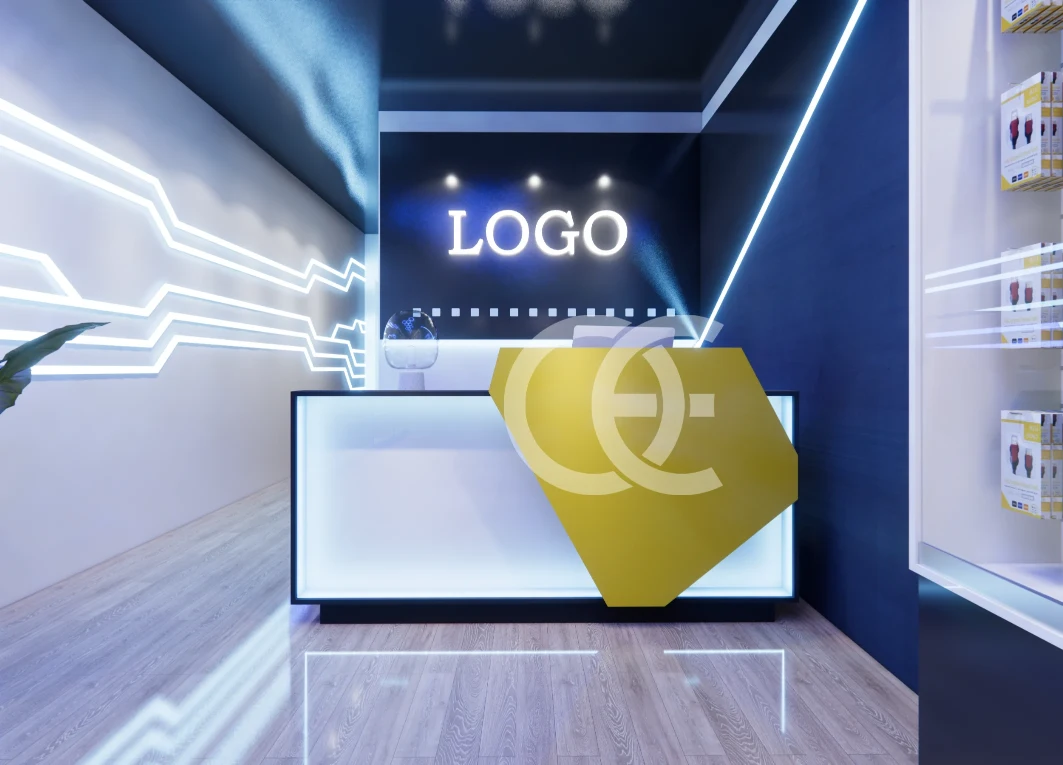
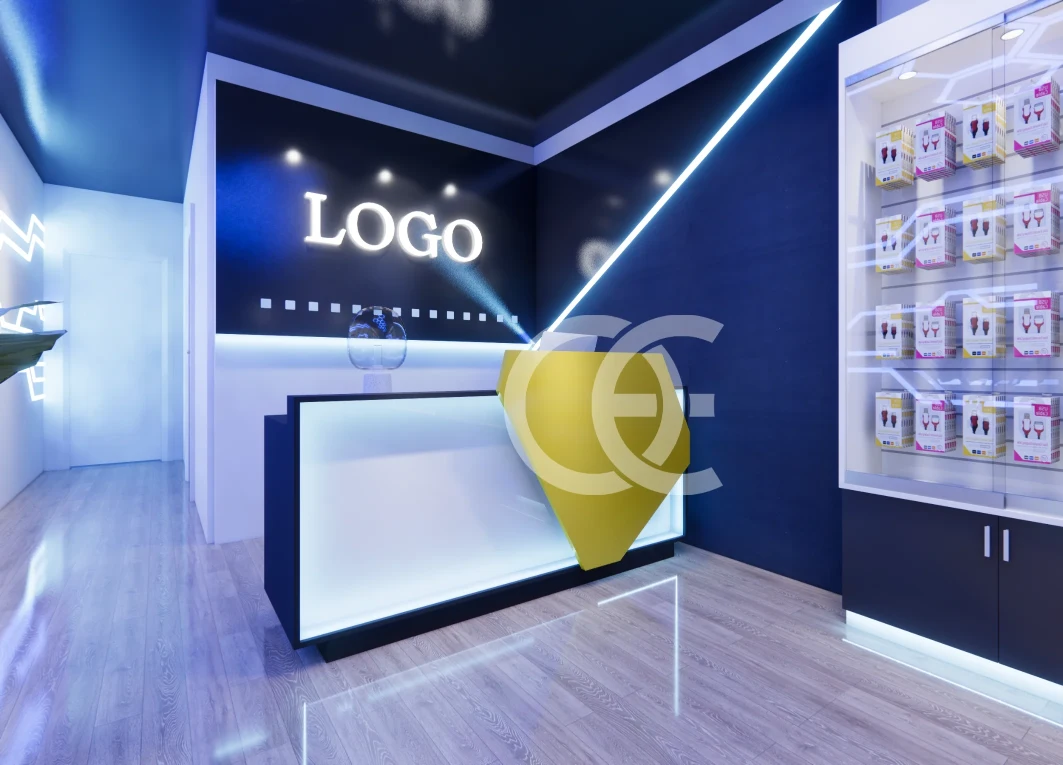
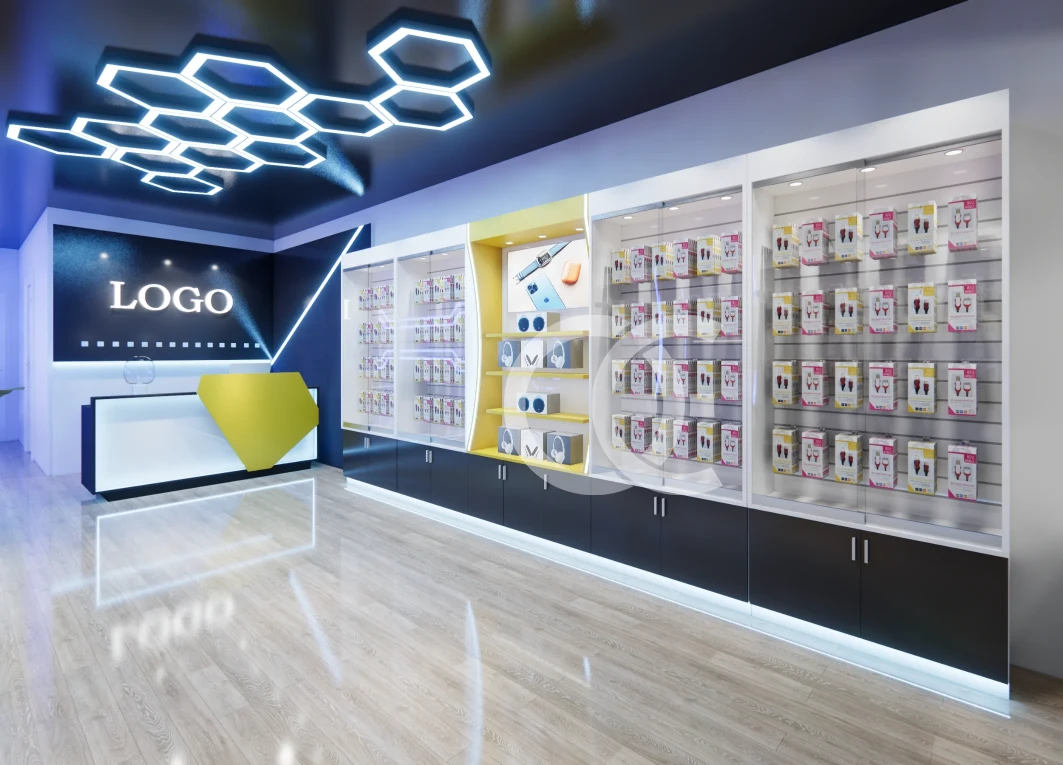
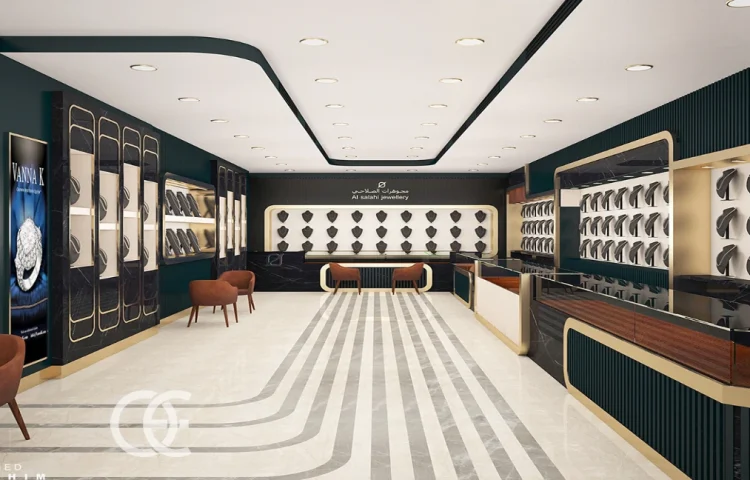
The main image presents a clean contemporary direction built around a blue, light gray, gray palette. Its service counter format is not decorative alone: it is arranged to support staff workflow, customer handover, concealed storage, and a clean transaction point.
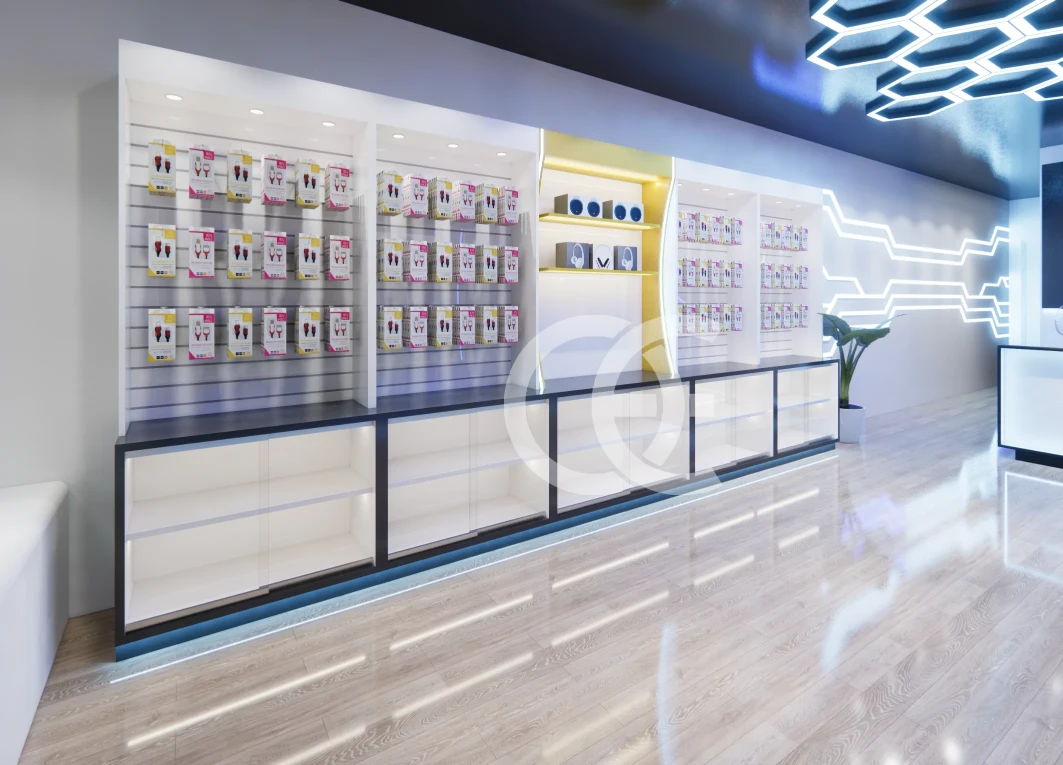
Its commercial value comes from applying the visual direction to real merchandise—smartphones, accessories, connected devices, and live demonstration products. That makes the project relevant not only to Modern Glass Counter for Cell Phone Display Design, but also to searches for mobile phone display stand, smartphone demo table, and phone accessory wall.
Merchandising Smartphones Within the Layout for Modern Glass Counter for Cell Phone Display Design
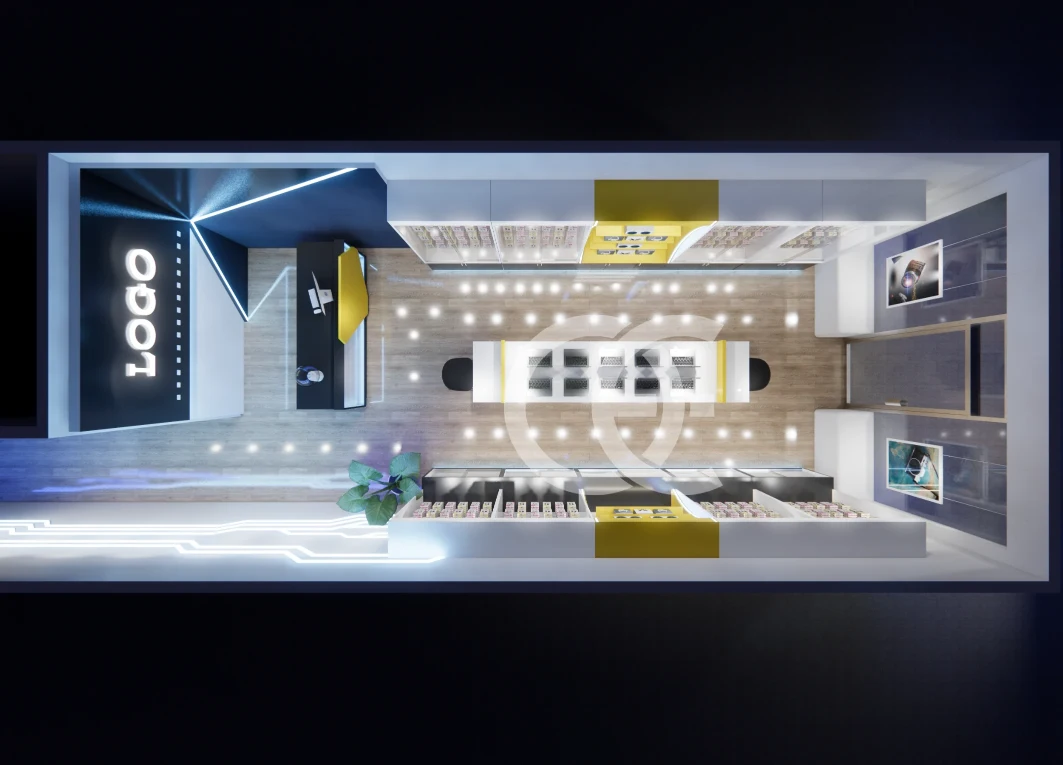
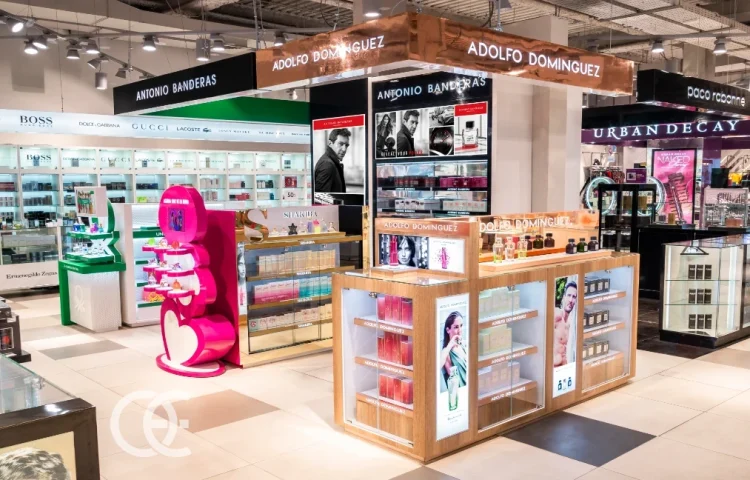
Merchandising density should follow the product size and buying decision. The service counter can carry hero items at eye level, broader choice in secondary positions, and replenishment stock close to staff access.
A coordinated package can add powered demo tables, accessory walls, lockable cabinets, service desks, and launch displays. Their heights, openings, and storage positions should follow one visual language so that cable management and electronics store fixtures read as a connected fixture family.
Building the Clean Contemporary Direction in Modern Glass Counter for Cell Phone Display Design
The detected blue, light gray, gray palette should be confirmed with physical finish samples because screen colors can shift. Surface gloss, texture, edge treatment, and the temperature of the lighting will determine whether the installed result keeps the same character as the rendering.
The fixture detailing can incorporate glass display surfaces. LED position, cable routes, ventilation gaps, lock locations, removable panels, and cleaning access should be drawn before fabrication rather than solved on site.
Operational Details for a Buildable Modern Glass Counter for Cell Phone Display Design
The rendering establishes appearance, but fabrication requires a second layer of decisions: exact dimensions, material thickness, hardware, lighting voltage, graphic files, assembly joints, and installation sequence.
With those points resolved, the secure device display can move from an attractive image to an installation-ready system with fewer decisions left for the site team.