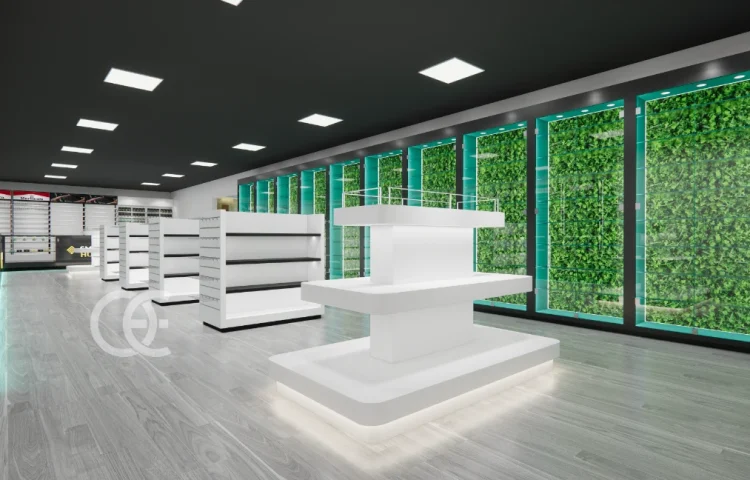
Acrylic Display Shelves for Cell Phone Shops Design Concept, Palette, and Display Intent
The reference image for this page is characterized by acrylic display components, with a black, light gray, gray palette. Those cues make the concept relevant to mobile phone and electronics retail, where display clarity and brand recognition must be resolved at the same time.
Its commercial value comes from applying the visual direction to real merchandise—smartphones, accessories, connected devices, and live demonstration products. That makes the project relevant not only to Acrylic Display Shelves for Cell Phone Shops Design, but also to searches for mobile phone display stand, smartphone demo table, and phone accessory wall.
Merchandising Smartphones Within the Layout for Acrylic Display Shelves for Cell Phone Shops Design
The image suggests a clear hierarchy between feature display and supporting stock. In a measured plan, the shelving system can anchor the first sightline, a category zone, or the transition toward consultation and checkout.
A coordinated package can add powered demo tables, accessory walls, lockable cabinets, service desks, and launch displays. Their heights, openings, and storage positions should follow one visual language so that cable management and electronics store fixtures read as a connected fixture family.
Building the Crisp, High-Contrast Commercial Character in Acrylic Display Shelves for Cell Phone Shops Design
Because the rendering uses black, light gray, gray as its dominant palette, the finish schedule should define sheen as carefully as hue. Matte panels, reflective glass, metallic accents, and illuminated graphics behave differently under ceiling and shelf lights.
The fixture detailing can incorporate acrylic display components. LED position, cable routes, ventilation gaps, lock locations, removable panels, and cleaning access should be drawn before fabrication rather than solved on site.
Operational Details for a Buildable Acrylic Display Shelves for Cell Phone Shops Design
Before manufacturing, the visual concept should be checked against the floor plan and the largest displayed item. Module widths, shelf spacing, counter height, access doors, power points, and packing sections can then be fixed in the drawings.
With those points resolved, the secure device display can move from an attractive image to an installation-ready system with fewer decisions left for the site team.