Quick View: Infusion pharmacy is a unique compilation of a pharmacy. It prepares, issues, and supervises sterile medications. These medicines are administered through IV, subcutaneously, or other injection methods. Most of these patients are the ones who get treated this way temporarily outside of the hospital for more complex cases.
Background: As of 2026, the healthcare industry sees a dramatic shift from hospitalization. The increase in biologic drugs has also had its consequences. Infusion pharmacy has become the art of maintaining chronic diseases. Fewer hospital stays and eliminating adverse drug reactions (ADRs) are the immediate benefits of it.
Core Message: In addition to a simple definition, this guide provides a detailed description of the patient journey. It discusses different infusion settings for patients. It elaborates the clinical team’s job. It also gives a forecast of the infusion services in the future.
This piece of analysis is based on the current recommendations given by the authorities in the field such as the National Home Infusion Association(NHIA) and URAC accreditation standards.
Important Facts
- Specialized Compounding: Infusion pharmacies are pros at preparing sterile, injectable, and solutions for infusion medications. This technique is known as compounding.
- Alternate-Site Care: The majority of the services are provided outside the hospital. This includes the patient’s residence, an Ambulatory Infusion Center (AIC), or a long-term care facility.
- The Whole Clinical Schedule: The infusion pharmacy’s job is much more than just giving out medication. It ensures complete clinical management. This includes continuous patient monitoring, education, and working closely with the entire healthcare team.
- Important Distinction from Retail: In contrast to regular retail pharmacies, infusion pharmacies are obliged to meet stringent sterile compounding regulations (an example is USP <797>). They are the ones who manage long-term complex patient care plans for both acute and chronic conditions.
The Most Widely Accepted Definition of Infusion Pharmacy (What It Is and What It Isn’t)
To truly understand infusion pharmacy, we must look deeper than surface descriptions. We must also scrutinize the technical definitions ascertained by the healthcare authorities. This is not a simple pharmacy that looks after IV bags. It is, indeed, a therapist service delivery model that serves as both palliative care and acute medical treatment.
The Medical Definition as per Healthcare Authorities
Based on the standards of accrediting organizations, an infusion pharmacy is a unit that is primarily located at a decentralized location where the drug compounding staff is trained to work with sterile formulations. It is, therefore, a service-oriented pharmacy that works with patients who have acute and chronic conditions that require parenteral administration of drugs.
To be a true infusion pharmacy, it is imperative to comply with USP General Chapter <797> regarding sterile compounding requirements. This standard ensures that all medicines are made in a clean environment. Thus, no external factors can jeopardize the sterilization of the drugs or the health of the patient. Leading accreditation bodies like URAC offer specific Infusion Pharmacy Accreditation that validates a pharmacy’s commitment to quality and safety. These organizations underline that the services have to comprise a comprehensive array of professional pharmacy services, care coordination, and clinical monitoring. That is to say, a holistic service package.
What Infusion Pharmacy Is Not
Also highlighting what an infusion pharmacy isn’t can be invaluable in this case.
* It is not a walk-in retail pharmacy. You cannot just throw a prescription for an infused drug and collect it in just minutes. The process has to involve a lot of clinical and administrative work such like: benefits investigation and patient assessment.
* It is not just a delivery service of drugs. Even though they control the distribution of medicines, their main wealth is in the devoted clinicians who take care of the patients. Especially, a pharmacist and a nurse are assigned to assign this clinical management.
* It is not fully for hospitals. A widespread idea is that intravenous therapy is limited to hospitals only. In fact, most of the infusion services in alternative sites are given. Specifically, these premises refer to the home or dedicated infusion centers, which serve to improve patient comfort and cut healthcare costs.
Infusion Pharmacy vs. Specialty Pharmacy vs. Retail Pharmacy: A Brief Comparison
The pharmacy environment in the modern world is rather diverse. In fact, the pharmacy environment of today is a multifaceted one with various service platforms that are particularly carefully structured to meet patients’ needs. Having the awareness of the variance between retail, specialty, and infusion pharmacies enables patients, caregivers, and providers to utilize proper channels in the healthcare system.
Seeing the First Difference
Every type of pharmacy has its own characteristics.
* Retail Pharmacy: This is the most classic form. It is focused mostly on dispensing medications that are widely used in the market however, most of the time they are physical pills and liquids. Their clinical services tend to be sparse and typically limited to basic patient counseling and medication therapy management (MTM).
* Specialty Pharmacy: This type is the one that provides those high-price and high-development medicines. This segment of the infusible drug market is mostly occupied by the medications that are used for rare diseases like cancer, multiple sclerosis, or rheumatoid arthritis, which are oral or self-injectable drugs. These kind of formulations also are accompanied by “high-touch” services such as individual monitoring, side-effects management, assistance with prior authorizations, etc.
* Infusion Pharmacy: This type is the one that dispenses most of the services. They are focused only on sterile medications that are given through infusion or injection. The most distinguishing feature is the mix of sterile compounding and inclusive clinical care coordination. Nurses often administer the drugs and train patients on the use of devices.
It’s important to note there is significant overlap. Many infused drugs are also considered “specialty” drugs due to their high cost and complexity. Their presence has commandeered the phrase “specialty infusion pharmacy.” This is a unit that provides health consumers with a broad choice of the most complicated and costly therapy options on the market.
Pharmacy Comparison Table: Service at a Glance
| Feature | Retail Pharmacy | Specialty Pharmacy | Infusion Pharmacy |
|---|---|---|---|
| Primary Medication Type | Oral solids (pills), liquids | Oral, self-injectable, some infused | Intravenous (IV), injectable |
| Key Service | Dispensing & counseling | High-touch medication management | Sterile compounding & clinical care |
| Patient Environment | At home (self-administered) | At home (self-administered) | Home, Infusion Center, LTC |
| Clinical Involvement | Basic counseling, MTM | Intensive monitoring, side-effect management, PA support | Full care coordination, nurse training, lab monitoring |
| Regulatory Focus | State Board of Pharmacy | State Board + URAC/ACHC | State Board + USP <797> + URAC/ACHC |
| Example Medications | Lisinopril, Metformin | Humira®, Revlimid® | IVIG, TPN, IV Antibiotics |
The Infusion Triad: Home, The Mobile Unit, and The Hospital
One of the best things about the modern infusion therapy is the fact that it is flexible. You are no longer tied to a hospital bed to get the treatment. The site of care is chosen based on the drug, patient’s clinical condition, insurance coverage, and personal preference.
Home Infusion: The Enjoyment of the Hospital at Your Place
As defined by providers like NikoHealth, a home infusion pharmacy specializes in managing IV medications in a patient’s home. This is the preferred setting for many patients. Healing of the disease has never been so fun and simple with the advantages of home infusion.
The process of these services is a complete coordination. The infusion pharmacy sends the patient-specific medication. They send it to the patient’s home with all the necessary supplies (pumps, tubing, alcohol swabs, etc.). For the first dose, a skilled infusion nurse usually visits. He/she/they administers the drug, trains the patient or a caregiver on the process, and ensures they are comfortable with the equipment.
Ambulatory Infusion Centers (AICs) / Suites
Ambulatory Infusion Centers (AICs), also known as infusion suites, are stand-alone outpatient clinics. They are dedicated exclusively to administering infusion therapies. They provide a comfortable, practical alternative to a sterile hospital room. They often have additional conveniences, such as private rooms, comfortable recliners, and Wi-Fi.
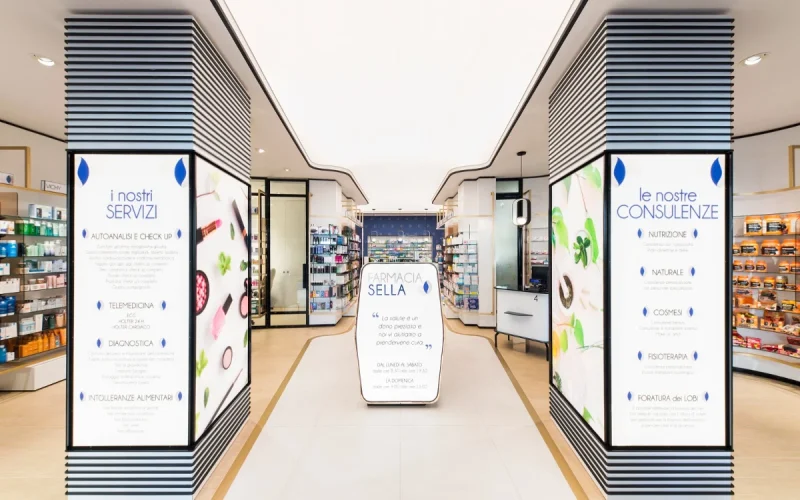
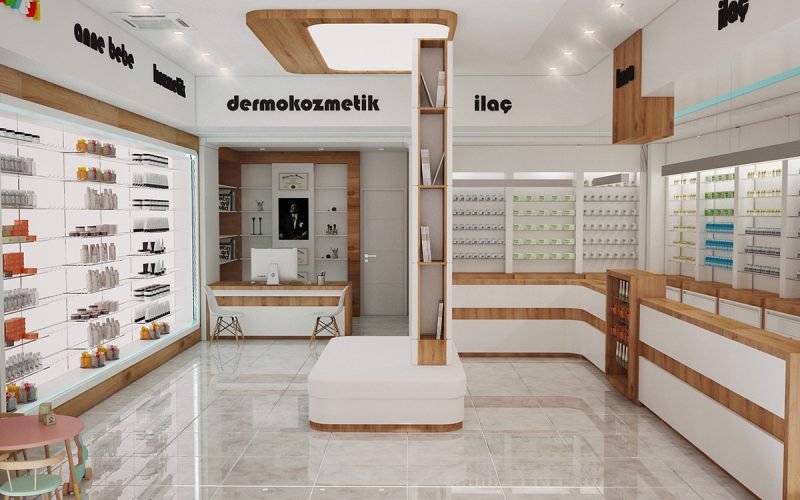
The biggest advantage of an AIC is having on-site clinical staff, including expert nurses and pharmacists, available to manage the infusion and quickly address any adverse reactions. This makes it a friendly environment for patients. It’s particularly suitable for drugs that might provoke a stronger response. It’s also perfect for individuals who are not comfortable managing their therapy at home. The professional atmosphere of an AIC is crucial for patient confidence. Attention to detail in the physical space builds trust. This includes a welcoming reception to a clean, well-organized treatment area. This is where expert pharmacy design can help establish a professional brand identity that reflects the high quality of care provided. A well-designed space signals a commitment to excellence and patient-centered care. This might feature a professional Medicine Shop Showcase Logo Design – Ouyee Display.
Hospital-Based Outpatient Infusion
Hospital-based outpatient departments are the traditional setting for infusion therapy. This option is generally selected in some exceptional situations:
* Patients who are very complex and require full hospital resources immediately.
* First doses of very risky biologic drugs that are known to cause serious allergic reactions (anaphylaxis).
* Patients whose insurance criteria require the use of a hospital-affiliated facility.
Even though this setting is full of clinical prowess, sometimes it is perceived as less patient-friendly and less secure than home infusion or an AIC.