
In today’s tough market, a pharmacy is more than just a place to pick up medicine. A good custom pharmacy shop design helps build patient trust. It also makes work flow better and boosts sales. You might be building new or fixing up an old space. Either way, smart planning of your layout and fixtures matters a lot. This includes everything from the main work area to each medicine display stand. Good design can change your whole business. This guide covers everything you need to know. We’ll go from basic ideas to picking the right partners like Ouyee Display to make your vision real.
Key Takeaways
- Patient Experience is Key: Good design puts the patient first. It makes their visit smooth and comfortable from start to finish.
- Efficiency Drives Profit: A smart layout helps staff work better. It cuts down on mistakes and gives more time for talking with patients.
- Fixtures Define Function: The right furniture matters. A secure counter and good shelving are key for safety and sales.
- Design Builds Trust: How your pharmacy looks affects what patients think. It shows how professional and caring your brand is.
- Strategic Planning is a Must: A step-by-step design process is important. It goes from idea to setup. This makes sure your vision becomes real and follows all rules.
The 4 Pillars of High-Performing Pharmacy Design
A great custom pharmacy shop design stands on four key pillars. Each one works with the others. Together they create a space that is safe, works well, and makes money. Knowing these ideas is the first step to building a better pharmacy.
Pillar 1: Patient-Centric Workflow
Your design must focus on the patient’s trip through your store. Make a clear path from where they drop off prescriptions to the waiting area. Include consultation rooms and the payment counter too. This clear flow cuts down confusion. It also reduces wait times. This makes the visit nice and stress-free.
Pillar 2: Operational Efficiency
The layout behind the counter matters just as much as the front. You need a well-organized work area. Secure storage and comfortable workstations are vital. This focus on efficiency helps your staff work faster. It cuts down on mistakes and makes jobs more satisfying.
Pillar 3: Brand Identity and Trust
Your pharmacy’s design says a lot about your brand. The colors, materials, and lighting you pick should feel professional and welcoming. A clean, modern, and trustworthy space makes patients feel safe. They’ll have more confidence in your care.
Pillar 4: Retail Optimization & Profitability
A pharmacy is also a retail business. Smart placement of over-the-counter products can boost sales a lot. Use end displays for sales items. Put popular products where people can easily see them. This gets customers to browse more. This is a key part of any good medicine shop interior design.
The Blueprint for Success: Mastering Your Pharmacy Layout & Flow
The physical layout is the base of your whole custom pharmacy shop design. It controls how both customers and staff move through the space. A well-planned layout can make a small pharmacy feel big. It can make a large one feel easy to navigate.
The Welcoming Zone: Entrance and Waiting Area
Your entrance is the first thing people see. It should be open, bright, and easy to move through. A comfortable waiting area helps a lot. Good seating, soft lighting, and maybe a digital screen with health tips can improve the patient experience. This area sets a good tone for the whole visit.
The Retail Zone: OTC and Self-Selection Areas
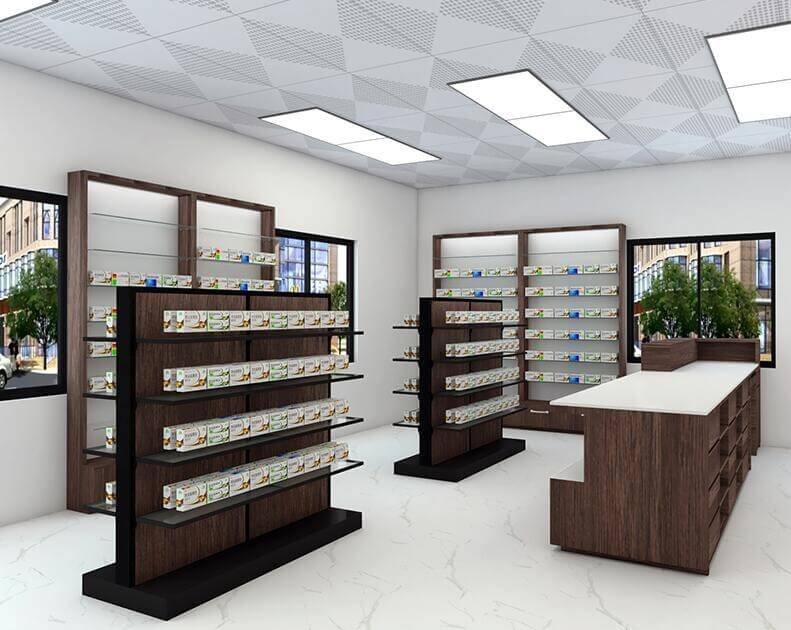
Set up your retail space in clear groups. Use wide, clean aisles and clear signs to guide customers. Gondola shelving works great for main aisles. A prominent medicine display stand near the front can show off seasonal or high-profit products. This gets customers to shop on their own and buy more.
The Professional Zone: The Dispensary and Consultation Spaces
This is the heart of your work. The dispensary must be designed for security, privacy, and efficiency. The pharmacy counter design is very important. It serves as both a secure workspace for staff and the main place to interact with patients. Private or semi-private consultation rooms are also becoming key. They’re used for services like shots and health advice.
Optimizing for Compact Spaces
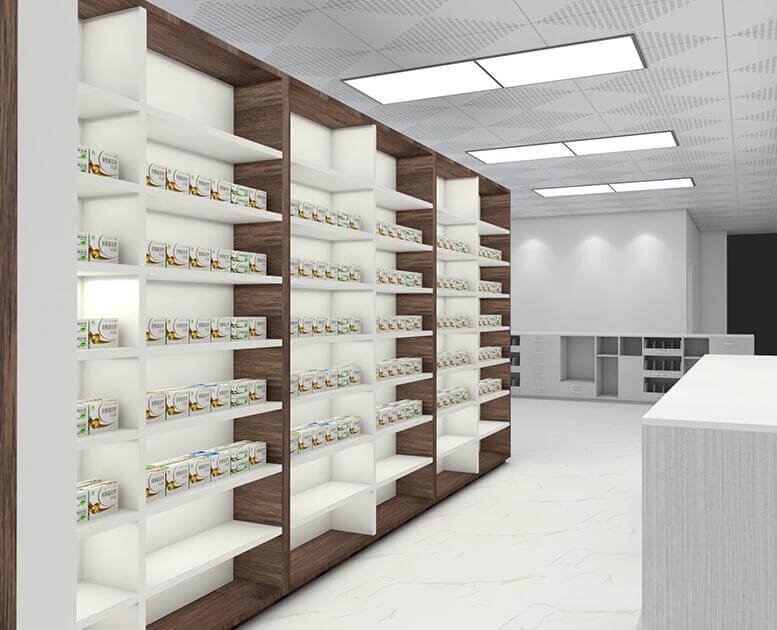
Not every pharmacy has a large space. Strategies for optimizing small pharmacy layouts are key for city or boutique locations. To make a small space work, think up. Use tall shelving units and wall displays. Furniture that does multiple jobs helps too. Glass and mirrors can make a space feel bigger.
Essential Fixtures: From Medicine Display Stand to Consultation Counter
The right fixtures are the building blocks of a working pharmacy. Each piece of furniture has a specific job. They securely store medications and showcase retail products. Buying high-quality, purpose-built pharmacy furniture is a smart choice.
The Heart of the Operation: The Pharmacy Counter
The pharmacy counter is more than just a checkout spot. It is the command center for your professional services. It must give enough workspace for staff. It needs secure storage for prescriptions. It should be a clear, welcoming service point for patients. Materials should last long and be easy to clean. Solid surface or high-pressure laminate work well.
Showcasing Products: The Medicine Display Stand & Gondolas
Retail success depends on product visibility. A flexible medicine display stand can create eye-catching displays for new or featured items. Gondola shelving forms the main aisles. It gives a flexible way to organize different product types. Countertop display units near the register are perfect for last-minute impulse buys.
Secure & Organized: The Medicine Display Cabinet
Behind-the-counter medications need secure and organized storage. A professional medicine display cabinet is designed for this job. Look for features like strong locks and clear or frosted glass doors. Internal dividers or drawer systems help too. Good lighting inside the cabinet helps staff quickly and correctly find medications.
Maximizing Vertical Space: The Pharmacy Wall Shelf
To make the most of your floor space, use your walls. A custom pharmacy wall shelf system lets you store a lot of stock neatly. Adjustable shelves offer flexibility for different product sizes. Built-in LED lighting can highlight products. It makes the whole space feel brighter and more professional.
Sourcing Your Pharmacy Furniture
To ensure a unified and working design, it’s best to work with one experienced provider. A company that specializes in pharmacy furniture manufacturing can create a complete solution. They can make sure every piece works together perfectly. This includes everything from the counter to the shelves in your custom pharmacy shop design.
Pharmacy Shelving Material Comparison
| Material | Durability | Cost | Aesthetics | Maintenance |
|---|---|---|---|---|
| MDF/Laminate | Good | Low-Medium | Very Versatile | Easy to Clean |
| Powder-Coated Steel | Excellent | Medium | Modern, Industrial | Very Easy |
| Glass | Fair (Tempered) | Medium-High | Sleek, Open | Shows Fingerprints |
| Acrylic | Good | Medium | Modern, Lightweight | Can Scratch |
The Step-by-Step Custom Pharmacy Design Roadmap
Creating a custom pharmacy design can feel like a huge project. We break it down into a clear, manageable process. Following this roadmap makes sure nothing is missed. Your project stays on track too.
Step 1: Discovery & Goal Setting
Our first step is always a deep conversation. We meet with you to understand your vision, budget, and work needs. This consultation with your pharmacy design team is key for defining project goals. We discuss everything from patient flow to brand identity.
Step 2: Space Planning & Layout Design
Next, we take detailed measurements of your space. Our designers then create a 2D floor plan. This blueprint shows the proposed layout of all zones. This includes the dispensary, retail area, and waiting lounge. We refine this plan with you until it perfectly matches your workflow needs.
Step 3: Concept & 3D Visualization
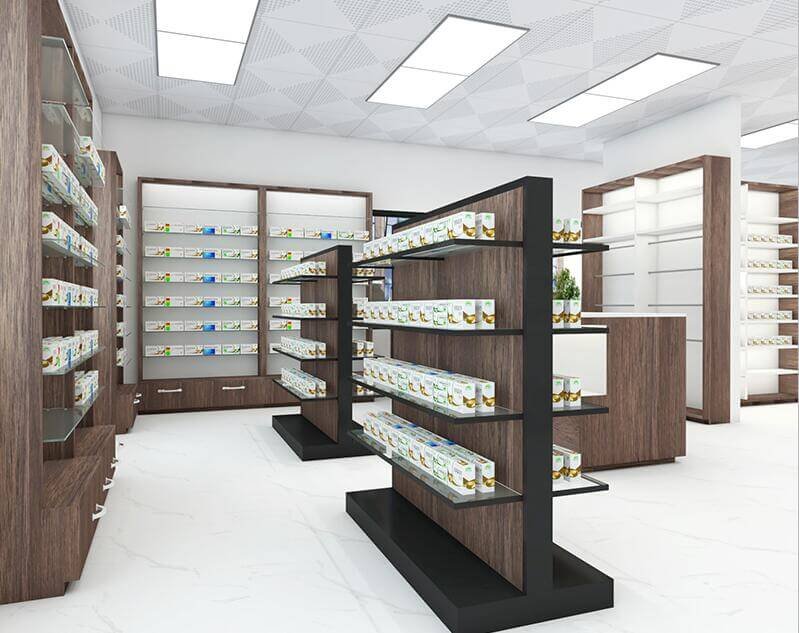
This is where the design comes to life. We create detailed 3D renderings that show you exactly how your finished pharmacy will look. You will see the colors, materials, lighting, and furniture in a realistic virtual model. This lets you make changes before any manufacturing begins.
Step 4: Fixture Selection & Material Specification
With the 3D concept approved, we finalize the details. We help you select the exact materials, finishes, and hardware for every fixture. This includes picking the right type of wood for the shelves. We choose the best countertop surface for durability. We also pick the ideal lighting for each area.
Step 5: Manufacturing & Quality Control
Once all specifications are confirmed, our manufacturing team gets to work. We build all the custom fixtures in our own facility. This gives us complete control over quality. Each piece is checked to make sure it meets our high standards before it is prepared for shipping.
Step 6: Installation & Final Handover
Our professional installation team delivers and assembles all fixtures on-site. We work efficiently to minimize disruption to your business. After a final walkthrough and quality check, we hand over your new, ready-to-use pharmacy. A full custom design and build-out for a medium-sized pharmacy can typically range from 8-12 weeks. This goes from final design approval to installation. However, typical project timelines for pharmacy transformations can vary based on scope.
Beyond the Shelves: Modern Trends in Pharmacy Design
The world of healthcare is changing. Pharmacy design is evolving with it. A modern custom pharmacy shop design uses new ideas to better serve patients and improve business. Here are a few key trends shaping the industry.
Integrating Technology Seamlessly
Technology is no longer an afterthought. Modern pharmacy design ideas often blend technology without disrupting the clean look. This includes digital signage for promotions. Self-service kiosks for prescription refills help too. Streamlined point-of-sale systems built right into the counter also work well.
The Rise of the “Wellness Hub” Concept
Pharmacies are becoming community health destinations. Modern designs include dedicated spaces for services beyond dispensing. This can mean private rooms for vaccinations and health screenings. One-on-one consultations with a nutritionist work too. This adds value for patients and creates new revenue streams.
Biophilic Design: Bringing Nature In
Biophilic design connects people with nature. This trend in medicine shop interior design uses natural elements to create a calm and healing atmosphere. Think natural wood finishes, indoor plants, and large windows. These allow for plenty of natural light. These elements can reduce stress and make patients feel more comfortable.
Hyper-Personalization and Boutique Aesthetics
The one-size-fits-all, sterile pharmacy look is fading. Many owners are choosing a more personalized, boutique feel. This design approach reflects the unique character of the local community. It helps the pharmacy stand out from large chain competitors.
Choosing Your Partner: What to Look for in a Pharmacy Design Company
Selecting the right partner is the most important decision you will make for your project. A good company will guide you through every step. They’ll deliver a result that exceeds your expectations.
Key Vetting Criteria:
- Experience: Look for a company with a strong portfolio of completed pharmacy projects. Ask to see examples of their work.
- Expertise: Do they understand the specific needs of a pharmacy? This includes healthcare regulations and efficient workflow.
- Capabilities: A partner who offers end-to-end services can make the process much smoother. This goes from design to manufacturing and installation. A top-tier pharmacy design company should handle everything.
- Customization: Make sure they can create truly custom solutions tailored to your space and brand. They shouldn’t just sell you standard modules.
- Client Testimonials: See what their past clients have to say about their experience and the final result.
Your goal is to find a partner who acts as a trusted advisor. They should translate your vision into a beautiful, functional, and compliant reality.
FAQ: Your Custom Pharmacy Design Questions Answered
Q1: How much does a custom pharmacy shop design cost?
A: The cost varies widely based on size, scope, material choices, and location. It can range from a few thousand dollars for simple fixture updates to over $100,000 for a full build-out. The best approach is to get a detailed quote from a professional pharmacy design company.
Q2: What is the most important fixture in a pharmacy?
A: While every piece is important, the pharmacy counter is arguably the most critical. It’s the central hub for workflow, security, and patient interaction, and its design directly impacts efficiency and service quality.
Q3: How can I make my small pharmacy feel larger?
A: Use light colors, smart lighting, vertical storage like tall pharmacy wall shelf units, and glass or acrylic materials to create a sense of openness. A well-planned layout that minimizes clutter is also key.
Q4: What materials are best for pharmacy furniture?
A: Durability and hygiene are paramount. High-pressure laminates, solid surfaces (like Corian), powder-coated steel, and high-quality MDF are popular choices for their cleanability and longevity. Your choice will depend on budget and desired aesthetic.
Q5: Can a good medicine display cabinet really increase sales?
A: Absolutely. A well-lit, organized, and strategically placed medicine display cabinet or retail shelf makes products more appealing and easier for customers to find. It improves the shopping experience, which can directly lead to increased sales of OTC products.




 English
  German
  Arabic
  French
  Spanish
  Italian
  Russian
  Turkish
  Portuguese
  Japanese