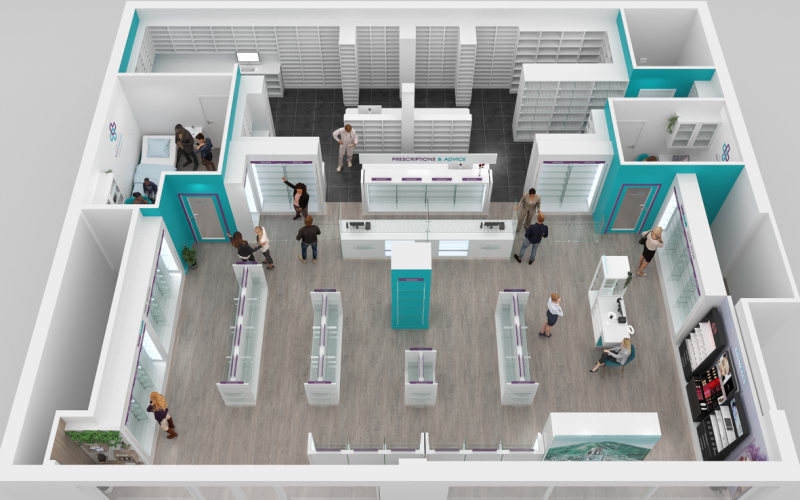
A pharmacy is more than just a store. It is a key healthcare center in the community. How you design your pharmacy affects patient safety, staff work, and your profits. A smart pharmacy design balances patient needs, daily work, security, and your brand. To do this well, you need a great design partner. Leaders like Ouyee Display know what modern pharmacies need. They know how to create spaces that work well and feel welcoming. This guide covers the main ideas, layout plans, key design parts, and rules to help you build a top pharmacy.
Key Takeaways
- Focus on Dual Journeys: A good pharmacy layout thinks about both patient and staff paths. Then it brings them together for best results.
- Function Over Form: Looks matter, but function comes first. This means good workflow, safe storage, and strong materials.
- Compliance is Non-Negotiable: Your design must follow rules like ADA and protect patient privacy with HIPAA.
- Furniture is Your Foundation: The right counters, shelves, and storage are key to your work. They affect workflow and sales.
- Expert Partnership is Key: Working with a pharmacy design expert makes sure all needs are met well.
The Core Principles of a High-Performing Pharmacy Design
Before you place any counter or pick paint colors, you need to know the basic goals. These ideas will guide every choice you make. They make sure your space looks good and works well. A smart approach to pharmacy design sets you up for success.
Here are five core ideas to remember:
- 1. Patient-Centricity: The design should always put patients first. This means making a space that is easy to use and comfortable. It should give privacy for talks. Clear signs and easy flow reduce stress and build trust.
- 2. Workflow Efficiency: A pharmacy is a busy workplace. The layout must help the prescription process by cutting down staff steps. This reduces errors, cuts wait times, and makes staff happier.
- 3. Compliance and Safety: Your pharmacy must meet all health and building rules. This includes ADA for access and HIPAA for patient info. The design must also keep medications, staff, and patients safe.
- 4. Brand Identity and Professionalism: Your pharmacy’s look is a strong brand tool. The design should show skill, cleanliness, and trust. A professional look builds patient loyalty and sets you apart.
- 5. Flexibility and Future-Proofing: Pharmacy work is always changing. Your design should adapt to new tools like robots and new services like shots.
The Dual-Journey Layout: Optimizing for Patients and Staff
The best way to plan your pharmacy layout is to think of two connected trips. One is the patient’s path. The other is the staff’s work flow. When you make both work well together, you create a space for everyone. This approach prevents problems like slow work and crowded areas.
Mapping the Patient Journey
The patient’s visit starts when they see your storefront. Your design should guide them easily through each step.
A typical patient trip includes:
- Entrance: A clean, bright, automatic door welcomes people.
- Greeting & Drop-Off: A clear area to leave prescriptions without rush.
- Waiting Area: Comfortable seats with enough space to avoid crowds.
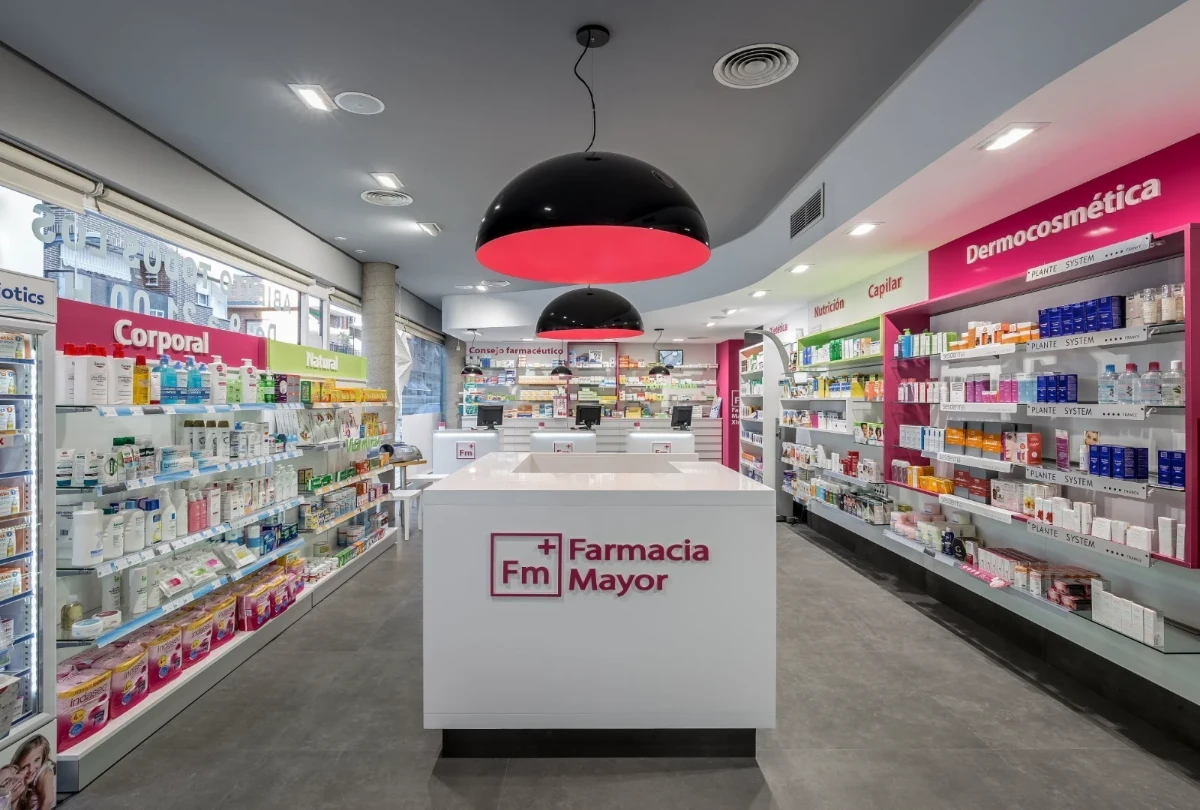
- Retail Browsing: Wide aisles that are easy to walk through. Clear product groups.
- Consultation: A private space for personal talks.
- Pick-Up & Payment: An organized counter process that is quick.
- Exit: An easy and clear path out of the store.
Mapping the Staff (Prescription) Journey
A good staff workflow is the heart of a profitable pharmacy. The dispensary layout is key for accuracy and speed.
The prescription trip from staff view involves:
- Prescription Intake: Getting the script at drop-off or electronically.
- Data Entry: A good computer station for entering info.
- Filling: The station where medication is counted or prepared.
- Verification: A separate area where the pharmacist checks without distraction.
- Secure Storage: Placing the finished prescription in an organized, safe spot.
- Dispensing: Getting the medication and completing the sale.
A logical “triangle” workflow between entry, filling, and checking stations is a classic design. It cuts down movement and helps pharmacists stay focused.
Integrating the Journeys: Common Layout Models
Once you know the two journeys, you can pick a layout that serves both. As noted in some Modern Pharmacy Design Ideas for Customer-Friendly Spaces, the goal is natural and comfortable flow.
Here is a comparison of common layout types:
| Layout Type | Best For | Patient Journey Pro/Con | Staff Workflow Pro/Con |
|---|---|---|---|
| Grid | Maximizing retail space; high-volume stores. | Pro: Easy to navigate, familiar. Con: Can feel sterile and uninspired. | Pro: Simple to stock shelves. Con: Can create long paths for staff. |
| Free-Flow | Boutiques; pharmacies with a focus on consultation. | Pro: Creates a high-end, exploratory feel. Con: Can be confusing without clear signage. | Pro: Allows for creative station placement. Con: Can be inefficient if not planned well. |
| Spine | Long, narrow spaces; pharmacies with a central path. | Pro: Guides customers directly. Con: Can feel like a hallway; less browsing. | Pro: Can create a very efficient linear workflow. Con: Less flexible for staff movement. |
Essential Design Elements: Crafting a Healing Environment
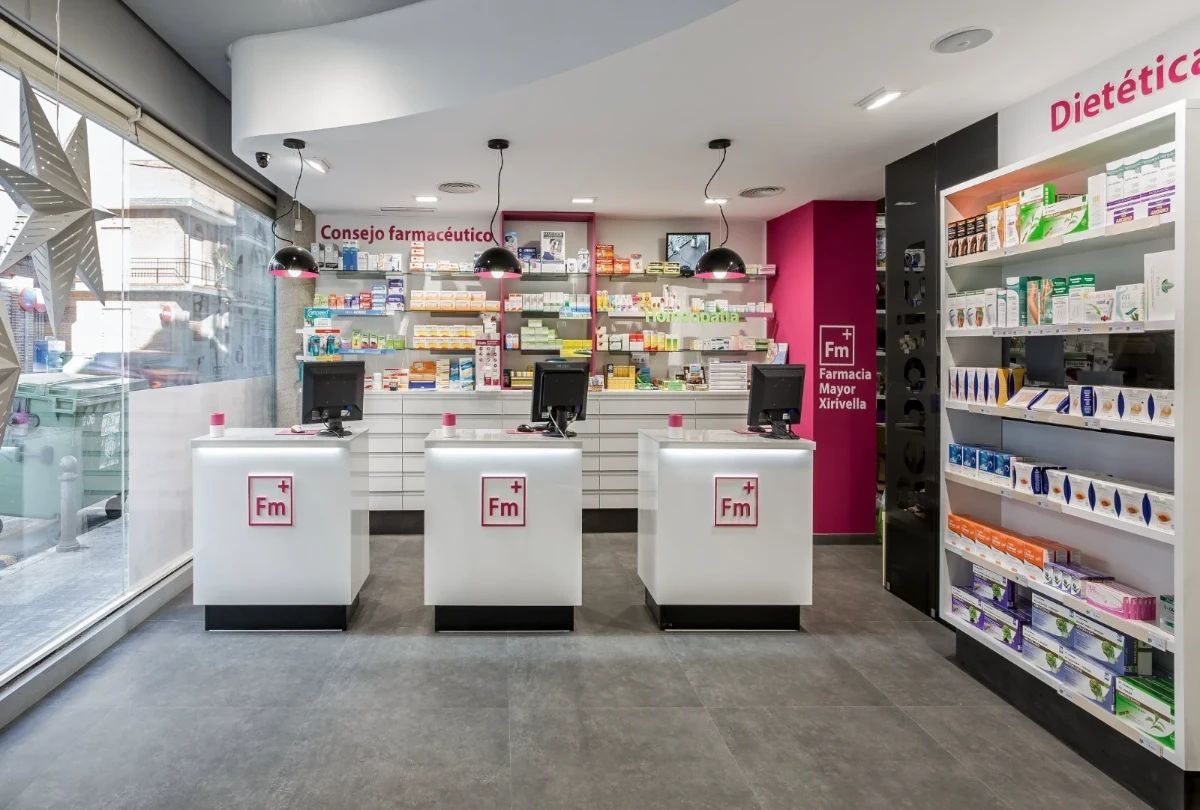
How your pharmacy looks and feels really matters to patients. Smart choices in color, lighting, and materials can reduce worry, build trust, and create a nice space. When you design a pharmacy, these details matter as much as the layout.
The Psychology of Color
Color can change mood. For a healthcare setting, it’s best to use calming colors.
- Blues, greens, and warm neutrals like beige or light gray have a soothing effect. They work well for waiting areas and talk rooms.
- Bold accent colors from your brand logo can be used sparingly. They create interest and strengthen your identity without overwhelming the space.
Lighting for Clarity and Comfort
Good lighting is key for both safety and mood. A good lighting plan uses three layers.
- Task Lighting: This is bright, clear, focused light for work areas. The dispensary, checking station, and sales counters need great task lighting to prevent errors.
- Ambient Lighting: This is the overall light in the space. In retail and waiting areas, it should be softer and more welcoming than task lighting.
- Accent Lighting: This highlights specific features. It can show high-profit retail products, promotional displays, or professional signs.
Flooring and Material Selection
The materials you pick must handle heavy traffic and frequent cleaning.
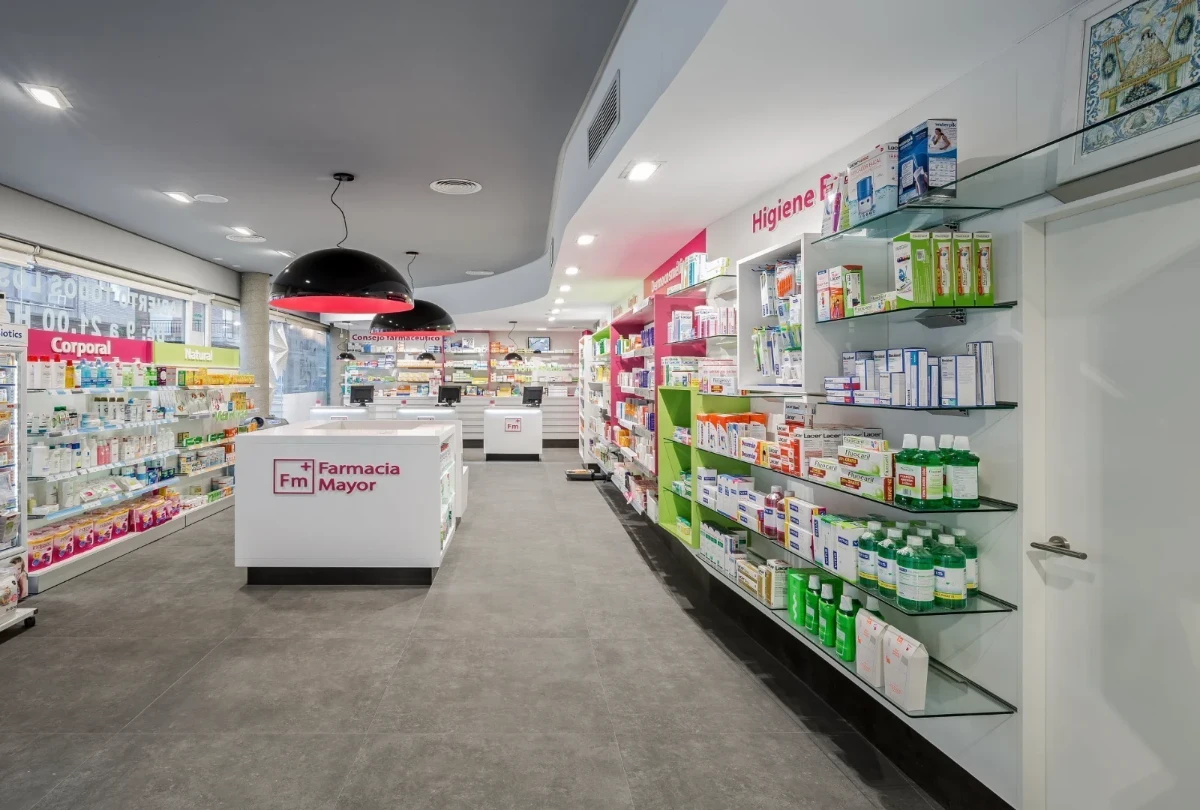
- Durability and Cleanliness: Focus on surfaces that don’t absorb liquids and are easy to clean. Luxury Vinyl Tile (LVT) is popular because it is strong, water-resistant, and comes in many designs.
- Safety: Flooring should prevent slips, especially near the entrance where water may come in.
For great ideas, looking at a gallery of medicine shop interior design ideas can help you see how different colors, lighting, and materials work together.
Furnishing for Function and Form: The Heart of Your Pharmacy
The fixtures and furniture you choose are the workhorses of your pharmacy. They are not just for display. They are key tools that define your workflow and shape customer experience. The right pharmacy furniture serves as the backbone of an efficient and professional operation.
The Pharmacy Counter: Your Command Center
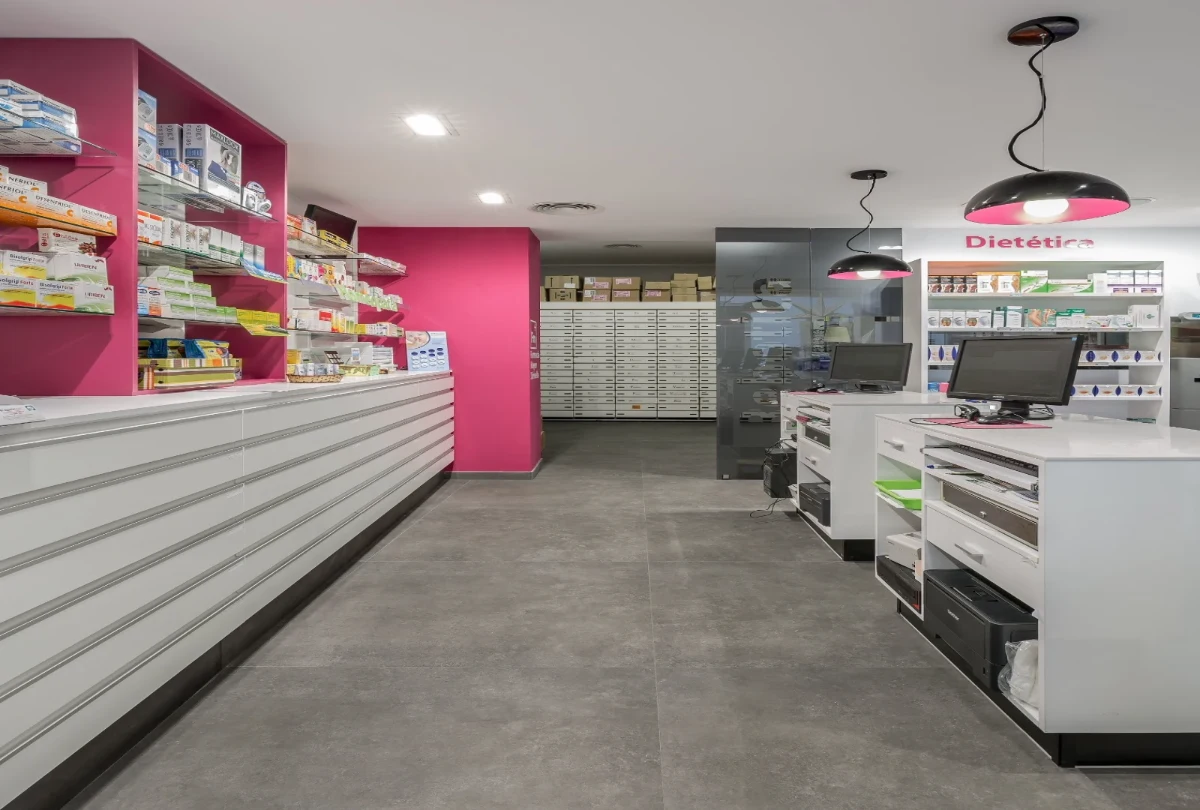
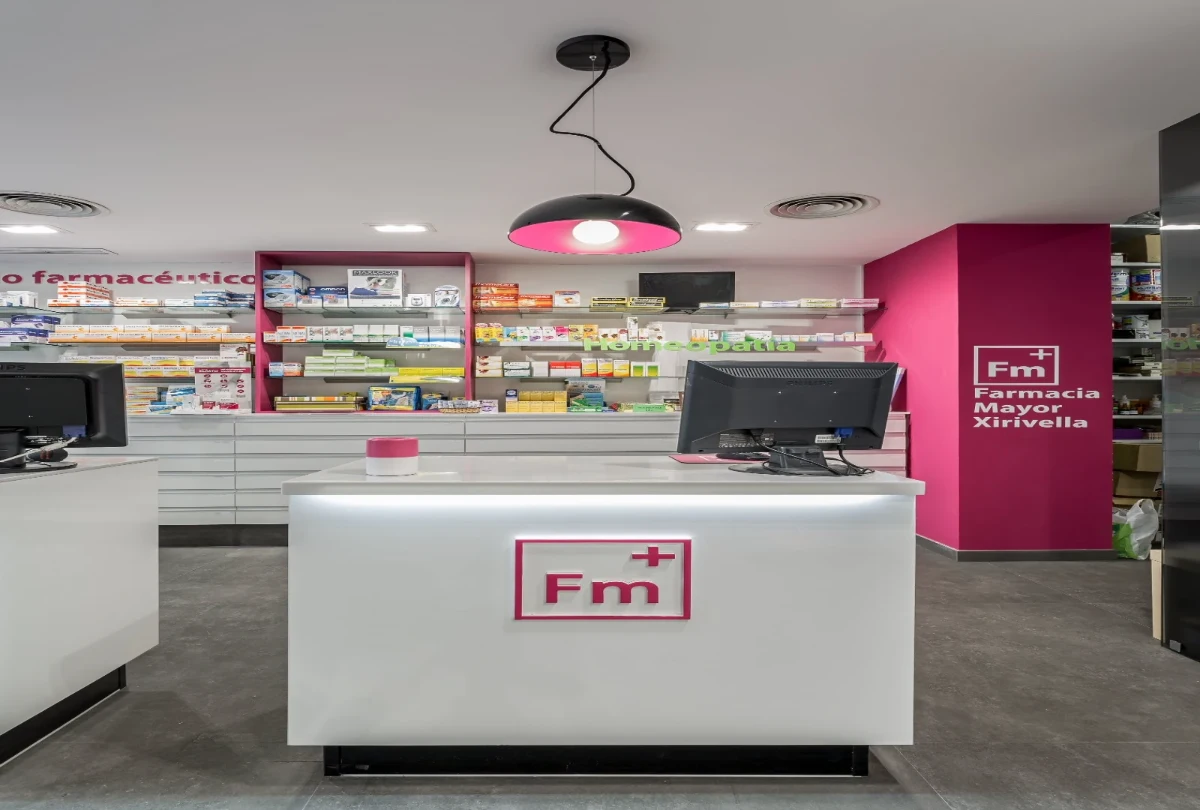
The pharmacy counter is the most important piece of furniture in your store. It serves as a point of sale, a barrier for the secure dispensary, and the main point of contact with patients.
A well-designed pharmacy counter must do many things. It needs space for POS systems, computers, and printers. It should also have privacy panels to shield talks and transactions. Importantly, a section of the counter must be ADA-compliant. This is typically between 28-36 inches high to ensure access for all patients.
Shelving and Merchandising Displays
Your shelving strategy is key to maximizing sales and keeping your pharmacy organized. It’s important to think about front retail shelving and behind-the-counter dispensary shelving differently.
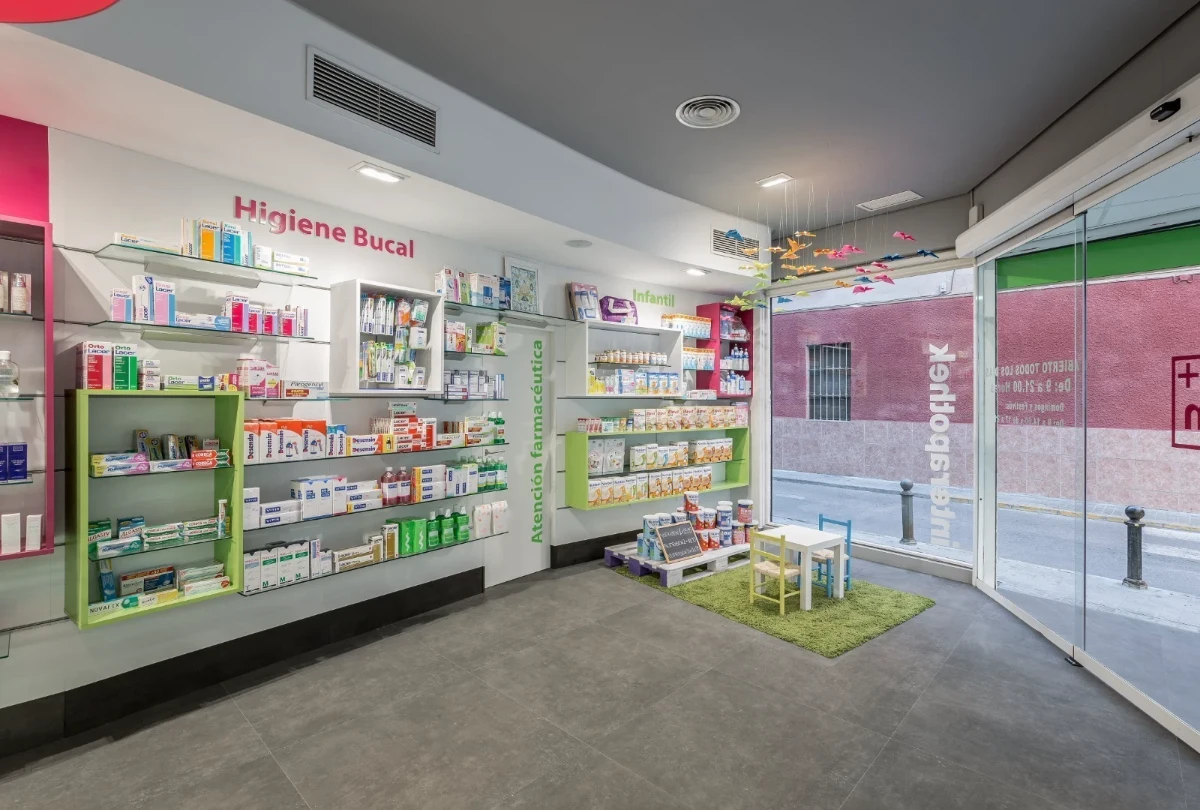
For retail areas, a well-organized pharmacy wall shelf system makes it easy for customers to find what they need. Gondolas and end caps can feature promotional items and drive impulse buys. In the dispensary, shelving must be designed for speed and organization. Frequently used drugs should be placed in the most accessible locations.
Secure Storage: The Dispensary and Stock Room
The most critical element behind the counter is the secure and organized storage of medications. A messy or insecure dispensary is a major risk.
High-density drawers, lockable cabinets, and specialized refrigerated units are essential. A proper medicine display cabinet or drawer system in the dispensary prioritizes organization, security, and quick access above all else. This ensures that staff can locate medications quickly and that controlled substances are always secure.
Designing for Trust, Privacy, and Compliance
A successful pharmacy design goes beyond looks and workflow. It must build patient trust by creating a secure and private environment. It must also strictly follow all legal rules. This focus on compliance is a must in modern pharmacy design.
Creating Confidential Spaces
Patients often need to discuss sensitive health information. Your design must provide a space for these conversations to happen privately.
Options range from fully enclosed consultation rooms to semi-private nooks. These can be created with acoustic panels and smart furniture placement. The goal is to ensure patients feel comfortable speaking with your staff. Professional firms like The Pharmacy Design Group specialize in creating layouts that smoothly integrate these private spaces into the overall floor plan.
Ensuring Accessibility (ADA Compliance)
The Americans with Disabilities Act (ADA) sets clear requirements for public spaces. They must be accessible to everyone. Failure to comply can result in big penalties.
Your pharmacy design must include:
* Aisle Width: Aisles must be at least 36 inches wide. A 48-inch width is needed in some areas for wheelchair turning space.
* Counter Height: A portion of the main transaction counter must be no higher than 36 inches.
* Reachable Shelves: Some retail products should be placed on shelves that are within reach for a person in a wheelchair.
* Clear Pathways: All paths of travel must be free of obstructions.
Security by Design
Security is a top priority. A smart layout can significantly enhance the safety of your staff and your inventory.
Design the dispensary to be in a location that is not easily accessible to the public. This is often at the back of the store. Use the counter as a natural barrier. Ensure staff have clear sightlines across the retail floor to monitor activity. Of course, lockable cabinets for controlled substances and a reliable surveillance system are also essential components of a secure design.
Bringing Your Vision to Life: Partnering with a Pharmacy Design Expert
While this guide provides a solid blueprint, executing a flawless pharmacy design requires specialized knowledge and experience. The complexities of healthcare regulations, workflow optimization, and fixture manufacturing make a professional partnership invaluable.
The video below explains the typical process of working with a design firm, from the initial idea to the final installation.
Hiring a specialist offers numerous benefits. They have deep knowledge of compliance, established relationships with suppliers, and the project management skills to keep your build-out on time and on budget. As firms like Concept Pharmacy + Clinic Design show, specialists bring a level of focus on healthcare environments that general contractors may lack.
The typical process includes:
1. Consultation: Discussing your vision, needs, and budget.
2. Site Visit: Analyzing your space and taking precise measurements.
3. 2D/3D Renderings: Creating detailed plans and visual models for your approval.
4. Manufacturing: Building the custom fixtures and furniture.
5. Installation: Assembling and installing everything on-site.
A great pharmacy design is an investment that pays for itself through increased efficiency, higher sales, and lasting patient loyalty.
Frequently Asked Questions (FAQ)
What is the most important factor in a small pharmacy design?
For small pharmacies, the most critical factor is space optimization. This involves using vertical space effectively with floor-to-ceiling shelving, selecting multi-functional furniture, and implementing a streamlined layout that doesn’t feel cramped. A well-placed pharmacy counter and smart storage are key to making a small footprint work efficiently.
How can I improve workflow efficiency with design?
Focus on a “golden triangle” workflow for staff between the drop-off window, filling station, and verification/dispensing areas. Minimize physical steps. Use automated dispensing technology if possible, and ensure all necessary tools and supplies are within arm’s reach at each workstation. A logical design of the pharmacy workspace is paramount.
What are the biggest design mistakes to avoid?
Common mistakes include poor lighting (especially in the dispensary), inadequate waiting space leading to crowding, neglecting patient privacy at the counter, and choosing aesthetics over functionality. This last mistake can lead to inefficient workflows and staff frustration, undermining the entire purpose of a good pharmacy design.
How much does it cost to design and furnish a pharmacy?
Costs vary dramatically based on size, location, and the quality of finishes and furniture. A basic remodel might cost a few thousand dollars, while a full design and build-out for a new pharmacy can range from $50,000 to over $200,000. Working with a pharmacy design company can help you get detailed quotes and manage your budget effectively.
How does good design increase pharmacy profitability?
Good design increases profitability in several ways. An efficient workflow allows staff to fill more prescriptions accurately and faster. A welcoming retail layout with strategic product placement boosts front-end sales. Finally, a professional and trustworthy environment enhances patient loyalty and retention, securing your customer base for the long term.