
In luxury retail, a store is more than just a place to sell things. It is a stage where a brand’s story comes alive. A well-designed space creates a feeling. It makes an experience that stays with customers long after they leave. The ShengDa High-end Jewelry Shop Design shows this idea perfectly. It mixes modern style with timeless grace. This creates a model for jewelry stores everywhere. This article will break down the ShengDa design. It will give you clear rules to build your own luxury retail space. We will look at the key parts of the ShengDa style. We will also explore the rules of luxury design and the thinking behind it all.

Key Takeaways
* The ShengDa design uses neutral and gold colors to make jewelry the main focus.
* High-quality materials like marble, metal, and ultra-clear glass are key for a luxury feel.
* A store’s layout and lighting should guide customers and highlight products.
* Good design tells your brand’s story and focuses on the customer’s total experience.
* Picking the right jewelry showcase maker is important for both safety and style.
* A clear, step-by-step plan is needed to take your design from idea to opening.
Case Study: Breaking Down the ShengDa High-end Jewelry Shop Design
To understand what makes the ShengDa High-end Jewelry Shop Design work so well, we must look at its parts. Each choice of color, material, and light is made for a reason. Together, they create a space that feels both welcoming and special. This careful planning is a mark of great retail design.
The Smart Use of Neutral and Gold Colors
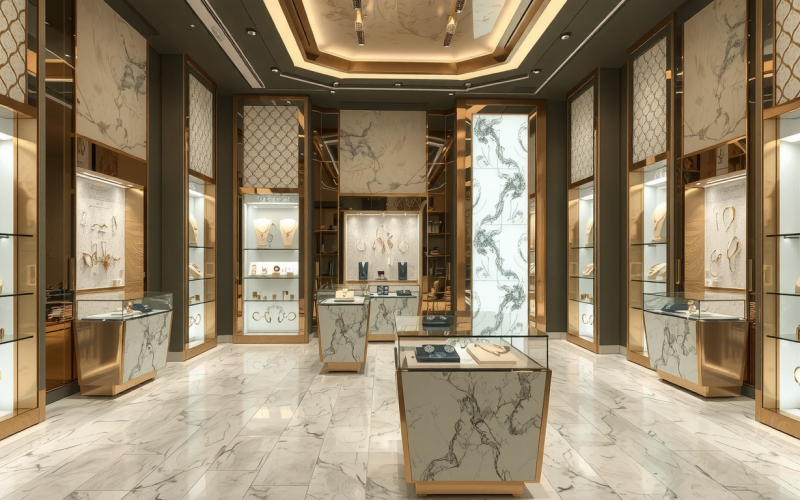
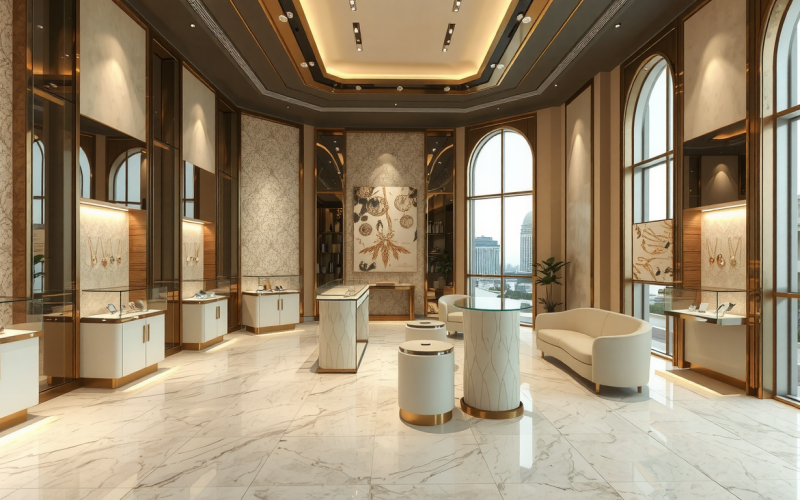
The color plan in the ShengDa design is simple but strong. The walls, floors, and large furniture use soft, neutral colors. These include beige, cream, and gentle gray. This calm background does two important things.
First, it creates a feeling of calm and class. The space feels open and clean, not loud or busy. Second, these quiet colors make the gold and bronze accents stand out. The metallic finishes on showcases and fixtures add warmth. They also add a touch of classic luxury. Most importantly, this color plan makes sure the real stars—the jewelry—shine brightest.
Material Choice: A Mix of Marble, Metal, and Glass
The materials used in a high-end jewelry shop design show quality without words. The ShengDa design perfectly combines three key materials. Polished marble floors reflect light. This adds to the store’s brightness and gives a sense of solid, lasting value.
Brushed gold or bronze metals are used for showcase frames and details. This choice is warmer and more welcoming than shiny chrome. Finally, ultra-clear, low-iron glass is used for all showcases. This type of glass has no green tint. So customers see the true color and sparkle of the diamonds and gems inside.
| Material | Key Properties | Contribution to Luxury Feel |
|---|---|---|
| Polished Marble | Durable, Reflective, Solid | Elegance, Permanence, Cleanliness |
| Brushed Bronze | Warm Tone, Rich Texture | Classic Luxury, Warmth, Sophistication |
| Ultra-Clear Glass | High Clarity, Secure, Low Tint | Unobstructed View, Preciousness |
Store Flow and Customer Journey
The layout of the ShengDa High-end Jewelry Shop Design is open and easy to understand. There are no confusing paths or dead ends. From the moment a customer enters, their journey is guided gently through the space. The store is often set up in clear zones.
You might find a section for wedding collections. Another area for high-value statement pieces. And another for more affordable items. This zoning helps customers find what they want easily. The path often leads from the open browsing areas at the front. It goes to more private, comfortable seating areas at the back. These quiet spaces allow for personal talks and a more relaxed decision process. The flow feels natural, not forced.
The Art of Light: Layered Lighting Design
Lighting is one of the most important parts of any jewelry store. The ShengDa design uses a layered approach. This creates the perfect mood and makes the products sparkle. This plan involves three types of lighting working together.
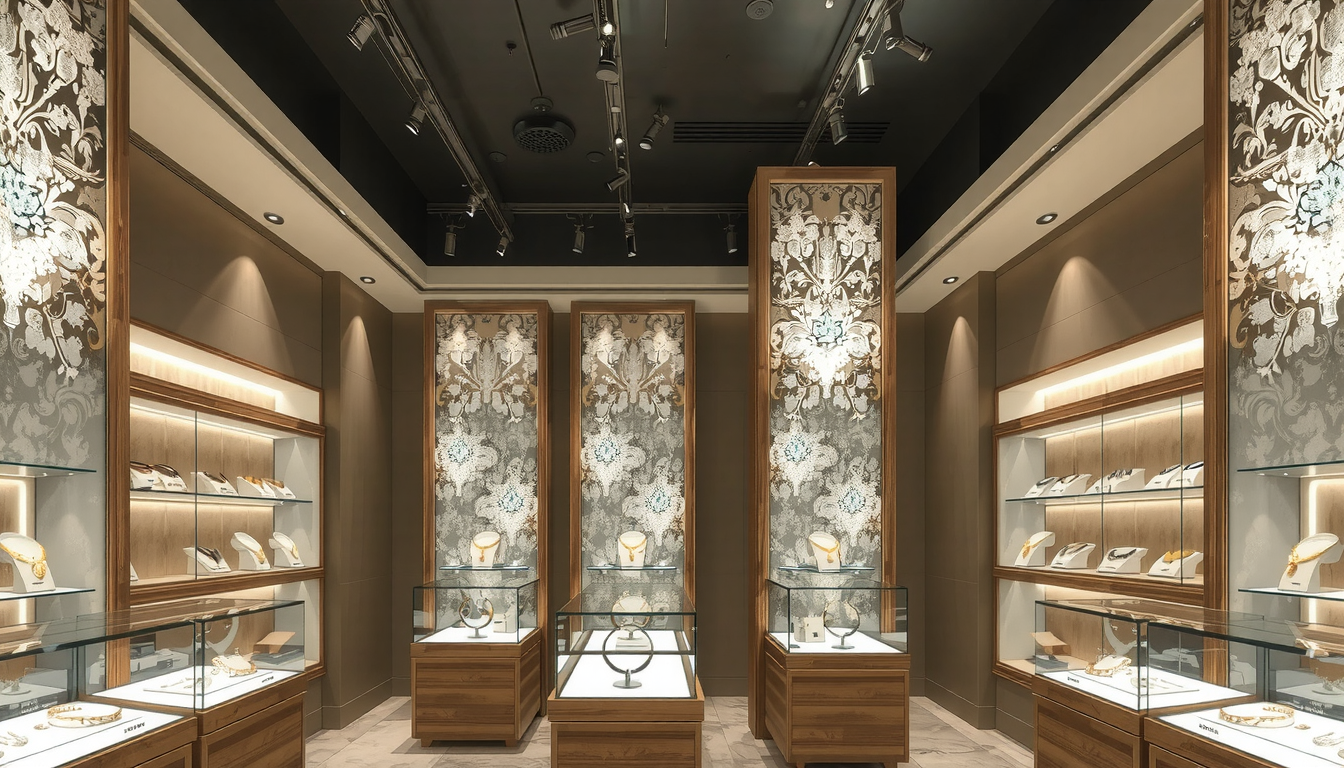
Ambient lighting provides the general light for the store. This often comes from beautiful chandeliers or soft, recessed ceiling lights. Task lighting is focused light aimed at the jewelry itself. Small, powerful LED spotlights inside each showcase are a key part of this. Accent lighting adds visual interest. This can be wall lights or decorative lamps that highlight building features or displays.
The 5 Basic Rules of Modern Luxury Jewelry Store Design
Studying the ShengDa High-end Jewelry Shop Design gives us a model. But we can also pull out broader rules from it. These five rules can guide any brand owner or designer looking to create a world-class luxury space. They move beyond a single style to offer a framework for success.
1. Brand Storytelling Through Space
Your store’s design should be a physical version of your brand’s identity. It should answer the question: who are you? Are you modern and bold, or classic and romantic? Every choice should support your story. This includes the color of the walls and the shape of the display cases. A successful jewelry store design isn’t just beautiful. It tells a story that connects with your target customer on an emotional level. This is what turns a visitor into a loyal client.
2. The Importance of Customer Experience
A luxury experience goes beyond what the eye can see. It involves all the senses. Think about the comfort of the chairs in the consultation area. Consider the subtle, pleasant scent in the air. Think about the curated music playing softly in the background. Private viewing rooms offer a sense of being special. A welcoming staff offering a drink makes a customer feel valued. These details create a complete and memorable experience.
3. The Science of Product Display
How you display your jewelry has a direct impact on sales. The ShengDa design shows that less is often more. Crowded showcases can look cheap. They make it hard for customers to focus. Grouping items by collection or style creates a clean, organized look. The height of displays is also important. Key pieces should be at eye level. This focus on careful arrangement is part of what the new rules of luxury retail are all about. It blends physical and emotional appeal.
4. Smooth Integration of Technology
Modern luxury includes modern technology. But it should be integrated smoothly. This means no clumsy wires or ugly screens. Digital displays can show brand videos or close-up shots of detailed pieces. Tablets can be used by staff to show customers different options. They can also show customization possibilities. Even the point-of-sale system should be sleek and efficient. This makes the final step of the purchase feel as premium as the first. The goal is to use technology to enhance the experience, not dominate it.
5. Security by Design
Security is a top priority for any jewelry store. But it should not make the space feel like a fortress. A great high-end jewelry shop design builds security into its very structure. This includes using reinforced, laminated glass for showcases. It also means installing high-quality, hidden locks. Camera systems should be placed strategically for full coverage. But they should not be intrusive. Private viewing rooms and secure back-office areas also add a layer of safety. The best security is effective but almost invisible to the customer.
The Psychology of Luxury: How Materials and Lighting Shape Buyer Behavior
Why does a space like the ShengDa High-end Jewelry Shop Design feel so luxurious? It is because the design choices tap into deep human psychology. Our brains make instant judgments based on what we see and touch. Understanding this allows us to create spaces that trigger feelings of quality, desire, and trust.
The Touch and Visual Power of Materials
The materials in a store speak a silent language. Each one sends a different message to the customer’s subconscious mind.
-
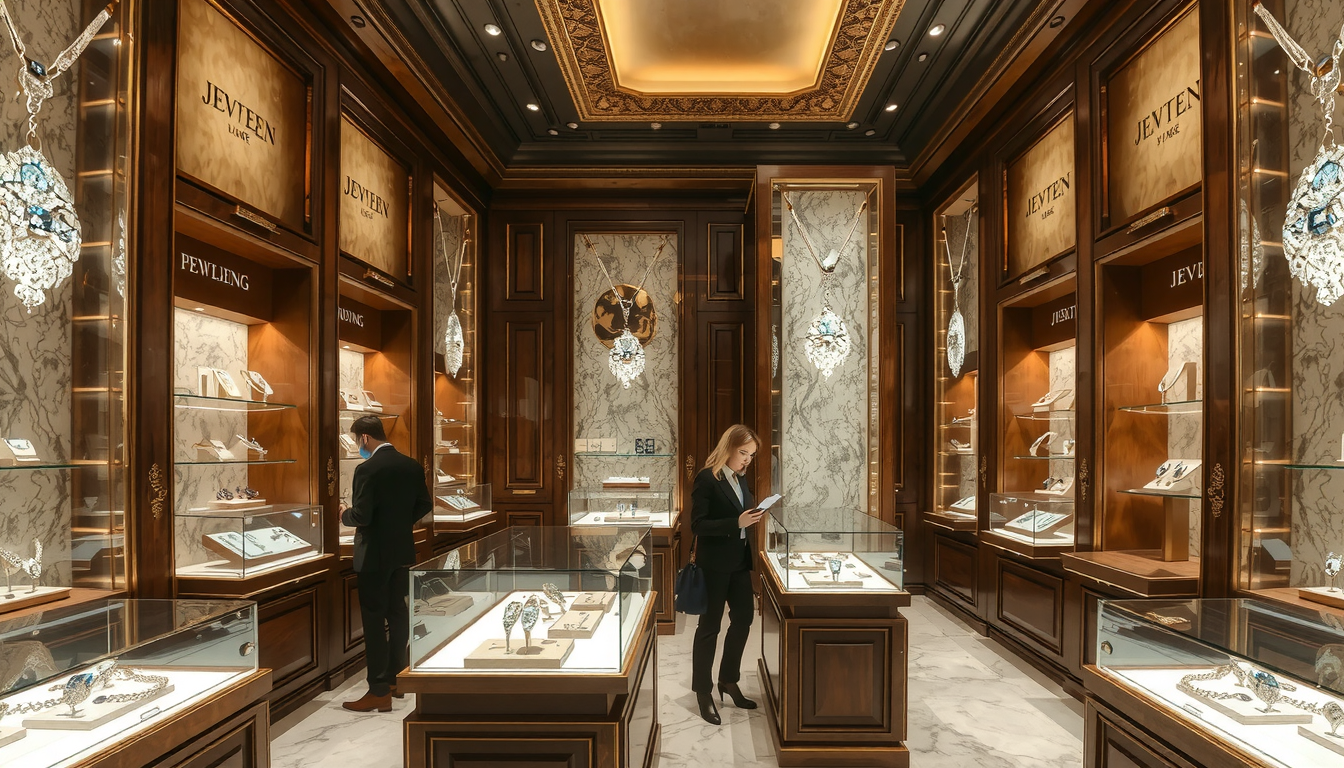
Weight & Solidity (Marble, Hardwoods): When we see or touch heavy, solid materials, we think of permanence and stability. Marble floors and thick wood panels suggest that the brand is established. They show it is trustworthy and offers products of real value.
-
Shine & Warmth (Brushed Brass, Bronze): Shiny, warm metals have been linked with wealth and royalty for centuries. Unlike cold, sterile chrome, brushed brass and bronze feel classic and inviting. They add a soft glow that feels rich and sophisticated.
-
Clarity & Value (Glass, Crystal): Clear glass protects the jewelry while allowing a perfect view. This creates a psychological effect. The object behind the glass is presented as something precious and treasured. It is worthy of being kept safe. This increases its perceived value.
Using Light to Create Desire
Light is perhaps the most powerful tool for influencing mood and perception in a jewelry store. It is both an art and a science. As noted by experts in The Art and Science of Retail Lighting, the right light can transform a space.
-
Color Rendering Index (CRI): CRI measures how accurately a light source shows the true colors of an object. For jewelry, a high CRI of 95 or more is a must. This industry standard ensures that a diamond’s fire is seen exactly as it is. A sapphire’s deep blue and an emerald’s rich green are also shown truly. Low CRI light can make expensive gems look dull and lifeless.
-
Color Temperature (Kelvins): Light has a color, measured in Kelvins (K). Warmer light (around 3000K) has a yellowish tone. This makes gold jewelry look rich and vibrant. Cooler light (around 4000K-5000K) has a whiter, brighter tone. This is perfect for making diamonds and platinum sparkle brilliantly. Many stores use a mix to best suit different collections.
-
Focus and Contrast: A store that is lit too evenly can feel flat and boring. The best designs use contrast. By creating “pools” of bright light on the showcases and keeping surrounding areas slightly dimmer, the eye is naturally drawn to the product. This makes the jewelry the hero of the space.
Selecting Modern Store Fixtures: The Building Blocks of a High-End Jewelry Shop Design
The theoretical principles of a design like the ShengDa model are brought to life through physical fixtures. The showcases, counters, and displays are the workhorses of your store. They must be beautiful, functional, and secure. Choosing the right fixtures is a critical step in building your own high-end jewelry shop.
Essential Types of Jewelry Showcases and Displays
Different types of showcases serve different purposes within the store’s layout. A well-designed space uses a mix of these to create a dynamic and engaging environment.

- Standard Counter Showcases: These are the classic, waist-high counters that form the main browsing areas. They allow staff and customers to interact comfortably over the display.
- Pedestal Showcases: A single, tall display case used to highlight a “hero” piece. This could be a signature necklace or a new collection. They draw attention and signify importance.
- Wall-Mounted Showcases: These are built into the walls, saving floor space and creating a gallery-like feel. They are great for organizing collections and adding vertical interest.
- Tower Displays: Tall, freestanding glass towers that offer 360-degree views of the items inside. They work well in open areas or near the entrance to catch the eye.
Key Features to Demand from a Jewelry Showcase Manufacturer
When you invest in fixtures, you are investing in your brand’s image and security. Not all showcases are created equal. Here is a checklist of what to look for in a quality supplier.
- Lighting: The showcase must have built-in, low-heat LED lighting. The LEDs should have a high CRI (95+) to show true colors.
- Glass: Demand ultra-clear, anti-reflective glass for the best view. For security, the glass should be tempered or laminated to resist breakage.
- Locks: Locking mechanisms should be high-quality and secure. But they should also be hidden so they don’t take away from the elegant design.
- Materials & Finish: Look for perfect finishes with no visible seams or gaps. The materials should be durable and the joinery precise.
- Customization: The ability to match the jewelry showcase to your specific brand look. When checking out a jewelry showcase manufacturer, always ask about their customization capabilities.
From Concept to Grand Opening: Your 5-Step Implementation Plan
Having a vision for a ShengDa-style high-end jewelry shop design is the first step. Turning that vision into reality requires a structured plan. This five-step process breaks down a complex project into manageable stages. It guides you from the initial idea to the final, polished result.
Step 1: Vision & Budgeting
This is the foundation. Clearly define your brand identity and your target customer. What feeling do you want your store to evoke? At the same time, establish a realistic budget. Understand that high-quality materials and craftsmanship are an investment. A clear vision and budget will guide all future decisions.
Step 2: Conceptual Design & Layout
This is where the creative work begins. Work with professional designers to translate your vision into concrete plans. This stage involves creating mood boards to define the aesthetic. It also involves developing detailed floor plans for traffic flow and generating 3D renderings. These visuals allow you to see and refine your store before any construction begins.
Step 3: Sourcing & Manufacturing
With the design finalized, it’s time to source the materials and commission the fixtures. This involves selecting the exact marble, metal finishes, and lighting components. Partnering with an experienced, full-service firm like Ouyee Display can integrate the design and manufacturing phases. This ensures your vision is executed perfectly. They can build the custom showcases and displays to the exact specifications of the design.
Step 4: Construction & Installation
This is the physical build-out phase. Your general contractor will prepare the space. This includes electrical, flooring, and wall finishes. Once the main construction is complete, the specialized team will come in. They will install the custom-made showcases, lighting systems, and other fixtures. Careful coordination is key to a smooth process.
Step 5: Merchandising & Final Touches
The store is built, but the final magic happens here. This is the art of placing the jewelry in the showcases. It involves arranging the pieces to tell a story. It also means setting up the lighting for maximum sparkle and adding the final decorative touches. This stage prepares the store for its grand opening. It ensures it makes a stunning first impression.
FAQ: Answering Your Top Questions on High-end Jewelry Shop Design
1. What is the average cost to design and build a high-end jewelry store?
Costs vary widely based on location, store size, and the quality of materials. A realistic range is typically between $150 to $500+ per square foot. The budget is generally split between design fees, fixtures and showcases, general construction, and specialized lighting systems.
2. How long does a typical jewelry store design project take from start to finish?
A full project timeline can range from 3 to 6 months or more. This can be broken down into phases: Design and Planning (4-6 weeks), Fixture Manufacturing (6-8 weeks), and On-site Construction and Installation (4-10 weeks). Custom work and high-quality finishes require time and should not be rushed.
3. What is the most important element in a ShengDa-style high-end jewelry shop design?
While all elements work together, lighting is arguably the most critical. You can have the most beautiful materials and stunning jewelry, but poor lighting will make everything look dull. Expert lighting elevates the entire space, creates the right mood, and makes the products truly sparkle and sell themselves.
4. How can I make a small jewelry store feel luxurious?
Focus on quality over quantity. Use high-end materials like a marble countertop or brass accents, even in a small area. Maintain a simple, cohesive color palette to make the space feel larger. Most importantly, invest in brilliant lighting and a few exquisite, custom-made jewelry showcases instead of many generic ones.
5. Do I need to hire a professional jewelry store design company?
While it’s not mandatory, it is highly recommended for a project like a ShengDa-inspired store. A professional firm brings deep expertise in customer flow, lighting science, security integration, and brand storytelling. They help you avoid costly mistakes and ultimately create a more effective, profitable, and beautiful retail environment.



 English
  German
  Arabic
  French
  Spanish
  Italian
  Russian
  Turkish
  Portuguese
  Japanese