A high-end jewelry showroom is more than just a store. It’s a special place to visit. It’s the heart of a brand. It’s where stories come alive through light, texture, and space. Few brands know this better than Piaget. They’re famous for their beautiful jewelry. They’re also known for creating amazing spaces to show their pieces. Piaget succeeds by turning their “Sunny Side of Life” idea into a real experience. Every customer feels it. They do this by paying close attention to light, materials, and storytelling through space. This article will break down Piaget’s design approach. We’ll look at its main parts. We’ll offer useful tips for other luxury brands. These brands want to create memorable beautifully designed jewelry boutiques.
Key Takeaways
- Brand Story is Foundation: A strong brand idea, like Piaget’s “Sunny Side of Life,” must guide any successful high-end jewelry showroom design.
- Lighting is Key: Layered lighting—background, task, and accent—is vital for setting the mood and making jewelry shine.
- Materials Create Luxury: A mix of top materials like brass, velvet, and natural stone creates a rich experience that shows quality.
- Layout Guides the Journey: Smart zoning and private viewing rooms create a story flow. This makes customers comfortable and encourages them to explore.
- Displays are Product-Specific: Jewelry and watches need different display methods to show their unique qualities, from sparkle to precision.
The “Sunny Side of Life”: Brand Ethos to Showroom Ambiance
Excellent high-end jewelry showroom design always begins with a strong brand story. It’s the primary thought that influences every decision, from the color of the walls to the softness of the chairs.
What is the “Sunny Side of Life”?
Piaget’s central theme is a celebration of light, energy, and shared happiness. This is a positive and sophisticated outlook on life. The brand uses elements like the sun, blooming roses, and bright colors, which reflect this concept. These brand symbols come from places like the French Riviera.
From Philosophy to Physical Space
The idea is to convert this intangible concept into a tangible experience once you enter the showroom. The design invites customers to feel the brand’s warmth, elegance, and playfulness. It’s not only about looking at a collection of jewelry. It’s about entering the world of Piaget. Each detail is united in the goal of creating this unistic atmosphere.
Deconstructing the Piaget Aesthetic: Core Elements of Luxury
In order to achieve this, Piaget applies specific design components. These serve as the building blocks of their luxury environment. Dissecting them exemplifies the mechanics of effective high-end jewelry showroom design.
A Symphony of Light
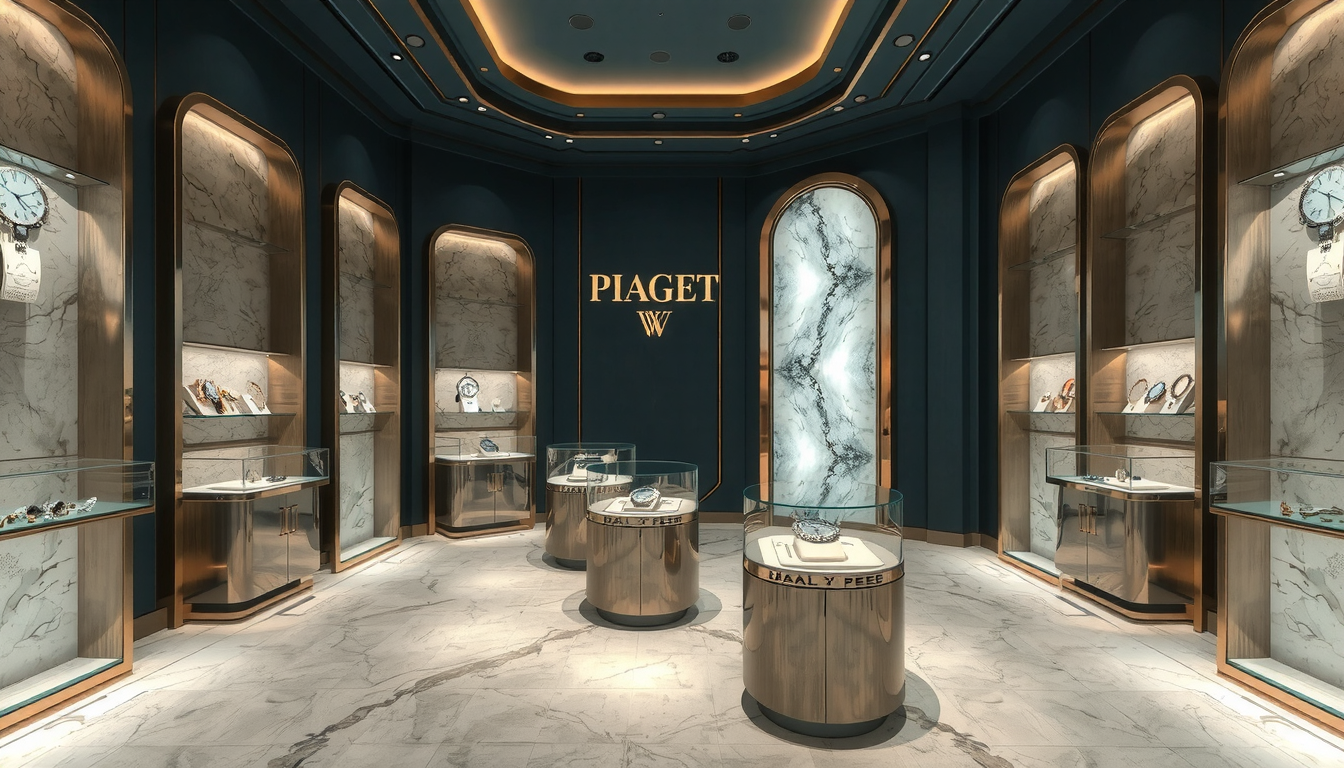
Lighting in a Piaget boutique does more than help you see. It creates a feeling. They use a layered approach with three types of light.
Background light provides a soft, warm glow throughout the store. It feels like gentle sunshine. This makes the space welcoming and comfortable.
Task lighting is focused and very important. It uses high-CRI (Color Rendering Index) bulbs inside display cases. This ensures the light shows the true color and fire of gemstones. It also shows the fine details of watch parts.
Accent lighting adds drama. It might be a spotlight on a wall texture or a special art piece. These lights often look like rays of sun. They add visual interest and guide the eye.
Materiality and Texture
Touching and feeling are part of the luxury experience. Piaget chooses materials that are beautiful to look at and nice to touch. The choice of materials is crucial in luxury jewelry design, as it reflects the quality of the products.
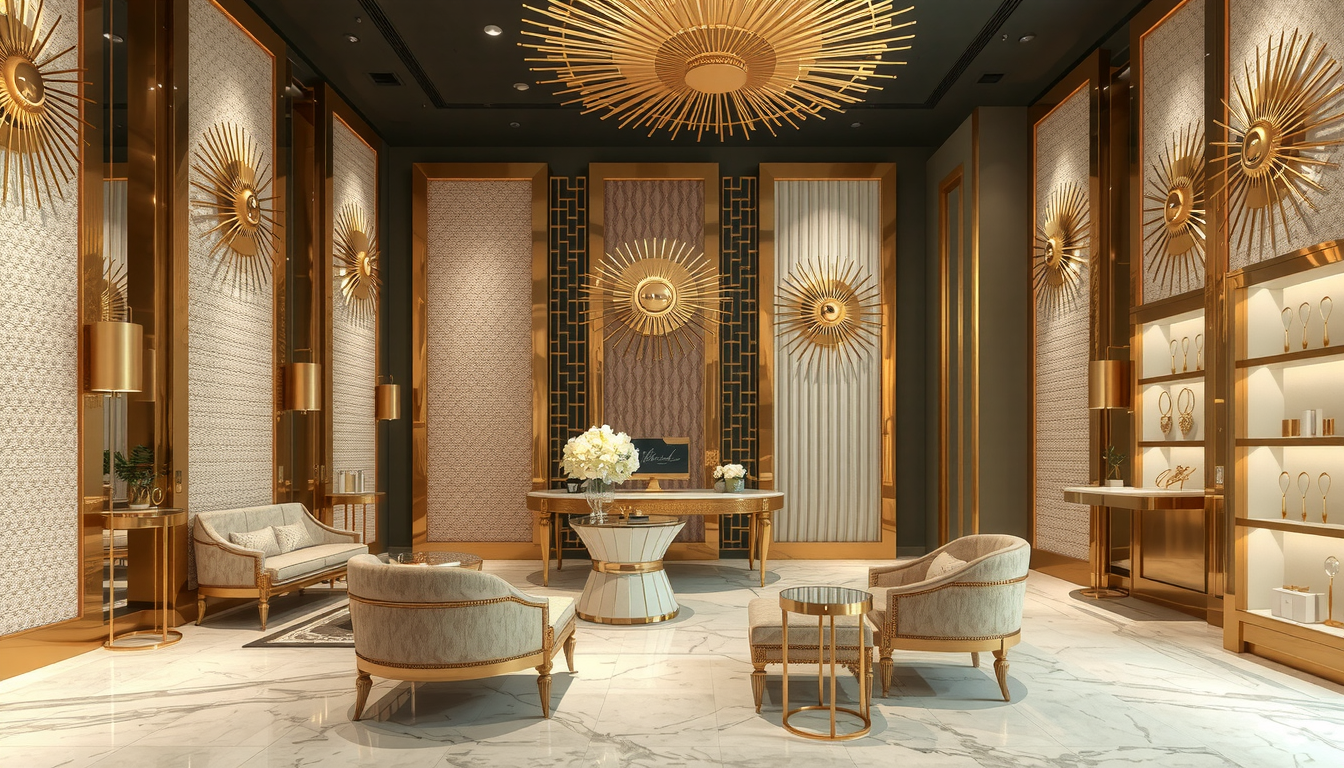
- Polished Brass & Gold Finishes: These metals are used on fixtures and details. They reflect the precious metals in Piaget’s jewelry. They add a warm, rich feeling.
- Textured Wall Panels: Walls are often covered in special panels. Some have patterns that look like sun rays. Others copy the look of fine fabrics. This adds depth and elegance.
- Luxurious Fabrics: Velvet and silk are used for chairs and in private viewing areas. These soft materials add comfort and classic luxury.
- Natural Stone: Floors and counters are often made of marble or travertine. This provides a solid, timeless, and elegant base for the entire design.
The Piaget Color Palette
Color is used to create a steady and bright mood. The main colors are gold and white. These feel bright and sunny. They are paired with a deep, rich “Piaget blue” as a strong accent. Sometimes, you will see touches of other bright colors. Like the green of malachite. These are direct references to the gemstones used in their famous jewelry.
Spatial Storytelling: Guiding the Customer Journey
The layout of a showroom is a silent guide. A well-planned space tells a story and makes the customer experience better. Great high-end jewelry showroom design thinks about how a client moves and feels in the space.
The Welcoming Entrance
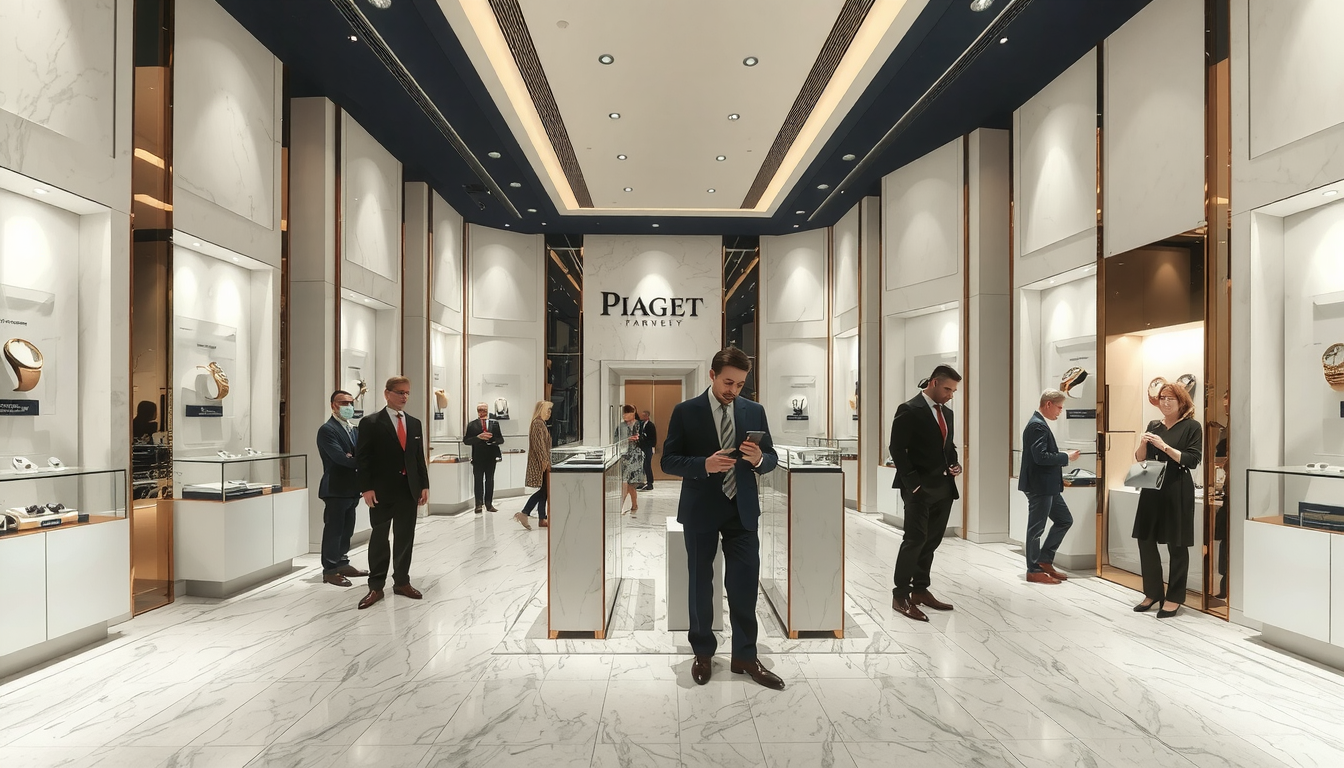
The entrance to a Piaget boutique is open and clean. It gives clients a moment to adjust from the busy world outside. Instead of a pushy sales counter, there is often a beautiful centerpiece or a welcoming desk. This is like a hotel front desk. This creates a relaxed and impressive first impression.
Strategic Zoning for Discovery
The showroom is carefully divided into different zones. You might find areas for high jewelry, bridal collections, timepieces, and famous lines. This separation allows for different moods within one store. The watch area might feel more technical and masculine. The bridal section is softer and more romantic. This approach encourages customers to explore and discover. This is a key part of effective jewelry store design.
The Sanctum: Private Viewing Rooms
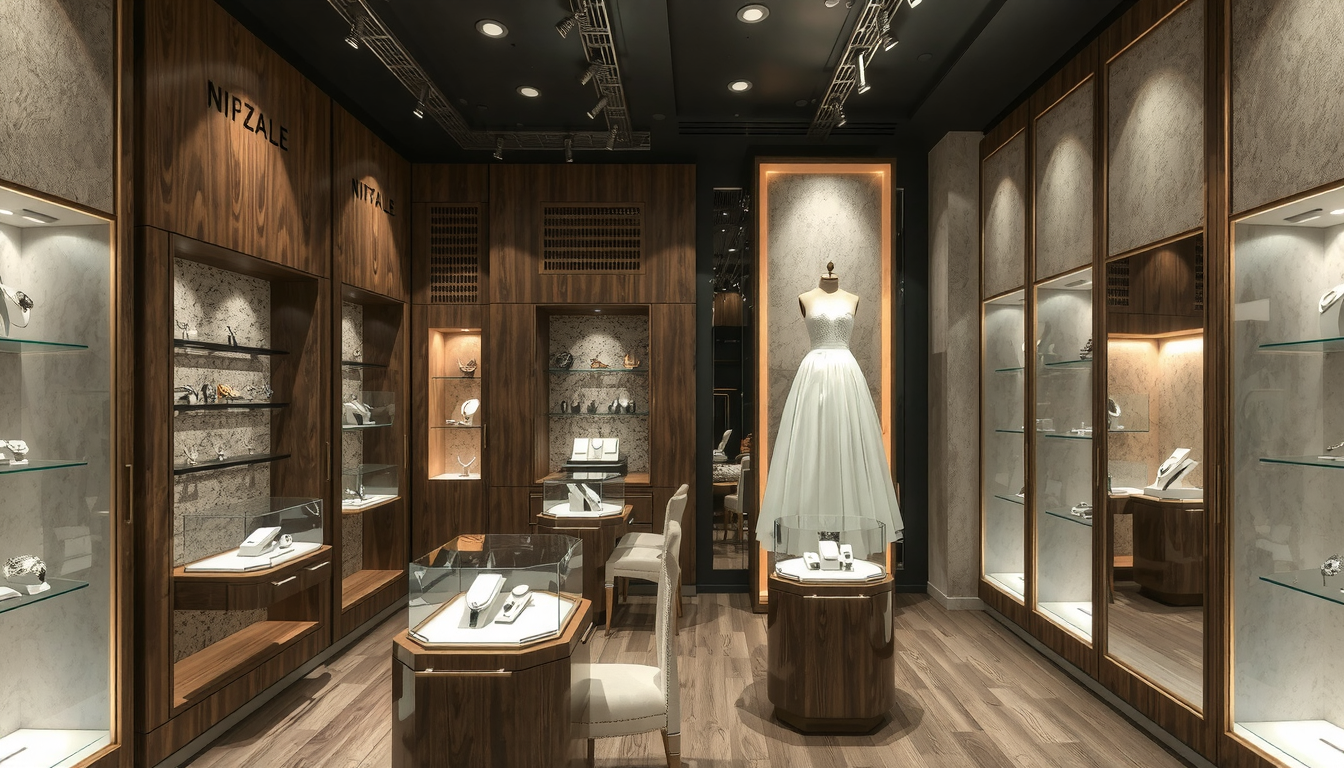
Private viewing rooms, or VIP lounges, are essential to high-end jewelry showroom design. They are quiet, private spaces for clients to think about major purchases. These rooms are designed for total comfort. They feature soft seating, a personal bar, and special lighting. This is where the highest level of personal service happens.
The Art of the Showcase: Designing for Jewelry vs. Watches
While both are luxury items, fine jewelry and high-end watches need different types of displays. A professional jewelry showcase manufacturer understands these differences. The showcase design must highlight the best features of each item.
A Comparative Table: Brilliance vs. Precision
This table shows the different display needs for jewelry and watches.
| Feature | High-End Jewelry Display | Luxury Watch Display |
|---|---|---|
| Primary Goal | Maximize sparkle, fire, and color. | Showcase craftsmanship, complications, and dial detail. |
| Lighting | Multi-directional, high-intensity LED spotlights to catch facets. | Softer, more diffuse lighting to prevent glare on the crystal and dial. |
| Backgrounds | Often soft, neutral, or dark fabrics (velvet, suede) to create contrast. | Clean, structured backgrounds. Sometimes technical materials or fine wood. |
| Arrangement | Spaced out to give each piece “breathing room.” Use of busts and forms to show how it wears. | Often displayed on individual stands or winders. Grouped by collection or movement type. |
| Security | Highest level, integrated seamlessly into the design. | High level, with a focus on allowing for easy handling by staff. |
When you see a Piaget Limelight Gala watch, the display lighting is soft. It lets your eye follow the beautiful curves of the case and the sparkle of the small diamonds. When you look at a high jewelry necklace, the lighting is more intense. It is designed to make the large gemstones pop with color and brilliance. The showcase design directs your attention differently for each piece.
Partnering for Perfection: Realizing Your Vision
Creating high-end jewelry showroom design at the level of Piaget takes more than just good ideas. It needs a perfect mix of brand vision, design skill, and expert craftsmanship.
It is vital to work with specialists who understand luxury. They know how to source the right materials. They can install complex lighting. They can build perfect fixtures. For over 20 years, Ouyee Display has been a trusted partner for global brands. We turn big design ideas into amazing retail spaces. Our experience ensures every detail meets the highest standards of luxury. This includes everything from the first drawing to the final installation.
FAQ: High-end Jewelry Showroom Design
This section answers common questions about creating a luxury jewelry retail space.
1. What is the most important element in high-end jewelry showroom design?
Answer: While every element matters, lighting is probably the most important. It directly affects how the jewelry and watches look. It also sets the mood of the entire space and guides the customer’s eye. A great design can be ruined by poor lighting.
2. How can I make a small jewelry store feel more luxurious?
Answer: Focus on quality over quantity. Use top materials in key touchpoints like counters and door handles. Use a smart, layered lighting scheme. Most importantly, keep the space uncluttered. A “less is more” approach with perfect execution reads as more luxurious than a crowded space.
3. What colors are best for high-end jewelry showroom?
Answer: Neutral and sophisticated palettes work best. Think warm whites, soft grays, and deep charcoals. Add metallic finishes like gold or brass. A signature brand color, like Piaget’s blue, can be used smartly as an accent to build brand identity.
4. Why are private viewing areas so important in luxury jewelry stores?
Answer: They provide an exclusive, comfortable, and pressure-free environment for clients thinking about big purchases. This privacy enhances the personal service experience. It builds trust. It allows for a more focused and private sales process. This is essential for high-net-worth individuals.
5. How do I balance security needs with an open and welcoming design?
Answer: The key is integration. Modern high-end jewelry showroom design includes security seamlessly. This includes using high-clarity, laminated security glass for showcases. It also involves carefully placed cameras and showcases with advanced locking mechanisms that are elegant, not industrial. The layout itself can also enhance security with clear sightlines for staff.