
Perfume display bottle shelf-edge retention should be checked with the actual bottle, the proposed shelf and the normal retrieval movement. A front lip, a separate bottle locator and a closed glass door do different jobs. None can be approved from a showroom photograph alone. Before ordering, confirm where the bottle base sits, whether staff can lift it clear without catching the cap, and what happens when the next bottle is removed. This guide helps retail buyers prepare a practical sample review and a written acceptance record without inventing a universal lip height, load rating or anti-fall guarantee.
Identify the movement you need to control
Start with a specific problem rather than an accessory name. A bottle sliding toward the front of an open shelf is different from a tall tester being tipped during handling. A boxed fragrance catching against a shelf edge is different again. Write down the observed movement, the location and the person involved. “The front-row bottle shifts when the adjacent carton is lifted” gives the supplier a clearer task than “make the display safe.”
Separate ordinary merchandising checks from exceptional hazards. An informal sample review can reveal poor fit, snagging and awkward access. It does not establish resistance to impact, theft or earthquakes. Those claims require a defined design basis and appropriate professional assessment. If a fixture rocks, glass is damaged or hardware is loose, stop using that area and obtain instructions before placing stock on it.
The broader choice between backwalls, gondolas and tester islands belongs in our perfume retail display buying guide. Here, the decision is narrower: does the agreed edge or enclosure detail work with the particular bottles and the people who handle them?
Distinguish a shelf edge from a bottle restraint
A raised edge can interrupt forward sliding at the base of a bottle. It does not necessarily stop a bottle tipping over the edge, and a decorative trim may have no intended retaining function. Ask the supplier to identify the actual functional detail in a drawing or sample. Record its attachment and its relationship to the usable shelf surface; do not infer performance from the apparent thickness of a photograph.
A fitted locator controls the resting position of a particular bottle shape. It may make a seasonal change harder if the replacement bottle has a different base. A closed glass-front cabinet creates an enclosure, but its door is open during replenishment and retrieval. The door also needs its own clear travel and operating space. Treat these as separate interfaces rather than interchangeable solutions.
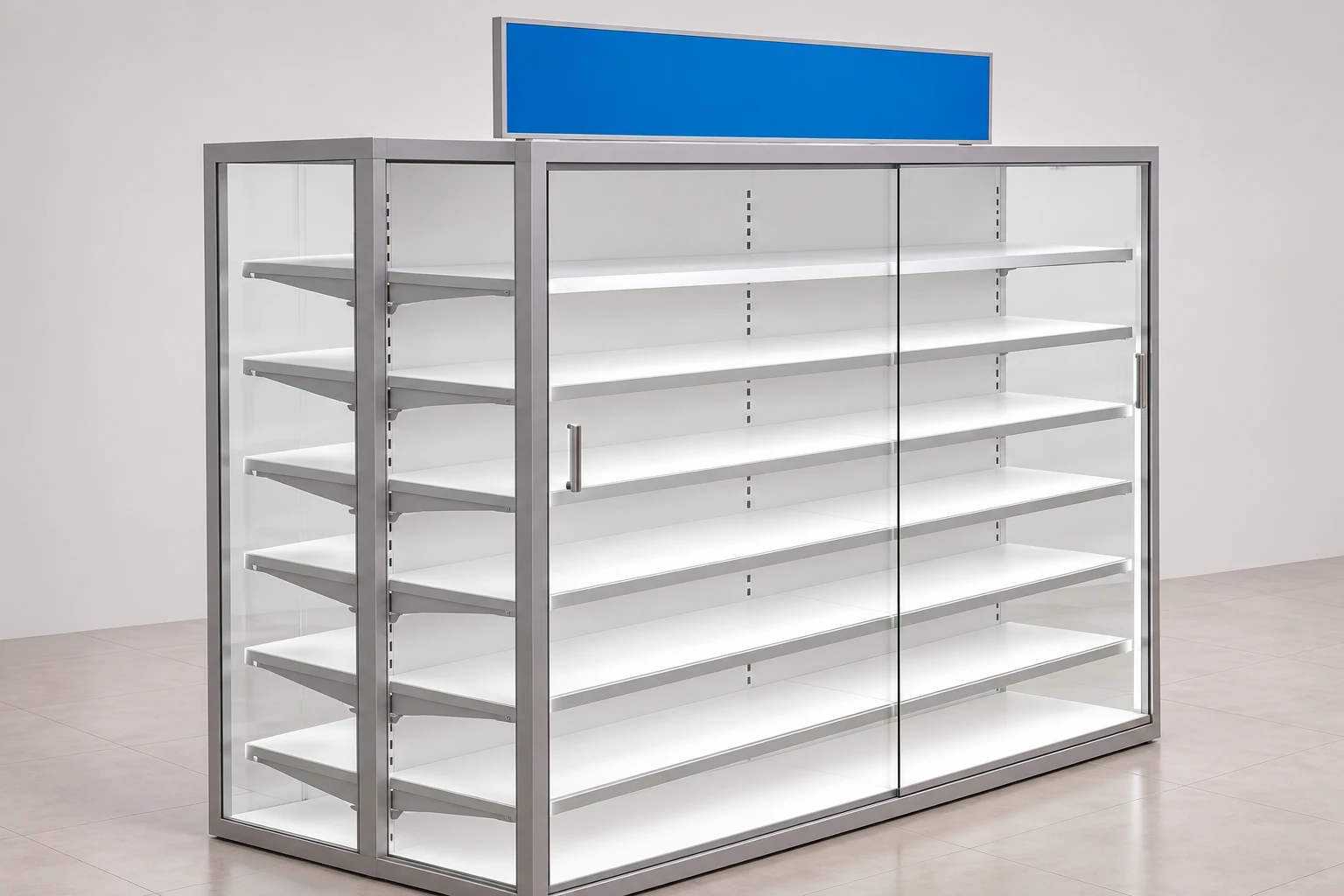
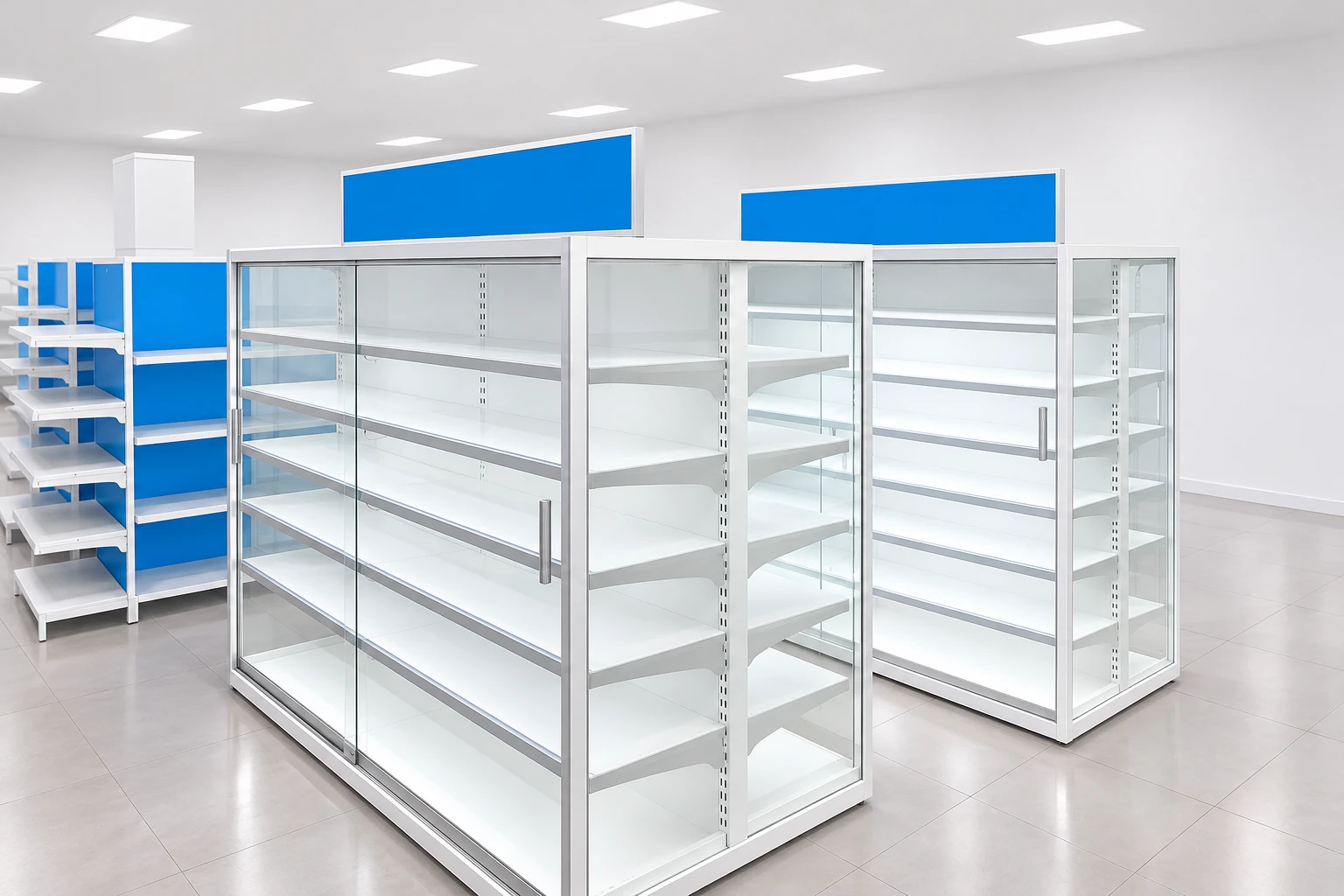
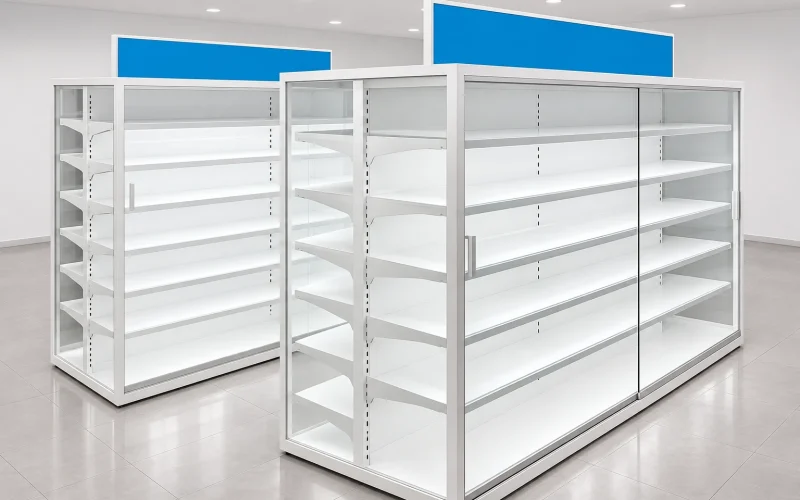
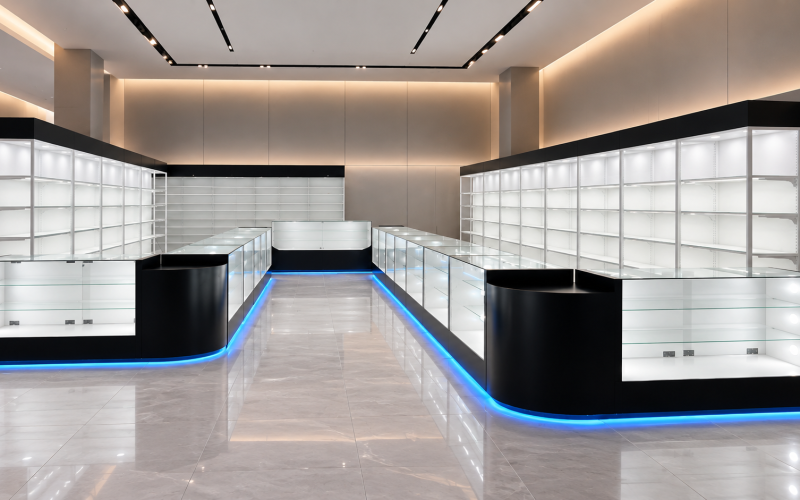
O blue and white perfumery gondola display provides a real product reference for this discussion. Its published product information identifies adjustable shelves and a category-sign system. The reference photographs show glazed cabinet fronts. They do not establish a bottle-specific restraint specification. Confirm any proposed retention accessory, glass detail or change in shelf position separately in the project documents.
Prepare a representative bottle set
Bring the bottles and cartons that create different handling problems. Include the widest base, the tallest bottle, a narrow rounded base, a heavy presentation bottle, and the packaging used for replenishment. Include the intended tester arrangement if customers will handle testers. Do not assume that one brand’s bottle represents every fragrance in the planned assortment.
Record the sample identity and the condition in which it was reviewed. An empty demonstration bottle can handle differently from a filled retail bottle, so label it clearly and do not extend its results to untested conditions. Use packaging or approved substitutes for initial positioning when breakage would create a hazard. Any later trial with real stock should follow the retailer’s normal handling arrangements and the supplier’s instructions.
Measure the base footprint, overall height and the widest part of the body. Note projections, removable caps and packaging that changes the effective shape. There is no useful universal clearance to copy without the actual shelf and bottle information. Give the supplier the measured samples and let the agreed design define the required fit.
Use a check sheet that leads to decisions
The following is a qualitative buyer’s checklist, not a strength test or a regulatory limit. It separates the observed result from the evidence still needed. The underlying distinction between supporting an object and controlling its movement is consistent with the Canadian Conservation Institute’s guidance on physical forces and object vulnerability; that museum guidance is not a perfume-fixture certification.
| Interface | Observe with the sample | Record before approval |
|---|---|---|
| Bottle base and shelf | The intended resting position without balancing on trim or labels | Sample identity, shelf finish and usable position |
| Front edge or lip | Whether the body catches during normal lifting and replacement | Functional drawing detail and any handling restriction |
| Adjacent products | Whether removing one item disturbs its neighbours | Approved arrangement and replenishment sequence |
| Door and handle | Clear movement with stock in the intended positions | Open position, retrieval route and staff access |
| Cleaning interface | Access to the edge, corners and any removable insert | Care instructions and permitted cleaning products |
| Changed assortment | Which new shapes are outside the reviewed sample set | Trigger for a new fit review rather than automatic acceptance |
Walk through retrieval and replenishment
Place the approved sample arrangement on a stable, installed sample fixture or a supplier-approved mock-up. Start with ordinary movements: approach, identify, lift, replace and replenish. Watch the bottle base and the user’s hand at the same time. A lip can appear unobtrusive when the shelf is empty yet become an obstacle when the bottle behind it must be tilted to clear the shelf above.
Check the front row, rear row and the positions near the cabinet sides. Repeat the sequence with the sample shapes that differ most. Record whether the user has to move another product, reach around a door or grip a cap to retrieve the bottle. If the task requires an awkward workaround, revise the arrangement or fixture detail before accepting it.
Do not push bottles toward the edge to discover a failure force, shake the cabinet or perform an improvised impact test. Such exercises can break glass and provide misleading reassurance. If a buyer needs a measurable retention performance, specify the intended event and ask a competent designer or test provider to establish a suitable method and acceptance criteria.
Keep cleaning and maintenance workable
A new edge detail should not leave a narrow inaccessible pocket where residue collects. Ask how staff will clean the shelf-to-edge junction and how an approved insert is removed, if removal is part of its intended design. Get written care instructions for the actual surface and accessory. Do not assume that a cleaner suitable for the bottle is suitable for the shelf coating, adhesive or trim.
Inspect any removable accessory after it is refitted. It should return to the agreed position without loose pieces or an improvised repair. Stop and obtain replacement instructions when an edge becomes sharp, a fixing loosens or an insert no longer fits. Cleaning access and replacement access are purchasing questions because a low initial price is unhelpful if normal upkeep requires dismantling unrelated display sections.
For a new installation, use the fixture floor-survey checklist before making final fit assumptions. Use the separate unpacking and receiving checks to document transport condition. These earlier steps support the review but do not replace a loaded merchandising sample check.
Separate daily fit checks from seismic design
Where earthquake risk matters, bottle retention and cabinet stability require more than an attractive front lip. The University of California San Diego’s workplace hazard guidance discusses shelf lips among several measures for reducing falling-object hazards. It does not provide a universal perfume-shelf design or certify a particular cabinet.
Getty describes assessing individual objects and coordinating their supports with display furniture in its account of protecting art from earthquakes. That illustrates why the bottle, shelf, cabinet and installation should be considered together. A museum’s engineered system cannot be copied into a retail specification by appearance, and a successful routine retrieval trial is not a seismic test.
The Getty Museum video below explains seismic isolator technology as further learning about controlled object movement. It is not a demonstration of this Ouyee product or a recommendation to add isolators to a fragrance shelf. Refer seismic requirements to the appropriate local professionals and fixture supplier.
Watch the Getty Museum explanation on YouTube.
Send a quote brief that preserves the sample decision
Send the supplier photographs of the reviewed arrangement, sample identities, measurements and an annotated shelf drawing. Identify which edges are decorative and which are intended to retain a bottle. Ask what information supports any claimed performance. Include the door arrangement, shelf finish, cleaning requirements and the people responsible for approving the final detail.
Agree how changes will be handled. A new bottle shape, a different shelf material or an altered lip attachment can invalidate the earlier fit review. Record the change and decide whether another sample is needed before repeating the order across a chain. At handover, compare the delivered detail with the approved sample and close any discrepancy before stocking the affected area.
Perguntas frequentes
Is a decorative shelf trim a bottle retaining lip?
Only if the supplier identifies and supports that intended function. Appearance alone does not establish how the trim is attached or what movement it can control.
Can a glass door replace a shelf-edge check?
No. A closed door creates an enclosure, but access occurs with the door open. Review bottle positioning, retrieval clearance and door movement separately.
What lip height should every perfume shelf use?
There is no universal height established by this guide. The bottle geometry, shelf arrangement, handling task and defined performance requirements must inform the project detail.
Does a successful sample review prove earthquake resistance?
No. Routine fit and handling observations do not establish seismic performance. Any earthquake requirement needs an appropriate design and verification process.
When should the retailer repeat the fit review?
Repeat it when bottle shapes, shelf positions, finishes, doors or retention details change in a way that could affect the approved arrangement or retrieval movement.





 Portuguese
 English
 German
 Arabic
 French
 Spanish
 Italian
 Russian
 Turkish
 Japanese