Step 1 – Validate Your Jewelry Store Idea (Before You Spend Big)
Before you sign a lease, order jewelry showcases, or design a logo, you need to be absolutely sure there’s real demand for your jewelry concept in your market. Validation keeps you from burning cash on a beautiful store that no one actually needs.
Choose Your Jewelry Niche First
You can’t serve “everyone.” Pick a clear niche so customers instantly understand what you’re about and why they should choose you.
Common jewelry store niches in the US include:
- Fine jewelry – gold, platinum, diamonds, natural gemstones
- Higher price points, higher margins, stricter expectations on quality and certification.
- Fashion jewelry – plated metals, trendy designs, affordability
- Volume-driven, ideal for younger buyers and impulse purchases.
- Lab-grown diamond store – engagement rings and fine pieces with lab-grown stones
- Strong value story: bigger look for the price, transparent sourcing.
- Custom jewelry – bespoke engagement rings, one-of-a-kind designs
- Requires design skills, CAD, and strong consultation process.
- Vintage / estate jewelry – pre-owned fine pieces, signed designer items
- Requires expertise in authentication and second-hand regulations.
- Men’s jewelry – chains, rings, bracelets, watches, cufflinks
- Underserved niche in many US markets.
- Bridal / engagement-focused boutique – rings, bands, wedding-day jewelry
- Relies heavily on referrals, reviews, and premium in-store experience.
Ask yourself:
- Which niche fits your skills, budget, and credibility?
- What type of jewelry do people already come to you for advice on?
- Do you want to be known for price, design, luxury, or convenience?
Write one sentence that defines your niche:
“We are a [niche] jewelry store serving [who] with [style/benefit] at [price level].”
Define Your Target Customer and Price Point
Next, get specific about who you’re selling to and what they can realistically afford.
Clarify:
- Demographics
- Age range
- Income level
- Relationship stage (students, young professionals, established families, retirees)
- Lifestyle and style preferences
- Minimalist vs bold
- Classic vs trendy
- Luxury buyers vs value hunters
- Budget ranges
- Everyday pieces: Are they comfortable at $50–$150, $150–$500, or more?
- Engagement rings: Are you in the $1,500–$3,000, $3,000–$7,000, or $10,000+ range?
If your ideal customers make $60K–$80K/year, you cannot build a store that depends on $15,000 engagement ring sales to stay alive. Your price point must match local wallets.
Local Market Research: Income, Style, Competition
Now ground your idea in real local data. You’re opening a brick and mortar jewelry business, so the neighborhood matters.
Research:
- Income levels
- Use tools like Census data, city-data.com, or local chamber of commerce info.
- Look for median household income and home values within a 3–5 mile radius.
- Style preferences
- Walk malls and high streets: What kind of jewelry are people wearing?
- Visit salons, bridal shops, and boutiques: What style dominates? Minimal, boho, flashy, urban, Western?
- Competition density
- Count existing jewelry stores, mall booths, pawn shops, and online-heavy brands with local presence.
- Note the type of jewelry they focus on: discount, chain stores, independent fine jewelry, lab-grown, bridal, custom.
Ask:
- Is this area already overrun with similar jewelry stores?
- Is there a clear gap—for example, no modern bridal boutique, no lab-grown diamond specialist, or no men’s jewelry focus?
Competitor Analysis: In-Store and Online
Don’t guess. Study what’s already working.
In-store competitor checklist
Visit each major competitor as if you were a customer. Take notes on:
- Store positioning: luxury, mid-range, or discount?
- Pricing: entry price for rings, necklaces, bracelets, bridal sets.
- Store design and jewelry showcases: do they look modern and secure, or dated and cheap?
- Customer experience:
- How quickly are you greeted?
- Do staff educate or just push?
- Best sellers: what’s in front displays and window cases?
- Traffic levels: are they busy on weekdays and weekends?
Online research
- Website and Instagram/TikTok – what style and tone do they use?
- Google reviews – what do customers love and hate?
- Check for common complaints:
- Poor selection
- Pushy sales
- Old-fashioned designs
- Long repair times
Those complaints are your opportunities. Your jewelry store business plan should directly solve these gaps.
Quick Validation Methods (Before Signing a Lease)
Test your concept on a small scale. If you can’t generate interest with lean experiments, a full retail jewelry store will struggle.
Effective validation tools:
- Pop-up booths
- Set up at local markets, fairs, or inside partner boutiques.
- Track what sells, average ticket size, and what people ask for.
- Trunk shows
- Partner with salons, bridal shops, or clothing boutiques for weekend events.
- Offer a tight, curated selection and collect feedback.
- Pre-orders
- Show designs or samples online.
- Take deposits for custom or made-to-order pieces.
- Instagram polls and DMs
- Ask your audience:
- “Would you buy this ring at $295 or $395?”
- “Do you prefer lab-grown or mined diamonds?”
- Track engagement, not just likes.
- Ask your audience:
- Simple surveys
- Use Google Forms or Typeform.
- Ask: budget ranges, favorite metal, stone types, where they usually buy jewelry.
If you can’t get real pre-orders, deposits, or strong purchase intent, adjust your niche, designs, or pricing before you invest in a full jewelry boutique.
Physical Jewelry Store vs Hybrid (Online + Offline)
You don’t have to start with a huge, expensive space. For many new owners, a hybrid strategy is safer and more profitable.
Physical store only works better when:
- You’re in a high-income, high-traffic area.
- You’re heavily focused on bridal and luxury fine jewelry that requires in-person consultation.
- You have the budget for top-tier lighting, fixtures, and security systems from day one.
Hybrid (online + offline) is often smarter when:
- Your startup budget is tight.
- You want to test multiple niches (fashion + custom, fine + lab-grown).
- You plan to leverage Instagram Shop, a website, and marketplaces for sales.
- You’re okay starting smaller: studio, appointment-only showroom, or shared retail space.
Ask yourself:
- Can you build an online audience now, even before you open doors?
- Could you start with an appointment-only showroom and scale into a full store once revenue is steady?
The goal at this step is simple: prove that your jewelry store idea has real demand, at real price points, from real people in your market—before you commit to long leases, high-end fixtures, and a full build-out.
Step 2 – Create a Bulletproof Jewelry Store Business Plan
If you want a jewelry store that actually makes money (and not just looks pretty), you need a clear, no-fluff business plan. Here’s how to build one that works in the real world.
Key Sections of a Jewelry Store Business Plan
Keep it simple but complete. Your jewelry store business plan should include:
- Executive – What your store is, who you serve, and how you’ll make money.
- Company Overview – Legal structure, ownership, and basic business info.
- Market Analysis – Your local market, jewelry demand, and competitors.
- Products & Services – What you sell: fine jewelry, fashion, lab-grown, custom, repairs, etc.
- Marketing & Sales Strategy – How you’ll get customers in the door and keep them coming back.
- Operations Plan – Store hours, staffing, suppliers, systems, and workflows.
- Financial Plan – Startup budget, pricing, revenue projections, and profit margins.
Your business plan doesn’t have to be fancy. It just has to be honest, specific, and numbers-based.
Define Your Concept & USP
This is where you answer: Why should someone buy from you and not the store down the street or online?
Clarify:
- Concept
- High-end bridal boutique
- Lab-grown diamond store
- Trendy fashion jewelry boutique
- Custom design + repair studio
- USP (Unique Selling Proposition)
Examples:- “Modern bridal with lab-grown stones at transparent pricing”
- “Local custom jewelry studio with 2-week turnaround”
- “Men’s jewelry and watches only, in a club-style space”
Your concept and USP will drive everything: your inventory mix, store design, jewelry showcase displays, pricing, and marketing.
Market Analysis & Local Demand
Don’t guess your market. Do quick, targeted research:
- Who lives nearby?
- Income levels
- Age range
- Lifestyle (young professionals, families, retirees)
- What are people buying now?
- Bridal and engagement
- Everyday fine jewelry
- Fashion jewelry / trend pieces
- Men’s jewelry
- Who are your competitors?
- Chain mall jewelry stores
- Local high-end jewelers
- Pawn / second-hand shops
- Online-first brands with strong local presence
Look at their price points, store design, displays, and customer experience. This helps you position your jewelry boutique so you’re not just “another jewelry store.”
Startup Budget, Pricing Strategy & Revenue Projections
Before you sign a lease, map out your jewelry store startup costs and how you’ll price your products.
- Startup Budget (one-time)
- Lease deposit and first months’ rent
- Store build-out and renovation
- Jewelry showcases and fixtures
- Initial inventory
- Security, POS, licenses, branding, website
- Monthly Operating Costs
- Rent + utilities
- Payroll
- Inventory reorders
- Marketing
- Insurance and software
- Pricing Strategy
- Typical jewelry business profit margins:
- Fashion jewelry: often higher margins
- Fine jewelry: lower percentage margins but higher ticket size
- Decide your markup based on your concept and target customer, not random numbers.
- Typical jewelry business profit margins:
- Revenue Projections
- Estimate:
- Average transaction value
- Expected daily customers
- Conversion rate (how many buy)
- Build conservative, moderate, and optimistic scenarios.
- Estimate:
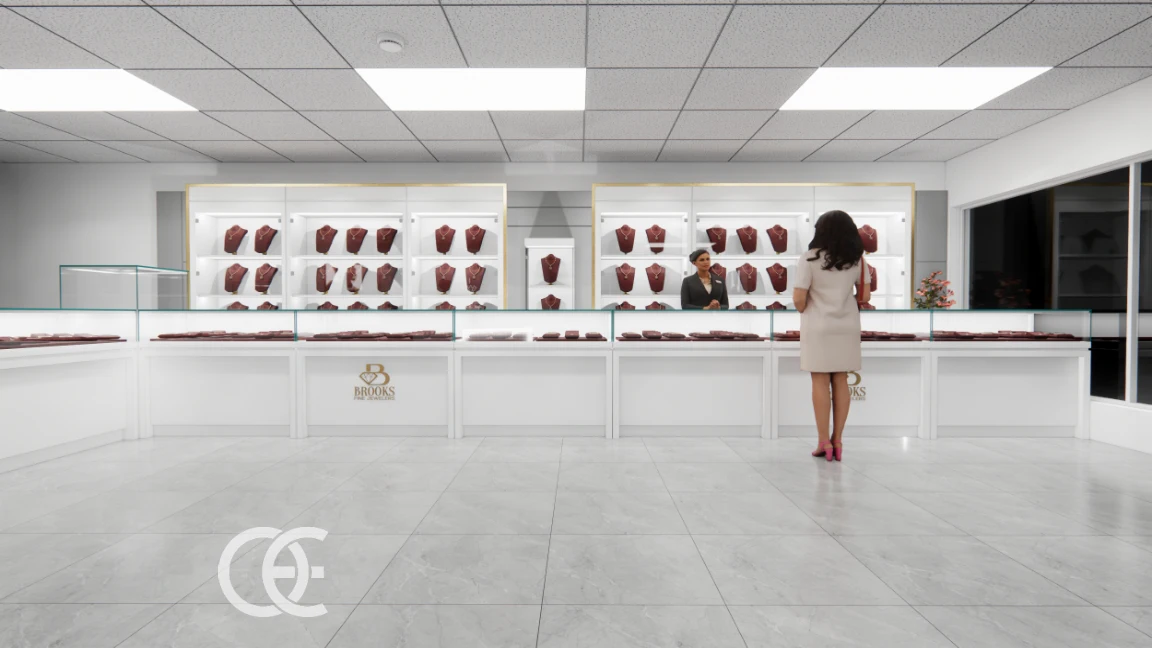
Break-Even Analysis & Realistic Profit Margins
You need to know exactly how much you must sell to cover your costs.
- Break-even point
- Total monthly fixed costs ÷ average gross profit per sale
- This gives you the minimum monthly sales you have to hit.
- Profit Margins
- Aim for healthy gross margins that match your category.
- Factor in: shrink (loss/theft), discounts, and promotions.
If the math only works with “perfect” sales, rethink your rent, inventory level, or concept before you launch.
Funding Options: How to Pay for Your Jewelry Store
Most U.S. jewelry store owners use a mix of:
- Personal savings – Best if you want full control and low debt.
- Bank or SBA loans – Good if you have strong credit and a solid plan.
- Friends & family – Only if you treat it like a real business deal with clear terms.
- Investors or partners – Possible if you’re building a larger or multi-location concept.
Lenders and investors will take you more seriously if your business plan shows clear startup costs, projected sales, and break-even.
Free Jewelry Store Business Plan Template (How to Use It)
Use a jewelry store business plan template as a base, then customize it:
- Fill in your concept, USP, and target customer first.
- Plug in real local numbers for rent, wages, and inventory.
- Adjust the financial sections until the business looks realistic—not just hopeful.
- Use it as a working document you update as you get quotes from contractors, fixture suppliers, and security providers.
As you design your store and plan your fixtures, you can pull ideas from other retail layouts—like how this type of glass retail display cabinet uses clean lines and lighting to showcase high-value items—then adapt that thinking to your own jewelry store design ideas.
A tight, honest plan is your filter. If the numbers and positioning don’t work on paper, they won’t magically work in real life.
Step 3 – Jewelry Store Startup Costs & Budget (Real Numbers)
When people ask me how to open a jewelry store, this is the part they underestimate the most. The numbers matter. If you get your budget wrong, even a beautiful store in a great location can struggle.

Average Jewelry Store Startup Costs (Low, Mid, High-End)
These are realistic ranges for a small brick-and-mortar jewelry store in the U.S.:
| Store Type / Positioning | Typical Size | Estimated Total Startup Cost* |
|---|---|---|
| Low-budget / starter jewelry shop | 300–600 sq ft | $40,000 – $90,000 |
| Mid-range jewelry boutique | 600–1,200 sq ft | $90,000 – $250,000 |
| High-end / luxury jewelry store | 1,000–2,000 sq ft | $250,000 – $750,000+ |
*Includes build-out, fixtures, initial inventory, tech, marketing, and working capital. Major metro areas skew to the higher side.
Your biggest variables: rent, build-out, and inventory.
One-Time Costs vs Ongoing Monthly Expenses
Think of your jewelry store budget in two buckets:
One-time startup costs:
- Lease deposit and first month’s rent
- Store build-out and renovation
- Jewelry showcases, display cases, and store fixtures
- Initial inventory
- POS system, hardware, and software setup
- Licenses, permits, legal fees
- Branding, website, and launch marketing
Ongoing monthly expenses:
- Rent and common area maintenance (CAM)
- Payroll and commissions
- Insurance (property, liability, workers’ comp, sometimes jewelers block)
- Security monitoring fees
- Marketing and ads
- Software subscriptions (POS, email, accounting)
- Utilities and internet
- Ongoing inventory reorders
If you don’t plan for both, you’ll run out of cash fast—even if sales are good.

Detailed Jewelry Store Cost Breakdown
1. Lease Deposit and Rent
- Security deposit: Typically 1–3 months’ rent.
- Monthly rent (small U.S. city):
- Low-budget: $1,500 – $3,000
- Mid-range: $3,000 – $8,000
- High-end / prime mall or high street: $8,000 – $25,000+
Run the math: rent should usually stay under 10–15% of projected monthly sales for a healthy margin.
2. Store Build-Out and Renovation
This is where opening a jewelry boutique can get expensive, fast.
- Light refresh / paint / flooring: $5,000 – $20,000
- Custom build-out with millwork and lighting: $20,000 – $150,000+
If you’re doing a serious redesign, use retail layout principles (even guides written for other retail segments, like this one on mini grocery store design and layout, can help you think through customer flow, sightlines, and focal zones).
Ask for tenant improvement (TI) allowance in your lease to help offset these costs.
3. Jewelry Showcases, Display Cases, and Store Fixtures
Your fixtures are part of your brand and your security. Don’t cheap out here.
- Basic off-the-shelf cases and fixtures (starter store): $5,000 – $15,000
- Mid-range mix of custom and standard cases: $15,000 – $50,000
- High-end custom jewelry display cases and millwork: $50,000 – $150,000+
Include:
- Front display counters
- Wall cases
- Freestanding towers
- Window display platforms and risers
- Ring trays, busts, bracelet bars, earring stands
Look for tempered glass, strong locks, and integrated LED lighting. A professional retail fixtures manufacturer can deliver consistent finishes and durable quality compared to random cheap pieces.
4. Initial Inventory and Stock Levels
Inventory is usually your single biggest investment.
Typical starting inventory budgets:
- Low-budget fashion jewelry store: $10,000 – $40,000
- Mid-range fine + fashion mix: $40,000 – $150,000
- High-end fine jewelry or lab-grown diamond store: $150,000 – $500,000+
Tips:
- Start narrow and deep in your core categories (e.g., bridal, custom, men’s chains), not shallow across everything.
- Use consignment where possible to expand selection without crushing your cash flow.
- Track jewelry business profit margin by category from day one.
5. Security Systems and Insurance
Jewelry store security systems are non-negotiable and directly tied to your insurance.
- Basic alarm and camera setup: $3,000 – $8,000 (install)
- Stronger system with quality CCTV, safe integration, and monitoring: $8,000 – $25,000+
- Safes and vaults: $2,000 – $20,000+ depending on rating and size
- Monthly monitoring: $40 – $200+
Insurance:
- General liability, property, and jewelers block coverage
- Expect several thousand dollars per year at minimum, more for higher-value inventory and risky locations.
6. POS System, Hardware, and Software
You need a POS built for jewelry, not a generic cash register.
- POS hardware: iPads or terminals, receipt printers, scanners: $1,000 – $3,000+
- POS software (jewelry-specific): $100 – $400/month
- Extras: label printers, barcode or RFID tags, payment terminals
Make sure it handles: repair tickets, custom orders, appraisals, serialized items, and omnichannel (online + in-store) inventory.
7. Licenses, Permits, and Legal Fees
Budget for:
- Business registration and LLC formation
- Sales tax permit
- Precious metal dealer license (if you buy gold or scrap)
- Second-hand dealer or pawn license (if reselling used pieces)
- Basic contracts (suppliers, consignment, staff)
Realistically: $500 – $3,000 including an attorney to review critical documents.
8. Branding, Website, and Marketing
Even if you’re focused on local, people will Google you before they walk in.
- Logo and basic brand kit: $500 – $3,000
- Website with e-commerce: $2,000 – $15,000+ (or lower if you DIY on Shopify)
- Photography and content: $500 – $5,000
- Launch marketing (ads, events, print): $2,000 – $10,000+
Plan on at least $500 – $2,000/month ongoing for ads, promos, and content creation once you’re open.
9. Working Capital and Emergency Buffer
This is what keeps you alive when:
- Sales are slower than expected
- A big repair bill hits
- You want to grab a great inventory opportunity
Aim for 3–6 months of operating expenses in cash or credit access. For a small store, that can easily be $20,000 – $100,000+ depending on your burn rate.
Cost-Saving Tips That Don’t Hurt Your Brand
Cutting the wrong corners will kill your image. Here’s where you can save without looking cheap:
- Negotiate free rent or TI: Push for a few months of free rent and a tenant improvement allowance.
- Start with fewer SKUs: Launch tighter, then expand based on what sells.
- Mix custom and ready-made fixtures: Use custom cases only where they really matter (front counters, window), and off-the-shelf elsewhere.
- Phase your tech: Start with a solid jewelry POS + basic CRM, add extras later.
- Use content over discounts: Build demand with good photos, styling videos, and education instead of slashing prices.
Where you should not cut corners:
- Lighting
- Security
- Core jewelry showcases and displays
- Insurance
Those are directly tied to sales, safety, and your brand image.
Sample Jewelry Store Budget by Concept
Here’s a simplified example so you can see how the cost to open a jewelry store shifts by concept:
| Line Item | Low-Budget Fashion | Mid-Range Fine + Fashion | High-End Bridal / Lab-Grown |
|---|---|---|---|
| Lease deposit + first month | $4,000 | $8,000 | $20,000+ |
| Build-out & renovation | $8,000 | $35,000 | $100,000+ |
| Jewelry showcases & fixtures | $7,000 | $25,000 | $80,000+ |
| Initial inventory | $20,000 | $80,000 | $250,000+ |
| Security & insurance setup | $5,000 | $12,000 | $30,000+ |
| POS, hardware, software | $3,000 | $6,000 | $10,000+ |
| Licenses & legal | $1,000 | $2,000 | $5,000+ |
| Branding, website, launch marketing | $5,000 | $10,000 | $25,000+ |
| Working capital / buffer | $15,000 | $40,000 | $100,000+ |
| Estimated Total | $68,000 | $218,000 | $620,000+ |
Use this as a starting point, then plug in your local rent, your design expectations, and your target inventory level.
If you’re serious about how to start a jewelry business the right way, build your budget conservatively, assume some delays, and overestimate costs. It’s much easier to handle pleasant surprises than financial shocks.
Step 4 – Legal Structure, Licenses & Permits for a Jewelry Store
Getting the legal side right protects you, your money, and your brand. Here’s how to handle the basics when you’re planning how to open a jewelry store in the U.S.
Choose the Right Business Structure
For most small jewelry stores, I’d look at these three options first:
- LLC (Limited Liability Company)
- Protects your personal assets if something goes wrong
- Flexible taxes (can be taxed as sole prop, partnership, or S-corp)
- Good balance of protection and paperwork for most jewelry boutiques
- Sole Proprietorship
- Easiest and cheapest to start
- No liability protection – your personal assets are on the line
- Only makes sense if you’re starting very small and low-risk
- Corporation (C-Corp or S-Corp)
- Better for larger operations, multiple investors, or aggressive scaling
- More paperwork, compliance, and accounting costs
If you plan to sell fine jewelry, diamonds, or deal with higher-ticket items, I strongly favor an LLC or corporation for liability protection.
Register Your Jewelry Store Name and Brand
Once you’ve picked your business structure:
- Check name availability with your state’s Secretary of State website.
- Register the business name (LLC or corporation filing, or DBA for sole props).
- Grab a matching domain name and consistent social handles (Instagram, TikTok, Facebook).
Your jewelry store name needs to be unique, easy to spell, and brandable, especially if you plan to build an omnichannel jewelry retail presence.
Get Your EIN, State Registration & Sales Tax Permit
To actually operate and open a jewelry boutique, you’ll need basic tax registrations:
- EIN (Employer Identification Number)
- Free from the IRS website
- Needed for bank accounts, payroll, and some vendor accounts
- State business registration
- Most states require you to register if you’re operating locally and collecting sales tax
- Sales tax permit / seller’s permit
- Required in most states to collect sales tax on jewelry sales
- Also lets you buy inventory tax-exempt from wholesalers
Do this before you sign a big lease or place your first major inventory order.
Jewelry-Specific Licenses & Precious Metal Dealer Rules
If you sell fine jewelry, gold, silver, platinum, or diamonds, some states and cities require:
- Precious metal dealer license
- Special registration if you buy, refine, or resell gold or other metals
These rules can be strict and often include:
- Background checks
- Recordkeeping requirements
- Holding periods for items bought from the public
Call your state licensing department and city/county clerk and ask specifically about “precious metal dealer” regulations for jewelry businesses.
Second-Hand, Pawn & Resale Regulations
If you plan to:
- Buy used gold or diamond jewelry
- Offer trade-ins
- Do any pawn-style lending
You may need:
- A second-hand dealer license
- A pawn broker license (if you offer loans against jewelry)
- To follow special laws around ID checks, reporting, and holding periods
Don’t skip this. Non-compliance can get your new jewelry store shut down fast and lead to fines or criminal charges.
Zoning Rules for a Retail Jewelry Store
Before you sign a lease:
- Confirm the zoning allows retail and specifically a jewelry store
- Some locations restrict businesses that deal in precious metals or pawn/second-hand
- Malls and upscale centers may have use restrictions and security requirements
Ask the landlord for zoning info in writing, and double-check with the city’s planning or zoning office.
Trademark Your Jewelry Store Name & Logo
If you’re serious about building a brand:
- Run a basic trademark search (USPTO database) to see if your jewelry store name or similar marks are already taken.
- Consider filing a federal trademark for:
- Your brand name
- Your logo
- Possibly your slogan
This protects you as you scale, especially if you move from a small jewelry shop setup to a multi-location or online and offline jewelry store.
Basic Contracts You Need in Place
Even for a small, brick-and-mortar jewelry business, you should have:
- Supplier agreements
- Pricing, payment terms, delivery times
- Returns, repairs, and consignment terms
- Quality standards and certification (GIA, IGI, etc.)
- Jewelry consignment agreements (if you take pieces on consignment)
- Who owns what
- Payout percentages
- What happens if items are lost, stolen, or damaged
- Employment agreements or offer letters
- Pay structure (salary, commission, or hybrid)
- Confidentiality and non-solicitation clauses
- Basic expectations and code of conduct
- Customer-facing terms
- Clear return and exchange policy
- Repair and custom order terms (timeline, deposits, non-refundable parts)
Clean paperwork upfront makes it easier to grow into a high-end jewelry boutique design, upgrade fixtures later, and negotiate better terms with suppliers and landlords.
Step 5 – Pick the Right Location & Store Size
When you’re figuring out how to open a jewelry store, your location and square footage will make or break your profit. This is where rent, visibility, and your brand image all collide, so you need to run the numbers, not just go with your gut.
Best city or neighborhood for a jewelry store
You want to be where people already spend money on “wants,” not just “needs.” In the U.S., I’d look for:
- Household income: Middle to upper-middle income areas (and above) with strong home ownership.
- Shopping behavior: Established retail corridors, popular downtowns, or lifestyle centers where people stroll, dine, and shop.
- Compatible neighbors: Clothing boutiques, salons, bridal shops, luxury beauty, and gift stores are great signals.
- Crime and safety: Jewelry is a target. Check local crime stats, lighting, and police presence. Talk to neighboring business owners.
If you’re in a big metro, aim for one of the top 2–3 shopping districts people mention when you ask, “Where do you usually go to shop?” If you’re in a smaller city, you want the main commercial strip or the busiest local shopping center.
Mall vs high-street vs lifestyle center vs destination boutique
Each format fits a different jewelry concept and budget:
- Mall jewelry store
- Pros: Guaranteed foot traffic, predictable hours, heavy seasonal sales.
- Cons: High rent, strict rules, long leases, mall marketing fees.
- Best for: Mid-market to chain-style concepts, lab-grown diamond store, fashion jewelry with volume.
- High-street / Main street
- Pros: Strong visibility, walk-by traffic, flexible branding, more local feel.
- Cons: Parking can be tricky, rent still high in prime blocks.
- Best for: Fine jewelry, bridal, custom design studios that want a storefront with character.
- Lifestyle center / open-air plaza
- Pros: Nice environment, restaurants and entertainment, good evening/weekend traffic.
- Cons: Similar rent to malls, sometimes seasonal patterns.
- Best for: Bridal and higher-end fashion jewelry boutiques.
- Destination boutique
- Pros: Lower rent, more control, great for by-appointment luxury.
- Cons: You must generate your own traffic; weak walk-ins.
- Best for: High-end, appointment-based fine jewelry, custom and bespoke; strong online presence and referrals.
Choose based on how you plan to get customers:
- Heavy walk-in traffic model → mall or busy street.
- Referral, custom, appointment model → destination boutique is fine and cheaper.
Foot traffic vs rent: how to run the numbers
Don’t guess. Treat “foot traffic vs rent” like a math problem:
- Estimate traffic and conversion
- Count people passing by during peak hours on different days.
- Estimate what % you can realistically convert (e.g., 5–15% into the store, 10–30% of those into buyers).
- Estimate average ticket
- Fine jewelry: maybe $600–$2,500 per sale.
- Fashion jewelry: maybe $50–$250 per sale.
- Back into potential revenue
- Example: 200 passers/hour × 6 hours of peak traffic = 1,200/day
8% enter (96 people), 15% buy (14–15 buyers).
If average sale is $400, that’s about $5,600/day in peak-season revenue.
- Example: 200 passers/hour × 6 hours of peak traffic = 1,200/day
Then compare that to:
- Monthly rent + CAM (common area maintenance) + utilities
- You generally want total occupancy cost (rent + NNN/CAM) to sit around 8–12% of projected annual sales for a sustainable jewelry business profit margin.
If the math pushes your occupancy cost above ~15% of expected revenue, you’re overpaying unless your margins are extremely high.
Ideal store size and layout by jewelry concept
In jewelry, you don’t need a huge footprint to look premium. In fact, too much space often makes showcases feel empty and kills the vibe.
Average ranges (U.S.):
- Starter / small jewelry shop setup
- 300–600 sq ft
- Good for: fashion jewelry, small lab-grown diamond store, starter fine jewelry
- Simple layout: 2–3 main showcases, 1 consultation corner, small backroom.
- Mid-range fine jewelry boutique
- 600–1,000 sq ft
- Good for: bridal, fine fashion, mixed fine & fashion jewelry
- Layout: several perimeter wall cases, island showcases, defined consultation seating, small safe room.
- High-end jewelry boutique
- 1,000–1,800 sq ft
- Good for: luxury, custom design, VIP appointments
- Layout: generous circulation space, multiple feature cases, private consultation room, dedicated safe/office.
The layout matters as much as size. Design your jewelry store layout floor plan so customers can clearly see your most profitable cases first, with easy flow to a comfortable seating area. A professional fixture and storefront concept, like this kind of high-end diamond store storefront and ring display design, is a good reference for how to maximize a compact footprint.
Visibility, parking, and access
You can have a great store hidden in a dead corner and it will still struggle. For jewelry retail, I’d prioritize:
- Line of sight: Drivers and pedestrians should see your sign and windows clearly.
- Window exposure: Enough frontage to showcase 2–3 strong window displays.
- Parking: Free or low-cost, easy in-and-out. If customers have to fight for parking, you’ll lose impulse traffic.
- Entrances and safety: Well-lit entrance, no creepy alleys, visible cameras, and clear signage.
You don’t need the largest space; you need the best visible small space you can afford in the right cluster of businesses.
Lease negotiation tips for new jewelry store owners
Treat your lease like a big long-term contract—because it is. A few non-negotiables:
- Negotiate build-out help: Ask for tenant improvement (TI) money or several months of free rent for your build-out.
- Start with a shorter term + options: For a new location, 3–5 years with renewal options is safer than locking into 10 years.
- Cap increases: Push for a cap on annual rent increases (e.g., 3–4%).
- Clarify security responsibilities: Who pays for security upgrades, doors, gates, and cameras? Your insurer may require specific standards.
- Co-tenancy clauses (if possible): In centers or malls, try to protect yourself if major anchor tenants leave.
Have a local commercial real estate attorney review your lease. The cost is minor compared to getting stuck in a bad deal.
When a smaller space is actually better for jewelry retail
In jewelry, smaller often wins:
- It’s easier to secure (fewer access points, less glass, lower costs for anti-theft jewelry showcases).
- Rent is lower, so your break-even is easier to hit.
- You can create an intimate, high-touch experience that feels exclusive.
- It forces you to curate inventory instead of overbuying.
If you design the interior smartly with custom jewelry display cases, high-impact lighting, and a clean layout, a 500–800 sq ft shop can look more luxurious than a half-empty 1,500 sq ft space.
The honest move: start with the smallest, most visible space that fits your concept, then grow into bigger only when your numbers prove you need and can afford it.
Step 6 – Jewelry Store Design & Layout That Sells
If you want your jewelry store to actually move product (not just look pretty on Instagram), the layout has to be intentional. Every square foot needs a job.
Principles of an Effective Jewelry Store Layout
A strong jewelry store layout should:
- Showcase trust and security the second someone walks in (clear sightlines, solid cases, nothing sketchy).
- Guide customers naturally from front to back without confusion.
- Highlight your highest-margin collections at eye level and in key traffic zones.
- Support both quick visits and longer consultations (think: “in and out” shoppers vs. engagement ring buyers).
- Keep staff in control of the floor with good visibility to all jewelry showcases and entrances.
Keep the layout clean, simple, and consistent. Too many fixtures, colors, and decor pieces will distract from the jewelry and make the space feel cheap.
Designing the Customer Journey: Door to Checkout
Map your store like a loop, not a maze:
- Entry view: What do customers see in the first 5 seconds? This should be your strongest branding and one or two hero displays, not clutter.
- Main path: Guide them along a clear path using:
- Angled display cases
- Flooring changes
- Lighting cues and focal points
- Discovery zones: Place “explore” sections along the path:
- Fashion jewelry
- Seasonal collections
- Giftable items
- Checkout area: Keep it visible but not the first thing people see when they enter. It should feel approachable, not like a front desk at a bank.
Decompression Zone & First Impression Strategy
Right inside the front door, create a decompression zone:
- 5–10 feet of “breathing space” for customers to adjust from outside to inside.
- No heavy signage, no aggressive displays, no staff pouncing on them.
- Use:
- Clean flooring
- A simple welcome statement or logo wall
- One strong feature display, not ten
Past that zone, hit them with your first impression strategy:
- A clean, high-impact jewelry showcase featuring your core identity:
- Bridal if you’re a bridal-focused store
- Lab-grown if that’s your angle
- Local designer or custom if that’s your hook
Placing Your Most Profitable Jewelry Collections
Don’t let your best-margin products hide in the back:
- Eye-level and hand-reach level in your main path = prime real estate.
- Put your high-margin fashion jewelry, lab-grown diamonds, and branded collections there.
- Use:
- Feature cases near the center of the store
- End-cap displays on islands or counters
- Use lower-impact, lower-margin items (cleaning cloths, add-ons, accessories) closer to checkout for impulse sales.
For a polished, high-conversion look, invest in professional jewelry showcase displays and fixtures that match your brand, not random cases from office surplus.
Comfortable Consultation & Seating Area
Any serious jewelry store needs a consultation zone, especially if you sell:
- Engagement rings
- Custom pieces
- High-ticket fine jewelry
Key points:
- Provide comfortable seating for 2–4 people.
- Keep it semi-private but still visible for security.
- Include:
- A clean display table or counter
- Good task lighting
- Easy access to ring trays and sample stones
- Avoid cramming this space; if it feels cramped or exposed, customers spend less and leave faster.
Back-of-House Layout: Safe Room, Office, Storage
Your back-of-house is just as important as the front:
- Safe room / vault area:
- Close to the main floor but not visible to customers.
- Direct, secure path from cases to safe.
- Office:
- Small but functional for paperwork, POS admin, staff breaks.
- Storage:
- Organized shelving for packaging, marketing materials, cleaning supplies.
- Clear inventory holding areas for repairs, custom orders, and incoming stock.
Keep back-of-house tight, efficient, and secure. The less time staff waste walking around, the more time they have to sell and serve.
ADA Compliance & Accessibility
In the U.S., you can’t ignore accessibility:
- Maintain clear pathways (generally 36″ wide) between fixtures.
- Use counter heights that are reachable for wheelchair users, or have a dedicated accessible counter.
- Make sure:
- Doors are wide enough and easy to open.
- There are no awkward steps or trip hazards at the entrance.
- Seating is available for customers who need it.
Beyond compliance, making your jewelry store accessible builds trust and widens your customer base.
Common Jewelry Store Layout Mistakes That Hurt Sales
Avoid these layout killers:
- Overcrowded cases and fixtures – If everything is special, nothing is. Edit your displays.
- Dark corners or bad lighting – Jewelry needs balanced, bright, focused light, not dim or yellow spots.
- Blocking sightlines – Tall fixtures or random furniture that prevent staff from seeing customers or entrances.
- Checkout right at the door – Makes the store feel transactional and pushes people to leave faster.
- No seating at all – Especially bad for bridal and custom; people will leave to spend elsewhere.
- Mismatched, cheap-looking fixtures – This instantly downgrades your perceived value and price point.
If you want a cohesive, sales-driven layout, work with a professional retail fixtures partner. A well-planned jewelry boutique design can lift average transaction value and make your store feel high-end without going overboard on budget.
Step 7 – Jewelry Store Lighting That Makes Pieces Pop
Jewelry lives or dies by how it looks under your lights. You can have a great location and stunning showcases, but bad lighting will make diamonds look dull and gold look cheap. Good lighting, on the other hand, instantly makes your store feel high-end and helps you justify your price points.
Why Lighting Is Critical in a Jewelry Store
In a jewelry store, lighting is basically a silent salesperson. The right setup will:
- Make diamonds sparkle and gemstones look richer
- Help customers see tiny details and feel confident buying
- Support your brand (luxury, modern, minimal, etc.)
- Improve how your store looks in photos and videos for social media
If the lighting is too yellow, too dim, or uneven, your pieces will look flat and lifeless—and customers will walk.
Best Color Temperature & CRI for Jewelry (4000K–5000K, High CRI)
For jewelry, you want clean, neutral-white light that shows true color:
- Color temperature:
- 4000K–4500K = neutral white, great for gold and mixed metals
- 4500K–5000K = crisp white, great for diamonds and gemstones
- CRI (Color Rendering Index):
- Aim for CRI 90+ so metals and stones show their real color and fire
Avoid very warm (2700K) or super cool (6500K) lighting—they distort colors and can cheapen the look of your showcases.
Layered Lighting: Ambient, Accent & Task
Use layered lighting so the store feels bright and focused, not harsh:
- Ambient lighting:
- General ceiling lighting that sets the overall brightness
- Can be track lights, recessed cans, or linear fixtures
- Accent lighting:
- Directed beams on showcases, wall displays, and feature zones
- This is what makes jewelry “pop” and draws eyes to high-margin pieces
- Task lighting:
- Lighting for the checkout, repair bench, and consultation desks
- Helps staff work accurately and customers inspect pieces up close
The goal is even overall brightness plus punchy highlights where it matters.
Spotlights for Diamonds & High-Ticket Items
Diamonds and big-ticket pieces should get special treatment:
- Use narrow-beam spotlights (10°–25°) aimed at key trays and busts
- Tilt spots so they catch facets and create sparkle without blinding customers
- Highlight:
- Engagement ring cases
- Signature collections
- Limited-edition or high-margin items
Think of these spotlights as your “stage lights” for money-making displays.
How to Avoid Glare, Shadows & Flat Displays
Bad lighting is just as noticeable as good lighting. To avoid common issues:
- Glare:
- Don’t point lights straight into glass—angle them so they bounce into the product, not the customer’s eyes
- Harsh shadows:
- Use multiple light sources from different angles
- Avoid single downlights over a case with no front lighting
- Flat displays:
- Mix brightness levels—your hero pieces should be slightly brighter than the rest
- Add a subtle contrast between background (ambient) and showcases (accent)
Take test photos with your phone. If jewelry looks washed out or dull, adjust angles and intensity.
Energy-Efficient LED Lighting for Jewelry Displays
In the U.S. market, LED is the standard for jewelry stores—both for quality and operating cost:
- Long lifespan and low heat (important for comfort and safety)
- Available in high CRI and the ideal 4000K–5000K range
- Dimmable options let you adjust for day vs. night or events
Look for LED strips integrated into showcases, or work with a fixtures manufacturer that can build in lighting-ready designs instead of retrofitting later.
Lighting Ideas for Window Displays & Feature Zones
Your window and key feature zones need lighting that stops people in their tracks:
- Use focused spotlights on hero pieces in your window display
- Add backlit panels or subtle LED strips behind shelves for depth
- Keep window lighting slightly brighter than the store interior at night to create a “stage” effect
- Rotate lighting focus when you rotate collections—don’t “set and forget”
If you’re investing in custom tables or display furniture, pair them with lighting that supports their impact, similar to how I treat the visual focus in my own wholesale fashion display tables.
Budget Ranges for Professional Lighting Design
Lighting is one area where cutting corners usually shows. Rough U.S. budget ranges:
- Small jewelry boutique:
- $3,000–$8,000 for quality LED fixtures and basic design
- Mid-size store in a mall or street location:
- $8,000–$20,000 depending on fixture count and custom showcases
- High-end jewelry boutique:
- $20,000–$50,000+ with full design, custom fixtures, and feature lighting
If you’re planning a full build-out or renovation, treat lighting as a core design element, not an afterthought. It’s one of the fastest ways to make your jewelry look more expensive and your store feel like a serious, profitable business.
Step 8 – Choosing Jewelry Displays & Store Fixtures
Why Your Jewelry Showcases Make or Break Sales
If your lighting brings customers in, your showcases close the sale. The wrong fixtures make even high-end pieces look cheap; the right ones instantly signal “quality” and justify your price point. In a U.S. jewelry market where customers are picky and comparison-shopping on their phones, your display cases have to:
- Show value – clean sightlines, no clutter, luxe materials
- Build trust – secure, well-lit, organized cases feel professional
- Guide the eye – clear focal points and height variation
- Match your brand – minimal, classic, or luxury, it all needs to be consistent
If I’m investing in inventory, I always protect that investment with fixtures that actually help sell it.
Core Types of Jewelry Display Cases You Actually Need
You don’t need every fixture on the market. You need the right mix for your concept, store size, and traffic flow.
1. Wall-Mounted Display Cabinets
Great for maximizing vertical space and keeping higher-end or fragile pieces out of reach. Use these for:
- Fine jewelry, bridal, and higher-ticket sets
- Collections you want to feature but not handle constantly
- Small stores where floor space is tight
Look for: locking doors, tempered glass, hidden LED strips, and finishes that match your showcases.
2. Freestanding Tower Showcases
These are perfect “beacons” that pull customers deeper into the store. Use towers to:
- Highlight new arrivals or seasonal collections
- Feature lab-grown diamond lines or trend pieces
- Create small “story” moments throughout the floor
I like slim towers with 360° viewing, strong locks, and built-in lighting so they work from any angle.
3. Countertop Display Cases
These live right on your sales counters and consultation tables. They’re ideal for:
- Impulse buys (earrings, stackable rings, small pendants)
- Upsells during bridal or custom consultations
- Items you want within easy reach for try-ons
Go for low-profile glass tops with easy-lift lids and subtle lighting. They shouldn’t block eye contact between staff and customers.
4. Window Display Platforms and Risers
Your window is your billboard. Platforms and risers let you build height, depth, and drama without overcrowding. Use them to:
- Create focal points around bridal sets, engagement rings, or statement pieces
- Rotate themes monthly (holiday, Valentine’s, graduation)
- Tell a story instead of just lining up rows of product
Simple platforms, cubes, and risers in consistent materials are better than a clutter of random props.
5. Ring Trays, Busts, Bracelet Bars, and Earring Stands
These “small” fixtures make a massive difference in perceived value. They turn basic glass boxes into curated jewelry displays.
Must-haves:
- Ring trays – for stacking collections and showing sizes
- Necklace busts – to show how a chain or pendant sits on the body
- Bracelet bars – keep pieces untangled and easy to compare
- Earring stands – show pairs clearly, not jumbled in a tray
Stick to 2–3 core colors (often white, cream, or light gray) to keep your cases clean and premium-looking.
Materials and Build Quality That Actually Matter
In jewelry retail, you’re selling trust. Your fixtures need to feel as solid as your reputation. I never cut corners on:
- Tempered glass – safer, stronger, and more secure
- Anti-bandit glazing (or laminated glass) – a must for higher-end locations or malls
- Heavy-duty locks and hinges – cheap hardware is obvious and risky
- Sturdy cabinetry – real wood or quality MDF with good finishes, not flimsy particleboard
Cheap fixtures scream “temporary” and drag down your brand. U.S. customers pick up on that in seconds.
Integrated LED Display Fixtures for Maximum Impact
Lighting built directly into showcases and cabinets is one of the fastest ways to make jewelry pop. Good integrated LED fixtures should:
- Sit hidden in the frame (no visible strips or harsh glares)
- Use 4000K–5000K color temperature with high CRI so diamonds and gemstones look true-to-color
- Be dimmable so you can adjust by time of day and store brightness
- Stay cool so they don’t heat up cases or damage packaging
When I’m laying out a store, I always treat lighting and fixtures as one system, not separate purchases.
Custom vs Off-the-Shelf Jewelry Fixtures (Pros and Cons)
Both options can work. It depends on your budget, timeline, and how unique you want your store to feel.
Custom Jewelry Display Fixtures – Pros:
- Tailored to your floor plan, brand colors, and product mix
- Cleaner look, better storage, and optimized lighting
- Helps you stand out from the “cookie-cutter” mall jewelry store
Custom – Cons:
- Higher upfront cost
- Longer lead times (especially with design + sampling)
Off-the-Shelf Fixtures – Pros:
- Faster turnaround
- Lower starting budget
- Easy to test layouts and change later
Off-the-Shelf – Cons:
- Harder to create a strong, cohesive brand image
- Sizing and finishes may not fit your exact layout
Most owners I know start with a hybrid: custom main counters and window displays, then off-the-shelf towers, trays, and smaller fixtures to control costs. For inspiration, check out these classic jewelry boutique showcase ideas to see how coordinated fixtures can shape your entire brand vibe.
Working With a Professional Fixtures Manufacturer Like Ouyee Display
If you want your store to look intentional from day one, partner with a retail fixtures manufacturer that understands jewelry specifically. With Ouyee Display, I treat it as an extension of my own team because:
- They specialize in custom retail store fixtures and jewelry showcases
- They know how to build for security, lighting, and premium finishes at the same time
- They can keep the look consistent across wall cabinets, towers, and counters
The goal is simple: a layout that sells, fixtures that protect your inventory, and a look that feels “you” the second a customer walks in.
Lead Times, Design Process, and Global Shipping Basics
If you’re going custom, you need to plan ahead. My typical timeline looks like this:
- Concept & Measurements (1–2 weeks)
- Share floor plan, brand moodboard, and budget range
- Design & 3D Renderings (2–4 weeks)
- Review layouts, materials, colors, and lighting details
- Sampling/Prototyping (optional, 2–4 weeks)
- Production (4–8 weeks)
- Shipping & Installation (3–6 weeks, depending on location)
For U.S. stores, I always allow 3–4 months from design approval to fully installed fixtures, especially if I’m using overseas production and global shipping.
Common Mistakes With Cheap or Mismatched Fixtures
The fastest way to cheapen your store is with random or low-quality fixtures. Mistakes I see all the time:
- Mismatched colors and styles – looks like a swap meet, not a jewelry boutique
- Too many fixture types – visual chaos, no clear focal points
- Flimsy locks and thin glass – customers subconsciously trust you less
- No integrated lighting – jewelry looks flat and dull
- Overcrowded cases – too much product kills the premium feel
If you’re working on a tight budget, buy fewer, better fixtures and leave some space to grow. A small, well-designed jewelry shop with clean showcases will outsell a larger, cluttered one every time.
Step 9 – Sourcing Jewelry Inventory & Reliable Suppliers
If you get your jewelry inventory wrong, everything else struggles. You need the right mix, the right quality, and the right partners behind you.
Decide Your Jewelry Mix First
Before you contact a single supplier, lock in what you actually want to sell:
- Fine jewelry – Gold (10K–18K), platinum, diamonds, and genuine gemstones. Higher ticket, lower volume, higher jewelry business profit margin if done right.
- Fashion jewelry – Plated, brass, stainless, sterling silver. Lower price, higher volume, great for trends and impulse buys.
- Lab-grown diamond jewelry – Strong margins, growing demand with Gen Z and Millennials who care about price and sustainability; ideal if you’re positioning as a modern, lab grown diamond store.
- Custom jewelry – Engagement rings, remounts, redesigns. Great for differentiation and loyalty, but you’ll need a reliable bench jeweler or manufacturing partner.
- Niche lines – Bridal-focused, men’s jewelry, vintage/estate, minimal everyday pieces, or bold statement sets.
Aim for a balanced mix: 60–70% proven sellers (bridal, basics, best-sellers), 20–30% trend pieces, 10–20% “wow” items that build your brand image.
Where to Find Jewelry Suppliers and Wholesalers
You have four main sourcing channels when you’re figuring out how to start a jewelry business with a solid supply chain:
- Domestic wholesalers (U.S.)
- Faster shipping, easier communication, better for reorders.
- Search B2B directories, trade associations, and local wholesale markets (NYC, LA, Miami).
- International manufacturers & exporters
- India – Diamonds, gold jewelry, bridal, and custom mountings.
- Thailand – Colored gemstones, silver fashion jewelry.
- Italy – High-end gold chains and classic fine jewelry.
- China – Fashion jewelry, stainless steel, lower-cost mass production.
- Independent designers & local makers
- Great for unique assortments and storytelling.
- Ideal for open a jewelry boutique concepts where design and brand vibe matter.
- Online B2B platforms
- Use for initial discovery only; always vet with samples, references, and small test orders.
Use Trade Shows to Your Advantage
Trade shows are the fastest way to meet serious suppliers in one place:
- JCK Las Vegas – The biggest U.S. jewelry trade show. Ideal for finding everything: fine jewelry, loose stones, lab-grown suppliers, technology, and packaging.
- Hong Kong Jewellery & Gem Fair – A huge global sourcing show. Strong for diamonds, gems, and high-volume manufacturing, especially if you plan to stock a wide range at competitive jewelry store startup costs.
Tips for trade shows:
- Schedule meetings ahead of time with shortlisted vendors.
- Bring your target price ranges and margin goals.
- Ask directly about MOQs (minimum order quantities), lead times, and sample policies.
- Take photos and notes of every booth you’re serious about.
If you’re planning a more design-driven space, study how exhibitors set up their showcases; many use setups similar to professional jewellery shop furniture and display ideas that you can adapt for your own store.
Lab-Grown vs Mined Diamonds: Margins and Demand
You don’t have to pick one, but you do need a stance:
- Mined diamonds
- Still seen as the “traditional” engagement choice.
- Higher cost, but strong perceived value and heritage.
- Margins can be slimmer in competitive markets.
- Lab-grown diamonds
- Lower landed cost, often higher percentage profit margin.
- Younger customers like the value and “ethical” positioning.
- Prices are dropping over time, so buy smart and price with room for movement.
A practical approach:
- Offer both, clearly labeled.
- Train staff to explain differences honestly (origin, price, resale, perception).
- Build packages where lab-grown allows bigger center stones at the same budget.
Consignment vs Outright Purchase
How you pay for inventory affects your cash flow more than almost anything else.
Consignment (the supplier owns stock until sold)
- Pros:
- Lower upfront cost and lower cost to open a jewelry store.
- Lets you test new lines with less risk.
- Cons:
- Lower margins, more paperwork.
- You don’t fully control promotions, markdowns, and displays.
Outright purchase (you own the inventory)
- Pros:
- Higher profit margin potential.
- Full control over pricing, marketing, and sales.
- Cons:
- Heavy cash outlay up front.
- Risk of dead stock if you mis-buy.
Often, a hybrid works best:
- Use consignment for higher-ticket or niche pieces.
- Use outright purchase for core items you know will move.
Whatever you do, use clear jewelry consignment agreements (ownership, returns, payment timelines, insurance responsibility).
Recommended Starting Inventory Value
These are ballpark ranges for a U.S. brick and mortar jewelry business:
- Small fashion jewelry shop (mall kiosk or small store)
- Starting inventory: $15,000–$40,000
- Mid-range jewelry store (mix of fine and fashion)
- Starting inventory: $75,000–$200,000
- High-end or bridal-focused boutique
- Starting inventory: $250,000–$750,000+
A simple rule:
- Aim for 2.5–4x your monthly sales goal in inventory at retail value.
- Keep enough depth in best-sellers so you don’t constantly stock out.
Quality Control and Certification
Your reputation is everything. You must have a tight process here:
- Certs to insist on (when applicable):
- GIA, IGI, or similar lab reports for major diamonds.
- Metal hallmarks (10K/14K/18K, sterling 925, etc.).
- QC checks:
- Inspect prongs, clasps, stone setting, finish, and weight.
- Randomly send a piece for independent verification if you’re unsure.
- Documentation to store:
- Invoices with metal purity and stone details.
- Certificates tied to specific SKUs/serials in your POS.
Never skip QC to save time. One bad piece can cost you a long-term customer.
Negotiating Terms and Building Long-Term Supplier Relationships
Strong supplier relationships can be as valuable as your best customers.
When you start talking to suppliers, push for:
- Reasonable minimum orders – Especially on new lines; ask to start small and scale.
- Payment terms – Net 30/45/60 once you show reliability.
- Return/exchange policies – For slow movers or defective items.
- Exclusivity in your area – If you commit to certain volume, request local exclusivity.
How to build trust with suppliers:
- Pay on time, every time.
- Share honest feedback about what sells and what doesn’t.
- Send photos of your store design and displays so they see you’re serious about presenting their product.
- Treat them as partners, not just vendors—especially critical if you want custom jewelry display cases, unique cuts, or short-notice rush orders.
If you source smart, validate quality, and respect your partners, your inventory turns faster, your margins stay healthy, and your jewelry store becomes much easier to scale.
Step 10 – Security Systems for a Jewelry Store
If you’re serious about opening a jewelry store, you can’t treat security as an add‑on. It’s part of your brand, your insurance, and your survival. Thieves know jewelry is high value and easy to move, so you need layered protection from day one.
Why Security Is Non‑Negotiable in Jewelry Retail
A solid security setup protects you in three ways:
- Reduces the chance of a break‑in or robbery
- Limits the size of a loss if something happens
- Keeps your insurance company willing to cover you
In the U.S., many insurers won’t even write a policy for a jewelry store unless you meet their minimum security standards (UL‑rated safe, monitored alarm, proper locks, etc.).
Core Security Elements You Must Have
At a minimum, every jewelry boutique or high‑end store should have:
Alarm Systems & 24/7 Monitoring
- Use a professionally installed burglar alarm with:
- Door and window contacts
- Glass break detectors
- Motion sensors in key areas
- Make sure it’s monitored 24/7 by a central station that can dispatch police.
- Choose a system with cellular backup, not just Wi‑Fi, so it still works if internet or power goes out.
High‑Resolution CCTV Cameras & Placement
- Use high‑resolution (1080p or higher) cameras that clearly capture faces and hands.
- Key camera placements:
- Store entrance (face shot as people enter)
- Cash wrap/POS area
- Each jewelry showcase / high‑value zone
- Back room, safe room, and delivery area
- Outside entrances and parking area
- Store footage in the cloud or on a secure NVR with 30–60 days of storage.
- Angle cameras to avoid glare from lighting and glass.
Safes & Vaults for Overnight Storage
- Use a UL‑rated burglar‑resistant safe sized to hold most or all of your high‑value pieces at night.
- Bolt the safe to the floor and keep it out of public view, ideally in a locked back room.
- Never leave high‑ticket items in showcases overnight, even with locks.
Security Film, Reinforced Doors & Showcases
- Add security film to street‑facing windows to slow smash‑and‑grab attempts.
- Use solid-core or metal doors with quality deadbolts for rear and service entrances.
- Choose lockable showcases with tempered glass or anti‑bandit glazing; many high‑quality anti‑theft jewelry showcases and fixtures integrate locks and stronger glass right into the design.
Panic Buttons & Silent Alarms
- Install silent panic buttons at:
- The cash wrap
- The repair/custom desk
- The office or safe room
- Train staff on when to use them (robbery, active threat, medical emergency).
Advanced Security Options Worth Considering
If you’re in a higher‑risk area or carrying very high‑end jewelry:
- Fog cannons: Flood the store with dense fog in seconds during a break‑in to disrupt thieves.
- Access control: Buzz‑in doors or card/fob access for staff‑only areas.
- Smart locks: Give you control over who can open doors, with logs and remote access.
- Integrated systems: Tie alarm, cameras, access control, and even case locks into one platform.
Typical Security Budget by Store Size
These are rough U.S. ranges (one‑time install, not including monthly monitoring):
- Small jewelry shop / starter boutique:
- $5,000 – $15,000 for alarms, cameras, safe, basic hardening
- Mid‑range neighborhood store:
- $15,000 – $40,000 with better CCTV coverage, stronger safe, more robust doors/windows
- High‑end jewelry boutique / multi‑carat diamond store:
- $40,000 – $100,000+ including vaults, advanced systems, and higher‑spec fixtures
Monthly monitoring for alarms and CCTV typically runs $50 – $300+ depending on services.
Working With Your Insurer
Before you commit to any security setup:
- Talk to an insurance broker who specializes in jewelers block policies.
- Ask for written security requirements (safe rating, alarm type, camera standards).
- Have your installer design your system to meet or exceed those requirements.
- Keep records of installations, inspections, and upgrades; your insurer will care.
This not only keeps you covered but can also lower your premiums.
Staff Training on Security & Robbery Response
The best system fails if your team isn’t trained. Build security into your daily routines:
- Opening/closing procedures
- Two people present for opening and closing when possible
- Check outside before unlocking and locking up
- Showcase and key control
- Only certain staff hold keys or codes
- One case open at a time; never leave cases open unattended
- Robbery response
- Policy: Cooperate, do not resist, protect people first
- Don’t chase suspects or argue; trigger panic button when safe
- After an incident: lock doors, call 911, secure video footage
- Customer interaction
- Limit how many high‑value pieces are out of the case at once
- Watch body language and suspicious behavior without profiling
Document all this in a simple security SOP, review it at least quarterly, and refresh training whenever you add new systems or staff.
When you treat security as a core part of your jewelry business—not an afterthought—you protect your cash, your reputation, and your peace of mind.
Step 11 – Jewelry Store POS System & Technology
When you’re thinking about how to open a jewelry store step by step, your POS and tech stack will quietly decide how smooth your life is. Get this right early, and everything from inventory to custom orders becomes way easier.
What to Look For in a Jewelry-Specific POS
For a jewelry store, a generic POS isn’t enough. You want features built for high-value, serialized items:
- Customer profiles & history (engagement rings, anniversaries, repairs, sizes)
- Serialized inventory tracking for stones, finished pieces, and settings
- Integrated repair/custom order module
- Role-based permissions (not everyone sees cost, reports, or discounts)
- Integrated sales tax, layaway, and financing options
- Omnichannel support for in-store, website, and social media sales
If your POS doesn’t handle serial numbers and special orders cleanly, skip it.
Best POS Options for Jewelry Stores (Overview)
You don’t need to overcomplicate it, but you do need a jewelry-friendly system. Many U.S. jewelers choose:
- Jewelry-specific POS systems (built for repair tickets, appraisals, custom work)
- Retail-focused cloud POS (good if you want strong omnichannel and online-first features)
Start by listing what you sell (fine jewelry, fashion, lab-grown, custom) and what workflows you need (repairs, CAD design, appraisals). Then match POS systems to that, not the other way around.
Inventory Management Features You Really Need
Jewelry store startup costs are too high to play loose with inventory. Your POS must:
- Track SKU + serial number + metal + stone + size + vendor
- Show real-time stock across store + online
- Track cost, margin, and sell-through rate
- Flag slow movers and best sellers
- Handle consignment items separately from owned inventory
If your system can’t quickly tell you what to reorder and what to stop buying, it’s costing you money.
Using Barcodes, RFID Tags, and Serial Numbers
High-value inventory needs tight tracking:
- Barcodes – low cost, easy to print, good for most stores
- RFID tags – faster counts, great for high-volume or multi-store setups
- Serial numbers – non-negotiable for stones, luxury pieces, and custom items
Use barcodes/RFID for day-to-day scanning and serial numbers for insurance, appraisals, and security. This combo also protects you against shrink and mix-ups.
Managing Repairs, Custom Orders, and Special Orders
A big chunk of jewelry business profit margin comes from services, not just product. Your POS should:
- Create repair tickets with photos, promised date, notes, and pricing
- Track custom jobs from quote → deposit → production → pickup
- Manage special orders (sizes, metals, stones) without losing track
- Send automatic text/email updates when jobs are ready
This is where many systems fail. If you do bridal, custom, or fine jewelry, test this workflow before you commit to any POS.
Omnichannel Setup: Website, Instagram Shop, Marketplaces
U.S. customers shop everywhere now—mall, Google, Instagram, Etsy, you name it. Your jewelry POS and tech stack should support:
- Ecommerce store synced with in-store inventory
- Instagram Shop / Facebook Shop with product tags on posts and Reels
- Optional marketplaces (Etsy for handmade, bridal platforms for custom)
Make sure your POS can push products, stock levels, and price updates out to your online channels without you manually changing everything twice.
Integrating Online and In-Store Inventory
Your goal: one source of truth for stock. No separate spreadsheets. No “oh, we sold that in-store already.”
Look for:
- Real-time sync between POS and website
- Reserve-in-store or buy online, pick up in store (BOPIS) options
- Clear flags for online-exclusive or in-store-only pieces
This is crucial if you carry limited-edition or one-of-a-kind items.
Basic Jewelry Store Tech Stack
You don’t need 50 tools. You need a tight, clean stack:
- POS system – the core (sales + inventory + repairs)
- CRM or built-in customer management – birthdays, anniversaries, preferences
- Email / SMS marketing tool – for campaigns and automations
- Accounting software – QuickBooks, Xero, etc., integrated with your POS
- Optional: appointment booking tool, especially for bridal or custom work
Tie these together so data flows automatically. Less clicking, more selling.
Data and Reports You Should Check Weekly
Even a small jewelry boutique needs to watch the numbers. Every week, I’d review:
- Sales by category (engagement, fashion, lab-grown, watches, etc.)
- Top 20 SKUs by sales and by margin
- Slow-moving inventory (over X days in stock)
- Average transaction value and units per transaction
- Sales by staff member
- Repair/custom order volume and average ticket
These KPIs help you decide what to buy, what to discount, what to push, and who on your team needs more support.
Dialing in your POS and tech is just as important as picking jewelry showcase displays or planning your jewelry shop lighting design. Get the systems right, and scaling your brick and mortar jewelry business plus online channels becomes much easier.
Step 12 – Hiring & Training Jewelry Store Staff
Staff will make or break your jewelry store. The right team sells more, protects your inventory, and keeps customers coming back. The wrong team costs you sales, creates security risk, and damages your brand. You can’t wing this part.
How Many Employees You Need for Opening Day
For most small to mid
Step 13 – Marketing Plan & Grand Opening Strategy (How to Open a Jewelry Store)
If you want your new jewelry store to actually sell (not just “look cute”), you need a clear marketing plan before you open the doors. Here’s how I’d set it up in the U.S. market.
Build Your Jewelry Brand: Name, Logo, Visual Identity
Your brand is what makes people choose your jewelry store over the one across the street.
Focus on:
- Name
- Easy to spell, easy to say, looks clean on a sign and Instagram handle.
- Check domain availability and social @handles before you lock it in.
- Logo
- Keep it simple and scalable (works on a tiny Instagram profile pic and a large outdoor sign).
- Avoid trendy fonts that will look dated in two years.
- Visual Identity
- 2–3 brand colors, 1–2 fonts, and a consistent photo style (clean, light, luxurious; or bold and fashion-forward).
- Use this look across your storefront, website, social, packaging, and even your in-store jewelry showcase displays.
Pre-Launch Marketing Checklist
Start marketing 4–8 weeks before you open. At minimum, have:
- Landing page / simple website with:
- Your brand story
- Opening date & location
- Email signup form (“Get 10% off your first purchase” or “VIP invite to grand opening”)
- Social media accounts (Instagram, TikTok, Facebook) with:
- Brand visuals
- Teaser photos of your jewelry
- Countdown posts to opening day
- Google Business Profile set up with:
- Name, address, phone, hours, temp note: “Opening soon”
- A few photos of renderings or sample pieces
- Basic print materials:
- Business cards
- Small flyers or postcards you can leave with nearby boutiques, salons, and coffee shops
Local Jewelry Store Marketing Ideas
Local is your money-maker at the start. Focus on:
- Events & Partnerships
- Partner with local hair salons, bridal shops, and clothing boutiques for mini pop-ups.
- Host a “Sip & Style” evening with a nearby wine bar or coffee shop.
- PR (Public Relations)
- Email local newspapers, lifestyle magazines, and bloggers with a short story:
“New lab-grown diamond store opening in [City], eco-conscious and budget-friendly.” - Invite them to your grand opening or a private preview night.
- Email local newspapers, lifestyle magazines, and bloggers with a short story:
Using Instagram, TikTok, and Facebook for Jewelry Promotion
You don’t have to dance on TikTok (unless you want to), but you do need consistent content.
Post:
- Showcase posts
- Close-ups of rings, necklaces, and sets
- “Try-on” photos & short videos on real people, not just models
- Behind-the-scenes
- Store build-out, cases being installed, pieces unboxed
- Custom design sketches, repairs, resizing process
- Short-form video (Reels/TikTok)
- “3 engagement ring styles under $2,500”
- “How to stack bracelets without tangling”
- “Fine jewelry vs fashion jewelry – what’s the difference?”
Use local hashtags: #DallasJewelry, #ChicagoBrides, #MiamiEngagementRings so nearby buyers find you.
Working With Local Influencers and Stylists
You don’t need celebrity influencers. You need local people with trust and real engagement.
- Look for:
- Local stylists, bridal planners, photographers, beauty pros.
- Micro-influencers (3k–25k followers) with real comments from local people.
- Offer:
- Free styling sessions in-store
- Borrowed pieces for photo shoots or weddings
- A private preview before your grand opening
- A commission or store credit for sales they directly bring in
Make sure you have simple jewelry consignment or loan agreements when letting pieces out for shoots—written, not verbal.
Email List Building Before and After Launch
Email is where real buyers live, not just scrollers.
Before opening:
- Offer early access or a founders’ discount in exchange for email signups.
- Collect emails:
- On your website
- At pop-up events and trunk shows
- Through social (“DM us your email for VIP invites”)
After opening:
- Send 1–2 emails per month:
- New arrivals
- Seasonal gift guides (Mother’s Day, Valentine’s Day, Christmas)
- Special events – trunk shows, custom design days, cleaning/polishing events
Grand Opening Event Ideas That Attract Real Buyers
You want paying customers, not just free champagne hunters.
Consider:
- VIP preview night (invite-only the day before opening)
- Top prospects, influencers, local vendors, wedding pros, neighbors.
- Opening weekend offers
- Free jewelry cleaning for the first 50 visitors
- Gift-with-purchase over a certain spend
- Limited-time discount on specific collections (not everything)
- Interactive experiences
- “Build your own stack” styling bar
- Engraving demo
- Short styling sessions with a local stylist
Make sure your store layout and fixtures support the flow of people—clear traffic paths and secure, visible displays. When you later upgrade your space, you can borrow ideas from high-end interiors and even from categories like boutique retail design studios that specialize in creating inviting shopping experiences.
Online Reviews, Google Business Profile, and Local SEO
In the U.S., most shoppers Google you before they visit.
- Google Business Profile
- Add real photos of your store, jewelry cases, and team.
- Keep hours and contact info current at all times.
- Reviews
- Ask happy customers to review you on Google and Facebook.
- Make it a habit: after a positive in-store experience, text/email them a direct review link.
- Local SEO basics
- Use city + keyword on your site:
“Fine jewelry store in Austin,” “bridal jewelry boutique in Miami,” “lab grown diamond store in Seattle.” - Add a “Visit Our Store” page with your address, map, parking info, and store photos.
- Use city + keyword on your site:
Paid Ads Basics for Jewelry Stores (Meta & Google Ads)
You don’t need a huge ad budget to start—just a tight focus.
- Meta Ads (Facebook & Instagram)
- Target by location radius around your store.
- Run simple campaigns:
- Brand awareness before opening
- Grand opening event promotion
- Highlight best-selling categories: engagement rings, everyday gold, fashion earrings.
- Google Ads
- Focus on high-intent keywords in your area:
- “engagement ring store near me”
- “jewelry store [city]”
- “lab grown diamond rings [city]”
- Start with a small daily budget and keep only the keywords that convert.
- Focus on high-intent keywords in your area:
Track visits, calls, and messages, not just clicks.
Simple Promos and Loyalty Programs
You don’t need complicated systems to reward repeat customers.
Easy options:
- First-time buyer offer
- 10–15% off first purchase over a certain amount.
- Birthday or anniversary offers
- Collect birthdays and anniversaries at checkout and send a yearly discount or gift offer.
- Loyalty program
- Simple points system or punch-card style:
“Spend $X, get $Y credit towards your next piece.”
- Simple points system or punch-card style:
- Referral rewards
- Give both the referrer and the new customer a small bonus (discount, store credit, or free cleaning/polishing).
Keep every promo clear, time-limited, and profitable. Protect your jewelry business profit margin—discount specific categories or slow movers, not everything in the store.
Use this marketing and grand opening framework to launch with momentum, build a real local following, and set your jewelry store up for consistent traffic and repeat buyers.
Step 14 – Daily Operations, Systems & KPIs
If you want your jewelry store to actually make money and stay organized, your daily operations and KPIs can’t be an afterthought. This is where a lot of new owners either win or crash.
Daily opening & closing checklists
Create simple, printed (or digital) checklists and use them every single day.
Opening checklist might include:
- Turn off alarm, unlock showcases, check safes
- Quick walk-through: windows, lighting, jewelry displays, cleanliness
- Turn on POS system, receipt printer, music, and scent (if you use it)
- Verify float/cash in drawer
- Check priority orders: custom jobs, pickups, repairs to be delivered today
Closing checklist might include:
- Count cash, reconcile with POS reports
- Remove high-value items from showcases and place in the safe
- Lock all showcases and storage cabinets
- Turn on alarm, check CCTV, lock doors
- Quick “trash and tidy” so you open clean tomorrow
These lists turn chaos into routine and keep staff mistakes to a minimum.
Cash handling & end-of-day reconciliation
Cash handling needs tight control in a jewelry store:
- One person per shift is responsible for the main cash drawer
- Use your POS “Z-report” or daily to match:
- Cash total
- Card total
- Store credit, gift cards, financing payments
- Investigate any cash differences immediately, no matter how small
- Never mix personal cash with store cash
- Drop excess cash into a safe during the day if you’re in a mall or busy strip
This protects you from internal shrink and keeps your books clean for tax time and insurance.
Inventory checks, shrink & stock rotation
Jewelry inventory is high value and easy to steal. You need structure:
- Daily: quick visual count of high-ticket items and showcases
- Weekly: spot checks on random SKUs against your POS
- Monthly or quarterly: full physical inventory count
- Track shrink (loss, theft, breakage) in your system with a specific reason code
- Rotate slower pieces into better positions or themed displays
- Use data to pull dead stock for promo, clearance, or remount projects
Even with great retail fixtures and displays designed for security, your systems and habits are what really protect your margins.
Managing repairs, custom jobs & returns
Repairs and custom orders are where misunderstandings and chargebacks happen if you’re sloppy. Keep it tight:
- Always use written work orders with:
- Photos of items
- Customer info
- Detailed description and price estimate
- Expected timeline and deposit paid
- Tag each piece with a job number and store it in a secure, organized area
- Update customers via text/email when:
- Item is at the jeweler
- Approved changes are needed
- Job is ready for pickup
- Have a clear, posted return and exchange policy (especially for custom and engraved items)
- Log every return in POS with a reason code so you can see patterns
Customer database & follow-up routines
Your customer list is one of your most valuable assets:
- Collect name, email, phone, birthday/anniversary, and preferences at checkout
- Tag customers by:
- Bridal, fine, fashion, men’s, gift buyer, etc.
- Price range and purchase history
- Set simple follow-up routines:
- 3–7 days after purchase: “How are you loving your piece?” message
- 6–12 months: cleaning/inspection reminder
- Before holidays, birthdays, and anniversaries: curated gift ideas
- Use email and text (with consent) for promos, trunk shows, and VIP events
This is how you turn a one-time bridal buyer into a lifelong client.
Key KPIs for jewelry stores
Watch these numbers every week and month. They tell you what’s really going on:
- Average Transaction Value (ATV)
Total sales ÷ number of transactions.- Raise it with add-ons, warranties, and better bundling.
- Conversion Rate
Number of sales ÷ number of visitors (or meaningful inquiries).- If foot traffic is good but conversion is low, you have a sales, display, or pricing issue.
- Units Per Transaction (UPT)
Total units sold ÷ number of transactions.- Push sets, matching pieces, and care kits to increase this.
- Inventory Turnover
Cost of goods sold ÷ average inventory value.- Jewelry moves slower than fashion, but if turnover is too low, you’re overstocked or buying the wrong styles.
- Gross Margin
(Sales – cost of goods sold) ÷ sales.- Critical for understanding your real jewelry business profit margin.
- Labor Percentage
Total staff cost ÷ sales.- If this is too high, tighten scheduling or improve sales training.
Track these in your POS and accounting software so you don’t have to guess.
Weekly & monthly review meetings
Don’t just collect data—use it:
Weekly (30–45 minutes):
- Review sales, ATV, UPT, top performers, and slow movers
- Talk about what customers are asking for that you don’t have
- Adjust display focus and staff priorities for the next week
Monthly (60–90 minutes):
- Deep dive into:
- Sales by category (bridal, fashion, men’s, lab-grown)
- Gross margin by vendor and collection
- Inventory aging (60, 90, 180+ days)
- Decide:
- What to reorder
- What to mark down, bundle, or send to clearance
- Which suppliers or styles are underperforming
Use these meetings to set simple, clear goals for the next period and to decide what to buy and what to cut. Data-backed decisions beat “I think this looks nice” every time.
Step 15 – Common Mistakes New Jewelry Store Owners Make
1. Underestimating Startup Costs & Cash Flow
Most new jewelry store owners think only about rent and inventory and forget everything else.
Big misses usually include:
- Build‑out and renovation
- Professional lighting and fixtures
- Security systems and jewelry insurance
- Marketing, website, and staffing
- Extra working capital for slow months
How to avoid it:
- Build a full budget with one‑time costs + 6–12 months of operating expenses.
- Add at least 15–20% as a contingency.
- Protect cash: don’t tie everything up in inventory on day one.
2. Choosing a Location Just for Cheap Rent
Low rent with low traffic usually ends up being the most expensive choice.
Red flags:
- Little to no foot traffic
- Hard to park or hard to see from the road
- Wrong customer profile for your price point
How to avoid it:
- Count foot traffic at your ideal hours (evenings, weekends).
- Talk to nearby business owners about sales and safety.
- Run the math: slightly higher rent with stronger sales is usually better than the “cheap” spot.
3. Skimping on Lighting, Displays & Security
In jewelry retail, how you show pieces is as important as what you sell.
Common mistakes:
- Dark store, yellow light, and dull showcases
- Cheap, mismatched display cases that look unsafe or low‑end
- Weak security: basic locks, no cameras, cheap safe
How to avoid it:
- Treat lighting and showcases as revenue tools, not “decor.”
- Use bright, high‑CRI LED lighting that makes stones pop (similar to what’s used in premium backlit display furniture to highlight products).
- Invest early in a quality safe, monitored alarm, and HD cameras—it’s non‑negotiable for a jewelry store.
4. Buying Too Much of the Wrong Inventory
A lot of new owners overbuy what they like instead of what customers actually want.
Typical issues:
- Too many SKUs, not enough depth in best sellers
- Overloaded cases that confuse shoppers
- Cash trapped in slow‑moving items
How to avoid it:
- Start tighter: focus on a clear niche and proven styles.
- Track sell‑through and reorder winners fast.
- Use small test buys before going deep into any collection or designer.
5. Ignoring Online Presence & Social Proof
In the U.S., most customers will Google you, check your Instagram, and read reviews before walking in.
Mistakes:
- No website or outdated site
- No Google Business Profile
- Few or bad online reviews
- Inconsistent social media
How to avoid it:
- Set up Google Business, basic website, and Instagram before opening.
- Ask happy customers for reviews regularly.
- Post real product photos, short videos, and customer stories consistently.
6. Hiring the Wrong Staff or Skipping Training
Your team is your brand. One pushy or careless salesperson can cost you thousands.
Common problems:
- Hiring purely on “sales experience” with no focus on trust or values
- No training on jewelry basics, security, or service
- No clear standards for how customers are greeted and guided
How to avoid it:
- Hire for integrity, attitude, and presentation first; train sales second.
- Create simple scripts, product cheat sheets, and role‑play sessions.
- Train every staff member on safety, robbery protocols, and how to handle high‑value pieces.
7. Not Tracking Numbers (Flying Blind)
If you’re not watching your numbers, you’re guessing—and guessing is expensive.
Signs you’re flying blind:
- You don’t know your top 20 selling SKUs.
- You can’t list your monthly break‑even number.
- You’re not tracking inventory turnover or margins.
How to avoid it:
- Use your POS to track:
- Sales by product
- Gross margin
- Average transaction value
- Inventory turnover
- Review reports weekly and adjust buys, pricing, and staffing from real data.
8. How to Avoid These Mistakes from Day One
Use this as your quick reality check:
- Plan for more cash than you think you’ll need.
- Choose location by sales potential, not rent alone.
- Invest in professional‑level lighting, fixtures, and security.
- Start lean with inventory and double down on proven sellers.
- Build your online presence and reviews early.
- Hire carefully, train constantly.
- Watch your numbers every single week.
If you stay disciplined on these points, you put yourself in the small group of jewelry store owners who not only open—but stay profitable and grow.
FAQ – Opening a Jewelry Store
How much money do you need to open a jewelry store?
In the U.S., the cost to open a jewelry store usually falls into these ranges:
- Low–mid fashion jewelry boutique: $40,000–$120,000
- Mid-range fine jewelry store: $120,000–$350,000
- High-end or luxury jewelry boutique: $350,000+
Your biggest costs are:
- Lease & build-out
- Initial jewelry inventory
- Security systems & insurance
- Displays, showcases, and store fixtures
- Working capital (3–6 months of rent, payroll, and basics)
You can lower the cost by:
- Starting with a smaller space
- Doing a tight, curated inventory
- Buying great fixtures once instead of replacing cheap ones later
Can you open a jewelry store with no experience?
Yes, but you can’t wing it. If you have no jewelry background, fill the gap by:
- Working part-time in a local jewelry store for 6–12 months
- Taking online courses on diamonds, gemstones, and metals basics
- Partnering with or hiring someone who knows jewelry production, repairs, and certifications
- Leaning on trusted suppliers who educate you on product and quality
Lack of experience isn’t the deal-breaker. Refusing to learn is.
Is opening a jewelry store still profitable now?
Yes, jewelry retail is still profitable in the U.S. if you operate smart:
- Typical jewelry business profit margins:
- Fashion jewelry: 55–75% gross margin
- Fine jewelry: 45–65% gross margin
- Lab-grown diamonds: often higher margin than mined
- Profit depends on:
- Buying right (not overstocking slow styles)
- Strong branding and customer service
- Tight control of shrink, discounts, and labor
Jewelry is still a high-margin, emotion-driven purchase. If you know your customer and manage your numbers, it can be very profitable.
How long does it take to open a jewelry store from idea to launch?
For most new owners, plan on 6–12 months:
- 1–2 months: niche, concept, business plan, financing
- 1–3 months: location search, lease negotiations
- 2–4 months: design, permits, build-out, fixtures
- 1–2 months: inventory buying, tech setup, hiring, training, marketing
If you go lean (small shop or hybrid online + showroom), you can sometimes launch in 3–6 months, but don’t rush the planning and security.
Do you need a physical store or can you start online first?
You do not need a physical store to start. Many successful brands:
- Start as an online jewelry business (Shopify, Etsy, Instagram)
- Use pop-ups, trunk shows, and local markets to test demand
- Move into a small showroom or appointment-only studio later
For high-ticket fine jewelry, a physical presence helps with trust. For fashion or lab-grown pieces, an online-first plus occasional in-person events strategy works very well.
What licenses do you need to sell jewelry in your state?
Exact requirements vary by state, but you’ll typically need:
- Business entity registration (LLC, corporation, etc.)
- Sales tax permit or reseller permit
- EIN (Employer Identification Number) from the IRS
- Local business license from your city/county
If you deal with gold, silver, diamonds, or second-hand jewelry, you may also need:
- Precious metal dealer license
- Second-hand dealer/pawn license
- Extra record-keeping and ID requirements
Always check your state and city websites or talk to a local business attorney to make sure you’re covered.
Should you start with fine jewelry, fashion jewelry, or both?
It depends on your customer, budget, and brand:
- Fashion jewelry only
- Lower startup cost
- Higher percentage margins
- Faster trend cycles, more frequent reordering
- Fine jewelry only (gold, diamonds, gemstones)
- Higher trust needed
- Bigger ticket sizes
- Higher inventory costs
- Hybrid (curated fine + fashion)
- Great if you want entry-price items plus upgrade options
- Lets you serve a wider range of customers
If money is tight, I like starting with fashion + select fine pieces or lab-grown diamond jewelry to keep inventory costs under control.
How do you find trustworthy jewelry suppliers and manufacturers?
Here’s how I screen for solid jewelry suppliers:
- Attend jewelry trade shows like JCK Las Vegas or the Hong Kong Jewellery Show to meet vetted suppliers in person
- Ask for references from other retailers
- Check:
- Certifications (GIA, IGI, RJC, etc.)
- Lead times and minimum order quantities
- Return, repair, and defect policies
- Start with smaller test orders
- Get everything in writing: pricing, terms, delivery times, and exclusivity if offered
Pair overseas suppliers (India, Thailand, Italy, China) with at least one local or U.S.-based partner to reduce risk and speed up reorders.
When should you upgrade your fixtures and store design?
You should upgrade your jewelry showcases, lighting, and layout when:
- Your current store looks dated compared to competitors
- Customers comment that they can’t see pieces clearly
- You’re moving upmarket and your space no longer matches your price point
- You’re losing sales because the store isn’t inviting or easy to shop
If you want a strong, modern look from day one, work with a professional retail fixtures manufacturer that specializes in jewelry, like the team behind this jewelry boutique showcase retail layout. Thoughtful layouts and custom jewelry display cases can boost both perceived value and conversion.
A smart approach is:
- Start with timeless, good-quality showcases
- Add better lighting and feature displays as your sales grow
- Plan upgrades on a 3–7 year cycle so your store always feels fresh and premium