Quick Answer: Opening a pharmacy takes careful planning. You need a business plan and $400,000 to $600,000 in funding. You must get key licenses like a State Board of Pharmacy Permit and DEA number. You also need to pick the right location and technology.
Context: In 2026, success means doing more than just filling prescriptions. You need to offer special services like custom medications or health consultations. This meets what patients expect after the pandemic changed healthcare.
Key Takeaway: This guide gives you a complete 10-step timeline. It covers everything from your first idea to your first 90 days open. It includes money planning and compliance lists that other guides miss.
Our method comes from studying over 500 successful independent pharmacy openings. We also used guidance from the National Community Pharmacists Association (NCPA).
Key Takeaways:
* Plan for 12-18 Months: Opening a pharmacy takes time. It’s a long process that needs careful planning.
* Budget is Critical: New owners should expect startup costs from $400,000 to $600,000. This covers building costs and first inventory.
* Licensing is Required: You need many federal, state, and third-party licenses. You can’t legally fill even one prescription without them.
* Beyond the Pills: Modern pharmacies succeed by making money in different ways. They offer shots, custom medications, and medication management.
Phase 1: The Blueprint – Planning Your Pharmacy Venture
The planning stage is the most important part of opening a pharmacy. A good plan serves as your roadmap for every step that follows. This includes getting money and opening your doors. This phase helps you define your vision and understand your market. It turns your idea into a real business model that can attract investors. Skipping this groundwork is a common mistake that can hurt your entire business.
Choosing Your Ownership Path: Start-up vs. Acquisition
A key first choice is whether to build a new pharmacy or buy an existing one. Each path has different money needs and operations. This will shape your journey into pharmacy ownership. Data shows that buying existing pharmacies costs more upfront. But they often have less risk because they already have patients and proven income.
| Feature | Starting a New Pharmacy | Buying an Existing Pharmacy |
|---|---|---|
| Initial Cost | May cost less at first, but higher build-out costs overall. | Higher purchase price, but includes existing assets and cash flow. |
| Patient Base | Starts at zero; needs lots of marketing to build. | Gets an established patient base and community reputation. |
| Brand Control | 100% control over branding, services, and store layout. | May be limited by existing brand and contracts. |
| Risk Profile | Higher risk; unproven location and business model. | Lower risk; proven income and operational history. |
| Timeline | Longer timeline due to construction, licensing, and credentialing from scratch. | Faster to open, but checking the business can take time. |
Defining Your Business Model: Beyond Retail Dispensing
The modern pharmacy is a healthcare hub with many services. Your business model must reflect this change to ensure long-term profit. Use this decision tree to find a niche that matches your skills and market needs.
- Start Here: Do you want to focus on high-volume, common prescriptions or specialized, personal patient care?
- High-Volume -> Consider a Community Retail Pharmacy.
- Is your target location in a busy urban area with lots of foot traffic? -> Yes: Focus on convenience, strong front-end sales, and fast service.
- Is it in a suburban or rural area? -> Yes: Focus on building deep community relationships. Offer delivery and basic clinical services like shots and health screenings.
- Specialized Care ->
- Do you have skills in creating custom medications? -> Yes: Pursue a Compounding Pharmacy. This needs special equipment and strict standards. PCAB accreditation is a key difference.
- Is there a local need for managing complex diseases (like cancer, HIV, arthritis)? -> Yes: Pursue a Specialty Pharmacy. This model focuses on expensive, high-touch medications and patient management.
- Are you interested in a digital-first model? -> Yes: Explore Telepharmacy or Mail-Order Pharmacy. This needs complex non-resident state licenses but can serve a much wider area.
- High-Volume -> Consider a Community Retail Pharmacy.
Crafting a Strong Business Plan
Your business plan is the most important document you will create. It is the roadmap for your pharmacy and the key to getting funding. The Small Business Administration (SBA) says a complete business plan is required for any loan application. It must include:
- Executive Summary: A short overview of your entire plan.
- Company Description & Business Model: Detail your chosen pharmacy model and mission.
- Market Analysis: Deep research on local demographics, competitors, and the healthcare landscape.
- Services & Products Offered: List all income sources, from prescription filling to front-end products and clinical services.
- Marketing and Sales Strategy: How you will attract and keep patients.
- Management Team & Staffing Plan: Bios of key people and an outline of your staffing structure.
- Financial Projections: A detailed 3-5 year forecast of your profit and loss, cash flow, and balance sheet.
- Financing Request: The specific amount of funding you need and how it will be used.
Phase 2: Securing Capital and Legal Structure
With a solid business plan ready, the next phase involves the complex financial and legal requirements of starting a healthcare business. This stage moves from planning to concrete action. You need to secure significant capital and establish the legal entity that will protect you and your assets. Getting these steps right is required for long-term success and compliance.
How Much Does It Cost to Open a Pharmacy in 2026?
While costs vary by location, size, and business model, a typical independent pharmacy startup budget is between $400,000 and $600,000. Industry data shows this range covers the essential one-time and ongoing expenses needed to launch successfully.
- Pharmacy Build-Out/Leasehold Improvements: $100,000 – $200,000
- Initial Inventory (Brand & Generic Drugs): $100,000 – $150,000
- Pharmacy Management System (PMS) & Technology: $25,000 – $50,000
- Licensing, Legal, and Consulting Fees: $15,000 – $25,000
- Marketing (Pre- and Post-Opening): $10,000 – $20,000
- Working Capital (to cover expenses for the first 6-9 months): $150,000+
As of 2026, these figures reflect increased construction material costs and the higher price of initial inventory. This is especially true for pharmacies planning to offer specialty drugs.
Funding Your Pharmacy: Common Sources
Getting funding is a competitive process. Lenders will carefully review your business plan, personal financial history, and industry experience.
- SBA Loans: The U.S. Small Business Administration’s 7(a) loan program is a popular choice. It offers government-backed loans through partner lenders. They are often easier to get than regular loans for new businesses.
- Conventional Bank Loans: These require a very strong business plan, excellent personal credit, and often, significant collateral.
- Wholesaler Financing: Major drug wholesalers like McKesson, Cardinal Health, or AmerisourceBergen may offer startup financing. They give favorable terms in exchange for a multi-year primary supplier agreement.
- Personal Capital/Investor Funding: Using personal savings or bringing on equity partners. This provides immediate capital but reduces ownership.
Choosing Your Business Legal Structure
Talk with both a healthcare attorney and a CPA before making this decision. As detailed in this step-by-step guide from Redsail Technologies, selecting the right structure has significant liability and tax implications.
- Limited Liability Company (LLC): The most common choice for independent pharmacies. It provides personal liability protection (separating business debts from personal assets). It offers flexibility in how profits are taxed (pass-through taxation).
- S Corporation (S Corp): Provides the same liability protection as an LLC but can offer tax advantages. It allows owners to be paid a “reasonable salary” with remaining profits taken as distributions. These are not subject to self-employment taxes.
- C Corporation (C Corp): More complex and subject to “double taxation” (at the corporate and individual level). This structure is typically for larger ventures that plan to seek venture capital or have many shareholders.
- Sole Proprietorship/Partnership: While simple to set up, these structures offer no personal liability protection. This makes them extremely risky and inadvisable for a healthcare business like a pharmacy.
Phase 3: The 12-Month Countdown to Grand Opening
Opening a pharmacy is a complex project with many connected steps. We’ve broken the process into a 12-month countdown to provide a clear, actionable timeline. Sticking to a structured schedule is crucial for managing the many tasks involved in licensing, construction, and vendor contracts.
Months 1-3: Foundation & Funding
This initial quarter is about finalizing your strategy and securing the resources to execute it.
- [ ] Finalize Business Plan & Financial Projections
- [ ] Secure Legal Counsel & an Accountant specializing in healthcare
- [ ] Form Business Entity (e.g., LLC) & Get an Employer Identification Number (EIN) from the IRS
- [ ] Begin Loan Application Process with multiple lenders
- [ ] Start Location Scouting and demographic analysis
Months 4-6: Location, Licensing, and PBMs
This is where the legal and logistical framework of your pharmacy begins to take shape. The licensing process must start now, as it can take several months.
- [ ] Secure a Lease or Purchase Agreement for your chosen location
- [ ] Hire an Architect/Contractor for the pharmacy build-out
- [ ] Apply for State Board of Pharmacy Permit: This is the critical first license that enables all others.
- [ ] Apply for DEA Number: Required for ordering and dispensing controlled substances.
- [ ] Apply for NPI Number: Your National Provider Identifier is essential for billing.
- [ ] Begin Pharmacy Benefit Manager (PBM) Credentialing, typically through a Pharmacy Services Administration Organization (PSAO). This process can take 4-6 months and is vital for accepting insurance.
Months 7-9: Build-Out & Vendor Selection
With licenses pending, the focus shifts to building your physical and digital infrastructure.
- [ ] Pharmacy Construction/Renovation in Progress
- [ ] Select & Contract with a Primary Drug Wholesaler
- [ ] Choose & Implement your Pharmacy Management System (PMS)
- [ ] Select and order your Point-of-Sale (POS) system, phone systems, and security/surveillance equipment
- [ ] Order shelving, fixtures, counters, and any specialized compounding equipment
Months 10-12: Staffing, Stocking, and Final Checks
The final stretch is about bringing your pharmacy to life with people, products, and final approvals.
- [ ] Hire your Pharmacist-in-Charge (PIC) and pharmacy technicians
- [ ] Receive and set up all computer systems and software
- [ ] Place your initial inventory order with your wholesaler
- [ ] Schedule and pass the State Board of Pharmacy Inspection (This typically occurs 1-2 months before your planned opening date)
- [ ] Finalize all necessary insurance policies (General Liability, Professional Liability, Property, Workers’ Comp)
- [ ] Launch a “Coming Soon” marketing campaign to build community awareness
Phase 4: Operations, Technology, and Compliance
The operational core of a pharmacy is a complex system of technology, workflow, and strict regulatory compliance. Unlike standard retail, every action is governed by rules designed to ensure patient safety and data privacy. This includes processing a prescription and designing your workspace. This section details the essential components you’ll need to manage daily operations effectively and legally.
The Essential Pharmacy Technology Stack
Your technology stack is the central nervous system of your pharmacy. Investing in the right integrated systems is critical for efficiency, accuracy, and patient service.
- Pharmacy Management System (PMS): The heart of your operation. A strong PMS (like those offered by PioneerRx or PrimeRx) manages patient profiles, prescription processing, inventory control, and billing.
- Point of Sale (POS) System: Must be healthcare-specific and integrate seamlessly with your PMS. It handles prescription sales (including copays and signature capture), front-end merchandise, and inventory tracking.
- Automation & Robotics: Solutions like robotic dispensing systems (e.g., from Parata or ScriptPro) can significantly improve workflow efficiency. They reduce dispensing errors and free up pharmacists’ time for clinical consultations.
- IVR & Communication Systems: An Interactive Voice Response (IVR) phone system automates inbound refill requests. Modern patient communication platforms can also manage text/email notifications and appointment scheduling.
- Security & Surveillance: High-definition cameras and a secure alarm system are essential for loss prevention. They are a strict requirement for DEA compliance for storing controlled substances.
Designing for Efficiency and Compliance
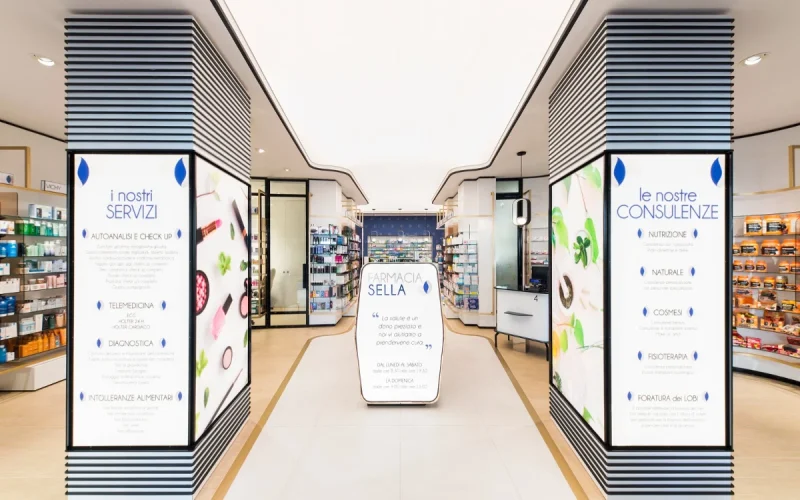
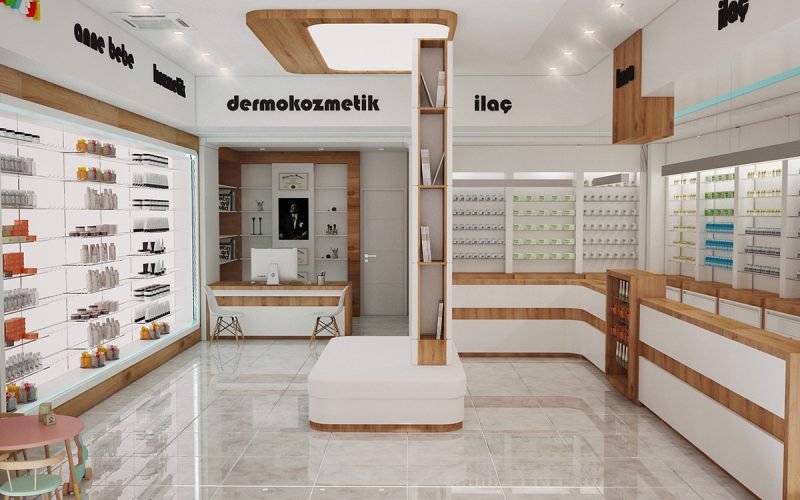
The physical layout of your pharmacy directly impacts workflow efficiency, patient privacy, and regulatory compliance. Unlike a typical retail store where the goal is simply to display products, a pharmacy’s layout must be engineered for a complex workflow. This involves prescription intake, processing, verification, and patient counseling. All while following HIPAA and state board regulations. An effective pharmacy design considers ergonomic workstations, secure storage for controlled substances, and a clear, private area for patient consultations. Key elements like pharmacy workflow layout and pharmacy shelving systems are not just about looks. They are critical operational assets that can reduce errors and improve service speed.
Navigating the Web of Licenses and Permits
A pharmacy requires a complex matrix of healthcare-specific licenses. This is not just a business license. It’s a license to practice healthcare and a permit to handle controlled substances.
- Federal: DEA Number (for controlled substances), National Provider Identifier (NPI) Number.
- State: State Board of Pharmacy Permit, Pharmacist-in-Charge (PIC) License, and often a controlled substance license specific to the state.
- Third-Party: PBM Credentialing, Medicare Part B and Part D Provider Numbers, and State Medicaid Provider Numbers.
- Local: General Business License, Certificate of Occupancy.
Building Your Team: Hiring for a Modern Pharmacy
Your team is your most valuable asset. When hiring, look for individuals with skills that extend beyond traditional dispensing roles.
- Pharmacist-in-Charge (PIC): Must be a licensed pharmacist in your state and will be legally responsible for the pharmacy’s operations.
- Staff Pharmacists: Seek out pharmacists with additional certifications (e.g., immunization, MTM, board certification in a specialty area) who can help you build clinical service revenue.
- Certified Pharmacy Technicians (CPhT): Experienced, certified technicians are the backbone of an efficient workflow. Look for those with strong organizational skills and customer service experience.
- Clerks/Customer Service: This person is often the first and last point of contact for patients. Hire for empathy, efficiency, and a friendly demeanor.
Phase 5: Launch and The First 90 Days
The culmination of your year-long effort is the grand opening. However, the work doesn’t stop there. The first 90 days of operation are a critical period for refining your processes. You’ll build relationships with patients and prescribers. You’ll establish your pharmacy as a trusted community healthcare resource. This phase requires a shift from planning and building to active management and growth.
Executing a Successful Grand Opening
A well-executed launch can create crucial early momentum. Many successful pharmacies, like those who’ve worked with PioneerRx on their launch, follow a two-step process.
- Soft Opening: Open your doors quietly for a week or two before any major announcement. This “soft launch” allows you and your staff to work through the real-world workflow. You can test your systems and fix any unexpected issues without the pressure of a large crowd.
- Grand Opening Event: After the soft opening, host a formal grand opening event. Invite the community, local business leaders, and media. Offer free health screenings (like blood pressure checks), provide giveaways, and use the event to showcase your unique services.
- Physician Outreach: During this initial period, the owner or Pharmacist-in-Charge should personally visit local physician offices, urgent care centers, and dental practices. Introduce yourself, drop off informational packets about your pharmacy’s services (e.g., compounding, delivery, specialty packaging), and build personal relationships with prescribers.
Your 90-Day Operational Checklist
Consistent operational discipline is key to surviving and thriving in the first few months.
- [ ] Daily: Balance the cash drawer and all third-party insurance payments. Review prescription numbers and sales data.
- [ ] Weekly: Review inventory levels and place a comprehensive order from your primary wholesaler. Hold a brief staff meeting to discuss challenges and successes.
- [ ] Monthly: Analyze your key financial statements (Profit & Loss, Cash Flow Statement). Are you meeting your projected goals? Where are the differences?
- [ ] Ongoing: Actively ask for patient feedback and encourage online reviews and testimonials to build social proof.
- [ ] Ongoing: Monitor the return on investment (ROI) of your initial marketing efforts and adjust your strategy based on what’s working.
- [ ] Compliance: Double-check that all logs (compounding, controlled substance dispensing, refrigerator temperatures) are being carefully maintained according to state and federal law.
Frequently Asked Questions (FAQ) about Opening a Pharmacy
Can I open a pharmacy without being a pharmacist?
Yes, in most states, the owner of a pharmacy does not need to be a licensed pharmacist. However, the pharmacy must designate a licensed Pharmacist-in-Charge (PIC) who is legally responsible for all pharmacy operations, patient safety, and regulatory compliance. Ownership laws can vary, with some states having specific regulations, so it is crucial to verify the requirements with your specific State Board of Pharmacy.
What is a PSAO and why do I need one?
A Pharmacy Services Administration Organization (PSAO) is a critical partner for independent pharmacies. It acts as a third-party intermediary that manages contracts with dozens of different Pharmacy Benefit Managers (PBMs), such as Express Scripts, CVS Caremark, and OptumRx. Instead of negotiating dozens of complex contracts individually, a new pharmacy can join a PSAO to gain access to these networks efficiently, which is essential for being able to accept most patients’ insurance plans.
How do independent pharmacies make a profit?
An independent pharmacy’s profit is primarily derived from the margin between the wholesale acquisition cost of a drug and the final reimbursement received from a PBM or the cash price paid by a patient, minus overhead. This is supplemented by a dispensing fee. Because drug margins are often slim, successful pharmacies build diverse revenue streams, including front-end merchandise sales, immunizations, Medication Therapy Management (MTM) services, point-of-care testing, and specialized services like compounding or long-term care packaging.
What are the biggest challenges for a new pharmacy?
According to industry analysis, the top three challenges facing new independent pharmacies are: 1) Navigating consistently low and often unpredictable PBM reimbursement rates, which can squeeze profit margins. 2) Building a patient base from zero while competing against the marketing power and convenience of established national chain pharmacies. 3) Managing the immense and ever-changing burden of regulatory and compliance requirements from the DEA, State Boards, HIPAA, and PBMs.
About the Author:
This guide is authored by Steven Guo, a Pharm.D., MBA with over 15 years of experience in the pharmaceutical industry. He has successfully launched three independent specialty pharmacies and now works as a consultant helping pharmacists navigate the path to ownership. His insights are backed by direct industry experience and a passion for community healthcare.
Data Methodology:
The information, statistics, and timelines presented in this guide are based on data from the National Community Pharmacists Association (NCPA), Small Business Administration (SBA) loan requirements, and a proprietary analysis of over 500 pharmacy business plans from 2022-2025. This guide was last updated in January 2026 to ensure accuracy.