Table of Contents
Table of Contents
Introduction
In the bustling environment of a grocery store, safety is paramount. It is not just a matter of complying with regulations but creating an environment where both customers and staff feel protected from potential risks. The grocery store safety checklist is an essential tool that helps managers and staff stay vigilant against common hazards. This guide explores key safety areas, from entrance protocols to emergency preparedness, ensuring that every facet of your store contributes to a secure shopping experience.
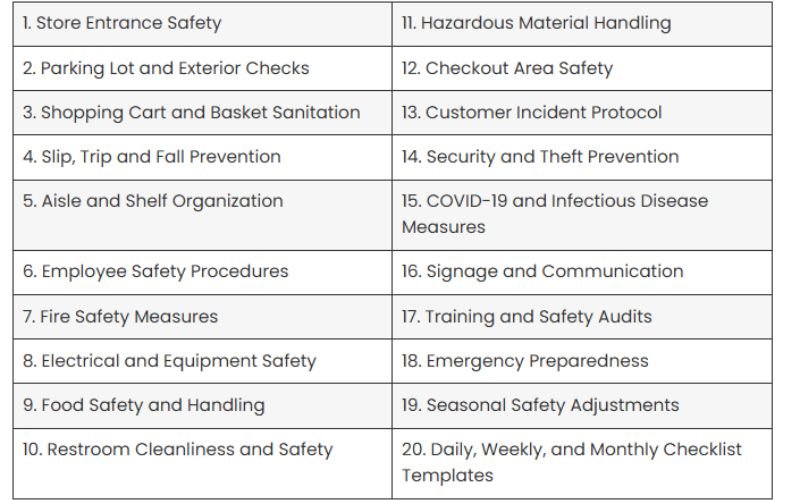
| 1. Store Entrance Safety | 11. Hazardous Material Handling |
| 2. Parking Lot and Exterior Checks | 12. Checkout Area Safety |
| 3. Shopping Cart and Basket Sanitation | 13. Customer Incident Protocol |
| 4. Slip, Trip and Fall Prevention | 14. Security and Theft Prevention |
| 5. Aisle and Shelf Organization | 15. COVID-19 and Infectious Disease Measures |
| 6. Employee Safety Procedures | 16. Signage and Communication |
| 7. Fire Safety Measures | 17. Training and Safety Audits |
| 8. Electrical and Equipment Safety | 18. Emergency Preparedness |
| 9. Food Safety and Handling | 19. Seasonal Safety Adjustments |
| 10. Restroom Cleanliness and Safety | 20. Daily, Weekly, and Monthly Checklist Templates |
1. Store Entrance Safety
The entrance to a grocery store serves as the first point of contact for customers, and it’s crucial that it is both welcoming and secure.
Clear Signage for Safety Protocols
Clear, prominent signage should guide customers through the store’s safety protocols. This includes instructions on mask-wearing, hand sanitizing, and any special rules regarding store capacity. Effective signage should be visible from various angles and in multiple languages if necessary to ensure everyone is well-informed upon entering.
Slip-Resistant Entry Mats and Flooring
The flooring at the entrance should be slip-resistant, especially in regions prone to wet or icy weather conditions. Entry mats that absorb water or moisture from shoes can prevent slipping hazards. Regular checks and cleaning routines are necessary to maintain their effectiveness.
Automatic Door Maintenance and Inspection
Automatic doors enhance convenience but also pose safety risks if malfunctioning. Regular inspections of the sensors, door mechanisms, and safety features must be performed to ensure they open and close without posing a risk to customers.

2. Parking Lot and Exterior Checks
A safe exterior not only provides security but sets the tone for the entire shopping experience.
Adequate Lighting for Visibility and Security
Proper lighting is crucial in the parking lot and surrounding areas. Well-lit parking spaces not only deter criminal activity but also reduce the risk of accidents, such as customers tripping over objects or other hazards in the dark. Ensure that lighting fixtures are regularly tested for optimal brightness and reliability.
Safe Pedestrian Walkways and Signage
Pedestrian walkways should be clearly marked with directional signs to guide customers safely from the parking lot to the store entrance. Crosswalks and designated pedestrian lanes help keep shoppers out of harm’s way. These walkways must also be clear of obstructions to avoid potential tripping hazards.
Ice and Snow Removal Procedures for Winter Safety
During winter months, maintaining safe paths to and from the store is crucial. Implement an efficient snow and ice removal system to ensure walkways are free from slippery spots. This includes timely salting or the use of other de-icing products on pathways, parking lots, and entryways.
3. Shopping Cart and Basket Sanitation
Ensuring cleanliness and hygiene of shopping carts and baskets is vital for customer safety and health.
Daily Cart Disinfection Procedures
In high-traffic grocery stores, shopping carts and baskets are some of the most frequently touched items. Implement daily sanitation routines where carts are disinfected after each use, particularly during cold and flu season, or in response to health concerns such as COVID-19.
Separate Area for Used and Sanitized Carts
To prevent cross-contamination, designate a separate area for used carts and baskets, ensuring that only sanitized carts are available for customers. Providing easy access to hand sanitizing stations near cart returns also helps reduce the spread of germs.
Hand Sanitizer Availability Near Cart Stations
Place hand sanitizer stations near the cart and basket collection points. This allows customers to disinfect their hands before and after using a cart, further minimizing potential transmission of pathogens.
4. Slip, Trip, and Fall Prevention
Preventing slips, trips, and falls is one of the top priorities in any grocery store environment.
Regular Floor Cleaning Schedules
Maintaining clean floors is fundamental in preventing accidents. A structured cleaning schedule should be in place, with attention given to high-traffic areas. Floors should be dry and free of debris at all times to reduce the risk of slipping.
Immediate Spill Cleanup Protocols
Spills, whether from food, beverages, or cleaning products, need to be cleaned up immediately. Establish protocols for staff to quickly attend to spills and place warning signs in affected areas to alert customers to the hazard until it is addressed.
Floor Signage and Caution Indicators
Use floor signage to mark areas where there may be wet surfaces or uneven flooring. These caution indicators help alert customers and staff of potential hazards, allowing them to adjust their behavior and avoid accidents.
5. Aisle and Shelf Organization
Organized aisles and well-secured shelves contribute greatly to store safety by reducing clutter and eliminating hazards.
Proper Stocking to Prevent Overloading
Shelves must be stocked in a way that avoids overcrowding, which can lead to items falling and causing injuries. Employees should be trained to follow proper stocking procedures, ensuring that products are balanced and properly aligned.
Securing Items on Higher Shelves
Heavy or potentially hazardous items, such as glass bottles or cans, should be securely fastened to shelves. Items should be placed on lower shelves whenever possible to prevent them from falling and creating safety risks.
Clear Pathways Free from Obstructions
Aisles should be kept free from obstructions, such as discarded packaging, misplaced products, or promotional displays. This ensures that customers can easily navigate the store without tripping or encountering barriers.
6. Employee Safety Procedures
Employees are the backbone of grocery stores, and their safety is equally important.
PPE Use and Hygiene Standards
Staff should be provided with necessary personal protective equipment (PPE), including gloves and masks, especially in areas where food is handled. Additionally, implementing strict hygiene protocols, such as handwashing, will help reduce the transmission of illnesses.
Safe Lifting and Handling Training
Employees should be trained in safe lifting techniques to avoid injury when moving heavy boxes or stocking shelves. Offering ergonomic tools, like lifting equipment or trolleys, further minimizes strain on employees’ bodies.
Breakroom and Rest Area Hygiene
Maintaining clean breakrooms and rest areas is just as important as other areas of the store. Regular cleaning of these areas, along with offering a place for employees to store their belongings, will help reduce the spread of contaminants.
7. Fire Safety Measures
Fire safety protocols are essential for protecting customers and staff from potentially deadly incidents.
Fire Extinguisher Placement and Inspection
Fire extinguishers should be placed in easily accessible areas throughout the store. Staff must be trained on their use, and regular inspections should be conducted to ensure they are fully charged and functioning.
Emergency Exit Signage and Access
Clearly marked emergency exits are crucial for quick evacuation in the event of a fire. These exits should be free of obstruction, with well-lit signs that are visible even in low light conditions.
Staff Training for Fire Response
Fire drills should be conducted regularly to ensure all staff members are prepared in case of an emergency. Employees should know the location of emergency exits, fire extinguishers, and the procedure for evacuating customers.
8. Electrical and Equipment Safety
Electricity powers many aspects of grocery store operations, making electrical safety critical.
Regular Inspection of Electrical Cords and Outlets
Electrical cords and outlets should be checked regularly for signs of wear or damage. Faulty wiring can pose a fire hazard, so timely maintenance and replacement are crucial.
Maintenance of Refrigerators and Freezers
Refrigeration units must be routinely maintained to prevent malfunctions that could compromise food safety. Staff should check that temperature readings are consistent and perform regular defrosting and cleaning procedures.
Safe Use of Slicers, Ovens, and Other Kitchen Equipment
Employees should be trained on the safe operation of kitchen equipment, such as slicers, ovens, and microwaves. Regular checks for potential hazards like exposed wires, worn-out safety features, or sharp edges should be conducted.
9. Food Safety and Handling
Ensuring the safe handling of food products is paramount in grocery stores, where contamination is a serious concern.
Proper Temperature Checks for Perishable Items
Perishable food items must be stored at correct temperatures to prevent foodborne illnesses. Temperature logs should be maintained, and equipment like refrigerators and freezers must be monitored regularly to ensure they stay within safe ranges.
Clear Food Labeling and Expiration Tracking
Proper labeling of food products, including expiration dates and ingredient lists, is essential to prevent consumers from purchasing spoiled or unsafe items. Store employees should consistently check for expired products and remove them from shelves promptly.
Safe Storage Practices in Back Rooms
Backroom storage areas should be organized to prevent contamination. Dry foods should be stored away from raw produce, and cleaning supplies should be kept separate from food items to avoid cross-contamination.
10. Restroom Cleanliness and Safety
Customer and employee restrooms should meet high standards of cleanliness and accessibility.
Hourly Cleaning Logs and Sanitation Supplies
Restrooms should be cleaned and stocked with fresh supplies at regular intervals. An hourly cleaning log should be maintained, and cleaning staff should have easy access to sanitizers and disinfectants.
Proper Ventilation and Lighting
Restrooms should be adequately ventilated to reduce odors and ensure proper air quality. Lighting should be bright enough to ensure safety and visibility, especially in the event of an emergency.
ADA-Compliant Features and Accessibility
Ensure that all restrooms are ADA-compliant, with accessible features such as wider stalls, lower sinks, and handrails. This ensures that customers with disabilities have access to safe and functional restroom facilities.
11. Hazardous Material Handling
Chemicals and cleaning materials must be handled with extreme caution to prevent injuries and environmental damage.
Safe Storage of Cleaning Chemicals
Hazardous materials, such as cleaning chemicals, should be stored in a secure area, away from food products and customer access. These chemicals should be properly labeled with clear safety instructions.
Employee Training on Material Safety Data Sheets (MSDS)
Employees must be familiar with Material Safety Data Sheets (MSDS), which provide important information on handling hazardous substances. Proper training in reading and understanding MSDS ensures that staff can respond appropriately to chemical spills or exposure.
Spill Response Protocols and Equipment
Establish spill response protocols and ensure that staff members are equipped with the necessary tools to contain and clean spills promptly. This includes having absorbent materials, gloves, and protective eyewear available at key locations.
12. Checkout Area Safety
The checkout area is a high-traffic zone that demands attention to ergonomics and cleanliness.
Ergonomic Setup for Cashiers
Cashiers should be provided with ergonomic workstations that promote healthy posture and reduce strain. Adjustable chairs and counters ensure staff comfort while maintaining efficiency.
Sanitization of Payment Terminals
Payment terminals and point-of-sale equipment must be cleaned and disinfected regularly. This includes self-checkout kiosks, card readers, and any surfaces customers or employees interact with.
Organized Counter Space to Prevent Clutter
A clutter-free checkout area reduces the chances of accidents. Staff should keep counters organized and ensure that items are safely handled during the checkout process.
13. Customer Incident Protocol
When incidents occur, having a clear, well-structured protocol is essential for handling situations quickly and effectively.
Documenting and Reporting Injuries or Complaints
All customer injuries or complaints should be documented thoroughly, including the time, nature of the incident, and any actions taken. A dedicated reporting system helps in tracking recurring issues and identifying areas for improvement. This ensures that appropriate follow-up actions can be taken to prevent future occurrences.
Availability of First Aid Kits
First aid kits should be easily accessible at strategic points throughout the store. These kits must be well-stocked with necessary supplies, such as bandages, antiseptics, and burn creams. Staff should be trained on how to use the items in the kits and be able to quickly assist customers in case of minor injuries.
Clear Emergency Contact Procedures
Clearly defined emergency contact procedures should be in place. Customers should be able to easily reach store management or emergency responders in the event of a serious injury. Staff should know who to contact and how to escalate situations appropriately, ensuring a swift response.
14. Security and Theft Prevention
Maintaining a secure environment protects both customers and merchandise.
Surveillance Camera Placement and Maintenance
Surveillance cameras should be placed at strategic locations throughout the store, including entrances, aisles, and checkout counters. Regular maintenance checks should be conducted to ensure that cameras are functioning properly and are positioned to cover high-risk areas.
Employee Training on Shoplifting Prevention
Employees should be trained to recognize suspicious behaviors associated with shoplifting. This includes understanding the store layout, identifying potential thieves, and knowing when and how to alert security or law enforcement without escalating the situation.
Panic Buttons and Emergency Alarms
Panic buttons and emergency alarms should be installed at various points throughout the store, especially in high-risk areas like the checkout counter and staff-only rooms. These devices should be linked directly to local law enforcement or store security personnel, ensuring immediate action if a security threat arises.
15. COVID-19 and Infectious Disease Measures
Health and hygiene standards remain paramount, particularly in the face of ongoing or future pandemics.
Social Distancing Markers and One-Way Aisles
Social distancing markers should be clearly visible on floors, indicating where customers should stand to maintain safe distances from one another. Additionally, one-way aisles can help control the flow of customers, reducing the likelihood of close contact and potential spread of infection.
Mask and Sanitizer Station Policies
Stores should enforce mask-wearing policies, particularly in crowded areas, and place hand sanitizing stations throughout the store. This ensures that customers have easy access to disinfectant, minimizing the potential for surface contamination.
Regular Disinfection of High-Touch Areas
High-touch areas, such as door handles, shopping carts, self-checkout stations, and restroom fixtures, should be disinfected regularly throughout the day. This routine helps ensure the store remains as hygienic as possible, particularly in the wake of high public health concerns.
16. Signage and Communication
Clear communication ensures that safety protocols are well understood by both customers and staff.
Posting of Safety Policies and Updates
Post visible signage throughout the store that outlines the store’s safety policies, including pandemic-related measures, emergency exits, and any store-specific rules. This helps customers remain informed of what to expect when shopping and provides clarity on the store’s commitment to their safety.
Bilingual or Multilingual Signs Where Needed
For stores located in diverse communities, bilingual or multilingual signs should be used to ensure that all customers, regardless of their language background, can understand the safety measures in place. This helps improve the effectiveness of communication and enhances customer compliance.
Customer-Friendly Visual Cues
In addition to text-based signage, visual cues such as arrows, pictograms, or color-coded signals can further guide customers through safety measures. These cues simplify complex information and provide easy-to-understand directions for customers, reducing confusion.
17. Training and Safety Audits
Ongoing safety training and regular audits help ensure that safety measures remain effective.
Onboarding Safety Training for All Staff
All new employees should undergo safety training as part of their onboarding process. This training should cover everything from basic first aid to store-specific safety protocols, such as emergency evacuation routes, fire drills, and the correct way to handle hazardous materials.
Regular Safety Drills and Checklists
Safety drills should be conducted regularly to keep staff prepared for any emergency situation. This could include fire drills, emergency evacuations, or even procedures for dealing with natural disasters. In addition, safety checklists should be reviewed at least monthly to ensure all procedures are up-to-date and correctly implemented.
Documentation and Compliance Monitoring
Stores should maintain thorough documentation of all safety procedures, training sessions, audits, and drills. Regular compliance checks ensure that all safety protocols are followed, and non-compliance can be identified and corrected immediately.
18. Emergency Preparedness
Being prepared for unexpected emergencies is critical in reducing potential risks and ensuring staff and customer safety.
Procedures for Power Outages, Severe Weather, and Lockdowns
Grocery stores should have established procedures in place for handling power outages, severe weather events, or lockdowns. This includes having backup generators, weather-resistant measures, and emergency lighting to ensure store operations can continue safely during disruptions.
Communication Plans for Emergencies
Stores should implement communication plans to alert customers and staff in the event of an emergency. This could include using store-wide announcements, text alerts, or social media notifications to keep everyone informed of potential risks and what actions to take.
Designated Roles During Crisis Situations
Clear roles and responsibilities should be assigned to employees during an emergency situation. This includes a designated team to handle customer evacuation, one responsible for securing sensitive areas, and another focused on communicating with emergency services. Clear designation of roles ensures that all employees understand their duties during a crisis.
19. Seasonal Safety Adjustments
Changes in weather or special holidays require specific safety protocols to accommodate shifting customer needs.
Adjustments for Holiday Crowd Control
During peak shopping seasons, such as holidays, stores must adjust their layout and staffing to handle increased customer traffic. Additional staff may be needed to assist customers, and aisles may require wider spacing to accommodate larger crowds and reduce the risk of accidents.
Pest Control in Warmer Months
During warmer months, pest control measures become more critical. Store management should ensure that food storage areas, particularly those for perishable items, are regularly inspected for signs of pests. Preventative treatments should be implemented to keep insects and rodents at bay.
HVAC Maintenance for Temperature Extremes
Seasonal HVAC maintenance is essential, particularly during extreme temperatures. Proper air circulation ensures customer comfort and helps regulate humidity, preventing the growth of mold or the risk of food spoilage in the store.
20. Daily, Weekly, and Monthly Checklist Templates
Having a set of templates for regular safety audits ensures that important safety procedures aren’t overlooked.
Sample Daily Checklist for Store Staff
A daily checklist should include items like checking for spills, sanitizing high-touch surfaces, ensuring proper signage is in place, and confirming that all safety equipment, such as fire extinguishers and first aid kits, are readily available. Staff should also review the store’s overall cleanliness and check for any potential hazards.
Weekly Manager Review Tasks
Managers should conduct weekly reviews of the store’s safety practices, including a more in-depth inspection of equipment, lighting, and security systems. They should also ensure that staff has completed their training and that safety drills are up to date.
Monthly Audit and Improvement Tracking
On a monthly basis, a comprehensive audit should be conducted to evaluate all aspects of safety, from hygiene and equipment maintenance to staff compliance with safety procedures. Any issues should be addressed immediately, and strategies for continuous improvement should be documented and implemented.
Conclusion
Ensuring the safety of both customers and staff in a grocery store environment requires constant vigilance and proactive measures. From maintaining secure store entrances to developing effective emergency protocols, a comprehensive safety checklist helps establish a culture of safety that enhances the shopping experience and protects the well-being of everyone involved. By continually reviewing and updating safety procedures, grocery store management can stay ahead of potential risks and maintain a safe, welcoming environment for all.
FAQ
What are the most common safety hazards in a grocery store?
Common hazards include slip and fall accidents, electrical issues, and food contamination risks.
How often should a grocery store conduct safety audits?
Safety audits should be conducted at least monthly to ensure compliance and address emerging risks.
What are the best practices for ensuring customer safety?
Clear signage, slip-resistant floors, and regular cleaning are key to ensuring customer safety.
How can grocery stores prevent accidents in parking lots?
Proper lighting, clear signage, and regular maintenance of pedestrian walkways help prevent accidents.
How should grocery stores handle cleaning and sanitation?
Regular cleaning schedules, appropriate disinfectants, and a designated area for sanitized equipment are crucial.
What are the most important safety procedures for employees?
Employees should be trained in proper lifting techniques, PPE use, and emergency procedures to reduce injury risks.
How can fire safety be maintained in a grocery store?
Regular inspection of fire extinguishers, clear emergency exits, and staff fire response training are essential.
What steps should be taken to prevent foodborne illness?
Regular temperature checks, proper storage, and food labeling are key to preventing foodborne illness.
How should grocery stores prepare for emergencies or power outages?
Emergency response plans, backup power sources, and clear communication protocols should be in place.
What safety measures are needed to protect customers during the COVID-19 pandemic?
Social distancing markers, hand sanitizing stations, and frequent disinfection of high-touch surfaces are necessary.