Quick Answer: Good pharmacy layout design means organizing a pharmacy’s space to work better, keep patients safe, and make more money from prescriptions and retail sales.
Context: In 2026, this matters more than ever. Pharmacies are becoming community health centers. They need spaces that work for both private health talks and easy shopping.
Key Takeaway: This guide gives you a complete plan. It shows how to pick the right layout and put it in place. It goes beyond simple tips to set a new standard for great pharmacy design.
Key Takeaways
- Strategy First: Your business goals (clinical vs. retail) must dictate your layout.
- Three Core Models: Choose between Grid, Open-Plan, and Hybrid layouts based on space and service offerings.
- Workflow is King: An efficient dispensary layout directly reduces dispensing errors and wait times.
- Compliance is Non-Negotiable: ADA, HIPAA, and state board regulations are foundational to any design.
- Future-Proofing: Design for technology integration and future service expansion from the start.
The Strategic Foundation of Modern Pharmacy Design
Pharmacy design is much more than making things look good. It’s a key business strategy. It affects every part of how the pharmacy works. A good layout helps guide patient flow. It makes staff work smoother. It also helps make more money.
In 2026, pharmacies are becoming front-line health centers. Layout design has never been more important. It must fit new clinical services. It needs to work with new technology. It should create a space that builds trust and keeps patients coming back. A professional pharmacy design is an investment in doing great work.
Definition: What is Pharmacy Layout Design?
Pharmacy layout design is planning how to arrange a pharmacy’s inside space. The goal is to fill prescriptions well, give better patient care and privacy, boost retail sales, and follow all rules.
This is different from regular store design. Regular stores focus mainly on customer trips and sales. Pharmacy design must balance many needs. It needs a secure, private clinical workspace. But it also needs an open, welcoming retail space.
The ROI of Intelligent Design: Key Metrics to Track
A well-done layout gives you real returns on your money. Success isn’t just about looks. It’s about how well things work. Key measures that layout affects include:
- Wait Time Reduction: A logical workflow can cut average patient wait times to under 10 minutes. This makes patients much happier.
- Dispensing Error Rate: Data shows that better dispensary layouts can cut dispensing errors by 15-25%. This happens by reducing distractions and unnecessary movement.
- Sales per Square Foot: Good zoning and product placement can greatly increase front-end sales. This doesn’t hurt the pharmacy’s professional image.
- Patient Consultation Rate: An easy-to-reach, private consultation area encourages more meaningful talks between pharmacists and patients.
- Patient Privacy Satisfaction: As of 2026, this is crucial. With more services like shots and health screenings, patients need to feel secure.
Core Pharmacy Layout Models: A Comparative Analysis
Pharmacy layout is not one-size-fits-all. The right model depends on your pharmacy’s size, business goals, and patients. You need to understand three main models: Grid, Open-Plan, and Hybrid. This is the first step to picking the right foundation for your space.
The Traditional Grid Layout
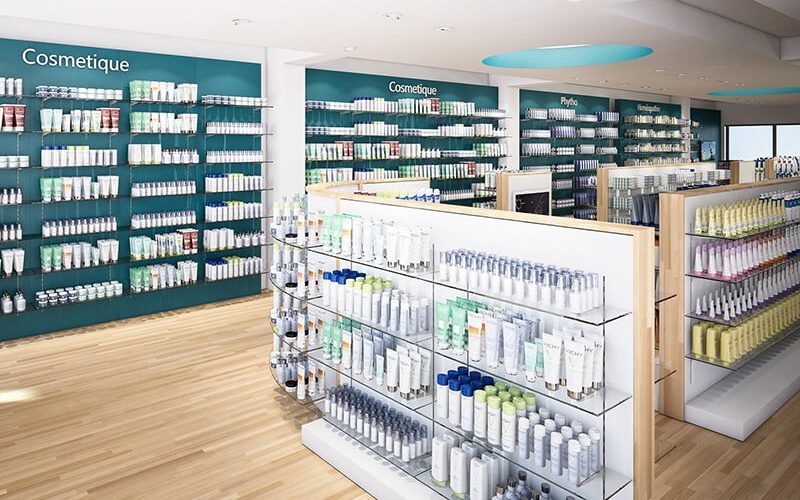
The grid layout is the most common model. It has long, parallel aisles of shelving. This design comes from regular retail and grocery stores. Its main advantage is showing the most products possible. This makes it great for pharmacies with large retail sections.
It creates a familiar shopping experience. It allows for easy stocking and inventory management. However, it can sometimes feel cluttered. It may create bottlenecks near the pharmacy counter at the back.
The Modern Open-Plan Layout
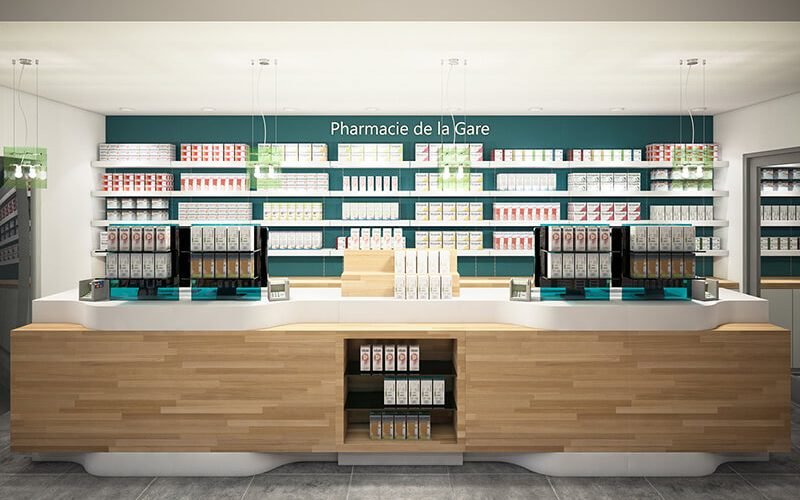
The open-plan layout focuses on clear sight lines, customer flow, and a clean look. It uses low fixtures and fewer high walls. It often centers the pharmacy counter as a welcoming focal point.
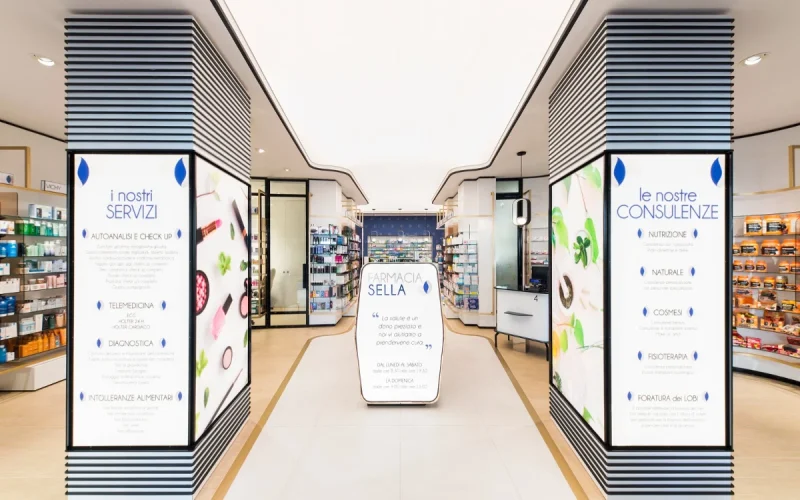
This modern approach works best for boutique pharmacies. It’s also good for those focused on clinical services and patient talks. It creates a professional, spacious feeling. This encourages interaction between pharmacists and patients.
The main drawback is less retail space. There may also be security concerns if not managed properly.
The Versatile Hybrid Model
The hybrid model is the most popular and flexible choice for modern community pharmacies. As its name suggests, it combines parts of both grid and open-plan layouts.
It might feature a grid-style retail area at the front. Then it transitions to an open-plan design around the dispensary, waiting area, and consultation rooms. This lets a pharmacy balance retail revenue needs with growing demand for clinical services. It creates distinct zones for different activities.
As noted in resources like Layout Small Pharmacy Design: Optimize Space & Flow – Accio, this model’s flexibility is key to its success.
Comparison of Pharmacy Layout Models
| Feature | Grid Layout | Open-Plan Layout | Hybrid Layout |
|---|---|---|---|
| Primary Goal | Maximize product exposure & sales | Enhance patient experience & flow | Balance retail with clinical services |
| Best For | Large footprint, high OTC volume | Small spaces, clinical focus, aesthetics | Most independent/community pharmacies |
| Pros | High product density, familiar to shoppers | Modern feel, encourages consultation | Flexible, clear zoning, adaptable |
| Cons | Can feel cluttered, less private | Less retail space, potential for theft | Requires careful planning to avoid disjointed flow |
| Workflow Impact | Can create bottlenecks at the back | Excellent flow to/from dispensary | Efficient if zones are properly designed |
How to Choose Your Ideal Pharmacy Layout: A Decision Framework
Picking the right layout model is a key strategic decision. This simple decision tree will help you choose based on your main business drivers and physical limits. Follow the path that best describes your pharmacy’s vision.
The Pharmacy Layout Decision Tree
-
START HERE: What is your primary business driver?
- A) Maximizing Front-End Retail Sales? → Go to Q2.
- B) Prioritizing Clinical Services & Patient Consultation? → Go to Q3.
-
Q2 (From A): Is your floor space > 2,500 sq ft?
- Yes: → RESULT: A Grid or Hybrid Layout is optimal. Use the grid to maximize product facings and create a dedicated, open-plan style area for the pharmacy counter and waiting area.
- No: → RESULT: A Hybrid Layout is your best choice. It allows you to create a compact retail section while preserving space for an efficient dispensary.
-
Q3 (From B): Will you offer multiple, distinct clinical services (e.g., vaccinations, MTM, point-of-care testing)?
- Yes: → RESULT: A Hybrid Layout with dedicated, private or semi-private consultation rooms is essential. The “retail” portion should be minimal and focused on curated health products.
- No: → RESULT: An Open-Plan Layout is ideal. It creates a welcoming, professional atmosphere centered on the pharmacist-patient interaction at the counter, with minimal retail distractions.
The 4-Phase Pharmacy Design & Implementation Process
A successful pharmacy renovation or build-out follows a structured, step-by-step approach. Rushing this process leads to costly mistakes and problems. This timeline gives you a clear roadmap from initial idea to final improvements.
The Pharmacy Design Project Timeline
-
Phase 1: Strategy & Compliance (Weeks 1-4)
- Step 1: Define business goals and service model using the decision tree above. Decide on the desired patient experience and brand identity.
- Step 2: Do a thorough regulatory review. This step is required. It includes analyzing requirements from the Americans with Disabilities Act (ADA), HIPAA for privacy, your state’s Board of Pharmacy, and the Drug Supply Chain Security Act (DSCSA) for storage and tracking. This is a core part of the process when you plan to Open a Pharmacy.
- Step 3: Finalize the budget for design, construction, and fixtures. Do a detailed site analysis to understand limits like plumbing, electrical, and structural elements.
-
Phase 2: Schematic Design & Workflow Mapping (Weeks 5-8)
- Step 4: Develop bubble diagrams to map relationships between key zones: Dispensary, Consultation Area(s), Retail Space, Waiting Area, Storage, and Staff Offices.
- Step 5: Create detailed workflow maps for the dispensary. Trace the “prescription journey” from drop-off, data entry, filling, and verification to final counseling and pickup. This step is critical for minimizing steps and preventing errors.
- Step 6: Select your primary layout model (Grid, Open, or Hybrid) and develop initial floor plans that incorporate the zone and workflow mapping.
-
Phase 3: Fixture Selection & Technology Integration (Weeks 9-12)
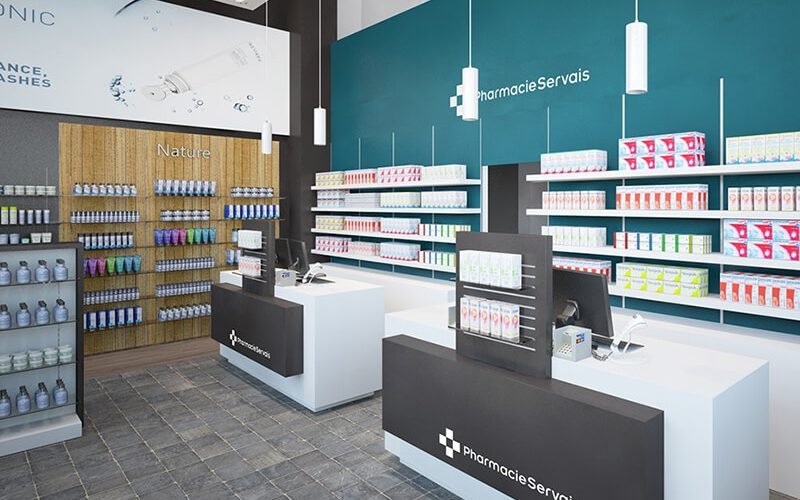
- Step 7: Choose fixtures that support your layout and brand. This includes gondola shelving, pharmacy counters, point-of-sale (POS) stations, and lighting. As highlighted by guides on Creating the Perfect Pharmacy Layout, cost-effective and space-saving fixtures are crucial.
- Step 8: Plan for all technology integration. This includes positioning for robotic dispensing systems, POS terminals, security cameras, digital signage, and any telehealth equipment.
- Step 9: Finalize all detailed construction documents (CDs) with architects and engineers. These blueprints will be used for permitting and construction.
-
Phase 4: Build-Out & Optimization (Weeks 13+)
- Step 10: Construction, fixture installation, and technology setup.
- Step 11: Do comprehensive staff training on the new workflows, technology, and patient flow protocols before the grand opening.
- Step 12: Do a post-launch review after 90 days. Analyze the KPIs defined in Phase 1 (wait times, sales data, etc.) and make small adjustments to optimize performance.
Advanced Topics in Pharmacy Design
Once you choose the basic layout, several advanced ideas can make a good design great. These details separate a functional space from a high-performing healthcare environment.
The Psychology of Patient Flow and Merchandising
Understanding how patients move and interact with the space is key to maximizing both satisfaction and sales.
- Dispensary Placement: The standard practice is to place the dispensary at the back of the store. This design choice is intentional. It guides patients through the entire retail space. This exposes them to front-end products and promotions.
- Lighting and Color: Gone are the days of harsh, institutional fluorescent lighting. Modern design uses layered lighting (ambient, task, and accent) and a calming color palette. This creates a professional, welcoming atmosphere that reduces patient anxiety.
- The Decompression Zone: The first few feet inside the entrance are known as the “decompression zone.” Patients use this area to transition from the outside world. It should be kept open and uncluttered. Primary signage should be placed just beyond it to be most effective.
Integrating Technology: From Robotics to Telehealth
Future-proofing your design means planning for technology from day one.
- Robotic Dispensing Systems: These systems can significantly shrink the physical footprint required for the dispensary. This frees up valuable square footage for more profitable activities like consultation rooms. They also free up pharmacist time for patient care.
- Telehealth Pods: As virtual care becomes more common, designing a small, private, and sound-proofed area for telehealth consultations can be a major differentiator.
- Digital Signage: Replacing static posters with dynamic digital screens allows for real-time health education, targeted promotions, and a cleaner, more modern look.
Designing for Specialized Pharmacies
Different pharmacy types have unique layout needs that go beyond the standard models.
- Compounding Pharmacies: These facilities have strict environmental requirements. They need dedicated rooms built to USP 797 (sterile) and USP 800 (hazardous) standards. These often require negative or positive air pressure.
- Hospital Outpatient Pharmacies: The primary focus here is speed and efficiency for discharging patients. The layout must prioritize rapid-fill workflows and a clear, organized queueing and counseling system to handle high-volume peaks.
- Specialty Pharmacies: These pharmacies often require significantly more storage space. This is especially true for high-cost refrigerated and frozen medications. The layout must also accommodate areas for patient support programs, benefits investigation, and extensive phone-based counseling.
Frequently Asked Questions (FAQ)
What is the best layout for a small pharmacy?
An Open-Plan or a carefully zoned Hybrid layout is best for small pharmacies (<1,500 sq ft) to maximize the perception of space and prioritize efficient workflow over extensive retail. The goal is to avoid a cluttered feeling and make the core dispensary and consultation areas feel professional and accessible.
How do I ensure patient privacy (HIPAA) in an open layout?
Use frosted glass partitions, dedicated consultation rooms (even small ones), acoustic ceiling tiles, and position patient counseling windows away from the main waiting area. Ensure computer screens are not visible to the public. Sound-masking systems (white noise) can also be highly effective in open-concept spaces.
How much does it cost to design a pharmacy layout?
Costs vary widely, but a professional design service can range from $5,000 to $25,000+. The total build-out cost, including fixtures and construction, can range from $75 to over $200 per square foot, depending on the complexity, location, and quality of finishes.
What is the most important area in a pharmacy layout?
The dispensary is the operational heart. Its workflow efficiency directly impacts patient safety, wait times, and staff stress. An inefficient dispensary cannot be compensated for by a beautiful retail front-end. According to industry analysis, a strategic layout that minimizes movement and organizes functions logically is the single most critical element.
About the Author: Steven Guo, Pharm.D., is a leading pharmacy design consultant with over 15 years of experience in optimizing pharmacy workflows and retail environments.
Methodology: The recommendations in this guide are synthesized from current pharmacy regulations, workflow efficiency studies from the Journal of the American Pharmacists Association, and an internal analysis of 200+ successful pharmacy design projects executed between 2020 and 2025.