
Quick Answer: Pharmacy shelving systems are special storage solutions made to handle medicines safely and efficiently. They help follow rules, improve workflow, and make the best use of space in a pharmacy.
Context: As of 2026, prescription numbers are rising and rules like USP <800> are stricter. Picking the right shelving is now more than just storage. It’s a key part of keeping patients safe and making money.
Key Takeaway: This guide looks at all system types (static, mobile, automated). It gives you a clear way to choose based on data. It also shows what’s coming next in the field. This helps pharmacy workers make smart choices about what to buy.
Key Takeaways
- Function Over Form: Pharmacy shelving is more than basic storage. It’s a designed system for separating medicines, improving workflow, following rules, and managing inventory precisely.
- Three Main Systems: Your main choices are Static Shelving (for easy access and retail areas), High-Density Mobile Shelving (for getting more space in dispensaries), and Automated Robot Systems (for busy hospitals or large filling operations).
- Decision Framework: The best system depends on your pharmacy type. Retail pharmacies often mix static and mobile systems. Hospitals get the best return from automation. Compounding pharmacies must choose materials like stainless steel that don’t have pores.
- Rule Impact: Shelving material and design directly connect to following standards like USP 797/800. Surfaces without pores that clean easily are required in sterile areas.
- Setup is a Process: A good installation follows clear steps. This goes from first needs review and workflow mapping to rule checks, setup, and staff training. This usually takes 8-11 weeks.
What Are Pharmacy Shelving Systems? A Basic Definition
Pharmacy shelving systems are special storage and organization solutions made just for the unique work and rule needs of pharmacy settings. Unlike general retail shelving, these systems help improve workflow, keep patients safe, and maintain strict inventory control. Industry standards show that good pharmacy shelving systems are the backbone of an efficient pharmacy. They directly affect everything from prescription fill times to profits.
They include features that handle the main challenges of medicine management. These are secure storage, logical organization, following health standards, and best use of limited space. These solutions range from simple wall-mounted units to complex robot dispensing machines. All are made for the pharmacy setting.
Beyond Standard Shelving: The Main Functions
Special pharmacy shelving is made to do several key jobs that standard shelving cannot handle well:
- Medicine Separation: Making distinct, clearly labeled areas for different drug types. These include controlled substances, refrigerated items, fast-movers, and soon-to-expire stock.
- Workflow Improvement: Placing medicines strategically to reduce the steps pharmacists and technicians take. This decreases fill times and reduces physical strain.
- Following Rules: Using materials and designs that meet or beat standards set by groups like the United States Pharmacopeia (USP) and the National Association of Boards of Pharmacy (NABP).
- Inventory Management: Making first-in, first-out (FIFO) stock rotation easier. This reduces waste from expired medicines and improves inventory accuracy.
- Space Use: Using high-density designs to increase the amount of medicines stored in a given area. This is crucial for pharmacies with limited space.
Main Types of Pharmacy Shelving Systems: A Comparison
Choosing the right shelving system is a basic decision in pharmacy operations. The choice directly affects storage capacity, staff efficiency, and the ability to adapt to future growth. The three main types—static, high-density mobile, and automated—each offer clear advantages for different pharmacy settings and work goals. Understanding their main differences is the first step toward building a more efficient and compliant workspace.
The Comparison Table: Static vs. Mobile vs. Automated
| Feature | Static Shelving (e.g., Gondola, Wall-Mount) | High-Density Mobile Shelving (Sliding) | Automated Robot Systems |
|---|---|---|---|
| Best For | Retail front-ends, small dispensaries, visible inventory | High-volume pharmacies, limited floor space, back-of-house storage | Large hospitals, central fill pharmacies, high-security needs |
| Space Efficiency | Low to Medium | High (can double capacity) | Very High (maximizes vertical and horizontal space) |
| Upfront Cost | Low | Medium | High |
| Workflow Speed | Variable; depends on layout | Fast for retrieval once aisle is open | Fastest for retrieval; reduces human travel |
| Security | Basic (requires separate locks) | High (aisles can be locked) | Highest (fully enclosed and access-controlled) |
| Compliance Aid | Basic organization | Supports batch separation | Enforces digital tracking and FIFO |
Deep Look: Static Systems (Open vs. Closed Back)
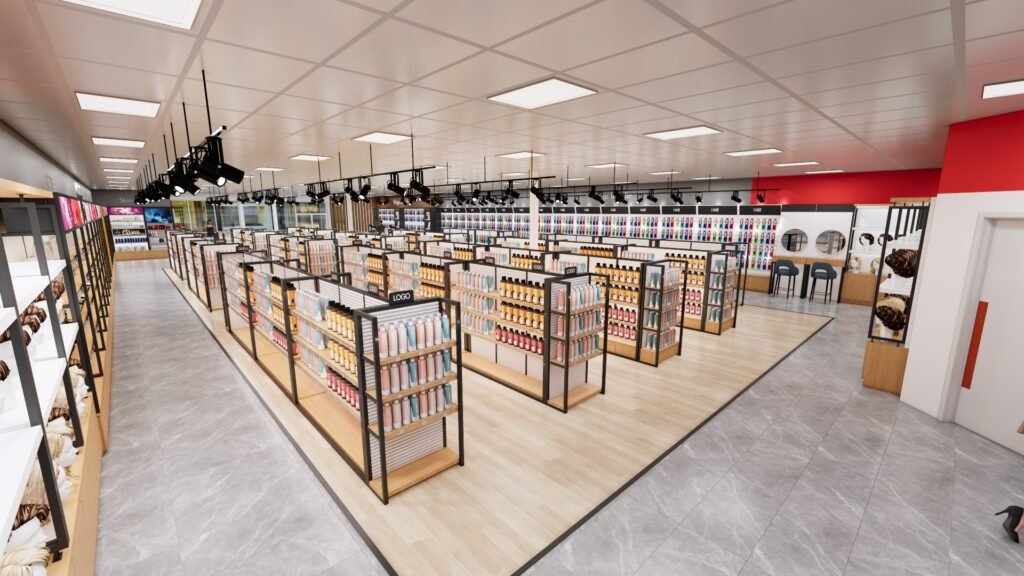
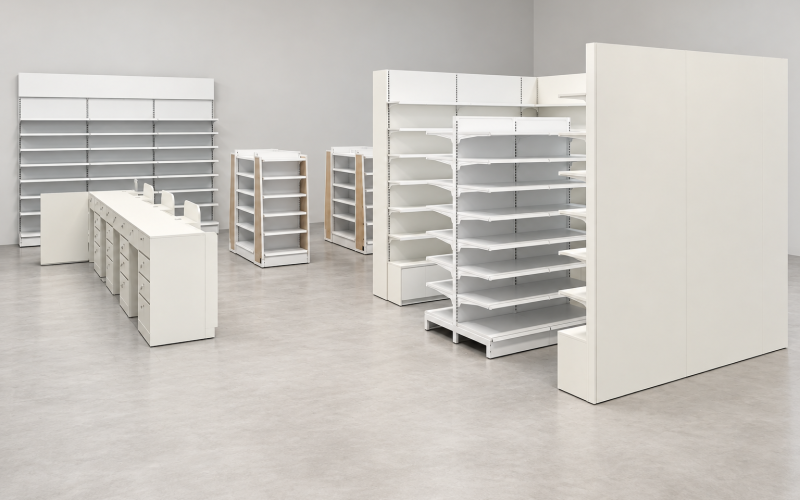
Static shelving is the most traditional and widely used solution. It includes familiar formats like gondola shelving for retail floors and wall-mounted units for dispensaries. These systems are valued for their low cost, simplicity, and direct access.
They typically come in “open back” designs, which help airflow and visibility. Or “closed back” designs that provide a more finished look and prevent products from falling behind the unit. While not the most space-efficient, their flexibility allows for versatile setups. These combine open shelving with drawers and bins. This helps staff separate medicine types and maintain a clean workflow.
Deep Look: High-Density Mobile Systems
High-density mobile shelving, often called sliding or compact shelving, is the leading solution for getting the most storage capacity in a limited area. These systems place shelving units on wheeled carriages that move along floor tracks. By removing fixed aisles between every row, they can effectively double the amount of inventory stored in the same area.
A user creates a “floating” aisle only where access is needed. This makes them ideal for back-of-house storage in busy retail pharmacies. They also work well for hospital pharmacies where floor space costs a lot but the budget for full automation is not available.
Deep Look: The Rise of Automated & Robot Systems
Automated and robot systems represent the top of pharmacy storage technology. These systems use robots to store, retrieve, and dispense medicines with minimal human help. They offer unmatched density, speed, and accuracy. They virtually eliminate picking errors and greatly improve inventory control through integrated software.
As of 2026, data suggests adoption of automated systems has increased by 40% in new hospital pharmacies. This comes from the American Society of Health-System Pharmacists. While the initial investment is significant, the long-term return from labor savings, error reduction, and enhanced security makes them compelling. This is especially true for high-volume environments like large hospitals and central-fill facilities.
How to Choose the Right Pharmacy Shelving System: A Decision Framework
Picking the ideal shelving system requires a systematic approach. This should align with your pharmacy’s specific work needs, physical space, and budget. A one-size-fits-all solution does not exist. A busy hospital inpatient pharmacy has very different requirements from a small community pharmacy or a sterile compounding facility.
This decision tree provides a logical framework to guide you toward the most appropriate system. This ensures your investment enhances efficiency and supports long-term growth. This process is a key part of the journey when you decide to Open a Pharmacy.
The Pharmacist’s Decision Tree
START HERE: What is your primary pharmacy type?
* A) Retail/Community Pharmacy:
* Is your primary bottleneck prescription filling speed or floor space?
* Speed -> Go to B (evaluate your dispensary layout as if it were a high-volume operation). A well-designed static system with clear zones for fast-movers can significantly improve workflow. Companies like specialized pharmacy shelving suppliers offer these.
* Floor Space -> Consider High-Density Mobile Shelving for the dispensary to double your stock in the same area. Use Static Gondola Shelving for front-of-store OTC products.
* B) Hospital Pharmacy (Inpatient):
* Do you handle high volumes of unit-dose dispensing and have high labor costs?
* Yes -> The return for Automated Robot Systems is strongest here. They greatly reduce picking errors, improve security for controlled substances, and free up pharmacist time for clinical tasks.
* No -> High-Density Mobile Shelving combined with modular bin systems offers the best balance of storage density and cost-effectiveness. This works for managing bulk supplies and less frequently accessed medicines.
* C) Compounding Pharmacy (USP 797/800 focus):
* Is your main concern material cleanability and following rules?
* Yes -> Put material above all else. Stainless Steel or non-porous polymer static shelving is required for cleanroom environments. The system’s design must be simple to wipe down and free of cracks where contaminants can build up. Go to “Key Features & Material Considerations” for more detail.
* No -> Re-evaluate your compliance needs immediately. All compounding facilities must follow strict environmental controls.
The Pharmacy Shelving Setup Timeline
Setting up a new shelving system is a significant project that goes beyond simple assembly. A well-planned timeline ensures minimal disruption to daily operations and a successful transition. The process involves careful planning, design, rule checks, and training. A comprehensive approach to pharmacy design is crucial for integrating the new shelving smoothly into your existing or planned workflow.
From Blueprint to Go-Live: A 6-Step Process
- Phase 1 (Weeks 1-2): Needs Analysis & Workflow Mapping. This initial phase is critical. We define the total volume and types of inventory to be stored. We analyze current prescription volume and map the physical movement patterns of pharmacists and technicians. The goal is to identify bottlenecks in the current system.
- Phase 2 (Week 3): System Selection & Layout Design. Using the decision tree framework, a primary system type is chosen. A professional designer then creates a detailed 2D and 3D layout of the pharmacy space. This shows shelving placement, aisle widths, and workflow paths to optimize efficiency and ergonomics.
- Phase 3 (Week 4): Rule Review. The proposed layout and selected materials are reviewed to ensure they follow all relevant NABP, state board of pharmacy, and USP standards. This is especially important for USP <797> and <800> if applicable. This step prevents costly changes later.
- Phase 4 (Weeks 5-8): Buying & Manufacturing. Once the design is approved, the official order is placed with the manufacturer. Lead times can vary significantly based on the complexity of the system (custom vs. stock) and the manufacturer’s schedule.
- Phase 5 (Weeks 9-10): Installation & Data Migration. Certified installers physically assemble and secure the shelving system on-site. For automated systems, this phase is more complex. It involves software installation, integration with the Pharmacy Management System (PMS), and data migration.
- Phase 6 (Week 11): Staff Training & Go-Live. Before the new system becomes fully operational, all staff must be thoroughly trained. This covers the new workflow, location of medicines, and operation of any new equipment (e.g., mobile shelving cranks or robot system interfaces).
Key Features & Material Considerations
The effectiveness of a pharmacy shelving system lies in its details. Beyond the basic structure, specific features and material choices determine its functionality, durability, and compliance. Selecting the right combination of these elements ensures the system can adapt to evolving needs and withstand the demands of a busy pharmacy environment.
Must-Have Features
- Adjustability: Shelves should be easily adjustable to accommodate different package sizes without tools. Look for systems that offer sloped positions for gravity-fed dispensing, flat positions for bulk storage, and inverted positions to create a tray with a lip.
- Modularity: The system should be modular. This allows you to add, remove, or reconfigure units as your inventory or workflow changes. This protects your initial investment and provides long-term flexibility.
- Integrated Dividers & Bins: High-quality systems offer a range of accessories like clip-on dividers and modular bins. These are essential for detailed organization, separating different NDCs of the same drug, and preventing cross-contamination.
- Security Features: For storing controlled substances, look for integrated security options. These can include lockable doors for static units, security cages, or track locks that secure an entire aisle of a mobile shelving system.
Material Showdown: Steel vs. Wood Laminate vs. Stainless Steel
- Powder-Coated Steel: This is the industry standard for most dispensary applications. It is durable, strong, and cost-effective. The powder coating provides a smooth, easy-to-clean surface that resists chipping and scratching. This makes it a reliable workhorse for both gondola shelving and back-end storage.
- Wood Laminate: Primarily used for front-of-store aesthetics, consultation areas, and pick-up/drop-off counters. It offers a warmer, more inviting look for patient-facing areas. Contrast Statement: Unlike steel, it has pores and may not be suitable for sterile compounding areas or any space requiring strict cleaning protocols.
- Stainless Steel: This is the required choice for USP 797/800 compliant cleanrooms and other sterile environments. Its non-porous, corrosion-resistant, and crack-free surface can withstand harsh cleaning and disinfecting agents without breaking down. This makes it essential for preventing microbial contamination.
Following Rules and Shelving Design (USP 797/800)
Following rules is a non-negotiable aspect of pharmacy design, and shelving plays a key role. Specifically, for pharmacies involved in sterile and non-sterile compounding, the standards outlined in USP General Chapters <797> and <800> dictate material and design requirements. USP <800> focuses on the safe handling of hazardous drugs. It requires storage areas to be designed to prevent contamination and make proper cleaning easier.
This means shelving in these designated areas must be made of smooth, impervious, and non-porous materials like stainless steel or medical-grade polymer. The surfaces must be free of cracks and crevices where particles could build up. Furthermore, shelving design should promote a clean workflow. This often requires items to be stored off the floor.
The choice of shelving is not merely an operational decision. It is a critical component of patient and staff safety. Failure to comply can result in significant penalties and loss of accreditation. When planning, every material and surface must be evaluated for its ability to be repeatedly sanitized without breaking down.
The Future of Pharmacy Storage: 2026 and Beyond
The evolution of pharmacy storage is moving towards smarter, more integrated, and sustainable solutions. As of 2026, emerging trends focus on leveraging technology and data to further enhance efficiency and safety. We are seeing the integration of IoT (Internet of Things) sensors into shelving systems. These monitor temperature for sensitive medicines in real-time and track inventory levels automatically.
This technology can trigger reorders and flag potential stock-outs before they happen. Furthermore, there is a growing demand for systems built from sustainable and recycled materials. This reflects a broader healthcare industry shift towards environmental responsibility. The future pharmacy will feature shelving that is not just a passive storage unit. It will be an active, data-generating component of a fully connected pharmacy ecosystem.
Frequently Asked Questions (FAQ)
What is the best shelving for a small independent pharmacy?
For a small independent pharmacy, the best solution is typically a mixed approach. Use cost-effective and durable static steel shelving (like open or closed-back units) for the main dispensary area. These systems are modular and can be set up with adjustable shelves, bins, and dividers to organize fast- and slow-moving inventory. For the front-of-store retail section, standard gondola shelving is ideal. If space in the dispensary is extremely limited, a small high-density mobile system can be a worthwhile investment to maximize stockroom capacity.
How much does a pharmacy shelving system cost?
The cost varies dramatically based on type, material, and size. Basic static steel shelving can cost a few hundred dollars per unit. A high-density mobile system for a small dispensary might range from $5,000 to $15,000. Fully automated robot systems are a significant capital investment. They often start at $100,000 and scale up into the millions for large hospital installations. It’s also important to factor in costs for site surveys, design, and installation. These can add several hundred to several thousand dollars to the total project cost.
How do you organize prescription bags in a pharmacy?
Prescription bags are typically organized in a dedicated Will Call area to streamline the pickup process. The most common methods use bin systems or hanging bag systems. Bins are often arranged alphabetically by the patient’s last name. Hanging systems use a rod or track with clips or hangers, also organized alphabetically. Some modern systems use lighted indicators or an automated retrieval system to help staff locate the correct bag quickly. This reduces wait times and improves customer satisfaction.
Can I use regular retail shelving in my pharmacy?
You can use regular retail shelving (like standard gondolas) for the front-end, over-the-counter (OTC) section of your pharmacy. However, for the dispensary or “back-of-house” area where prescriptions are stored and filled, it is strongly recommended to use specialized pharmacy shelving. Pharmacy-grade shelving is designed for higher density. It offers better organization with dividers and bins, features adjustable slanted shelves for gravity feeding, and is built with more durable materials to withstand the demands of a clinical workflow.
About the Author
Steven Guo is a certified Pharmacy Design Consultant with over 15 years of experience in optimizing pharmacy workflows and storage systems. They have overseen the design and installation of over 50 pharmacies nationwide.
Trust Signals Section
Data Methodology: The recommendations and data in this guide are based on analysis of industry best practices, manufacturer specifications, and direct consultations with pharmacists and regulatory experts. All information is current as of Q4 2025.


 English
  German
  Arabic
  French
  Spanish
  Italian
  Russian
  Turkish
  Portuguese
  Japanese