
That sinking feeling in your stomach is hard to forget. One moment, your special ring, necklace, or earring is right where it should be. The next, it’s gone. We know the panic and stress that comes next. But take a deep breath. Most lost items are just misplaced, not gone forever. The most important first step is to stop, breathe, and don’t touch anything else. Don’t rush to tear the place apart. This keeps the “scene” safe and stops you from making things worse. This guide will give you a calm plan for how to find lost jewelry. We’ll cover everything from resetting your mindset to doing a careful search.
Key Takeaways
- Stop and Breathe: Your first step should be to pause. Panic clouds your memory and makes searching harder.
- Think Back: Before you start looking, sit down and think through your steps. Try to remember the last time you had the jewelry.
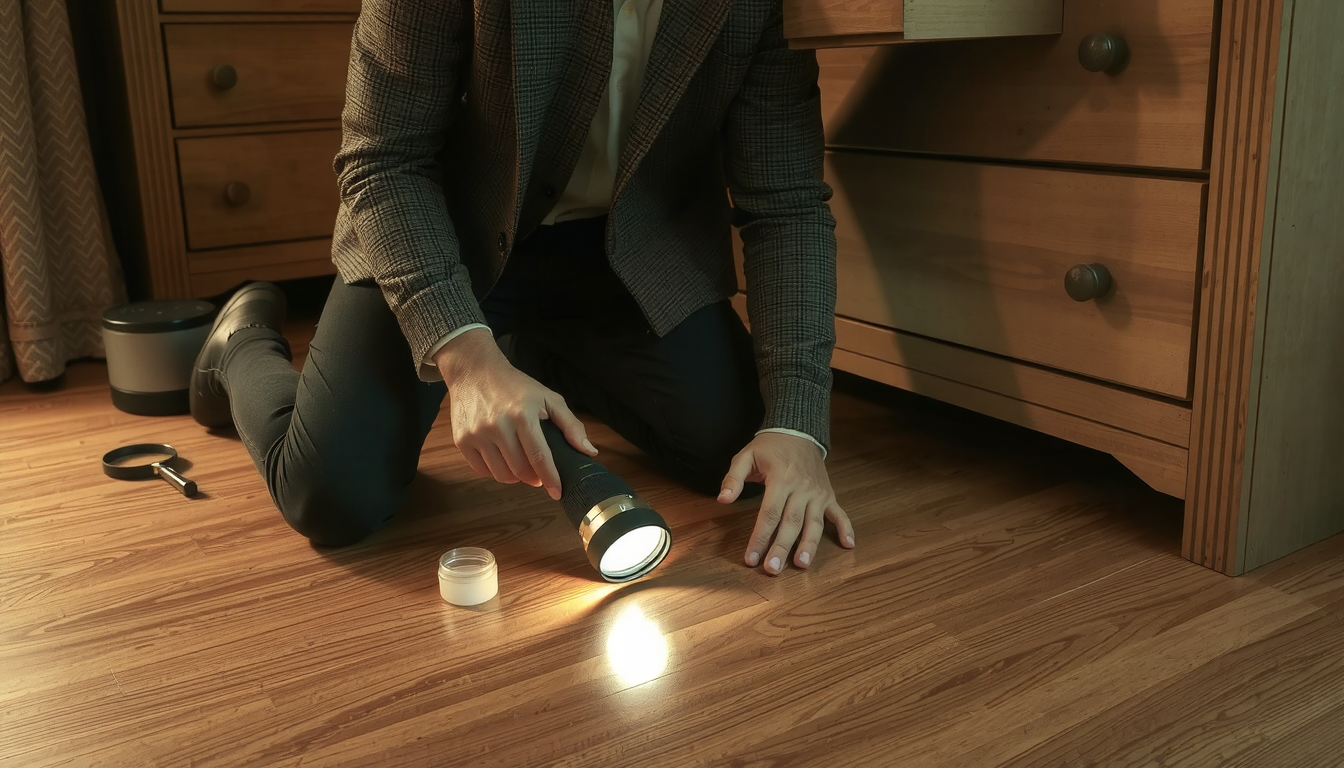
- Search in Order: Start looking where you last remember having the item. Work outward in circles. Use a flashlight and check common spots like drains, bedding, and cushions.
- Use Better Tools: If a simple search fails, try tools like a bright flashlight from low angles. You can also use a vacuum with pantyhose over the nozzle. For outdoor areas, try a rented metal detector.
- Know When to Get Help: If you can’t find the item, file a police report if you think it was stolen. Tell local jewelers and pawn shops. Contact your insurance company too.
Step 1: The Mindset Reset – Your Brain is Your Best Tool
Panic is your enemy. It makes it hard to think clearly and remember key details. Instead of panicking, you need to plan. A calm, logical approach works best to find lost jewelry. Experts agree that you shouldn’t just search randomly. You should apply a search zone strategy. This starts with a clear mind.
We call this the “Mental Rewind Technique.” It’s a strong way to access your memory.
First, sit down in a quiet room. Close your eyes and take a few deep breaths.
Now, picture the last time you are 100% sure you saw or felt the jewelry. See it clearly in your mind. Then, walk through every single thing you did after that moment. What clothes were you wearing? What did you carry in your hands or pockets? Which rooms did you walk through? What did you do in each room?
We once helped a client who lost her grandmother’s ring. She was sure it fell off in the garden. Using this method, she remembered she had been making bread dough right before going outside. She had taken the ring off and put it on the counter. We found it safe and sound, covered in a light dusting of flour in the flour bin.
Also, question what you think happened. Did the item fall off, or did you put it somewhere “safe” and forget? We often hide things from ourselves when we’re distracted. Thinking about your habits can give you a vital clue.
Step 2: The Systematic Search – How to Find Lost Jewelry in the House
Once you have a few possible locations in mind, you can begin looking. This is a key part of learning how to find lost jewelry in the house.

The golden rule is to start at the center. Begin your search in the room or area where you last remember having the item. From there, work your way outward in wider and wider circles.
Before you start, gather a basic search kit. This will make your search much better.
- A very bright LED flashlight.
- A pair of old pantyhose or tights.
- A vacuum cleaner with a hose attachment.
- Gloves and small plastic bags for collecting items.
Now, let’s break down the search room by room.
The Room-by-Room Search Matrix
| Location | Common Hotspots | Search Technique | Pro-Tip |
|---|---|---|---|
| Bathroom | Sink and shower drains, behind the toilet, inside or under cabinets, in the laundry hamper, on the soap dish, inside towels. | Use the flashlight to scan all surfaces. Check the P-trap pipe under the sink (see FAQ). Carefully shake out all towels and bathmats. | Small items like earring backs can get stuck in a soft bar of soap. Check it carefully. |
| Bedroom | In bedding (pillowcases, duvet covers), between the mattress and headboard, under the bed, inside shoes, on or under the nightstand, in laundry piles, deep in carpets. | Remove all bedding and shake it out over a clean, white sheet on the floor. Use the “pantyhose-over-the-vacuum-nozzle” trick for carpets and under furniture. | Your bare feet are very sensitive. Walk slowly on carpets; you can often feel a small post or stone before you can see it. |
| Kitchen | Sink drain, garbage disposal (UNPLUG IT FIRST), trash can, fruit bowl, on top of the refrigerator, inside canisters (flour, sugar, coffee). | Carefully and slowly sift through the trash can, bag by bag. Check the garbage disposal trap. Use your flashlight to check inside open food containers. | Rings often slip off when hands are cold or soapy from washing dishes. Replay those actions in your mind. |
| Living Area / Car | Between and under sofa cushions, inside recliner mechanisms, under floor mats, between car seats and the center console (“the gap”). | Remove all cushions. Use a flashlight and a vacuum crevice tool to explore deep inside furniture. Move car seats all the way forward and back to search underneath. | Always check the pockets of any coats or jackets you wore. Also, check inside any purses, backpacks, or gym bags you used that day. |
This careful approach is the best way to find lost jewelry in your house without getting overwhelmed. Be patient and thorough in each area before moving to the next.
Step 3: Advanced & Unconventional Search Methods
If your first careful search comes up empty, don’t lose hope. Sometimes, you just need a new approach or a better tool. This is where expert-level techniques for how to find lost jewelry come in.
First, change your view. We spend our lives looking at the world from eye-level. To find something small on the floor, you have to get on its level.
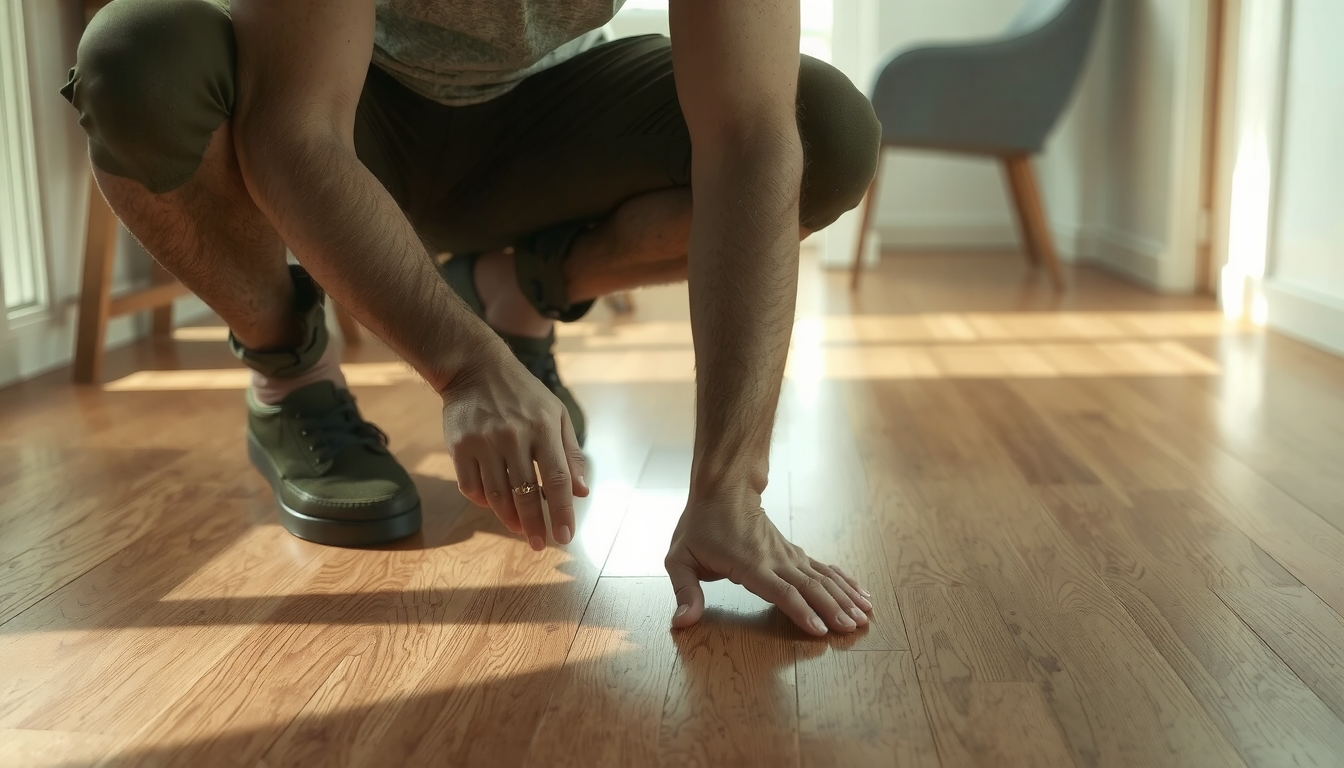
Lie down on the floor. Place your cheek on the carpet or hardwood. Use your bright flashlight to send a beam of light across the surface. This low angle will make any small, shiny object catch the light and sparkle. It shows things hidden by carpet fibers or tiny shadows.
Next, try to recreate what happened. Objects don’t always fall the way we think they do. We once helped a woman who lost her ring after throwing a bag of trash into a dumpster from her car. She was sure it flew straight in.
By having her act out the throw with a similar object, we found that the motion actually caused the ring to fly backward. It landed behind her car. We found it in the grass by the curb. The video below shows a great example of how to search in a tricky outdoor area like leaves.
Finally, use technology to help you.
-
Metal Detectors & Pinpointers: A large metal detector can be hard to use inside due to metal in the walls and floors. However, a small, handheld “pinpointer” is an amazing tool. It’s perfect for scanning a sofa cushion, a pile of laundry, or even a potted plant. As many experts in the field note, treasure hunting techniques often rely on using the right equipment, and a detector with a high frequency is best for small gold items.
-
Endoscope Cameras: These are tiny, cheap cameras on a flexible wire that connect to your smartphone. They are perfect for looking down a sink drain, inside a wall cavity, or deep within a car’s engine bay without taking anything apart.
Step 4: When the Search Fails – What to Do Next
There comes a point where you have to consider that the jewelry is not just misplaced in your home. If you think it was lost in public or stolen, it’s time to take different actions.
First, file an official report. If you believe the item was stolen, file a police report right away. Give them any photos, a detailed description, and the value of the item. This report is almost always needed to make an insurance claim.
If you lost it in a public place, contact the lost and found departments of every restaurant, gym, store, or office you visited. Be specific with your description.
Next, you should alert the professionals. It’s a good practice to contact local jewelers and pawn shops. Email them a photo and description of your lost jewelry. Good shops are very good at spotting stolen or lost property and will often work with police.
Use your community for help. Post a clear picture and description of the lost item on local social media groups, like neighborhood Facebook pages or Nextdoor. If the item is valuable, consider offering a reward. Just be careful not to share too much personal information publicly.
Finally, contact your insurance company. If you have your jewelry insured on a homeowner’s policy or through a separate policy rider, now is the time to start the claims process. They will need documents like the police report, any original receipts or appraisals, and photos of the piece.
Step 5: A Stitch in Time – Preventing Future Jewelry Loss
Going through the stress of losing a precious item is something no one wants to repeat. Once you’ve finished your search, it’s a good time to think about preventing future loss. A few smart habits can protect your entire collection.
First, establish “Safe Zones.” Choose two or three specific, consistent places in your home where you always put your jewelry. This could be a ring dish on your nightstand or a small tray by the kitchen sink. This simple habit eliminates the “where did I put it?” panic.
Next, focus on the importance of proper storage. Don’t just toss valuable items into an open drawer or bowl. Use a proper jewelry box with separate, soft-lined compartments. This prevents tangles and scratches and lets you see at a glance if something is missing.
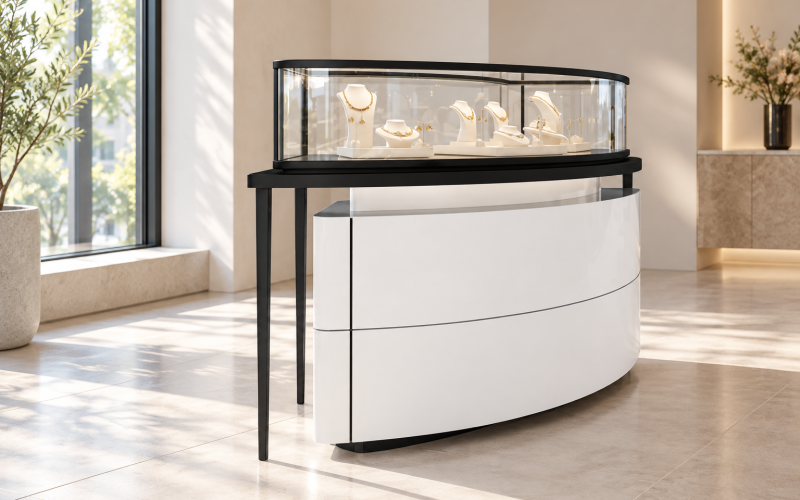
The principles of good jewelry store design focus on security and visibility. You can apply this same logic to your home. Having designated, secure, and well-lit places for your valuables can make all the difference.
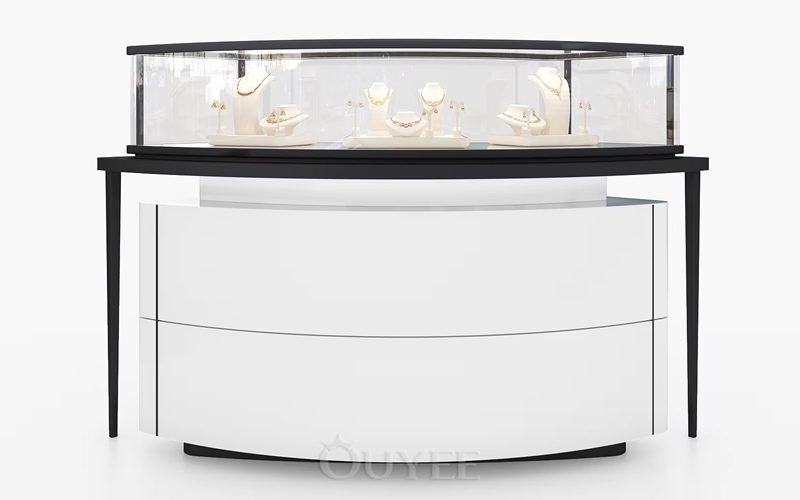
For a large or very valuable collection, look at how professionals display their items. While commercial firms like Ouyee Display create elaborate setups for retail, the core idea is the same: every piece has its own safe and visible place. Investing in a high-quality consumer jewelry showcase can be worthwhile. A professional jewelry showcase manufacturer designs these products specifically to protect and highlight jewelry, a principle you can easily use for your own personal storage.
Do regular fit and maintenance checks. At least once a year, have a jeweler check the prongs and clasps on your most-worn pieces. Also, be aware that finger size can change with the weather or weight changes. Never wear a loose ring while swimming, gardening, or doing other hard activities.
Finally, get your valuable pieces insured. Take clear photos of your jewelry and get formal appraisals for expensive items. Add a “rider” or “floater” to your homeowner’s or renter’s insurance policy to cover them. The small annual cost provides priceless peace of mind. Knowing how to find lost jewelry is a great skill, but not needing to use it is even better.
Frequently Asked Questions (FAQ)
H3: How can I find a lost diamond from a ring?
A loose diamond is tricky because it won’t be found with a metal detector. Your best tools are a dark room and a very bright flashlight. Get low to the ground and sweep the light beam slowly across the floor. Look for the unique, brilliant sparkle or “fire” that only a diamond has. The trick of stretching pantyhose over a vacuum hose is also very effective for this.
H3: I think my ring went down the sink drain. Is it gone forever?
No, it is usually not gone forever! The most important thing is to immediately stop running any more water down that drain. Place a bucket under the U-shaped pipe (called the P-trap) beneath the sink. Use a wrench to carefully loosen the two connectors on either side of the “U” bend. Empty the water and contents into the bucket, and your ring will very likely be sitting in the bottom.
H3: Can I rent a metal detector to find my lost jewelry?
Yes, you can. Many tool rental shops and some hardware stores offer daily rentals of metal detectors. This is an excellent option if you’ve lost a metal item in your yard, at a park, on a beach, or in any other outdoor space. For jewelry, ask for a model with a high frequency and good “discrimination,” which helps it ignore junk metal like pull-tabs.
H3: Will a magnet help me find my lost gold or silver ring?
Unfortunately, no. Precious metals like gold, silver, and platinum are not magnetic, so a magnet will have no effect on them. A magnet will only work if your jewelry is made of a metal that a magnet can stick to, like iron or steel. This is very rare for fine jewelry but might work on the clasp of some costume jewelry.
H3: How long should I search before giving up?
There is no magic time limit. After you conduct your first thorough, systematic search, it’s okay to take a break. Your brain may make a connection later. Many people find their “lost” items weeks, months, or even years later in a place they never thought to look, like the pocket of a winter coat or a suitcase from a past trip. After you exhaust all immediate search options, proceed with the next steps like filing reports, but never completely give up hope.













 English
  German
  Arabic
  French
  Spanish
  Italian
  Russian
  Turkish
  Portuguese
  Japanese