Introduction: Why Strategic Pharmacy Design is Your Most Powerful Prescription for Success

Great pharmacy design is more than just looks. It is a key tool for modern healthcare. The right design touches every part of your business. It makes patients happier, helps your staff work better, and boosts your profits.
Pharmacies are changing. They are no longer just places to get medicine. They are becoming health centers for the community. A smart drugstore design is vital for this change. As noted in The Alchemy of Pharmacy Design: Turning Space into Gold, a well-planned space turns every square foot into money. This makes your pharmacy a place of health and success.
Key Takeaways
* Patient First: Design for patient comfort, privacy, and easy movement.
* Workflow is King: A good layout for staff cuts errors and wait times.
* Layout Matters: Pick a layout (Grid, Free-Flow, or Hybrid) that fits your goals.
* Fixtures are Tools: The counter, shelves, and cabinets help with efficiency and sales.
* Rules are Key: Your design must follow ADA, HIPAA, and state rules to avoid fines.
* Hire Experts: Work with a design firm to prevent costly mistakes.
The Core Principles of Effective Drugstore Design
To create a winning pharmacy, we must build on solid ground. The best pharmacy design balances several key ideas. These principles work together. They create a space that is safe, welcoming, and profitable.
-
Principle 1: Patient-Centricity
The design must focus on the patient. This means creating a comfortable waiting area. It means having private spaces for talks. It means making it easy for everyone to move around. A good experience builds trust and loyalty. -
Principle 2: Workflow Efficiency
Your staff’s movement is a science. A smart layout cuts down steps for pharmacists and techs. This reduces the time to fill prescriptions. It also lowers the chance of errors. An efficient workflow is the engine of your pharmacy. -
Principle 3: Regulatory Compliance
A pharmacy has many rules to follow. Your design must include features for safety. It must meet accessibility rules like the ADA. It must protect patient privacy through HIPAA. Building compliance into the design from the start saves time and money.

-
Principle 4: Brand Identity & Trust
Your drugstore design sends a message. A clean, organized, and professional look tells patients they are in good hands. The colors, lighting, and materials you choose all help build your brand. They create a feeling of trust. -
Principle 5: Commercial Viability
A pharmacy is a business. The design must support retail sales. This means balancing the clinical area with a well-organized front store. A good design guides customers to products they may need. This boosts overall sales.
Pharmacy Layout Strategies: Choosing the Right Floor Plan
The floor plan is the foundation of your pharmacy design. It decides how people move through your space. There are a few common layouts. Each has its own benefits.
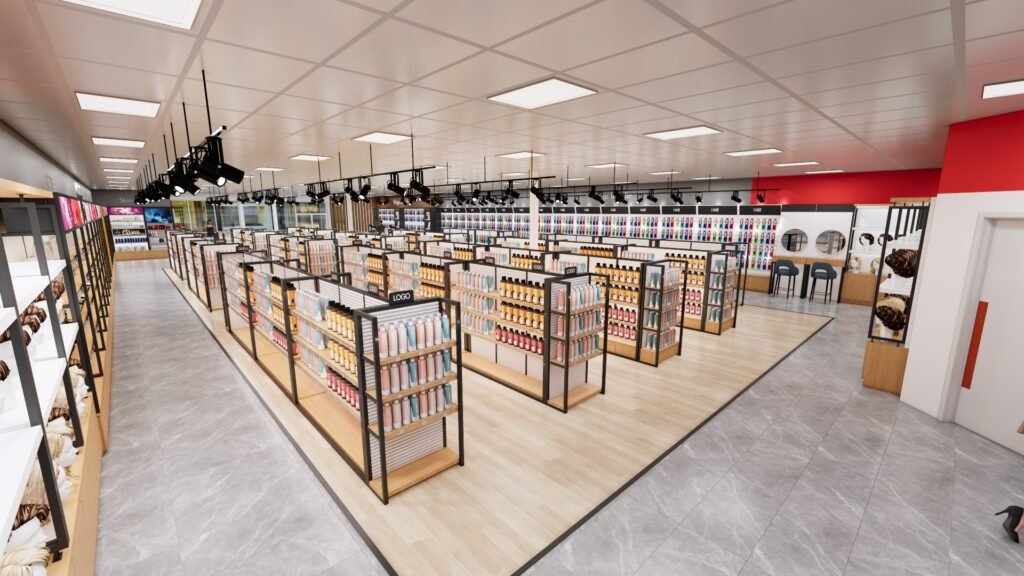
The Grid Layout is the traditional choice. It uses straight aisles, like a grocery store. This shows the most products. It uses space well and is easy to stock. However, it can feel cold. It does not guide customers on a specific path.
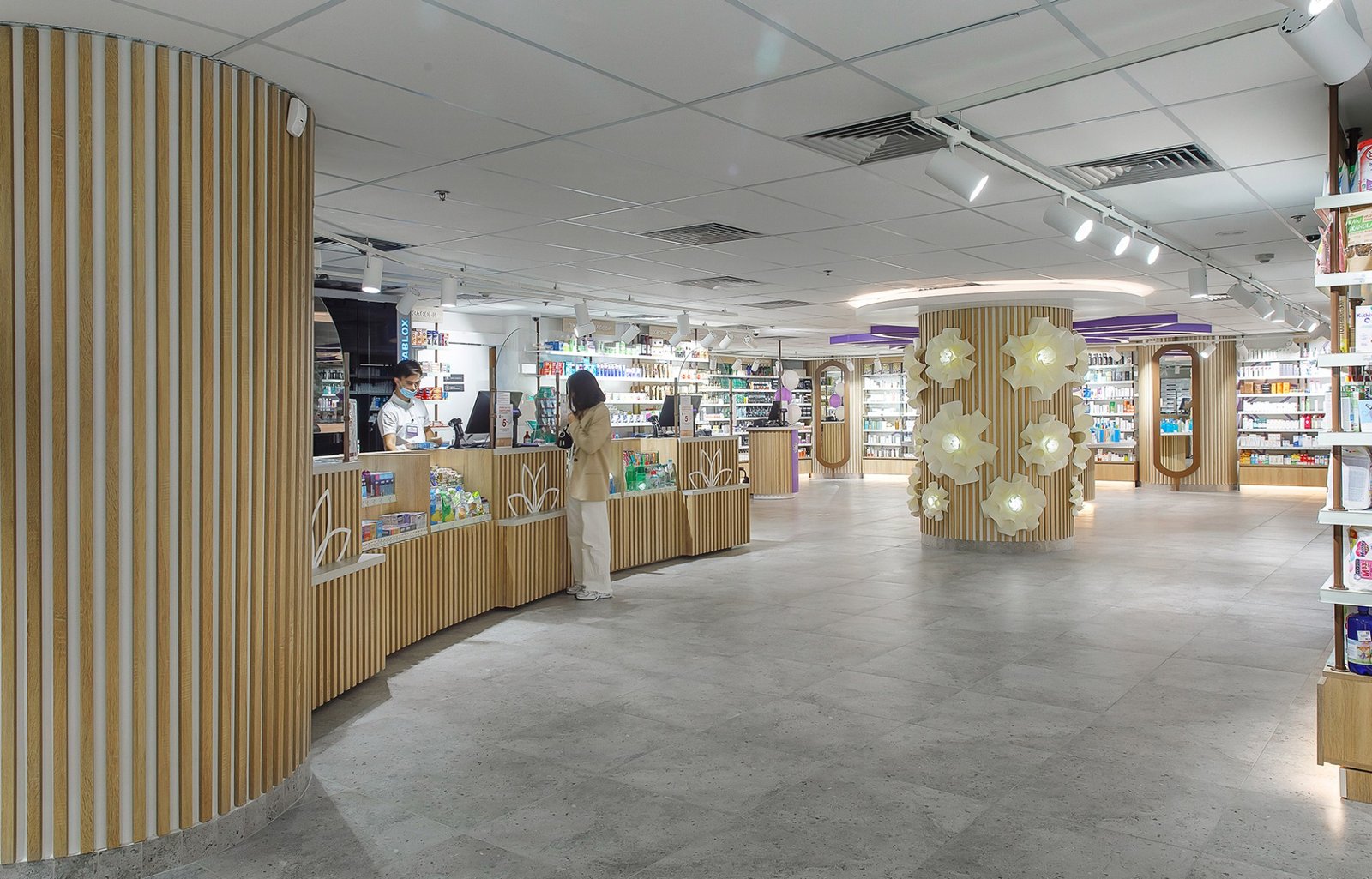
The Free-Flow Layout is more modern. It uses curved aisles and creative fixture placement. This layout encourages customers to browse and explore. It creates a high-end, boutique feel. The downside is that it uses space less well. It needs clear signs to prevent confusion.
The Hybrid Model is often the best choice for modern drugstore design. It combines the grid’s efficiency for medicine aisles. It uses a more open, free-flow area near the entrance and pharmacy counter. This offers a balance between retail sales and a professional feel.
No matter which layout you choose, there is one main rule. Place the prescription drop-off and pickup counter at the back. This simple rule of pharmacy design guides every patient through your retail area. This increases the chance of extra sales.
| Layout Type | Best For | Pros | Cons |
|---|---|---|---|
| Grid Layout | Maximizing product display, high-volume retail | Efficient use of space, easy to stock | Can feel impersonal, less browsing |
| Free-Flow Layout | Patient experience, boutique services | High-end feel, encourages discovery | Less space-efficient, requires skilled design |
| Hybrid Layout | Most modern pharmacies | Balances retail and professional feel | Can be complex to plan |
The Essential Elements of Medicine Shop Interior Design
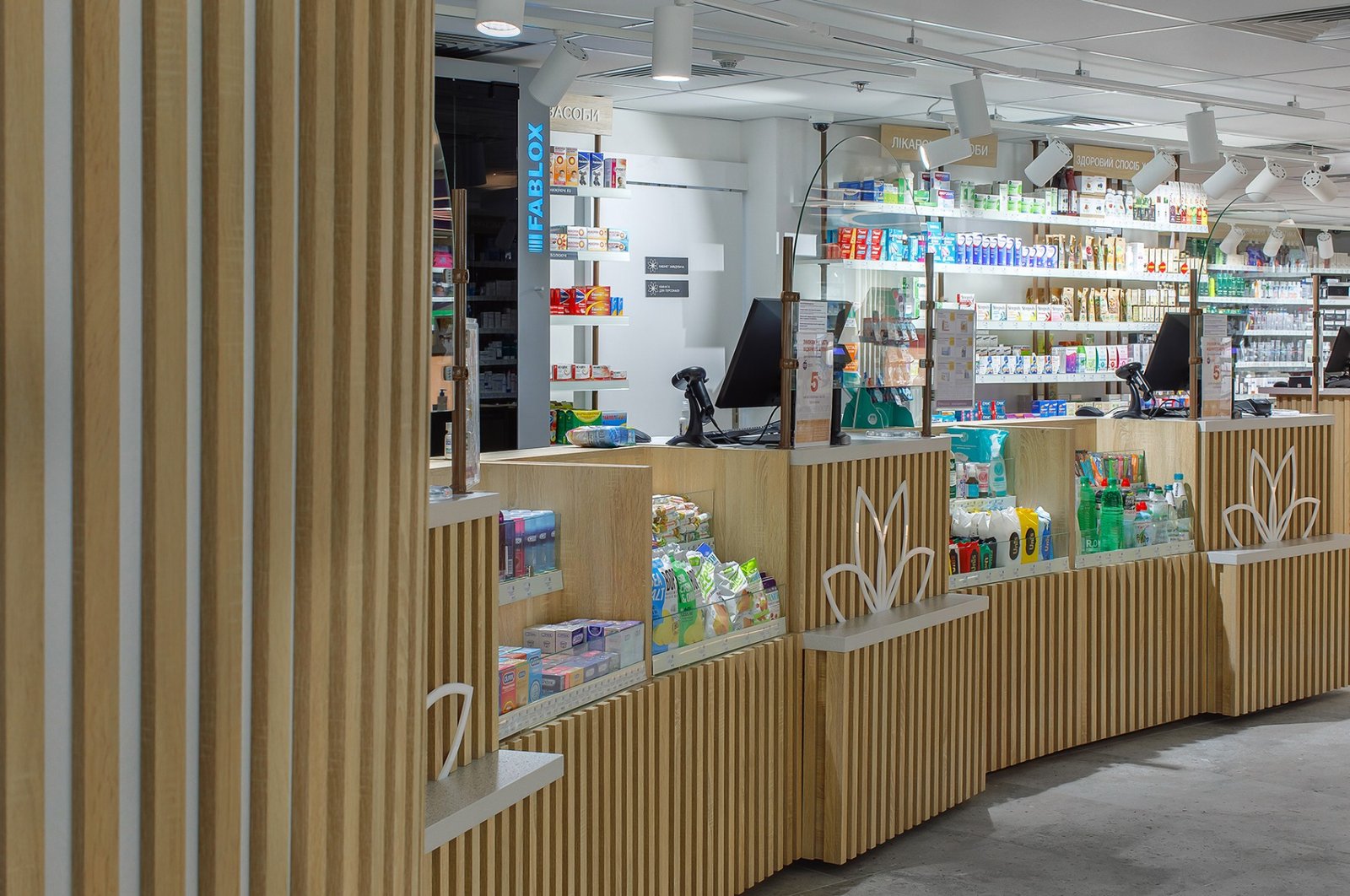
Once you have a layout, focus on the key parts inside your pharmacy. These elements work together. They create a functional and welcoming space. A great medicine shop interior design considers every detail.
The pharmacy counter is the heart of your operations. It is where staff work and patients get service. It must be efficient for your team and friendly for your patients. The design should allow for quick transactions. It should provide private talks and organized work.
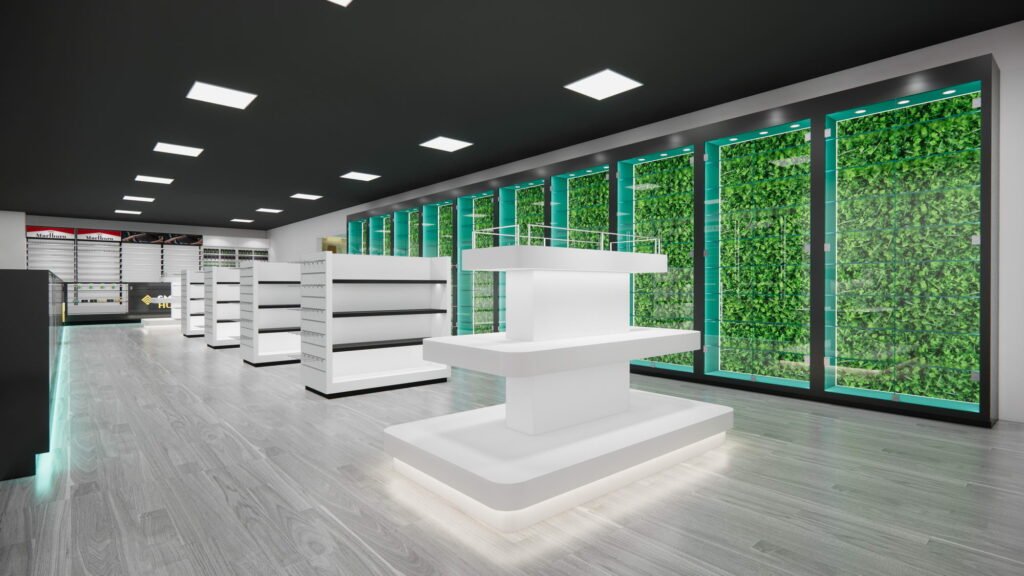
Shelving and storage are vital for both work and sales. In the dispensary, shelves must be organized for fast workflow. In the retail area, they must display products in an attractive way. A well-placed pharmacy wall shelf system uses space wisely. It keeps inventory in order. For high-value items, you need a secure medicine display cabinet. It shows off products while keeping them safe. All these pieces are part of your core pharmacy furniture. Choosing quality items is an investment in your business’s future.
Lighting is key to building trust. Harsh, bright lights can feel like a hospital. Instead, use layers of light. Ambient light provides overall brightness. Task light focuses on work areas like the counter. Accent light highlights products on display. This creates a warm and professional feel.
Color also affects how patients feel. As noted in some guides on Decoration in pharmacies: Design tips, a modern look often uses clean lines and simple colors. Light grays, whites, soft blues, and greens can make a space feel clean and calm. They build trust.
Finally, wayfinding and signage are very important. Clear, easy-to-read signs help patients find what they need. This includes signs for the dispensary, consultation rooms, restrooms, and different product sections. Good signage reduces confusion. It improves the customer experience.
The Pharmacy Design Project Checklist: A 7-Step Guide

Starting a pharmacy renovation or build-out can feel overwhelming. But with a clear plan, you can manage the process from start to finish. From our experience, breaking it down into steps makes it much easier. This is our guide to a successful drugstore design project.
-
Step 1: Define Your Vision & Budget
First, decide what you want to achieve. Are you trying to improve workflow? Do you want to add new clinical services? Are you trying to boost retail sales? This vision will guide all your decisions. At the same time, set a real budget. This should cover design, construction, and fixtures. -
Step 2: Assemble Your Professional Team
You cannot do this alone. It is very important to partner with experts. We strongly suggest hiring a specialized pharmacy design company. They understand the unique rules and workflow needs of a pharmacy. A general architect might not know these things. -
Step 3: Space Planning & Layout Finalization
Work closely with your designer. They will help you create a floor plan based on your goals and chosen layout. This step involves detailed drawings. These show where every wall, counter, and fixture will go.
-
Step 4: Source Your Fixtures and Furniture
Now you select the physical items for your space. Choose durable and functional pieces that fit your design. This includes the main counter, all shelving, and any waiting area furniture. For a project to run smoothly, working with a full-service provider like Ouyee Display can help. You can get everything from one source. -
Step 5: Address the Details: Lighting, Technology, and Finishes
This is where the look and feel come to life. Finalize your color choices, flooring materials, and lighting plan. Also, plan for technology. This includes cash registers, computers, and digital signs. Think about how they will fit into the design. -
Step-6: Construction and Installation
This is the building phase. Your contractor will bring the design plans to life. A good design partner will often help manage this phase. They make sure everything is built correctly. -
Step 7: Merchandising and Final Touches
The final step before you open your doors. This is when you stock your shelves and set up your displays. Make sure the entire space is clean and ready for your first patient.
Navigating Compliance and Accessibility in Your Drugstore Design
A beautiful and efficient pharmacy design is useless if it is not legal. Pharmacies must follow strict rules. These ensure patient privacy and public safety. Addressing these in the design phase is not optional. It is required.
HIPAA rules are about patient privacy. Your design must have areas for private talks between a pharmacist and a patient. This can be a separate room or a semi-private nook. The counter design is also important. It should be high enough or have barriers. This prevents others from seeing patient information on screens or papers.
ADA (Americans with Disabilities Act) compliance ensures your pharmacy is accessible to everyone. This has very specific requirements. For example, aisles must be at least 36 inches wide. This allows wheelchair access. At least a part of your main counter must be lowered. It should be between 28 and 34 inches high.
Each state also has a Board of Pharmacy with its own rules. These can include minimum square footage for the dispensary. They may require specific sinks and security measures for controlled drugs. A professional designer who knows these codes is vital. As experts like The Pharmacy Design Group know, understanding these specific requirements is key to a successful project.
Finally, do not forget staff safety. Your pharmacy design should have non-slip flooring and good lighting. It should have enough space for staff to work without risk of injury.
Conclusion: Your Pharmacy’s Future is by Design
In conclusion, strategic pharmacy design is one of the best investments you can make. It is an investment in the health of your business. It is an investment in the community you serve. A great drugstore design is not about spending the most money. It is about making smart choices.
A successful space finds the perfect balance. It must support a positive patient experience. It must create an efficient staff workflow. It must meet your business goals. By thinking carefully about layout, fixtures, lighting, and compliance, you create a pharmacy that works better for everyone. A well-designed pharmacy is more than just a building. It is a platform for a healthier future.
Frequently Asked Questions (FAQ) about Pharmacy Design
H3: What is the most important element in a pharmacy design?
While all parts are connected, the layout and the prescription counter area are the most critical. The layout controls how customers and staff move. The counter is the center of all work and patient contact. A bad design in this core area can hurt efficiency and service.
H3: How much does it cost to design and build out a pharmacy?
Costs can change a lot. The final price depends on location, size, and the quality of materials and fixtures. A small update might cost tens of thousands of dollars. A full build-out for a new, modern pharmacy can cost hundreds of thousands. It is very important to get detailed quotes from design firms and builders.
H3: How can I make a small pharmacy feel larger?
Use light colors on walls and ceilings to make the space feel open. Add mirrors and glass to create a sense of depth. Choose vertical storage, like tall and slim shelving. This draws the eye up and saves floor space. Good, bright lighting is also a must to make any space feel bigger.
H3: What’s the biggest mistake to avoid in drugstore design?
The biggest mistake is choosing looks over function. A beautiful pharmacy with a slow workflow, bad task lighting, or no patient privacy will not succeed. Function, workflow, and legal rules must always come first in any pharmacy design project.
H3: Do I need to hire a specialized pharmacy designer?
While a general architect can design a space, a specialized pharmacy designer brings deep industry knowledge. They know about pharmacy workflow and compliance rules like HIPAA. They know the specific equipment needed. This expertise can save you a lot of time and money. It helps you avoid serious mistakes.