
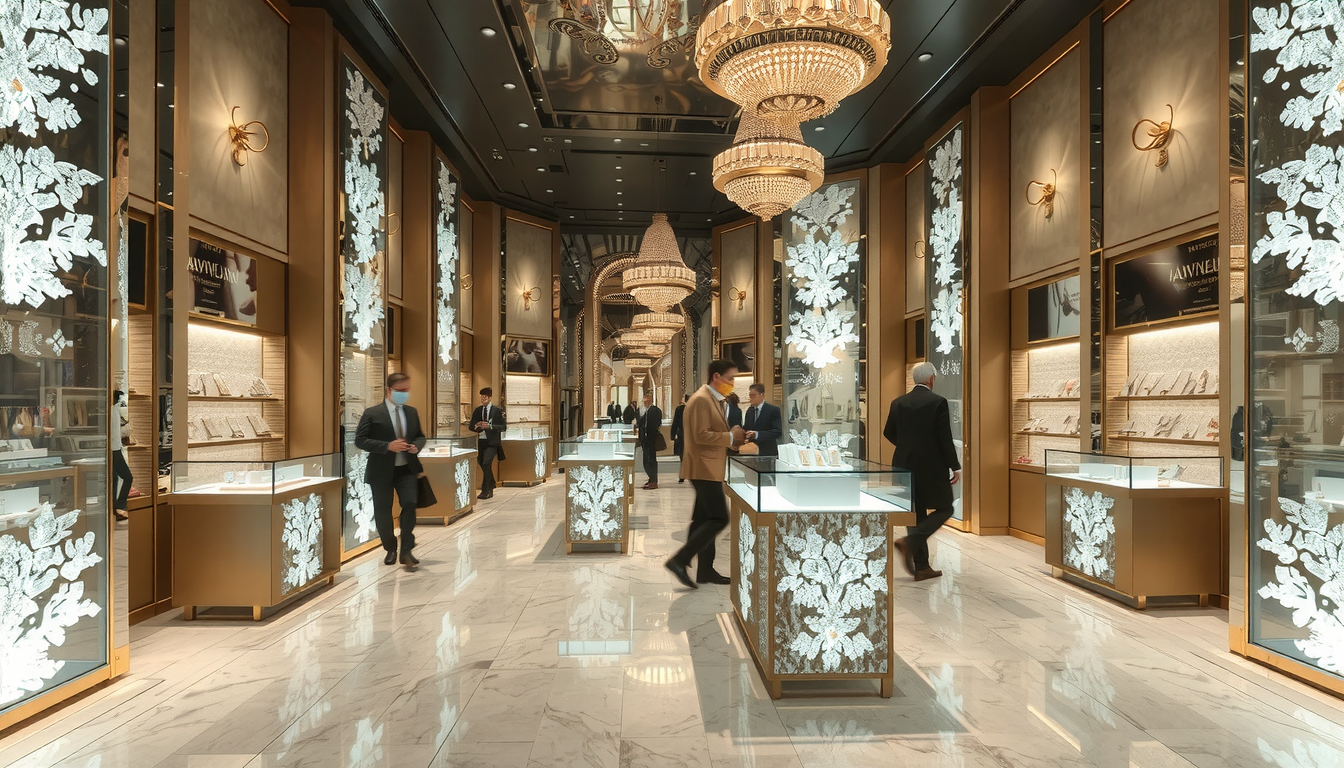
The interior design of the KING TAI FOOK jewelry shop exemplifies how modern shops should be. It equally combines the freshness of the new look and the old history of the brand. This design style is the best known for its ingenious employment of the color scheme. The highlighted rose red is the most conspicuous. It has also constantly used precious materials and a structure that directs clients on a unique path to different areas. The facts that these components are considered as a totality, as they together build a beautiful store and a successful one.
Highlights
- Narrative of the Brand: The design of KING TAI FOOK utilizes specific colors and a modern style to convey the message of a young luxury.
- The Customer Journey: The shop layout is planned cyclically, first from outside to inside. It leads customers back and forth through different sections as they create the whole experience.
- Clever Parts: Diagnosis items such as choice of color, materials, lighting and custom furniture are selected with the aim to spotlight jewelry. They give an impression of a high-end etch.
- Exclusive Treatment: Secret lounges are a strong element of the design. They provide extra care and comfort to the buyers to encourage them to buy more.
- Design Tool: The interior is not just decoration; it is a powerful brand-building and shopper connectivity tool.
The Special Touch of the KING TAI FOOK Store
Entering a KING TAI FOOK store is not simply shopping; it is a very well-planned experience. The whole decorative scheme is intent on creating a certain atmosphere. It wants to have an impact on your emotional feelings. This is what we commonly refer to as “experiential retail.”
The shop is not merely a place where jewelry is kept. Rather, it is an abbreviation of the very brand the store represents. Nowadays, online shopping has become prevalent but brick-and-mortar shops need to do more. They should be a space for brand construction. They should give people lasting experiences. The KING TAI FOOK jewelry shop interior design has done that exemplary.
Central Idea: The Past of the Brand, the Present of the Luxury
The look of the brand has progressed. The brand is now fancier with a signature youthful rose red color. This was a wise strategy to draw today’s, younger and modern consumers. Still, it keeps the aura of luxury, hence, a real testament to their understanding of the customers.
The design exhibits a story of a modern style. It honors the past and the brand’s history while opening doors to future. Each decision in design contributes to this story construction. The store becomes a branding event rather than just a regular shopping trip. This telling of brand stories is the cornerstone of their triumph amidst the highly competitive luxury market.
Diving into the Experience: A Journey in the Store
To realize the ingenious idea of KING TAI FOOK jewelry shop interior design, let’s take a real or a pretend walk through the space. Each area is wired carefully in the customer pathway.
The Front: The Indicator of Modern Luxury
Your trip kicks off even before you step in. The storefront is composed of simple, straight lines along with very high-quality materials. The huge glass windows and vivid, clearly readable branding create a very strong street appeal. It projects the image of quality and modernity which makes you want to check it out.
The Welcome Zone: A Nice Transition
The first thing that you see is not a wall of counters but an open space. It is called “the welcome zone.” This space allows you to shift from the hustle of the street outside to a peaceful luxury world. You can be astonished by the dazzling single piece that will be the emblem of the rest of the shop.
The Main Display Area: Where Beauty is Displayed
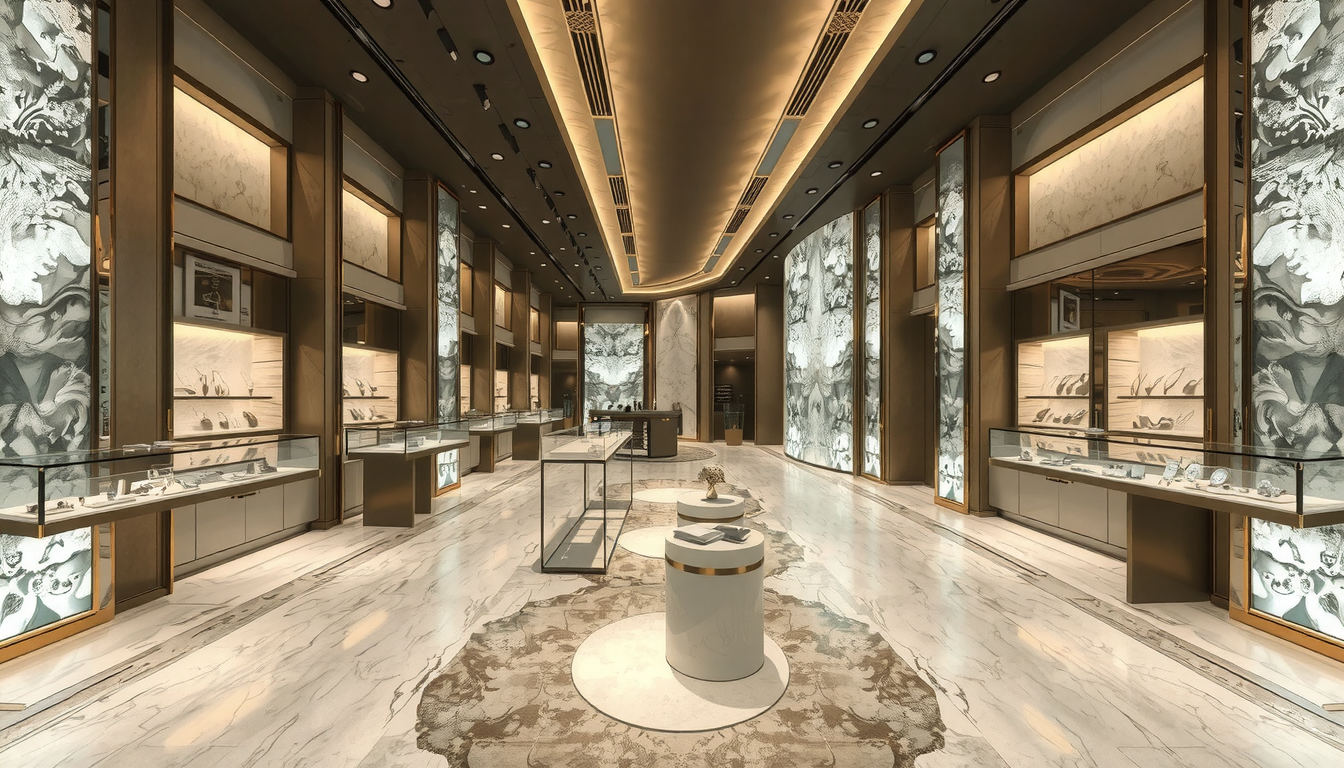
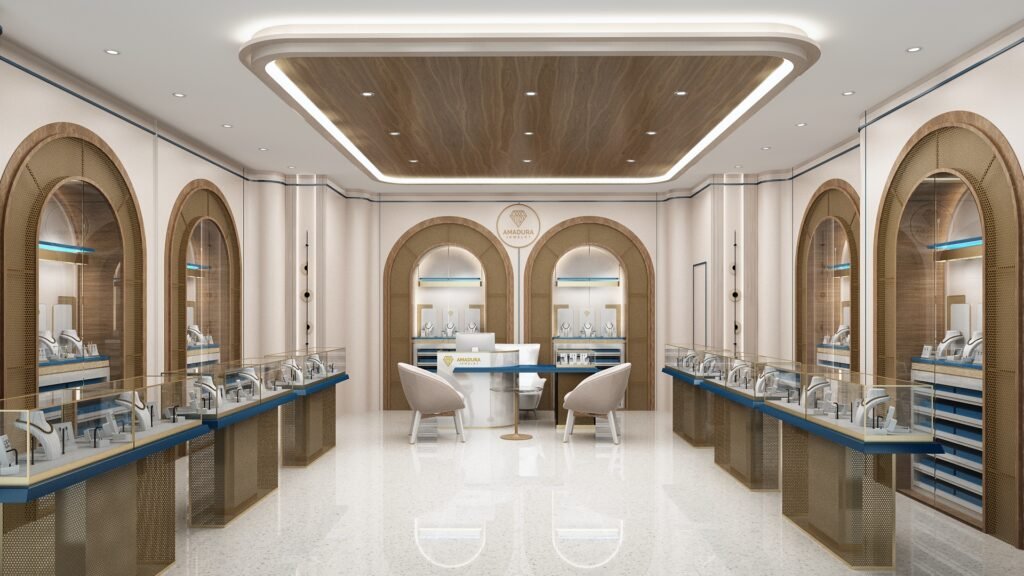
When you go a bit deeper, you will reach the main sales floor. The layout is very spacious and organized at the same time. The central square intersects with the vault displays that showcase the jewelry. They entice you to walk around them. Wall showcases on the right exhibit a wide variety of products without looking overloaded. This design allows exploration with your own rhythm. While the route seems clear, at the same time it facilitates the atmosphere of finding.
VIP Lounges: Creating a Special Treatment
Guest value the trip at every stage. The way to the more private place, the VIP and meeting lounges, is furbished with signs that mean attention and care. In the lighting department, it is softer and more pleasant. Cozy, plush seating is another cherry on the cake. Fine materials such as soft carpets and textured walls inherit a feeling of intimacy. The VIP setting, in this way, confirms customers’ worth. It allows high-quality discussions to take place.
Essential Features of KING TAI FOOK Style
The unique KING TAI FOOK jewelry shop interior design is an amalgam of a number of key parts. These are the elements that constitute the brand’s well-known character.
Clever Play of Colors
The brand’s signature rose red is striking and memorable, although it is cleverly used. It is counterbalanced by a plethora of neutral colors like white, beige, and a hint of soft gray. Subtle flares of metals like gold or brass are used to create classic luxury. Mixed feelings of straightforwardness and beauty in the aforementioned color palette.
A Tactile Material Narrative
Materials are very thoughtful about both the sight and the touch. A range of surfaces comes into the designer’s play which adds a rich touch to the overall look.
* High-gloss finishes on showcases create a streamlined, modern surface.
* Brushed metals on frames and details add a soft sheen.
* Textured wallpapers or fabric panels add warmth and softness.
* Mylon or top-grade stone flooring in main areas feel clean and sumptuous.
* Plush carpets are often put on VIP floors to offer a softer, quieter space.
Lighting Design: The Jewelry as the Center of Attention
Lighting forms the backbone of a jewelry store. The three-tier light plan is as follows:
1. General Lighting: The overall lighting that brightens the store contributes to the inviting and luxurious feel.
2. Task Lighting: The light in the display cases which direct it to the jewelry thus producing a shimmer effect.
3. Accent Lighting: Another kind of light to illuminate the different displays. It creates interest.
The total light uses high CRI (Color Rendering Index) bulbs that make sure that the diamonds and gemstones remain their true color.
The Importance of Custom Furniture
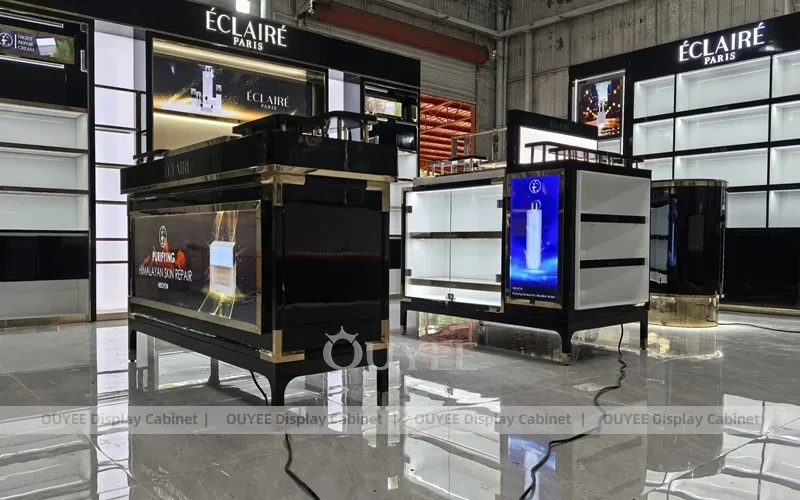
The display counters are not merely just jewelry boxes. They are specially designed pieces of furniture that fit in the overall organizational plan. Features like anti-reflective glass reduce glare. Integrated lighting is well-directed. Counters are also designed to be at a comfortable height for both customers and staff. Working with a professional jewelry showcase manufacturer is key to creating these smooth, integrated fixtures that define a luxury space.
Lessons from the Giants: Reflecting on KING TAI FOOK and Chow Tai Fook
In order to grasp the market better, it is useful to make a comparison between the KING TAI FOOK jewelry shop interior design and another giant in the business. Chow Tai Fook.
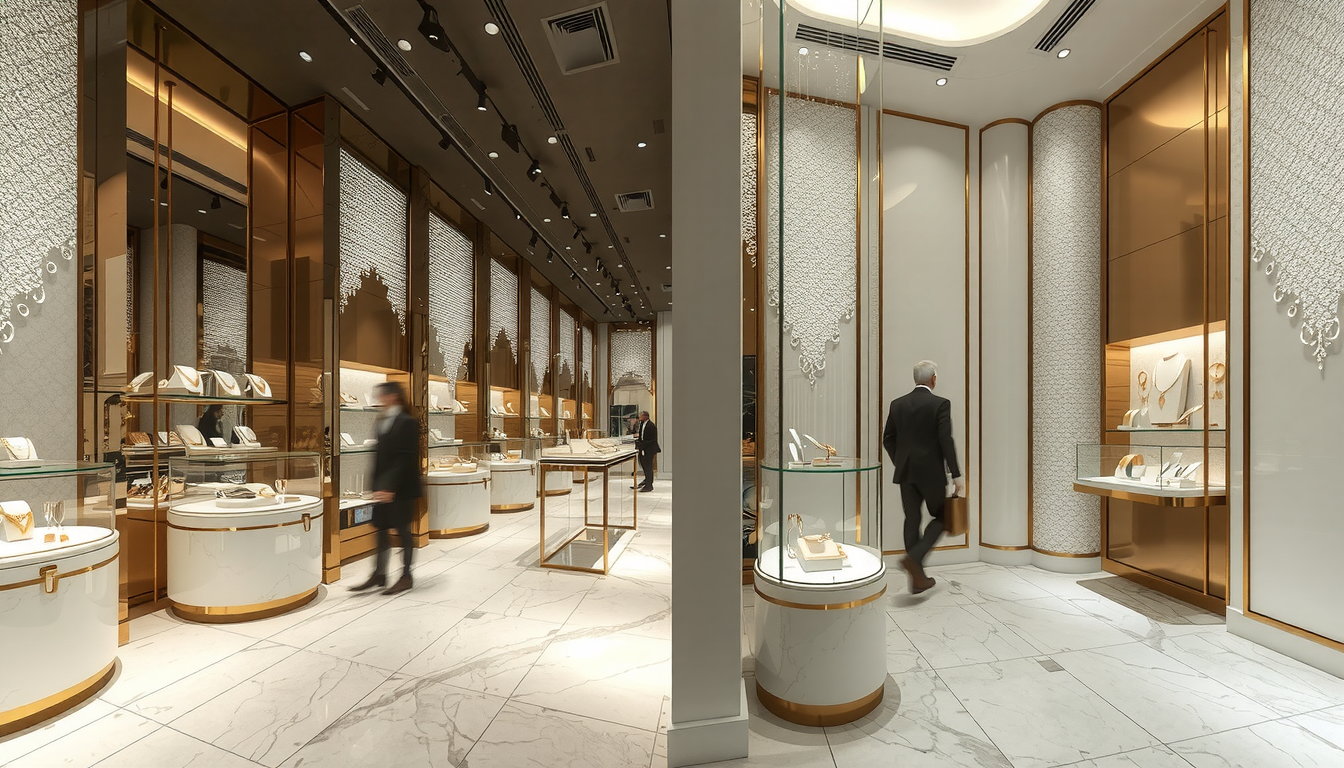
KING TAI FOOK’s design modern focus on youth and innovation. Its use of a bright, signature brand color sets it apart. The feel is fresh and international.
On the other hand, Chow Tai Fook’s design often more strongly resonates with heritage. Their fine jewelry collections often draw on traditional Chinese art, philosophy, and architecture. This theme carries across to their stores too. Their projects focus on retaining the core brand cultural elements. They use traditional motifs and materials. Both are successful, however, both have different methods of creating a luxury brand.
Closing Remarks: Your Formula to an Incredibly Amazing Store
In a nutshell, the success of the KING TAI FOOK jewelry shop interior design can be attributed to a very smart mixture of elements. They intersperse a compelling brand narration with a strong grasp of consumer preferences. Their keen attention to detail is also evident. From the color used on the wall to lighting on a diamond, every decision is made for a reason.
The primary objective of outstanding jewelry store design is to create a world that consumer wants to belong to. It must provoke desire, build trust, and create loyalty. For two decades and counting, Ouyee Display has been a partner for brands to convert their special ideas into beautiful stores thus creating the sought-after atmosphere.
Common Questions (FAQ)
What is the most important part in a luxury jewelry shop interior design?
While every part is important, lighting is probably the most critical. The right lighting not only makes the jewelry sparkle and shows its true color. It also sets the mood for the entire store. It creates a sense of luxury and focus that is essential for a high-end experience.
How can a smaller jewelry store apply design ideas from a brand like KING TAI FOOK?
Focus on the main ideas, not the large scale. Use a consistent color mix that reflects your brand. Invest in a few high-quality, well-lit display cases to be your focal points. Keep the layout uncluttered to provide a clear path for customers. A unified design is more important than a big space.
What color is best for a jewelry store interior?
There is no single “best” color. It depends on your brand identity. KING TAI FOOK uses rose red to communicate modern luxury. Other brands might use deep blues for a sophisticated feel or neutral grays to let the jewelry stand out. The key is to choose colors that match your brand and appeal to your target customers.
Why are VIP rooms important in a jewelry store design?
VIP rooms create a feeling of special treatment. They provide a private, comfortable space for high-value sales. This personal experience helps build strong customer relationships and encourages larger purchases. This happens away from the busyness of the main sales floor. It makes top clients feel special and valued.
How often should a jewelry store update its interior design?
A complete renovation might happen every 7-10 years. However, smaller updates should be done more often. You can refresh the look by changing window displays. You can update props, upgrade to newer lighting technology, or add new art every 1-2 years. This keeps the store feeling current and interesting for repeat customers.
 English
  German
  Arabic
  French
  Spanish
  Italian
  Russian
  Turkish
  Portuguese
  Japanese