你是否曾经看过项链或戒指上的价格标签?你是否曾经想过,“这实际上花了多少钱制造?”你并不孤单。了解珠宝的加价比例是否普遍,可能会让人觉得像是一个秘密。我们在这里揭开这层面纱。我们将为你提供珠宝定价的内部视角。本指南将帮助好奇的买家和新晋珠宝商理解这些数字。

核心要点
- 典型加价范围: 大多数珠宝的加价在100%到300%之间。这意味着价格是成本的2倍到4倍。这在批发时可能更低。在奢侈品牌中可能会高得多。
- 加价与利润率: 加价是指在成本基础上增加的金额,以确定销售价格。利润率是指销售价格中利润所占的百分比。它们并不相同。
- 影响价格的因素: 最终价格不仅仅关乎材料。它还包括人工、品牌声誉、店铺运营成本和稀有程度。
- 按类型的不同定价: 时尚珠宝的加价比例通常最高。高级珠宝的百分比较低,但美元加价较高。
- 成为聪明的购物者: 为了获得合理的价格,比较类似的商品。索要宝石证书。了解你所支付的内容。这包括珠宝本身与品牌名称的区别。
简短回答:珠宝的典型加价是多少?
珠宝的加价没有一个统一的神奇数字。然而,存在一个标准范围。珠宝的加价通常在100%到300%之间。这是对商品成本的2倍到4倍的乘数。
这个范围可以从批发交易的50%低点波动,也可以在世界知名的奢侈品牌中超过500%。重要的是要知道,这个加价并不完全是利润。
它涵盖了许多成本。这包括黄金和钻石的价格。它还包括珠宝匠的专业技能。它体现了品牌的影响力。它还包括经营企业的所有成本。本文将详细分析不同类型珠宝的加价是多少。我们还将展示影响最终价格的因素。
加价与利润率:理解关键定价术语
在深入之前,让我们澄清两个常被混淆的术语:加价和利润率。了解它们的区别对于理解珠宝的加价比例至关重要。
加价是指在商品成本基础上增加的百分比,用于设定销售价格。公式很简单:。
利润率,或称利润百分比,是指最终销售价格中利润所占的百分比。其公式为:。
让我们用一个简单的例子。如果一枚戒指的制造成本是100美元,售价为250美元,毛利率为150%。然而,利润率是60%。它们是完全不同的数字。
| 概念 | 定义 | 示例(成本=100美元,价格=250美元) |
|---|---|---|
| 加价率 | 加到成本上的百分比。 | ($250 – $100)/ $100 = 1.5 或者 150% |
| 利润率 | 售价中利润所占的百分比。 | ($250 – $100)/ $250 = 0.6 或者 60% |
行业平均水平一览:不同珠宝类型的加价率

珠宝的加价率有多高?这在很大程度上取决于你所关注的珠宝类型。不同类别的定价标准不同。
根据珠宝加价率的行业分析,数字可能差异很大。以下是一个大致的分类。
| 首饰类型 | 典型加价范围 | 原因 |
|---|---|---|
| 高级珠宝 (黄金、铂金、钻石) | 150% – 300% | 高材料成本意味着较低的百分比加价,但美元价值较高。 |
| 纯银与半宝石 | 200% – 400% | 较低的材料基础成本允许更高的倍数。 |
| 时尚/服装首饰 | 300% – 1000%+ | 材料成本非常低,因此加价百分比最高。 |
| 品牌奢华首饰 | 300% – 500%+ | 你为品牌名称、设计和声誉支付了高额溢价。 |
| 手工/工匠首饰 | 差异很大 | Price depends on the artist’s fame, labor time, and design complexity. |
Fine jewelry has expensive metals and gems. It often has a lower percentage markup. However, because the base cost is high, the dollar profit is still significant. On the other hand, fashion jewelry costs very little to produce. So a high multiplier is needed to create a meaningful profit per piece.
Behind the Price Tag: 7 Key Factors That Justify Jewelry Markup
The price on a piece of jewelry is not random. It is a careful calculation based on many real-world costs. Understanding these factors helps you see why the markup on jewelry can seem high.
Material Costs
The core of a jewelry piece’s cost is its materials. This includes the price of precious metals like gold and platinum. These change daily. It also includes the quality and rarity of gemstones. These are often judged by the 4 Cs: Cut, Color, Clarity, and Carat.Labor & Craftsmanship
Making jewelry is a skill. The time, expertise, and detail needed for a piece directly impact its price. A hand-engraved ring with complex settings takes far more work than a simple, machine-cast band. This labor must be paid for.Brand Power & Designer Reputation
Well-known brands like Tiffany & Co. or Cartier command higher prices. This is because customers trust their quality and desire their exclusive designs. You are paying for the brand’s story and status as much as the piece itself.Overhead & Operational Costs
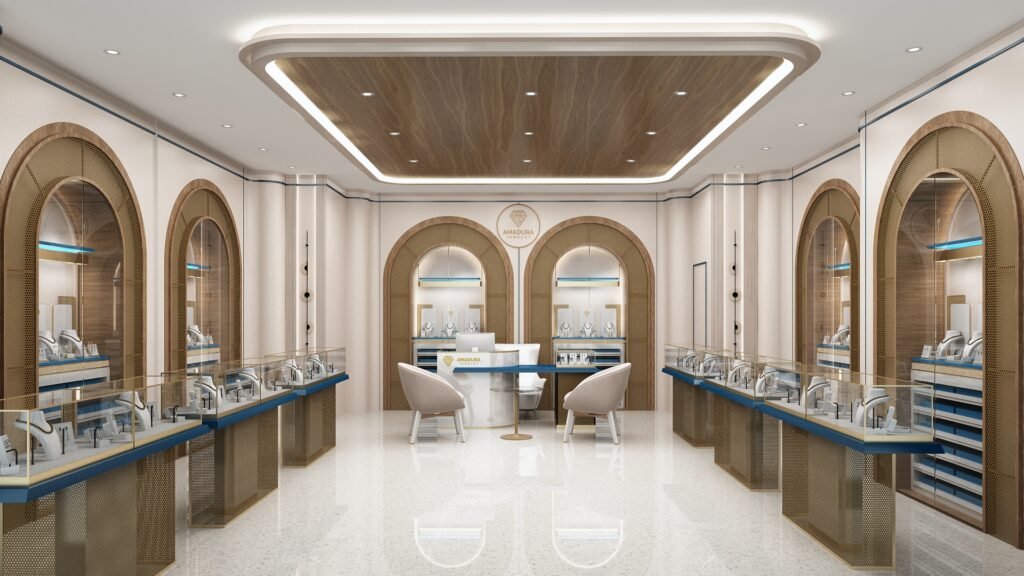
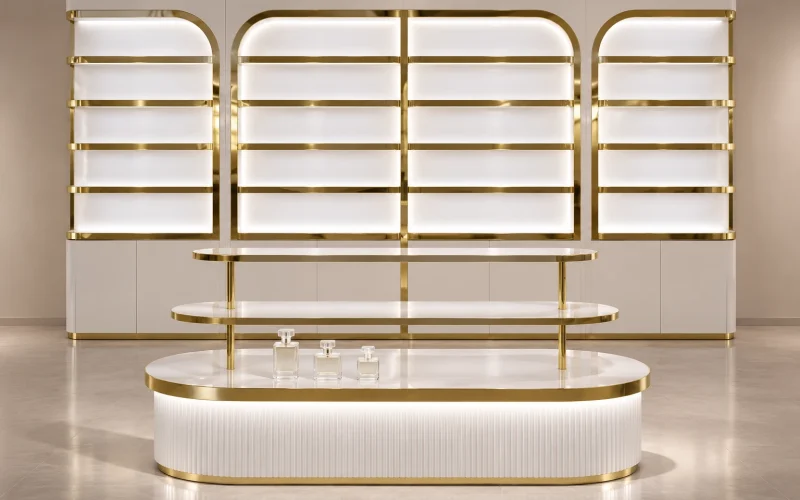
These are the costs that keep a business running. They are a major part of figuring out how much markup on jewelry is needed. This includes rent for a physical store and employee salaries. It includes marketing budgets. It also includes the store’s presentation. A premium 珠宝展示柜 is a big investment. But it is vital for showing items in the best light. Top suppliers like Ouyee 显示 are experts in this field. The entire 珠宝店设计 adds to the luxury feel and the value people see in the jewelry.Sales Channel (Wholesale vs. Retail)
A jeweler who sells directly to other stores uses a lower markup. This is often 50% to 100%. They sell in large volumes. The retail store then adds its own markup to the wholesale price to sell to customers.Exclusivity & Rarity
A one-of-a-kind piece will always have a higher markup. Limited edition collections or items with very rare gemstones are priced higher. This is because they are unique and hard to find.Certification & Authenticity
Getting a diamond or other valuable gem certified costs money. This is done by a respected lab like the GIA. However, this certificate provides trust and proves the gem’s quality. This adds to its value.

Anatomy of a Price Tag: From Workshop to Showcase
To truly understand how much markup is on jewelry, let’s walk through a real-world example. We will price a 14k gold and diamond ring from start to finish.
This shows how a piece goes from raw materials to a final retail price.
Step 1: Cost of Goods Sold (COGS)
This is the direct cost of the materials and labor to create the ring.
- Gold: 3 grams of 14k gold at $40/gram = $120
- Diamond: A 0.50 carat, G color, VS2 clarity diamond = $800
- Labor: 4 hours of a skilled goldsmith’s time at $50/hour = $200
- Total COGS: $1,120
Step 2: Applying a Wholesale Markup
Many designers first calculate a wholesale price. This is the price they would sell the ring for to a retail store. A common formula is to double the COGS.
- Formula: COGS x 2 = Wholesale Price
- Calculation: $1,120 x 2 = $2,240 (This is the Wholesale Price)
Step 3: Calculating the Final Retail Price
The retail store buys the ring for $2,240. They must then add their own markup to cover their costs and make a profit. A standard retail markup is often called “keystone.” This is 100% of the wholesale price.
- Formula: Wholesale Price x 2 = Retail Price
- Calculation: $2,240 x 2 = $4,480 (This is the Initial Retail Price)

The retailer might then adjust this price to something more appealing, like $4,495. This final price covers the store’s rent and marketing. It covers the cost from the 珠宝展示柜制造商. It covers all other business expenses while also providing the final profit.
For the Savvy Consumer: How to Judge if a Jewelry Price is Fair
Now that you know how much markup is on jewelry, you can be a smarter shopper. Here are a few tips to help you feel confident that you are getting a fair price.
- Compare Apples to Apples. When you compare prices between stores, make sure you are looking at items with the same material. For example, check 14k vs. 18k gold. Look at the same weight and stone quality. A lower price might mean lower quality.
- Ask About the ‘Fifth C’ – Certification. For any major diamond purchase, always ask for a report from a top-tier lab like GIA or AGS. This proves you are getting what you pay for.
- Understand the Brand. Ask yourself if you are paying for the quality of the piece or for the fancy box it comes in. Decide if a brand’s extra cost is worth it for you.
- Beware of Unbelievable Sales. Huge “50% Off” signs can be misleading. As discussed in the jewelry pricing journey from wholesale to retail, some stores inflate the original price just to offer a fake discount.
- Evaluate the Craftsmanship. Look closely at the piece. Are the stone settings secure? Is the metal polished smoothly? Is the construction solid? High-quality work justifies a higher price.
For the Aspiring Jeweler: A Basic Formula for Pricing Your Work
If you are starting your own jewelry business, pricing can be one of the hardest parts. How much markup should you put on your jewelry? Here is a simple, standard formula to get you started.
The Formula:
Let’s break this down:
- Material Costs: Add up the cost of everything in the piece. This includes your metal and stones. It even includes small things like solder and polishing supplies.
- Labor Costs: Pay yourself a fair wage for your time. Track how many hours it takes to make each piece.
- Multiplier (2.5x): This is a common starting point for direct-to-customer retail. This multiplier covers your business overhead. This includes tools, rent, and marketing. It also covers your profit. You can adjust it up or down depending on your market.
- Extras: Add any fixed costs at the end. This could be for special gift boxes or the cost of a gem certification.
This simple pricing journey is a great way to ensure all your costs are covered. It also helps you stay competitive in the market.
Conclusion: Markup is More Than Just a Number
In the end, the markup on jewelry can seem high. But it is a complex number. It reflects much more than just the value of the materials. It is a sign of an artist’s skill and a brand’s story. It shows the real costs of bringing a beautiful object to a customer.
The final price tag includes everything. This goes from the tiny bit of gold to the light shining on it in the display case. Whether you are a buyer looking for a fair deal or a seller setting a price, understanding what goes into that number is the key. It helps everyone navigate the jewelry world with more confidence.
Frequently Asked Questions (FAQ) about Jewelry Markup
1. What is “keystone” markup in the jewelry industry?
Keystone is a traditional pricing rule. The retail price is double the wholesale cost. This equals a 100% markup. For example, if a store buys a necklace for $50, they sell it for $100. Many jewelers now use “triple keystone.” This is 3x the cost. This better covers high overhead costs like rent and marketing.
2. 为什么钻石订婚戒指的加价如此之高?
订婚戒指的高加价反映了几个方面。这包括保持大量钻石库存的高成本和风险。它还涵盖了咨询所需的专业销售帮助和时间。最后,品牌的声誉以及购买的深刻情感意义使得其感知价值更高。
3. 我可以协商珠宝的价格吗?
It depends on the store. At smaller, independent jewelers, there might be some room for negotiation. This is especially true on expensive items. You might get a 5-15% discount. At large chain stores or luxury brand shops, prices are usually firm. It never hurts to ask politely. But do not expect a huge discount.
4. Is the markup lower at online jewelry stores?
通常是的。仅在线的商店拥有更低的运营成本。他们不需要支付昂贵的零售空间或那么多的销售人员。因此,他们通常可以以更低的价格提供相同质量的珠宝。权衡是,在购买之前你无法亲自看到这件作品。
5. How much of a jewelry’s retail price is the actual material value?
这因物品而异。对于一条简单的24k黄金链,材料价值可能占价格的70-80%。而对于一枚来自顶级设计师的非常复杂的品牌钻戒,原材料和宝石的价值可能仅占最终价格的20-30%。其余部分则用于支付劳动力、品牌价值、市场营销、间接费用和利润。






 Chinese
 English
 German
 Arabic
 French
 Spanish
 Italian
 Russian
 Turkish
 Portuguese
 Japanese