
Food-court and mall bubble tea operators usually need a clear order point, an efficient drink-preparation bar, storage for cups and ingredients, a separate handoff position, and visible menu or brand graphics. These can sit in one continuous kiosk counter or several coordinated modules. The main types of bubble tea kiosk fixtures for food-court and mall operators include order counters, preparation counters, ingredient display and storage shelves, pickup counters, staff storage, and graphic or menu structures. Choose them from a real menu, staff sequence, mall footprint, and equipment list. A product-page image cannot establish utility, food-safety, or installation requirements.
OYDisplay’s bubble tea kiosk manufacturing page 和 food kiosk page cover the wider service. This article helps buyers define the fixture schedule before asking a supplier for drawings and a comparable quotation.
Map the drink and customer journeys first
List the drinks and modifiers the kiosk will actually sell, then mark where each task happens: order entry, payment, tea or drink preparation, ingredient access, cup filling, sealing or lids, handoff, and cleaning. Equipment choices vary among operators, so obtain the proposed machines’ footprint, utilities, service clearances, and vendor instructions before fixing counter openings.
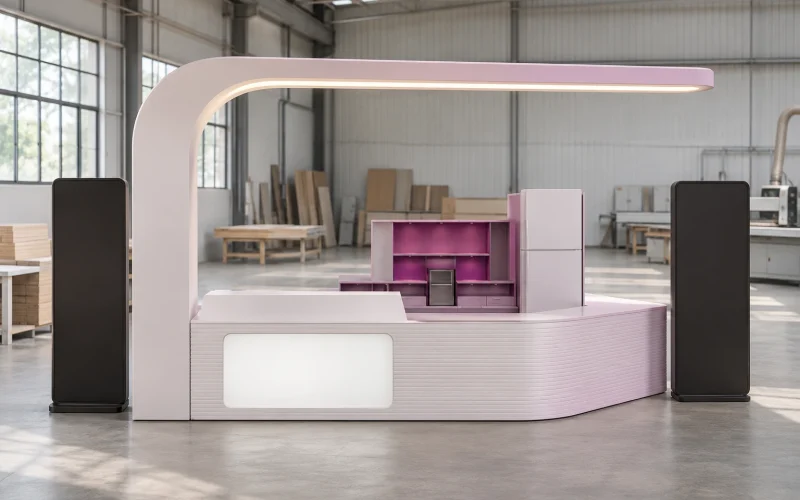
Walk the customer route from the approach side to order and pickup. Draw the staff route for replenishing cups, bringing ingredients in, removing waste, and serving a queue. The counter shape should support those handoffs. A photograph with an appealing canopy cannot tell you whether staff can reach the preparation equipment or whether waiting customers block new orders.
Ask the mall or food court for the approved footprint, signage boundaries, loading route, utility conditions, and operating constraints. Record them on the same plan the fixture supplier uses. A kiosk that fits the drawn area can still fail in practice if doors, power connections, staff access, or required customer routes are omitted.
Compare fixture modules by their operating job
The table is a qualitative decision aid. It does not prescribe a universal counter size, food-storage temperature, or electrical specification. Those details require the actual menu, equipment, local authority, and site approval.
| Fixture module | Role in the kiosk | 买家检查 |
|---|---|---|
| Order and payment counter | Giving customers a visible place to choose, customize, and pay | Queue, point-of-sale location, menu visibility, customer approach, and staff reach |
| Drink preparation counter | Supporting cup filling and the selected beverage equipment | Actual equipment footprint, utilities, work sequence, cleaning, and service access |
| Tea ingredient display shelves or staff storage | Holding ingredients, cups, or packaged additions according to the operation | Which items are customer-facing, which need staff-only access, and how they are replenished |
| Pickup or handoff counter | Moving completed drinks to customers without blocking ordering | Order identification, waiting space, spill response, and approach to the handoff |
| Backbar and base cabinets | Keeping packaging, reserve supplies, cleaning items, and equipment close to staff | Drawer and door clearances, storage separation, maintenance, and shift routines |
| Menu and graphic structure | Explaining the offer and making the kiosk recognizable from the mall route | Approval rules, power, graphic replacement, visibility, and cleaning access |
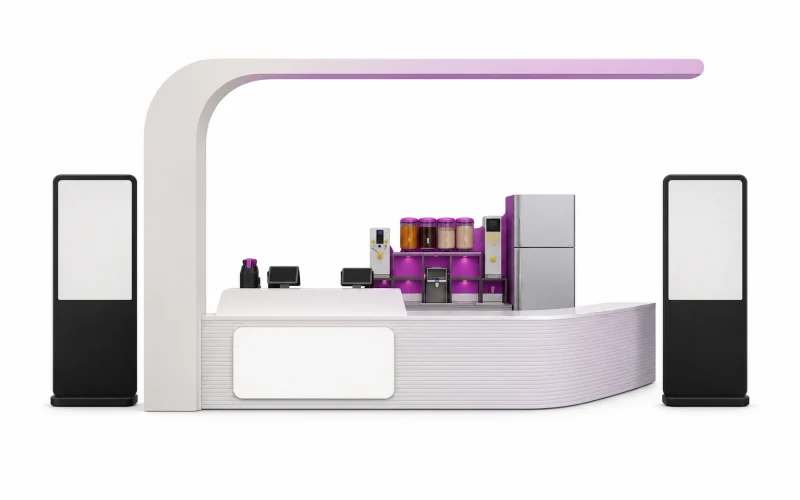
OYDisplay’s wood-look bubble tea booth is a real site product reference for a coordinated kiosk shell. Confirm what the quotation includes and where the operator’s own equipment, signs, and utility connections begin.
Define the order counter and pickup handoff separately
Bubble tea order counters support choices and modifiers. The order position should let staff hear the order and see the relevant menu without forcing the queue across a neighboring mall route. Decide where point-of-sale hardware sits, how customers learn when drinks are ready, and where a completed cup waits.
A distinct pickup point can help when the preparation time differs from the time needed to place an order. The exact arrangement depends on the operator’s projected workflow. Test a short rush scenario on the plan: one customer ordering, another collecting, and a staff member restocking cups. If these paths collide, revise the service front before finalizing the finish.
对于中国项目, U.S. Access Board ADA Standards address sales and service counters. They treat order and pickup as different services where both are offered. A qualified design professional should determine the applicable customer approach and route requirements for the actual site. No single kiosk photo can establish that review.
The U.S. Access Board’s Sales and Service Counters video below illustrates counter access. It supports the written standards and site-specific design review; it does not replace them.
Watch Sales and Service Counters from the U.S. Access Board.
Plan the preparation bar around real equipment
Ask the equipment vendors for the selected machines’ exact dimensions, utility needs, ventilation or service requirements where relevant, and the access needed for cleaning. Show those items on the kiosk drawing. Do not purchase a counter with generic equipment cutouts and expect every machine to fit.
The preparation sequence should put frequently used cups, ingredients, tools, and handoff within a sensible staff route. This does not mean every item must be visible to customers. Separate decorative shelves from working storage. Staff-side drawers and cabinets should open without blocking another worker’s position or preventing equipment service.
OYDisplay’s traditional boba tea counter offers a visual service-front reference. Use the corresponding product-page image to discuss the kiosk’s general arrangement, then specify actual equipment and opening details from the operator’s plan.
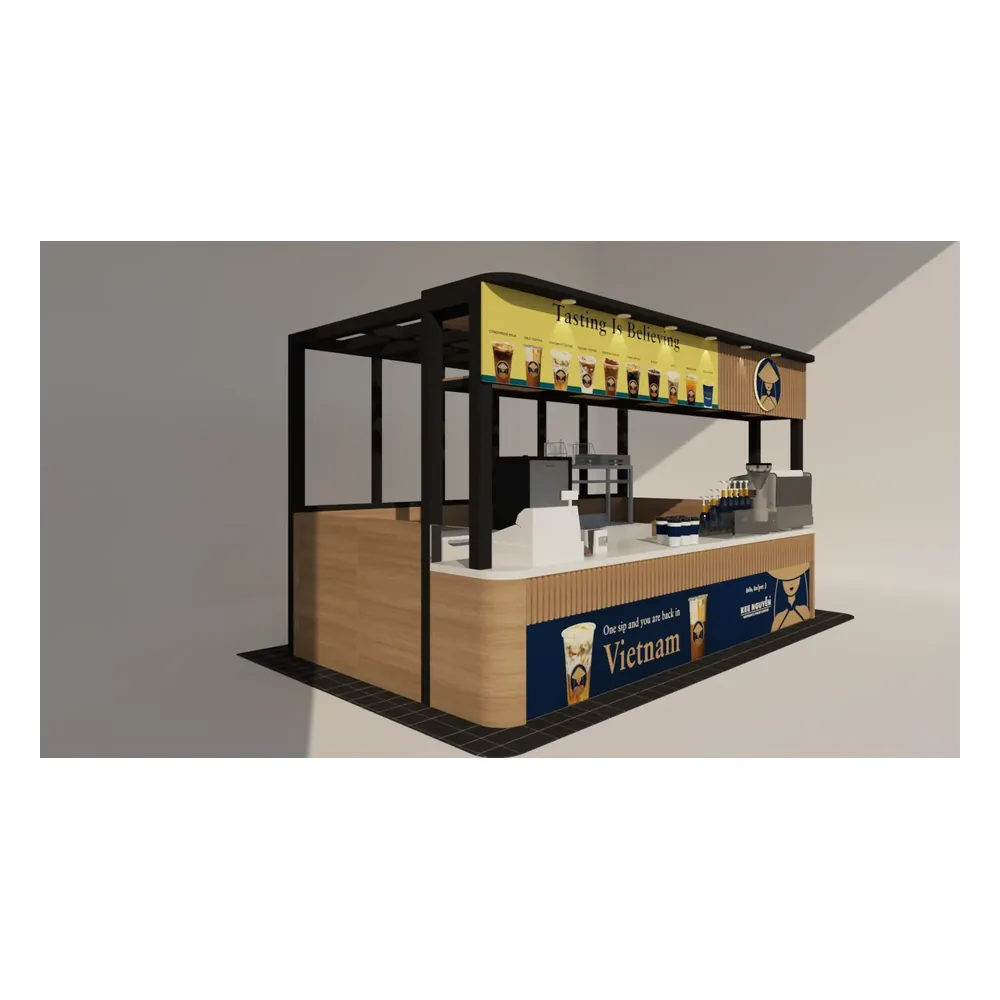
Separate display shelving from food handling requirements
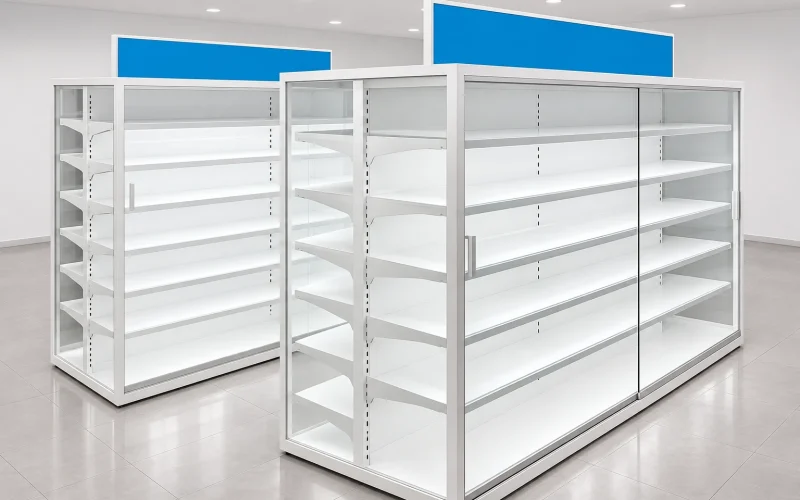
Tea ingredient display shelves may communicate flavor choices or brand identity, but the operator should decide which containers are truly customer-facing and which products belong in controlled staff storage. Mark refill and cleaning access on the drawing. Package dimensions, labels, and handling should drive shelf spacing; a graphic rendering is not a product schedule.
《 FDA Food Code 2026 is a model code that jurisdictions may adopt. Confirm the requirements that apply to the actual food-court or mall operation with its local health authority and equipment suppliers. In particular, the display and storage plan should follow the operator’s real handling and cleaning procedures rather than assume a pictured shelf or container is compliant.
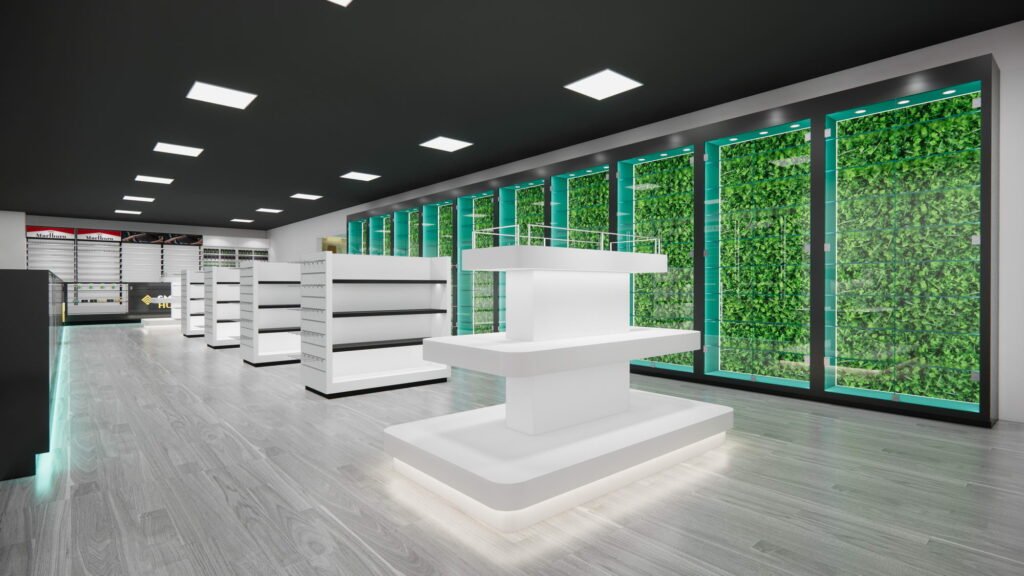
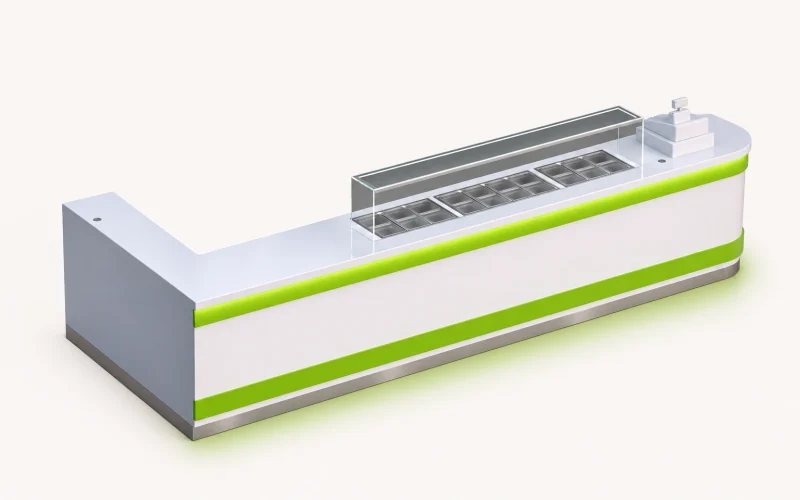
A green bubble tea kiosk product example can help discuss shelving, graphics, and a customer-facing service front. Verify each material and display function against the actual menu and location.
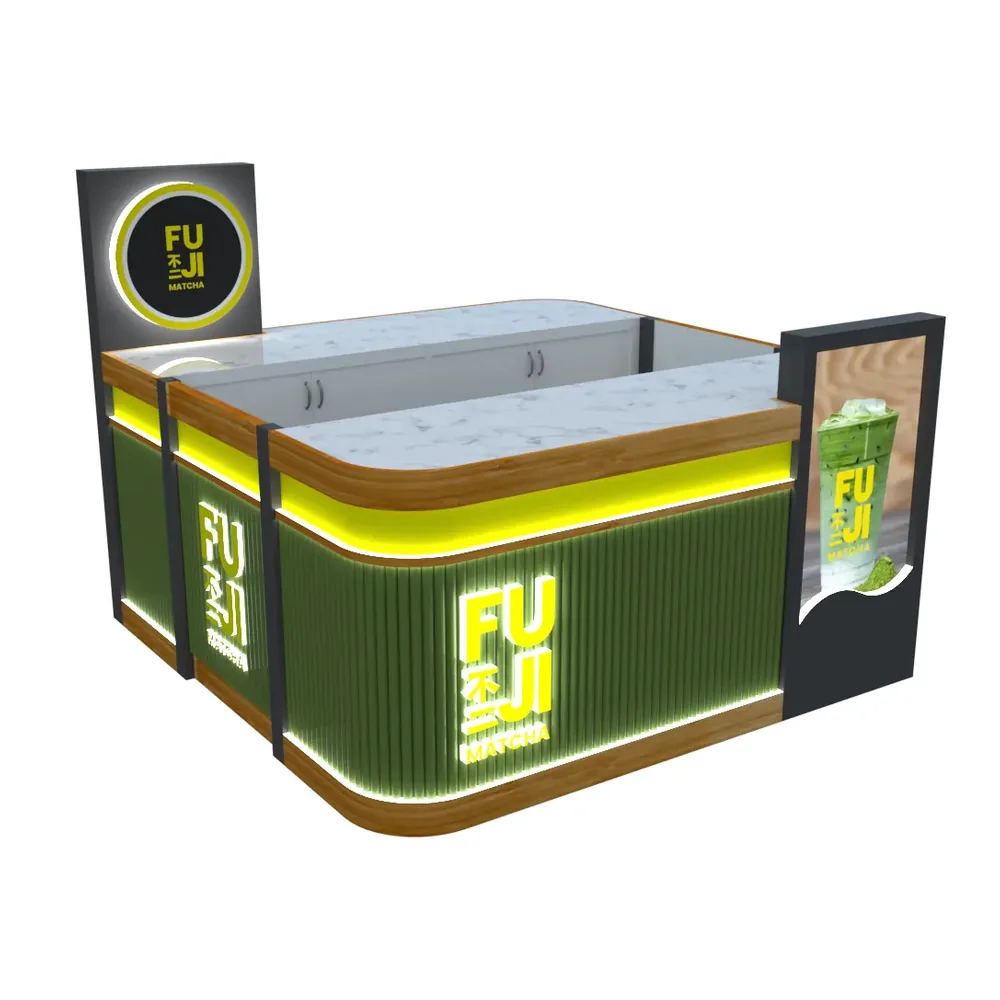
Coordinate kiosk layout, signage, and maintenance
A food-court kiosk can be viewed from several directions, but not every side should become a service point. Identify the intended order approach, staff entrance, stock delivery side, and pickup position. Position the menu where the queue can read it without blocking the adjacent operator or route. Ask the mall to confirm permitted sign sizes, heights, lighting, and power before artwork is finalized.
Consider the full shift: opening stock, a lunch rush, a refill of cups or ingredients, spill cleanup, maintenance, and closing. Ask how the operator reaches electrical or plumbing service points, removes waste, and replaces graphics. If staff must move equipment to clean a counter, show the movement and service clearance in the drawing.
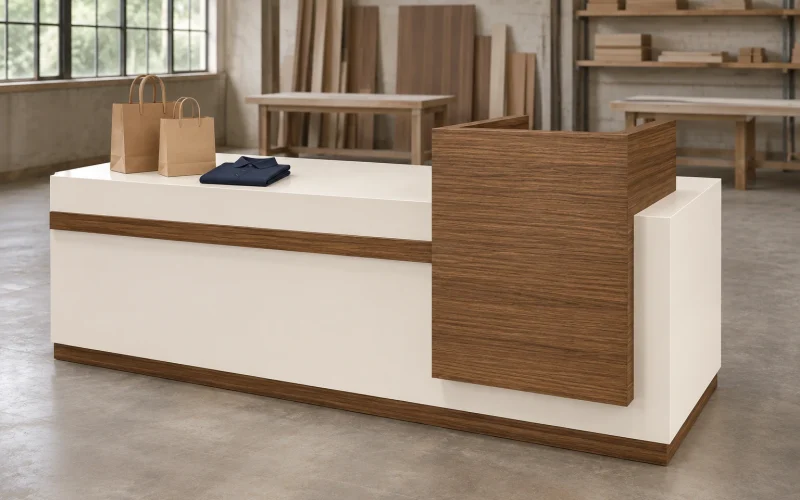
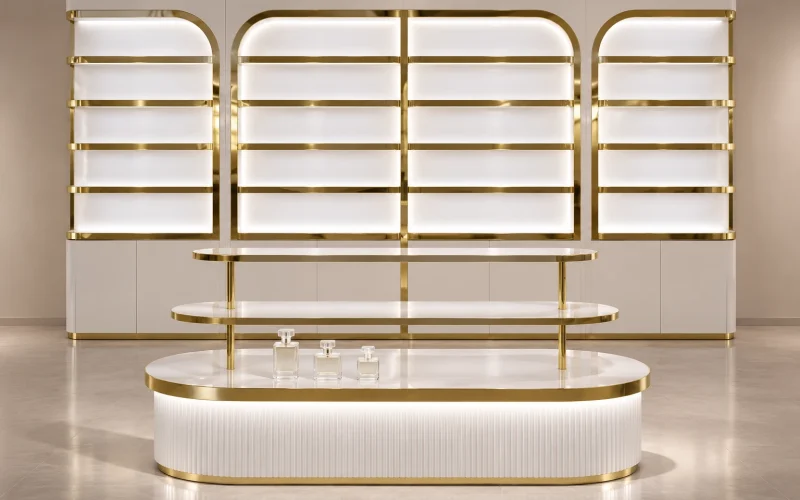
OYDisplay’s white bubble tea counter reference offers another service-front direction. Compare the image with the mall’s real utility locations and approved floor plan, then request a site-specific construction schedule.
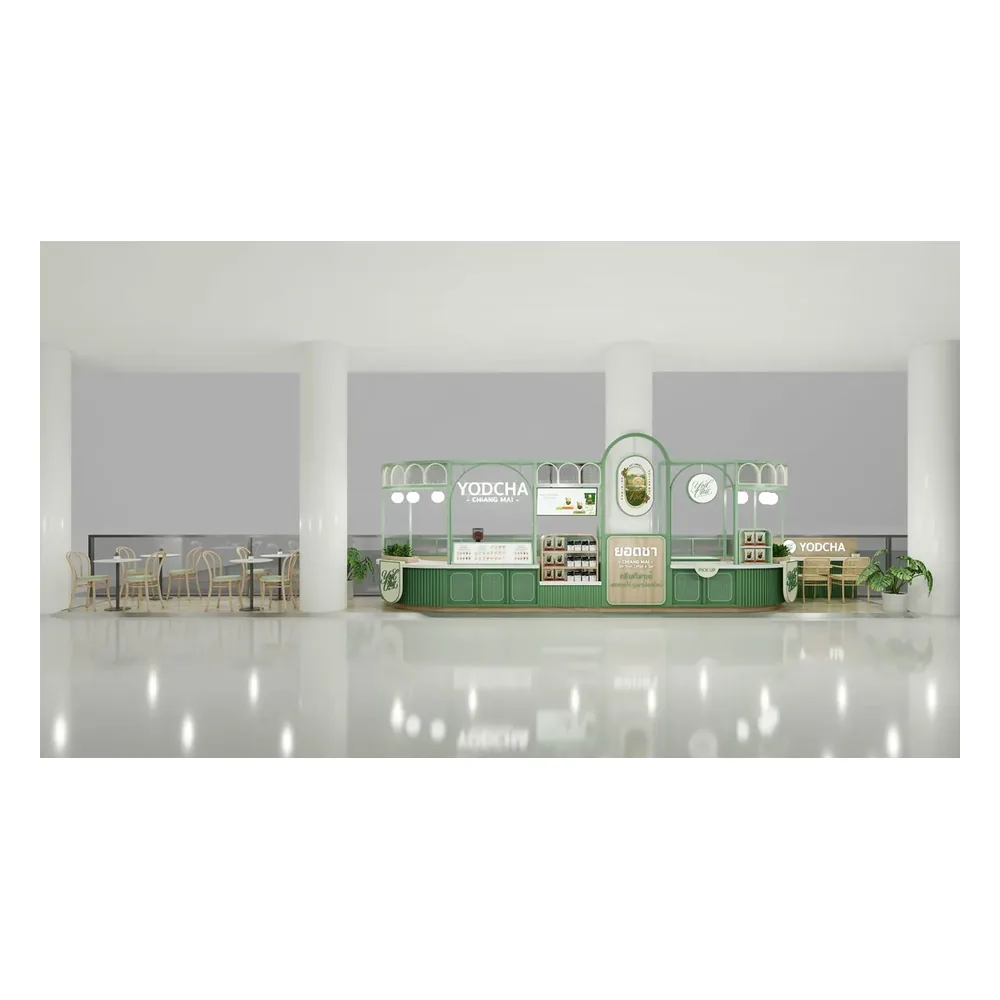
Use neighboring food-service guides for different jobs
A bubble tea kiosk shares some procurement questions with other food kiosks, but its drink customization and handoff sequence deserve their own plan. Our frozen yogurt kiosk fixture guide addresses another self-service and topping format, while the coffee shop counter guide covers a café bar and pastry service. Use these as complementary examples, not as copy-and-paste fixture specifications.
For a bubble tea unit, document the operator’s own menu and equipment. A supplier can then evaluate whether the available mall footprint supports a continuous bar, separate pickup module, or another service pattern. Keep the equipment vendors and fixture builder aligned on every drawing revision.
Request quotations on the same scope
Send each bidder the same approved site plan, menu and equipment list, staff sequence, graphic direction, local requirements, and delivery conditions. Ask for dimensioned drawings, a named fixture schedule, material and finish samples, and explicit exclusions. This protects the operator from comparing one complete proposal with another that omits installation, utilities, or signage.
| RFQ area | Evidence to request | Decision check |
|---|---|---|
| Site and service flow | Mall plan, queue, order and pickup positions, staff route, delivery access | Can customers and staff use the kiosk without conflicting paths? |
| Equipment and ingredients | Selected models, sizes, utility details, storage schedule, local requirements | Does every working component fit and remain serviceable? |
| Fixture construction | Named worktop and panel materials, shelves, doors, graphics, lighting, finish samples | Can staff clean, replenish, and maintain the proposed unit? |
| 交付和批准 | Shop drawings, sample or first unit, packing, freight, installation, landlord review, exclusions | Are suppliers pricing the same complete work? |
Where a custom material or counter detail matters, review a sample with the operator’s actual cups, packages, and menu graphics. Document changes on the final drawing before fabrication.
Common bubble tea kiosk buying mistakes
- Choosing a kiosk image before the drink menu and actual equipment are confirmed.
- Letting the pickup queue cross the order point or a neighboring food-court route.
- Showing ingredient containers without a verified staff handling and cleaning plan.
- Forgetting cup, lid, packaging, waste, and refill storage behind an attractive front.
- Comparing quotes that include different assumptions about utilities, graphics, or landlord approval.
常见问题解答
奶茶亭通常需要哪些设备?
大多数需要一个订单和支付柜台、饮料准备吧、原料和杯子存储、取货点、员工柜子和菜单图形。最终的组合取决于菜单、设备、批准的商场占地面积和运营工作流程。.
奶茶的订单和取货柜台应该分开吗?
它们可以共享一个连续的柜台,但两个客户服务应单独规划。一个独特的取货位置可以防止等待的顾客在饮料准备时间较长时阻碍新订单。.
应该放在配料展示架上的是什么?
仅限于运营商已批准的面向客户的角色。与设备供应商和当地卫生部门确定包装尺寸、标签、员工补给、保护和清洁,然后再指定货架。.
我应该向泡茶亭供应商发送什么信息?
发送测量的商场平面图、菜单、选定的设备细节、公用设施信息、客户和员工路线、存储需求、图形要求、当地健康和无障碍限制、安装范围和交付条件。
现有的自助服务亭设计可以复制到新的商场吗?
A product-page design can be a useful visual reference. A new mall still needs its own approved footprint, utility and equipment plan, materials, service openings, local requirements, and supplier drawings.
 Chinese
 English
 German
 Arabic
 French
 Spanish
 Italian
 Russian
 Turkish
 Portuguese
 Japanese