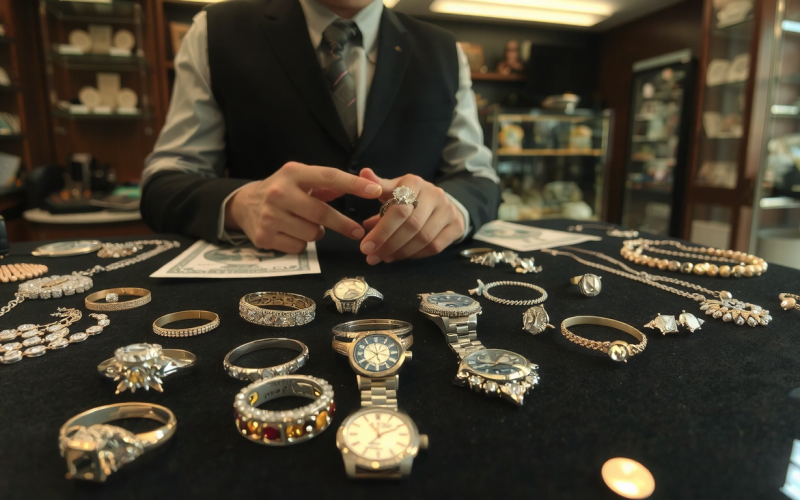
So, how much do jewelry store owners make? The simple answer is that a successful owner can earn anywhere from $60,000 to over $250,000 per year. But this number can change a lot. The real earnings depend on profit, how the business works, and how much money goes back into the store. A simple salary number doesn’t tell the whole story. This article will break down the real income you can expect. We’ll look at income data and key things that affect earnings. We’ll also show the difference between sales, profit, and what you actually take home. Plus, we’ll give you clear steps to make more money.

重要なポイント
- Owner Income Range: A typical jewelry store owner’s take-home pay ranges from $60,000 to $250,000+, but this varies a lot. Early years may see salaries as low as $30,000-$50,000 due to putting money back into the business.
- Profit is Not Salary: High store sales don’t equal high personal income. An owner’s pay comes from profit after all costs are paid. This includes inventory, rent, and staff salaries.
- Key Success Factors: Your income ties directly to your business model, location, inventory management, branding, and the store experience you create.
- Profit Margins are Crucial: The average profit margin for a jewelry business can be 25% to 75% on products. But net profit for the business is often between 5% and 15% after all operating costs.
- It’s a Long-Term Game: Expect to put most profits back into the business for the first 2-3 years. Stable, good income typically happens after year four. Top earnings come from mature, well-known stores.
The Bottom Line: Jewelry Store Owner Income by the Numbers
When we look at how much a jewelry store owner can make, the numbers tell a story. It’s not just one simple figure. The income depends on the stage and type of business. Recent surveys from groups like Jewelers of America show the median salary for a jewelry owner is around $102,500. But this is just the middle point. Top performers earn well over $200,000. New owners might earn much less.
To make this clearer, we can look at different scenarios. A small startup will look very different than a large, established store in a major city. Understanding these levels helps set real expectations for your potential earnings.
Typical Jewelry Store Owner Annual Income Scenarios
| Scenario/Level | Typical Annual Owner Take-Home | Key Characteristics |
|---|---|---|
| Startup / Small Town | $45,000 – $75,000 | First 1-3 years of business. Focus on putting profits back in. Lower rent and overhead. |
| Established Mid-Market | $80,000 – $150,000 | 4+ years in business. Stable customer base and steady sales. Located in a suburb or small city. |
| High-End / Urban Boutique | $150,000 – $350,000+ | Strong brand recognition. Prime location with high foot traffic. Sells luxury, custom, or designer pieces. |
These figures show the owner’s total pay. This includes any salary they pay themselves plus profits taken from the business.
Beyond the Paycheck: Understanding Revenue, Profit, and an Owner’s Real Take-Home Pay
Many people ask, “how much does a jewelry store owner make?” and think of a simple salary. But for an owner, “salary” is just one piece of the puzzle. To truly understand your earning potential, you must know the difference between revenue, profit, and the money you can actually take home. These concepts are the foundation of your business’s financial health.

Revenue vs. Profit: Why a Million-Dollar Store Isn’t a Million-Dollar Salary
Revenue is the total money your store brings in from sales. If you sell $500,000 worth of jewelry in a year, your revenue is $500,000. But that’s not your income.
From revenue, you must subtract all your costs. These fall into two main groups: Cost of Goods Sold (COGS) and Operating Expenses. COGS is what you paid for the jewelry you sold. Operating Expenses are things like rent, employee salaries, marketing, and utilities. What’s left after you subtract all these costs is your profit.
The Importance of Profit Margin
Profit margin is a percentage that shows how healthy your business is. Gross profit margin is your profit after subtracting only the cost of the jewelry itself. Net profit margin is what’s left after all expenses are paid. This net margin is the true measure of your business’s success.
The average profit margin for a jewelry business can be high on individual items, often between 25% and 75%. Fine jewelry has higher margins than fashion jewelry. However, after paying for rent, marketing, and salaries, a healthy net profit margin for the entire store is usually between 5% and 15%. This is the money that can become the owner’s income.
How Owners Get Paid: Salary, Draws, and Distributions
An owner doesn’t just get a regular paycheck like an employee. There are three main ways an owner takes money from the business.
- cURL Too many subrequests. cURL Too many subrequests.
- cURL Too many subrequests. cURL Too many subrequests.
- cURL Too many subrequests. cURL Too many subrequests.
cURL Too many subrequests.
cURL Too many subrequests.

cURL Too many subrequests.
-
cURL Too many subrequests.
cURL Too many subrequests. -
場所
cURL Too many subrequests. -
cURL Too many subrequests.
cURL Too many subrequests. -
在庫管理
cURL Too many subrequests. -
cURL Too many subrequests.
cURL Too many subrequests. -
cURL Too many subrequests.
cURL Too many subrequests. ジュエリーショップのデザイン creates a sense of luxury and trust. This makes customers feel comfortable spending more. The quality of each ジュエリーショーケース can make your pieces look more brilliant and appealing. Investing in a professional build-out is a smart move. Working with a trusted partner like Ouyeeディスプレイ can enhance brand value and boost sales, directly impacting the owner’s income. A great ジュエリーショーケースメーカー understands how to present products to maximize their appeal. -
Owner Expertise & Services Offered
If you, the owner, have special skills, you can create more ways to make money. Skills in gemology, custom design, or jewelry repair can add high-margin services to your business. A successful owner must have knowledge of every aspect of the industry, from sourcing raw materials to understanding the latest sales trends.
A Jeweler’s Income Journey: From Startup to Established Brand
Asking “how much do jewelry store owners make” often leads to a single number, but the reality is an evolution. An owner’s income changes dramatically over the life of the business. Here’s a realistic timeline of what you can expect.
The Foundation Years (1-3): Survival and Reinvestment

The first few years are about survival and growth, not big paychecks. We see most new owners working long hours and taking a very small salary, often between $30,000 and $50,000.
Almost every dollar of profit goes right back into the business. You’re buying more inventory, spending on marketing to build your name, and paying for unexpected costs. This phase is about building a strong foundation for the future. An owner’s income is secondary to the health of the business.
The Growth Phase (Years 4-7): Achieving Stability and Profitability
After a few years of hard work, things start to change. Your store has a reputation, a steady stream of customers, and more predictable sales. The business is likely breaking even or making consistent profit.
During this phase, an owner’s salary becomes more stable and can increase to the $70,000 to $120,000 range. You might take your first significant profit distribution. This is the stage where you begin to see how profitable a jewelry business can be when managed well. You’ve proven the model and are now reaping some of the rewards.
The Mature Stage (Year 8+): Maximizing and Scaling
After nearly a decade, a well-run jewelry store is a powerful asset. You have a strong brand, loyal clients, and efficient operations. At this point, how much a jewelry store owner can make rises significantly.
Owner income can reach $150,000 to $350,000 or even more. The most successful owners may open a second location or build a strong online business alongside their physical store. The business now generates enough profit to provide high income for the owner while also funding future growth.
Conclusion: The Verdict on a Jeweler’s Fortune
So, how much does a jewelry store owner make? As we’ve seen, the answer covers a huge spectrum. It’s not a get-rich-quick career path. The early years demand hard work, personal sacrifice, and constant reinvestment. Your take-home pay will likely be modest as you build your foundation.
However, for the dedicated entrepreneur, the potential is significant. Owning a jewelry store offers a path to a very comfortable six-figure income and beyond. Success depends on mastering your niche, managing your finances with discipline, and building a brand that people trust and love. If you can do that, the rewards of being your own boss in this sparkling industry are well within your reach.
よくある質問(FAQ):
1. What is a good profit margin for a jewelry store?
A good net profit margin for a jewelry store is typically between 5% and 15%. This is the profit left after all business expenses are paid. While the gross profit margin on individual jewelry pieces can be much higher, often 50-70% for fine jewelry, operating costs like rent and salaries will reduce the final net profit.
2. How much does it cost to start a jewelry store?
The cost to start a jewelry store varies dramatically. You could start a small online business for as little as $10,000. A physical, high-end store in a prime location could cost over $500,000. The main costs are inventory, rent, security systems, and the store build-out, which includes finding a quality ジュエリーショーケースメーカー for your displays.
3. Can you make a lot of money selling jewelry online vs. in a physical store?
Yes, both models can be very profitable. Online stores have lower overhead costs like rent, but they face intense competition and require significant spending on digital marketing. Physical stores build trust through personal service but have higher fixed costs. Many of the most successful owners today use a hybrid model, combining a physical showroom with a strong online presence.
4. What’s the difference between a jeweler’s salary and a jewelry store owner’s income?
A jeweler is usually an employee who performs a craft, such as setting stones or repairing pieces. They earn a salary, typically between $40,000 and $70,000. A jewelry store owner’s income is their total compensation from the business. This includes any salary they pay themselves plus all the business profits they are entitled to. An owner’s income potential is much higher.
5. How long does it take for a new jewelry store to become profitable?
Most new retail businesses, including jewelry stores, typically take two to three years to achieve consistent profitability. The first few years are focused on building brand awareness, growing a customer base, and reinvesting nearly all earnings back into inventory and marketing. Patience and a solid financial plan are essential.
- オリジナル言語:英語。
- 厳密な翻訳、日本のローカル文法に従う。
- 翻訳されたテキストのみを出力。
- 翻訳されたテキストには、出身国や地域に関する情報(例:「アメリカ合衆国」、「米国販売代理店」など)を含めないこと。
- すべての対象国情報は日本に置き換えること。
- 例:工場が中国にある場合や、ベトナム製の場合はそのまま維持。
- すべての文章は日本語で書き、キーワードは正確に翻訳すること。
- 説明やマークダウン、余計なテキストは一切含めないこと。
以上のルールに従って翻訳してください。
- オリジナル言語:英語。
- 厳密な翻訳、日本のローカル文法に準拠。
- 翻訳されたテキストのみを出力。
- 翻訳されたテキストには、出身国や地域に関する情報(例:「アメリカ合衆国」、「米国販売代理店」など)を含めないこと。すべての対象国情報を日本に変更すること。
- 例として、「工場は中国にあります」や「ベトナム製」などはそのまま保持。
- すべての文章は日本語で書き、キーワードは正確に翻訳すること。
- 説明やマークダウン、余分なテキストは一切不要。
- オリジナル言語:英語。
- 厳密な翻訳、日本のローカル文法に準拠。
- 翻訳されたテキストのみを出力。
- 翻訳されたテキストには、出身国や地域に関する情報(例:「アメリカ合衆国」、「米国販売代理店」など)を含めないこと。すべての対象国情報を日本に変更すること。
- 例として、「工場は中国にあります」や「ベトナム製」などはそのまま保持。
- すべての文章は日本語で書き、キーワードは正確に翻訳すること。
- 説明やマークダウン、余分なテキストは一切不要。