The safest way to clean turquoise is simple. Use a soft, dry, lint-free cloth to wipe it. If you see more dirt, you can use a cloth that is slightly damp with plain water. This careful approach is key. Turquoise is a soft and porous stone. This means it is easily damaged by chemicals, oils, and the wrong cleaning methods. This guide will teach you how to clean turquoise jewelry safely.
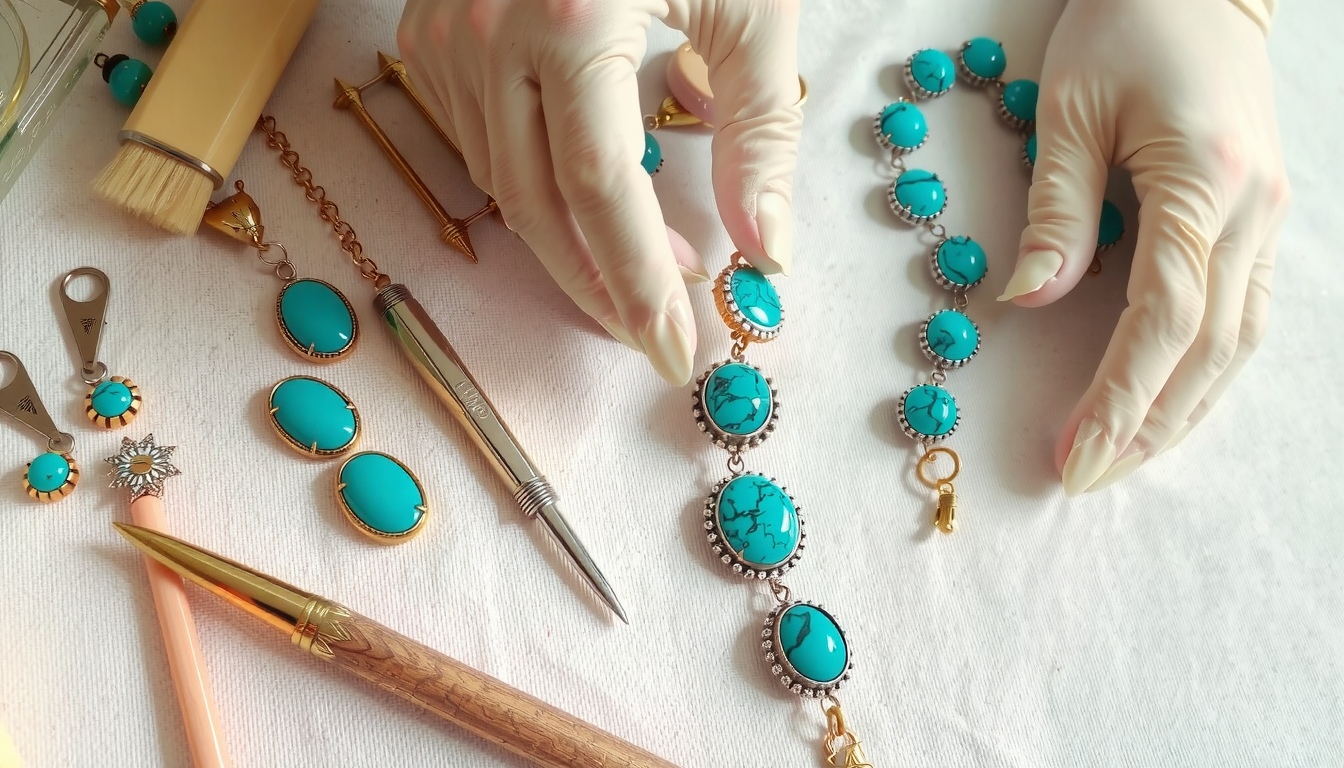
We will explore why turquoise needs special care. You will get step-by-step instructions for cleaning. This includes how to clean silver and turquoise jewelry together. We will also cover what to avoid. You’ll learn how to care for your pieces long-term. Plus, when to see a professional.
Punti chiave
- Use Water Sparingly: The best way to clean turquoise is with a dry, soft cloth. Only use a cloth lightly dampened with water for stubborn dirt. Dry it immediately after.
- Avoid All Chemicals: Never use jewelry cleaners, dips, or ultrasonic cleaners on turquoise. Don’t use soap, oils, or acids like vinegar either. These can cause permanent discoloration and damage.
- Protect the Stone: When cleaning silver and turquoise jewelry, focus only on the metal. Use a silver polishing cloth carefully. Avoid touching the stone.
- Store Properly: Keep turquoise in a separate pouch or lined box. This prevents scratches. Store it away from sunlight and humidity.
- “Last On, First Off”: Put your turquoise jewelry on after all lotions and perfumes. Take it off before washing hands, showering, or swimming.
First, Understand Your Treasure: Why Turquoise Needs Special Care
To learn how to clean turquoise jewelry properly, you must first understand the stone itself. Its unique qualities make it beautiful but also fragile. Knowing its weaknesses is the first step in protecting it.
The Porous Nature of Turquoise
Think of turquoise as a natural sponge. It is full of tiny holes, or pores. Because of these pores, it can absorb liquids it touches. This includes skin oils, lotions, perfumes, and cleaning chemicals.
This absorption can cause the stone to change color over time. It might darken or turn a greenish hue. Once a substance is absorbed, the damage is often permanent. The stone is vulnerable to absorbing these substances due to its porous nature, which is why we must be so careful.
Softness and Scratch-Risk
Scientists use the Mohs scale to rate the hardness of minerals. The scale goes from 1 (softest) to 10 (hardest). Turquoise ranks between 5 and 6 on this scale. This makes it much softer than gems like diamonds (10) or sapphires (9).
What does this mean for cleaning? It means turquoise can be scratched very easily. Harsh cleaners, stiff brushes, and even rough fabrics can leave permanent marks. Common household dust contains tiny quartz particles. These rank at 7 on the Mohs scale and can scratch your turquoise.
Stabilized vs. Natural Turquoise
You may hear the terms “natural” and “stabilized” turquoise. Natural turquoise is completely untreated. Stabilized turquoise has been treated with a clear resin. This resin fills the pores. It makes the stone harder and its color more stable.
While stabilized turquoise is stronger, this does not change how you clean it. You should still use the same gentle methods. Harsh chemicals can damage the resin coating. They can also dull the stone’s finish. The safest cleaning method is always the best for any type of turquoise.
The “Do Not Use” List: Damaging Chemicals and Methods
Knowing what not to do is just as important as knowing how to clean turquoise jewelry. Many common cleaning methods can cause damage that cannot be fixed. Avoid the items in this list at all costs. This will protect your precious pieces.
Here is a clear guide to what will harm your turquoise.
| Method/Substance | Why It’s Harmful |
|---|---|
| Pulitori ad ultrasuoni | The intense vibrations can damage the porous stone. They can also loosen the setting. Or cause the resin in stabilized turquoise to sweat out. |
| Steam Cleaners | High heat can cause the stone to crack. It can also change color permanently. |
| Ammonia, Bleach, or Harsh Chemicals | These will discolor or even start to dissolve the stone. Commercial jewelry dips and tarnish removers are especially dangerous. |
| Acids (Vinegar, Lemon Juice) | Acids react with the copper that gives turquoise its blue color. This causes permanent damage and color change. |
| Oils and Lotions | The porous stone will absorb them. This leads to a slow but sure darkening. The discoloration cannot be cleaned away. |
| Soaking in Water/Soap | cURL Too many subrequests., cURL Too many subrequests.. cURL Too many subrequests. |

cURL Too many subrequests.
cURL Too many subrequests.
cURL Too many subrequests.
Cosa Ti Serve
cURL Too many subrequests.
cURL Too many subrequests.
cURL Too many subrequests.
cURL Too many subrequests.
cURL Too many subrequests.
cURL Too many subrequests.
-
cURL Too many subrequests. cURL Too many subrequests.
-
cURL Too many subrequests. cURL Too many subrequests.
-
cURL Too many subrequests. cURL Too many subrequests.
-
cURL Too many subrequests. For any dirt stuck in the small spaces around the stone’s setting, use your dry, soft-bristled brush. Gently flick the dirt away. Do not use a wet brush. This can trap moisture in the setting.
-
Dry Immediately: This step is critical. Use a dry cloth to gently pat the entire piece of jewelry dry. Pay special attention to the area where the stone meets the metal setting. Make sure absolutely no moisture is left behind.
As you perform this simple cleaning, feel how the microfiber cloth glides over the stone. You’re not looking to scrub, but to lift. Notice how even a gentle pass can restore some of the stone’s natural luster and shine.
How to Clean Silver and Turquoise Jewelry
One of the most common questions is how to clean silver and turquoise jewelry. Silver naturally tarnishes and turns dark. But the chemicals used to clean silver are very harmful to turquoise. The secret is to clean the silver while carefully protecting the stone.
The Challenge: Protecting the Stone
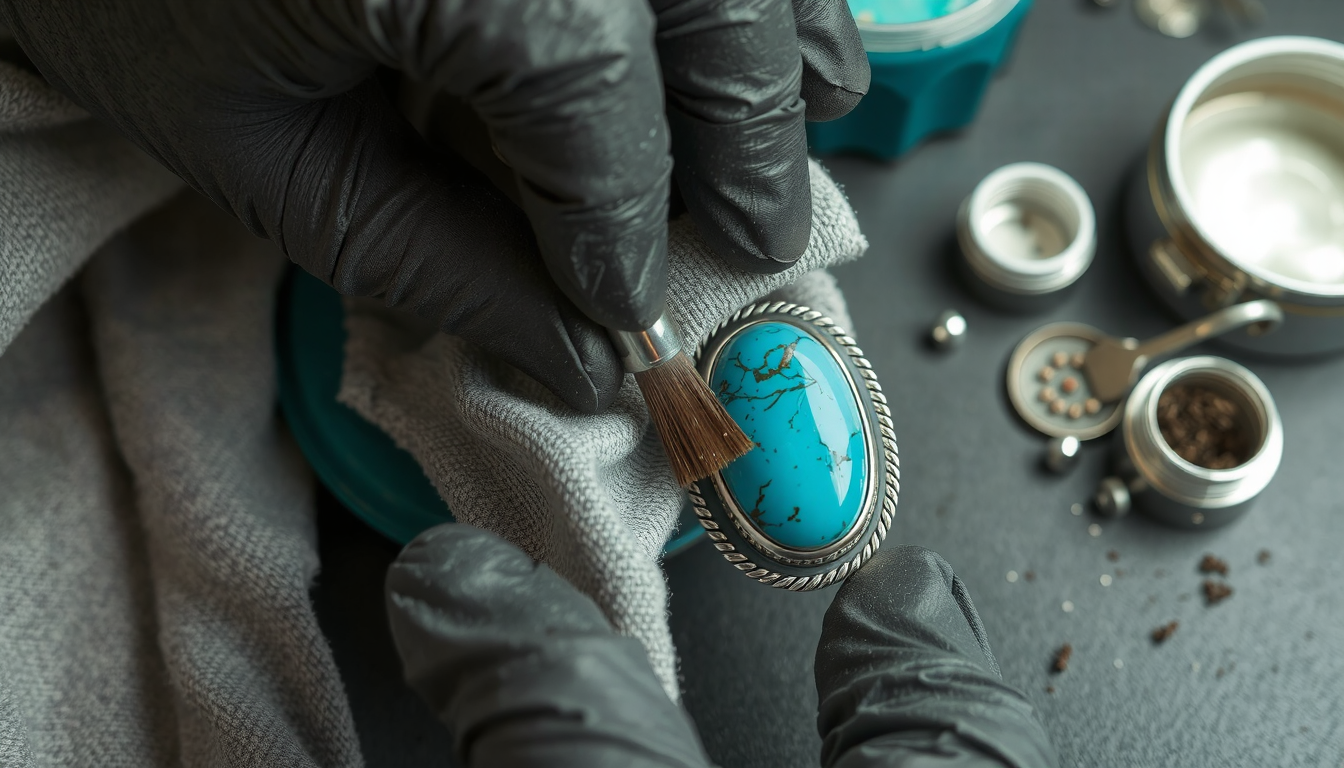
You must keep all silver polish and cleaners away from the turquoise. The key is to isolate the metal from the stone during cleaning. This requires patience and a steady hand. But it is the only safe way to restore the silver’s shine without causing damage.
Method 1: The Polishing Cloth (Best for Light Tarnish)
For light to medium tarnish, a professional silver polishing cloth is your best tool. These cloths are treated with a very fine cleaning agent.
To use one, carefully fold the cloth to create a clean, sharp edge. Use this edge or a corner to work on the silver areas only. You can use your thumbnail through the cloth to get very close to the bezel. The bezel is the metal rim holding the stone. Work without touching the turquoise. Work in small, deliberate, back-and-forth motions. For very detailed silverwork, you can wrap the cloth around the end of a Q-tip. This helps you reach into tiny crevices.
Method 2: DIY Paste for Heavy Tarnish (Use With Extreme Caution)
For heavy tarnish that a cloth cannot remove, you can try a homemade paste. This method is effective but carries a higher risk. Proceed with extreme caution. How you clean silver turquoise jewelry this way is all about careful application.
-
The Paste: Mix a very thick paste using baking soda and a few drops of water. It should be stiff, not runny.
-
Application:
- Use a Q-tip or a very small, fine brush to apply the paste only to the silver parts of the jewelry.
- CRITICAL: Do not let any of the paste touch the turquoise stone. If it does, wipe it off immediately with a dry cloth.
- Gently rub the silver with the Q-tip. You will see the tarnish start to lift.
- Removal: This is the most important part. Use a clean, damp Q-tip or the corner of a damp cloth to carefully remove all paste residue from the silver. Go over it several times to ensure it is all gone.
- Immediately dry the entire piece thoroughly with a soft, dry cloth.
Troubleshooting Common Cleaning Disasters
Even with the best intentions, accidents can happen. Here is some practical advice for what to do if you have made a cleaning mistake. This is a topic most guides on how to clean turquoise jewelry ignore.
“I Got Lotion/Oil on My Turquoise. What Now?”
Act fast. Immediately wipe the substance off with a dry, soft cloth. Do not rub it in.
If a light oil stain has already set on a natural, untreated stone, you can try a last-resort method. Make a paste of fuller’s earth or plain cornstarch and water. These are natural absorbent powders. Apply a thick layer to the spot. Let it dry completely. Then gently brush it off with a soft brush. This may help pull some of the oil out. Always test on a hidden area first if possible. In many cases, the stain is permanent. It becomes part of the stone’s unique history.
“I Accidentally Used Soap or a Mild Cleaner.”
If you have used soap or another cleaner, the first step is damage control. Immediately take a clean cloth and dampen it with plain water. Gently wipe the stone. You want to remove any chemical residue that is sitting on the surface.
After wiping it clean, dry the stone and the entire piece of jewelry completely. Watch the stone over the next few days. If a chemical reaction has started within the porous stone, it unfortunately cannot be reversed.
“My Turquoise Looks Dull After Cleaning.”
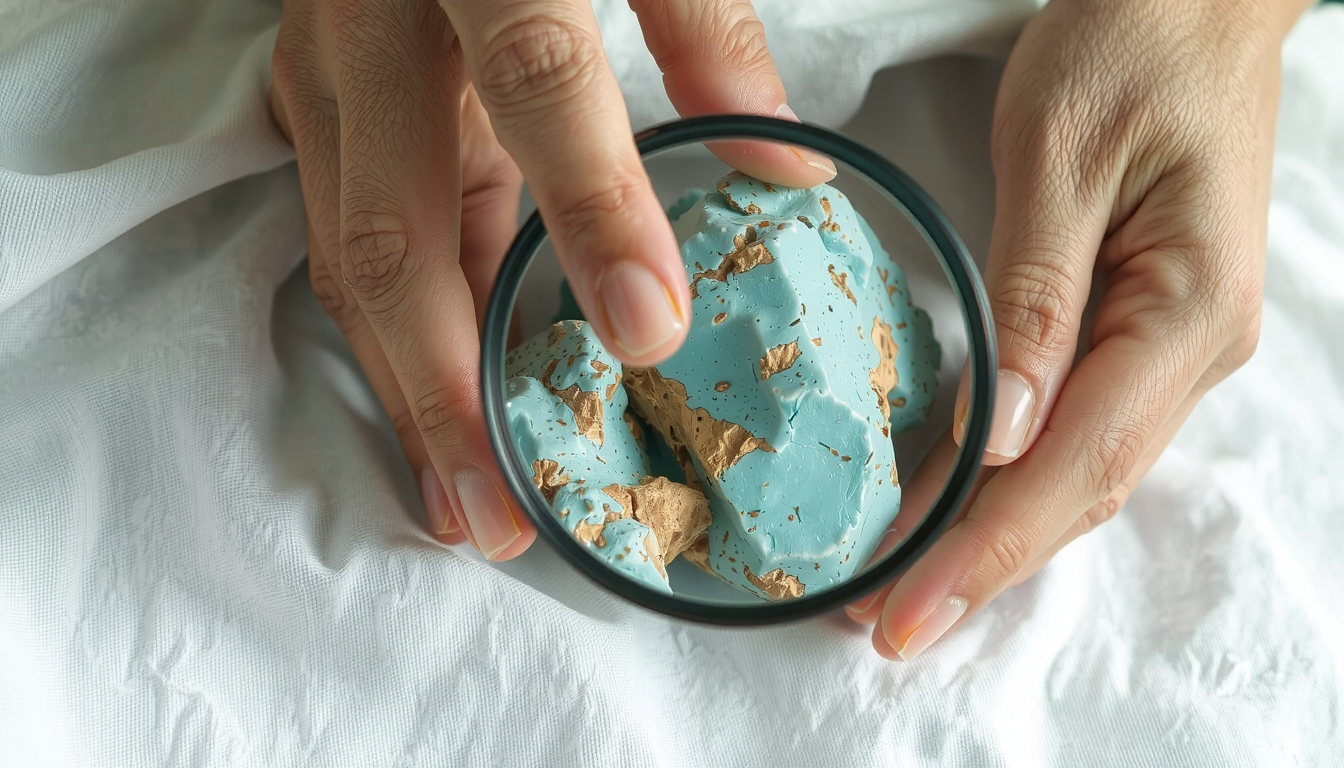
If your stone looks dull, it could be from one of two things. It might have a fine film of soap or cleaner residue on it. Or, if you scrubbed too hard, the stone’s polished surface may have been worn down.
First, try buffing the stone very gently with a clean, dry microfiber cloth. Often, this is enough to remove any residue and restore the shine. If the stone remains dull, its surface may be scratched or damaged. Do not try to use home polishing kits. At this point, it needs professional re-polishing by an expert jeweler.
Beyond Cleaning: Long-Term Care and Storage
Knowing how do you clean turquoise jewelry is only half the battle. Proper long-term care and storage are essential. They protect your jewelry and keep it beautiful for a lifetime.
The “Last On, First Off” Rule
This is the most important rule in all of jewelry care. Your turquoise should be the last thing you put on. It should be the first thing you take off.
Always apply cosmetics, perfumes, hairspray, and lotions before you put on your jewelry. These products contain oils and chemicals that can damage turquoise. At the end of the day, take your jewelry off before washing your hands. Remove it before showering or doing dishes.
Proper Storage to Prevent Damage
How you store your jewelry is critical. Never toss turquoise into a drawer or jewelry box with other items.
- cURL Too many subrequests. cURL Too many subrequests.
- cURL Too many subrequests. cURL Too many subrequests.
- cURL Too many subrequests. cURL Too many subrequests.
cURL Too many subrequests.
cURL Too many subrequests.
When to Seek Professional Help
cURL Too many subrequests.
cURL Too many subrequests.
- cURL Too many subrequests. cURL Too many subrequests.
- cURL Too many subrequests. cURL Too many subrequests.
- cURL Too many subrequests. cURL Too many subrequests.
- cURL Too many subrequests. cURL Too many subrequests.
cURL Too many subrequests.
When looking for help, find a jeweler who has specific experience with turquoise. Look for someone familiar with Southwestern or vintage jewelry. A general jewelry repair shop may not understand the unique challenges of working with this delicate stone.
FAQ: How to Clean Turquoise Jewelry
Here are quick answers to some of the most common questions about how to clean turquoise jewelry.
1. Can I use toothpaste to clean the silver on my turquoise ring?
We strongly advise against it. While some suggest this as a DIY hack, many toothpastes are abrasive. They can easily scratch the silver. More importantly, it’s almost impossible to keep the toothpaste off the turquoise stone. This can cause permanent damage from its chemicals and abrasives. A silver polishing cloth is a much safer alternative for cleaning silver turquoise jewelry.
2. My turquoise changed color over time. Can I clean it to restore its original color?
Usually, no. It is normal for natural turquoise to change color over the years. This happens as the stone absorbs skin oils and interacts with its environment. Many collectors value this process. It shows the stone is natural and adds to its character. Surface cleaning will remove dirt, but it cannot reverse this absorbed patina.
3. Is it safe to wear my turquoise jewelry in the shower or while swimming?
Absolutely not. Soaps, shampoos, and conditioners contain chemicals and oils. These can be absorbed by the stone and cause damage. Chlorine in swimming pools and salt in the ocean are also extremely harmful. They will discolor the stone. Always remove your turquoise jewelry before bathing, swimming, or washing dishes.
4. How do you clean turquoise jewelry that is set in gold?
The cleaning method for the turquoise stone itself never changes. Use a soft cloth, only dampened with water if absolutely necessary. Dry it immediately after. For the gold setting, you can use a dedicated gold polishing cloth. Again, be very careful to avoid touching the stone. Gold does not tarnish like silver. So it usually only needs a gentle buffing to restore its shine.
5. What’s the best way to clean vintage or Native American turquoise jewelry?
With extreme caution. These pieces are often very valuable and fragile. The safest approach is to only use a very soft, dry cloth to gently dust them. Because of their age, the traditional setting techniques (which may include sawdust backing), and the high likelihood of untreated stones, you should avoid water and all cleaners. If it needs more than a light dusting, we highly recommend consulting a specialist. Look for someone who works with antique or Native American jewelry restoration.
- Lingua originale: inglese.
- Traduzione rigorosa, conforme alla sintassi locale italiana.
- Solo il testo tradotto viene visualizzato.
- Il testo tradotto non deve contenere informazioni sul paese o sulla regione di origine, come "distributore negli Stati Uniti".
- Assicurarsi di cambiare tutte le informazioni sul paese di destinazione in Italia. Tutti i paesi.
- Per esempio, mantenere frasi come "fabbrica in Cina" o "Made in Vietnam" così come sono.
- Scrivere tutto in lingua italiana, le parole chiave devono essere tradotte correttamente!
- NESSUNA spiegazione, NESSUN markdown, NESSUN testo extra.
- Lingua originale: inglese.
- Traduzione rigorosa, conforme alla sintassi locale italiana.
- Solo il testo tradotto viene visualizzato.
- Il testo tradotto non deve contenere informazioni sul paese o sulla regione di origine, come "distributore negli Stati Uniti".
- Assicurarsi di cambiare tutte le informazioni sul paese di destinazione in Italia. Tutti i paesi.
- Per esempio, mantenere frasi come "fabbrica in Cina" o "Made in Vietnam" così come sono.
- Scrivere tutto in lingua italiana, le parole chiave devono essere tradotte con precisione!
- NESSUNA spiegazione, NESSUN markdown, NESSUN testo extra.
- Lingua originale: inglese.
- Traduzione rigorosa, conforme alla sintassi locale italiana.
- Solo il testo tradotto viene visualizzato.
- Il testo tradotto non deve contenere informazioni sul paese o sulla regione di origine, come "distributore negli Stati Uniti".
- Assicurarsi di cambiare tutte le informazioni sul paese di destinazione in Italia. Tutti i paesi.
- Per esempio, mantenere frasi come "fabbrica in Cina" o "Made in Vietnam" così come sono.
- Scrivere tutto in lingua italiana, le parole chiave devono essere tradotte con precisione!
- NESSUNA spiegazione, NESSUN markdown, NESSUN testo extra.